1,000th patient treated at Siteman with AI-enabled radiation therapy system

Combining artificial intelligence (AI) with advanced imaging, the technology supports more precise, personalized daily treatments by WashU Medicine physicians

Siteman Cancer Center at Barnes-Jewish Hospital and WashU Medicine has treated its 1,000th patient using state-of-the art radiation therapy technology that allows physicians to update a patient’s treatment plan on each day of treatment.

Called adaptive technology, the system incorporates slight changes in tumor shape, size and location, as well as the movement of surrounding healthy organs and tissue, to adjust a patient’s daily radiation therapy treatment plan for the best possible outcome.

The system is used to treat a range of tumors, including head and neck, central nervous system, thoracic, abdominal and pelvic cancers.

“We are pleased to offer this advanced technology to our patients — from the first person we treated with this system in 2020, to the 1,000th person in August 2025,” said WashU Medicine radiation oncologist Hyun Kim, MD, associate professor of radiation oncology and chief of Adaptive Radiation Therapy at WashU Medicine and Siteman.

“The milestone of 1,000 patients treated on this platform is literally the result of thousands of hours dedicated by our faculty and staff to personalize treatment every day for every patient,” he said.

Also known as online adaptive radiation therapy, it requires a team of expert physicians, physicists and radiation therapists to develop and review a treatment plan after the patient’s arrival — all within minutes after the patient is positioned to receive treatment.

In addition to the AI component and machine learning, the platform is equipped with cone-beam computed tomography (CT). Cone-beam CT quickly provides high-quality images and leads to better visualization of the tumors and surrounding healthy organs and tissue, allowing the physician to develop even more accurate, personalized treatment plans than with some older radiotherapy platforms.

In clinical trials incorporating the new technology, patients experienced decreased times to treatment and, in some cases, improved cancer control with less damage to surrounding healthy organs and tissue.

For some gynecologic cancers, treatment can involve imaging the ovaries of pre-menopausal patients. As a result, some patients have experienced premature ovarian failure and early menopause when treated with older radiotherapy technologies. WashU Medicine physician-scientists are conducting an ongoing clinical trial using the new technology with the hope that they can spare these organs.

Known as Ethos, the platform is manufactured by Varian Medical Systems, which also makes the cone-beam CT imaging component, called HyperSight.

Siteman recruiting participants for multi-cancer detection tests

National study aims to detect disease before symptoms appear

Siteman Cancer Center at Barnes-Jewish Hospital and WashU Medicine is recruiting participants for a national study of a new type of blood test aimed at detecting several types of cancer before symptoms appear. The tests could identify the presence of ovarian, pancreatic, bladder and other cancers that currently have no recommended screenings, as well as more common cancers that do.

WashU Medicine researchers at Siteman are recruiting people ages 45 to 75 who haven’t been diagnosed with cancer in the past five years to participate in the study. A blood draw is the most invasive part of participating, though additional time for follow-up is also required. There is no cost for participating in the study.

“We’re building the evidence on how these tests will perform: how they’re experienced by people, their potential benefits and more,” said Aimee James, PhD, MPH, MA, a WashU Medicine cancer prevention and control researcher at Siteman. “This could open up access to screenings for cancers we don’t already have screening options for — including stomach, esophageal and liver cancer.”

Multi-cancer detection tests are designed to detect biological substances that cancer cells release into the bloodstream, information that can even indicate where the cancer originated. The tests in this study, a national effort known as the Vanguard Study, also will screen for cancers that already have recommended screenings, including breast, colorectal, lung and prostate cancers.

The Vanguard Study is an important preliminary step in a larger plan to evaluate how well such tests work for reducing cancer deaths. The study will:

  • Provide information on how the tests work as cancer screening tools
  • Explore the decisions that participants and care providers make based on the results

The tests under review are expected to detect cancer in fewer than 5% of participants. If cancer is indicated, a nurse navigator will work with study participants to find appropriate follow-up care.

To enroll in the study or to learn more, call 314-362-5539 or visit https://publichealthsciences.wustl.edu/csrn.

Vaccine Shows Promise Against Aggressive Breast Cancer

Clinical trial targeted recurrence of hard-to-treat triple-negative breast cancer

A small clinical trial shows promising results for patients with triple-negative breast cancer who received an investigational vaccine designed to prevent recurrence of tumors. Conducted at Washington University School of Medicine in St. Louis with a therapy designed by Washington University researchers, the trial is the first to report results for this type of vaccine — known as a neoantigen DNA vaccine — for breast cancer patients.

The study, which found the vaccine to be well-tolerated and to stimulate the immune system, is available Nov. 14 in the journal Genome Medicine.

The phase I clinical trial — conducted at Siteman Cancer Center, based at Barnes-Jewish Hospital and the School of Medicine — involved 18 patients diagnosed with triple-negative breast cancer that was not metastatic, meaning it had not spread to other organs. Each patient received the standard of care and three doses of a personalized vaccine tailored to home in on key mutations in their specific tumor and train immune cells to recognize and attack any cells bearing these mutations.

Following treatment, 14 of 18 patients showed immune responses to the vaccine and, after three years, 16 patients remained cancer-free. While the early-stage trial was designed to evaluate safety of the vaccine and did not include a control group to determine efficacy, the researchers analyzed historical data from patients with triple-negative breast cancer treated with the standard of care only. In that group, on average, about half of patients remained cancer-free at three years post-treatment.

“These results were better than we expected,” said senior author William E. Gillanders, MD, the Mary Culver Distinguished Professor of Surgery at the School of Medicine who treats patients at Siteman. “Obviously, it’s not a perfect comparison, and we acknowledge the limitations of this type of analysis, but we are continuing to pursue this vaccine strategy and have ongoing randomized controlled trials that do make a direct comparison between the standard of care plus a vaccine, versus standard of care alone. We are encouraged by what we’re seeing with these patients so far.”

Triple-negative breast cancer is an aggressive tumor type that grows even in the absence of the hormonal fuel that drives growth of other types of breast cancer. To date, triple-negative breast cancer has no targeted therapies and is usually treated with traditional approaches that include surgery, chemotherapy and radiation therapy. For reasons that scientists are still investigating, this tumor tends to be more common among African American patients diagnosed with breast cancer. In this trial, one-third of the participants (six of 18) were African American.

For this trial, patients with triple-negative breast cancer who still had evidence of a tumor remaining after a first round of chemotherapy were eligible to participate. Such patients are at high risk of cancer recurrence even after the remaining tumor is surgically removed. After surgical removal, the research team analyzed and compared the tumor tissue with the same patient’s healthy tissue to find unique genetic mutations in the cancer cells. Such mutations in a patient’s cancer cells alter the proteins only in the tumor, making it possible to train the immune system to go after the altered proteins and leave healthy tissues alone.

Using software they designed, the researchers selected altered proteins — called neoantigens — that were made by the patients’ tumors and that were identified as most likely to trigger a strong immune response. On average, each patient’s vaccine contained 11 neoantigens (ranging from a minimum of four to a maximum of 20) specific to their tumor.

The software development was led by computational biologists Obi Griffith, PhD, a professor of medicine, and Malachi Griffith, PhD, an associate professor of medicine, both in the Division of Oncology at the School of Medicine. A related paper published simultaneously in the same journal describes the software tools they developed. One of their goals is to make these computational resources widely accessible to cancer researchers and clinicians worldwide.

“We hope to promote the use of this software for the design of cancer vaccines,” Malachi Griffith said. “These are complex algorithms, but in general, the software takes in a list of mutations and interprets them in the context of their potential to be good neoantigen candidates. The tools rank the possible neoantigens based on our current knowledge of what matters in stimulating the immune system to attack cancer cells. These software tools were developed with support from the National Cancer Institute, and they have an open license that makes them broadly available for both academic and commercial uses.”

Several studies of cancer vaccines are ongoing at Siteman. Vaccines for all of these trials are made in a Washington University School of Medicine facility that meets the good manufacturing practice (GMP) requirements set by the Food and Drug Administration. In some of the vaccine clinical trials for breast cancer patients, personalized vaccines are being investigated in combination with immunotherapies called checkpoint inhibitors that boost the action of T cells.

“We are excited about the promise of these neoantigen vaccines,” Gillanders said. “We are hopeful that we will be able to bring more and more of this type of vaccine technology to our patients and help improve treatment outcomes in patients with aggressive cancers.”

Learn more about all breast cancer clinical trials available at Siteman.

________________________________________________________________________________________

Zhang X, Goedegebuure P, Chen MY, Mishra R, Zhang F, Yu YY, Singhal K, Li L, Gao F, Myers NB, Vickery T, Hundal J, McLellan MD, Sturmoski MA, Kim SW, Chen I, Davidson JT, Sankpal NV, Myles S, Suresh R, Ma CX, Foluso A, Wang-Gillam A, Davies S, Hagemann IS, Mardis ER, Griffith O, Griffith M, Miller CA, Hansen TH, Fleming TP, Schreiber RD, Gillanders WE. Neoantigen DNA vaccines are safe, feasible, and induce neoantigen-specific immune responses in triple-negative breast cancer patients. Genome Medicine. Nov. 14, 2024.

This work was supported by Susan G. Komen for the Cure, grant number KG111025; the Alvin J. Siteman Cancer Center/Siteman Investment Program grant 4035; the National Institutes of Health (NIH), grant numbers R01 CA240983, P30‐CA091842, U01 CA248235 and T32 CA009621; the Foundation for Barnes‐Jewish Hospital; and the Centene Corporation contract P19‐00559 B101 for the Washington University‐Centene ARCH Personalized Medicine Initiative.

Xia H, Hoang MH, Schmidt E, Kiwala S, McMichael J, Skidmore ZL, Fisk B, Song JJ, Hundal J, Mooney T, Walker JR, Goedegebuure SP, Miller CA, Gillanders WE, Griffith OL, Griffith M. pVACview: an interactive visualization tool for efficient neoantigen prioritization and selection. Genome Medicine. Nov. 14, 2024.

This work was supported by the National Human Genome Research Institute (NHGRI) of the National Institutes of Health (NIH), grant number R00HG007940; the National Cancer Institute (NCI) of the NIH, grant number U01CA248235; the V Foundation for Cancer Research, award number V2018-007; the Centene Corporation contract P19-00559 for the Washington University-Centene ARCH Personalized Medicine Initiative; and the Goldberg Family Foundation.

This content is solely the responsibility of the authors and does not necessarily represent the official views of the NIH.

New Outpatient Cellular Therapy Center Opens at Siteman Cancer Center

A new Outpatient Cellular Therapy Center has opened at Siteman Cancer Center, based at Barnes-Jewish Hospital and Washington University School of Medicine in St. Louis.

With nine infusion beds and three infusion chairs, the center is on the eighth floor of Schoenberg Pavilion on the Washington University Medical Campus in the Central West End. The center is accessible through:

The new center offers outpatient therapies to certain patients diagnosed with lymphoma or multiple myeloma who receive one of three treatment options: CAR T-cell therapy, autologous stem cell transplant or immunotherapy with the use of bispecific T-cell engagers (BiTEs).

“These patients typically would be admitted to the hospital for two to four weeks,” said medical oncologist Amanda Cashen, MD, Washington University associate chief of hematologic malignancies and a stem cell transplant specialist at Siteman. “We’ve carefully planned this center for several years, because we wanted to offer a high standard of care in a safe setting. It complements our 96-bed inpatient stem cell and immunotherapy unit and is supported by our 24/7 cancer care clinic and a dedicated intensive care unit for emergencies or after-hours care.”

Medical oncologist Armin Ghobadi, MD, clinical director of the Center for Gene and Cellular Immunotherapy at Washington University, said patients often prefer outpatient treatment options over spending the night at the hospital. “We’ve set it up so that all of the patients undergoing BiTE immunotherapy will be outpatient,” he said. “For CAR T and autologous transplants, where the patient is his or her own donor, we believe up to 75% of our patients can have most of their treatment and monitoring in the outpatient setting, too.”

Short hospital stays still may be required but far fewer than was the case before the new center opened. Key to outpatient care, Ghobadi said, is the requirement that a caregiver remain with the patient while at home. “Some insurers don’t approve outpatient cellular or stem cell therapies without a dedicated caregiver,” he explained.

Kelly Terrell, MBA, BSN, RN, BMTCN, senior clinical program manager for hematologic malignancies, cellular therapy and transplantation at Siteman, said the care team educates patients and their caregivers so they understand the entire process and how to access any needed after-hours care. “But outpatient treatments for multiple myeloma and lymphoma are safe. Now patients can avoid long hospitalizations that previously were a deterrent to those who needed these therapies.”

The Outpatient Cellular Therapy Center includes the expertise of bone marrow transplant and cell therapy specialists, advanced nurse practitioners and infusion nurses, as well as case coordinators, a social worker and a pharmacist. Washington University physicians at Siteman perform more than 200 autologous stem cell transplants and 90 CAR T-cell procedures annually. The team also has treated more than 60 patients with BiTEs. “We envision ramping up the outpatient offerings rapidly,” Ghobadi said. “We already have six CAR T therapies that are FDA-approved, and more are in the pipeline.”

Cashen added: “As we see more treatment options become available, we can introduce new patient populations to outpatient care. I see this as a growing trend, because it is safe and convenient for patients.”

Colon cancer surgery: what to expect and how to prepare

When it comes to colon cancer, surgery is the most common treatment. Types of colon cancer surgery depend on the stage of the cancer and where the cancer is in the colon. For early-stage colon cancers and young-onset colorectal cancer, surgeons may recommend minimally invasive surgery. For more advanced colon cancers, surgery may be performed to remove parts of the colon or to reconnect healthy parts of the colon. All types of colon cancer surgery involve the removal of nearby lymph nodes where the cancer may have spread.

How to prepare for colon cancer surgery

Prior to your surgery, there are steps you can take to prepare.

A week or more before your surgery:

  • Make a list of all your medications and any allergies you have.
  • Fill any prescriptions you will need after surgery.
  • Ask your surgeon about when you should stop taking your medications. Don’t stop taking your medications without speaking to your surgeon.
  • Ask your surgeon if it’s safe to take ibuprofen or aspirin.
  • Arrange for family or friends to help care for you while you’re in the hospital and after you go home.
  • Plan for a caregiver to drive you home after you are discharged from the hospital.

24 hours before your surgery:

  • Don’t eat any solid foods and only drink clear liquids.
  • You may be advised not to eat or drink anything (including water) after midnight.
  • Ask your nursing team about the specific eating and drinking guidelines you’ll need to follow the night before surgery.
  • Your colon must be completely empty before the procedure. Follow your surgeon’s “bowel prep” instructions. You may need to use laxatives and/or enemas to get all the stool out of your colon.

The day of surgery and your hospital stay

When you arrive at the hospital for your surgery, you will be escorted to the pre-operation (pre-op) area to prepare for the operation. A nurse will take your vital signs and will insert an IV to administer fluids, including antibiotics to decrease the risk of infection, anesthetic medications and pain medications.

You’ll also meet with an anesthesiologist who will review your medical history, speak with you about your safety during surgery, go over the type of anesthesia you’ll receive and answer any questions you may have. Your family and/or friends will then go to the waiting room, where they will remain throughout the procedure.

Once the surgery is over, you will be taken to the recovery room. You will stay in recovery anywhere from one to two hours for observation and for the anesthesia to wear off. Then, you will be transferred to your room once you’re in stable condition.

You may stay in the hospital for two to five days after surgery. Depending on whether you have minimally invasive surgery or open surgery, your hospital stay may be shorter or longer. While you’re in the hospital, your nurses will teach you and your caregivers how to care for yourself during the recovery process.

Discharge and going home

Right after surgery, you will need to be on a clear liquid diet. This diet continues for the rest of that day. The day after surgery, you will get back to a regular diet. A dietitian will be available to help you while you’re in the hospital. Additionally, your nurses and physical therapists will help you move around and will teach you deep breathing and leg exercises. These exercises will help you regain mobility and improve your circulation.

Before discharging you from the hospital, your surgeon will write your prescriptions and give you written discharge instructions. Your surgeon will review these with you before you leave. Because medication and anesthetic can slow your reaction time and thought processes, make sure you have someone to drive you home.

Recovery at home

Once you’re home, you will be encouraged to steadily increase your activity level. Avoid strenuous activity – walking helps to prevent blood clots and keep your lungs clear, though you can climb steps and engage in light activity as soon as you feel up to it. Don’t take baths or submerge yourself in water until your incisions have healed.

Your surgeon will schedule a follow-up appointment after your surgery, but it’s a good idea to contact your surgeon right away if you experience any of the following:

  • Nausea/vomiting
  • Fever
  • Diarrhea
  • Wound is red, more painful or has drainage
  • No bowel movement within a few days of returning home

The Siteman approach to colon cancer surgery

With expert physicians, skilled support staff and the latest technology, we ensure that our colon cancer surgery patients receive the comprehensive care they need.

Our surgeons were the first in the region to perform laparoscopic colectomy for cancer. They use minimally invasive and robotic techniques whenever possible, making the recovery process easier while keeping risks down.

Our colon cancer specialist team

The multi-disciplinary colon cancer specialist team at Siteman comprises outstanding Washington University medical oncologists, radiation oncologists, surgeons, gastroenterologists, radiologists and others. The diverse expertise of our specialists allows them to create individualized treatment plans for all colon cancer patients.

While many colon cancers may be treated with surgery alone, some are treated with a combination of surgery, chemotherapy and radiation. Not all colon cancer patients will undergo the same course of treatment, so it’s important to have a team of providers across a wide range of disciplines.

You’ve been diagnosed with colon cancer. Now what?

If you’ve been diagnosed with colon cancer, you may be experiencing a wave of emotions including fear, anger and sadness. 50Siteman providers are here to support you every step of the way throughout your cancer journey. With our exceptional physicians, psychology services and survivorship care, we are committed to caring for your body, mind and wellness, even after treatment ends.

If you are experiencing symptoms of colon cancer and are concerned about your risk, please make an appointment with your primary care provider. If you have been diagnosed with colon cancer and would like a second opinion from a colon cancer specialist at Siteman, please call 800-600-3606.

Subtle signs of ovarian cancer women should look out for

The first symptoms of ovarian cancer are easy to miss, which is why it has long been called the “silent killer.” But ovarian cancer isn’t really a silent killer; the early signs are often ignored or mistaken for other benign conditions. Gynecologic symptoms for cervical, uterine and ovarian cancers are all easy to brush off, but being able to identify early symptoms is crucial. While uterine cancer rates have recently climbed past ovarian cancer’s, it remains a gynecological cancer needing special attention. Spotting the signs of ovarian cancer earlier means catching the cancer when it’s easier to treat.

What is ovarian cancer? Who does it affect?

Ovarian cancer is an overgrowth of abnormal cells that start in the ovaries, fallopian tubes or peritoneum. According to the American Cancer Society (ACS), ovarian cancer ranks fifth in cancer deaths among women, accounting for more deaths than any other cancer of the female reproductive system. While this statistic may seem daunting, ovarian cancer rates have been slowly falling over the past 20 years.

This cancer is more common among white woman than Black women. It also primarily affects older women who have already gone through menopause. In fact, about half of women diagnosed with ovarian cancer are age 63 or older.

Types of ovarian cancer

There are three types of ovarian cancer. The type of cancer you have – and the best course of treatment for you – will depend on the type of cell where the cancer begins.

  • Epithelial ovarian cancer: this is the most common type of ovarian cancer. It develops in the tissue surrounding the ovaries.
  • Stromal tumors: these rare tumors form in the ovaries’ structural connective tissue cells that produce estrogen and progesterone.
  • Germ cell tumors: these rare tumors begin in the ovarian cells that develop into eggs.

Wondering if you might have ovarian cancer? You’re not alone.

If you are concerned that you might have ovarian cancer, you may have fears about fertility; relationships and sexual health; the physical, emotional and financial impacts of treatment; and death.

While your fears and concerns are entirely valid, it’s important to keep in mind that many women with ovarian cancer go on to lead full lives. Being able to spot the subtle signs of ovarian cancer ultimately gives you the best chances for a positive outcome.

Signs of ovarian cancer

Symptoms of ovarian cancer include:

  • Bloating
  • Abdominal discomfort or back pain
  • Pelvic pain
  • Irregular bleeding
  • Change in bowel or bladder habits
  • Feeling full too quickly or lack of appetite

Risk factors for ovarian cancer

Certain factors may increase a woman’s risk of ovarian cancer. These include:

  • Getting older. Generally, most ovarian cancers develop after menopause.
  • Being overweight or obese. Obesity raises the risk of ovarian cancer. It may also have a negative impact on the overall survival of women with ovarian cancer.
  • Having children later or never having a full-term pregnancy. Women who have their first full-term pregnancy after age 35 or who have never had a full-term pregnancy are at higher risk for ovarian cancer.
  • Undergoing hormone therapy after menopause. Women who take estrogen alone or with progesterone are at higher risk for ovarian cancer than women who have never taken hormones.
  • Having a family history of ovarian, breast or colorectal cancer. Ovarian cancer runs in families. Additionally, due to gene mutations, a family history of breast or colorectal cancer increases a woman’s risk for ovarian cancer. Genes linked to hereditary ovarian cancer include ATM, BRCA1, BRCA2, BRIP1, RAD51D, PALB2, MLH1, MSH2, MSH6 and PMS2.
  • Having a family cancer syndrome. According to the ACS, up to 25 percent of ovarian cancers are a part of family cancer syndromes caused by inherited gene mutations.

Types of family cancer syndromes

  • Hereditary breast and ovarian cancer syndrome (HBOC). This syndrome results from inherited mutations in the genes BRCA1 and BRCA2. Mutations in these genes are responsible for most inherited ovarian cancers. BRCA1 and BRCA2 gene mutations are about 10 times more common in women of Ashkenazi Jewish descent.
  • Hereditary nonpolyposis colon cancer (HNPCC)/ Lynch syndrome. The lifetime risk of ovarian cancer in women with this syndrome is up to 10 percent. In addition, up to one percent of all ovarian epithelial cancers occur in women with HNPCC.
  • Peutz-Jeghers syndrome. This rare genetic syndrome causes polyps to form in the stomach and intestine during adolescence. It is linked to a high risk of cancers of the digestive tract. Women with this syndrome are at increased risk for both epithelial ovarian cancer and a type of stromal tumor called sex cord tumor with annular tubules (SCTAT).
  • MUTYH-associated polyposis. This syndrome causes polyps to form in the colon and small intestine. People with this syndrome are at high risk for colon cancer. They are also more likely to develop cancers of the ovary and bladder.

When should I talk to my doctor?

Symptoms of ovarian cancer can be mild and may be confused with other issues. Just because you’re experiencing one or more symptoms doesn’t mean that you have ovarian cancer. Still, if your symptoms last three weeks or longer, you should make an appointment with your provider.

What will happen at my initial doctor’s visit?

First, your provider (typically a gynecologist) will perform a pelvic exam. They will also ask questions about your medical and family history.

Next, your provider may use one or more of the following tests to screen for ovarian cancer:

  • Ultrasound. This test uses sound waves to create pictures of structures inside the body. Your provider will be able to see if either ovary looks abnormal. If something abnormal is found, further testing will be recommended.
  • CA-125 blood test. This test looks for CA-125, a protein that may be found at higher levels in women with ovarian cancer. However, just because a woman has a high CA-125 level does not mean she has ovarian cancer. Many other conditions can raise CA-125 levels, such as pregnancy and liver problems.
  • Surgery. In some cases, an ovary will need to be surgically removed and tested for signs of cancer to confirm a diagnosis.
  • Genetic testing. Your provider may recommend testing a sample of your blood to look for gene mutations that increase ovarian cancer risk. Knowing you have an inherited gene mutation will help your provider when putting together your treatment plan.

The Siteman approach to ovarian cancer

Our nationally renowned gynecologic oncology program is the largest in the Midwest. With expert physicians, nurses, skilled support staff and the latest technology, we ensure that our ovarian cancer patients receive the comprehensive care they need. Our physicians are also actively involved in clinical trials that investigate new therapy approaches. Patients who undergo ovarian cancer treatment at Siteman have access to new therapies that are as good as – or even better than – current standard therapies available at other cancer centers.

In addition, Siteman Cancer Center and WashU Medicine offer the latest fertility preservation treatments for women undergoing ovarian cancer treatment.

Our ovarian cancer specialists

The ovarian cancer specialist team at Siteman comprises outstanding WashU Medicine gynecologic oncologists, radiologists, genetic counselors, psychologists, pathologists and nurses. The diverse expertise of our specialists allows them to create personalized treatment plans for all ovarian cancer patients.

Be your own ovarian cancer care advocate

If you are experiencing any early symptoms of ovarian cancer, don’t brush them off. While other conditions could be causing them, it’s important to rule out the possibility of ovarian cancer. Being aware of these subtle signs and understanding your own individual risk increases your chances of catching ovarian cancer early, when it’s easier to treat.

You’ve been diagnosed with ovarian cancer. Now what?

If you have received an ovarian cancer diagnosis, you may be feeling a wave of emotions including fear, anger and sadness. Siteman providers are here to support you every step of the way throughout your cancer journey. With our exceptional physicians, psychology services and survivorship care, we are committed to caring for your body, mind and wellness, even after treatment ends.

If you are experiencing symptoms of ovarian cancer, or if you have received an ovarian cancer diagnosis and would like a second opinion from an ovarian cancer specialist at Siteman, please call 800-600-3606.

How Siteman approaches triple-negative breast cancer treatment

According to the American Cancer Society (ACS), triple-negative breast cancer (TNBC) accounts for 10-15 percent of all breast cancers. It develops more quickly, is more likely to spread and is harder to treat than other breast cancers. Because it’s such an aggressive cancer, TNBC has a poorer prognosis than other invasive breast cancers.

What is triple-negative breast cancer?

Triple-negative breast cancer is a type of breast cancer whose cells have tested negative for estrogen receptors (ER), progesterone receptors (PR) and human epidermal growth factor 2 (HER2). Unlike other invasive breast cancers, TNBC does not respond to hormone therapy or therapies that target HER2.

Diagnosed with triple-negative breast cancer? You’re not alone.

If you have recently received a TNBC diagnosis, you likely feel a great deal of fear. Common fears that TNBC patients have include:

  • Lack of targeted drug treatments
  • Treatment not working
  • Cancer recurrence
  • Dying

While a TNBC diagnosis can be scary, remember that it is not a death sentence. There are effective treatments for this cancer and many women go on to beat TNBC and live full lives, cancer-free. The earlier the cancer is caught, the easier it is to treat. This is why mammograms and early detection are so important.

Survival rates for triple-negative breast cancer

Survival rates for TNBC depend on how far the disease has progressed. According to the ACS, 5-year survival rates are as follows:

  • Localized (contained to the breast): 91 percent
  • Regional (spread outside the breast to nearby structures or lymph nodes): 65 percent
  • Distant (spread to distant parts of the body such as lungs, liver or bones): 12 percent
  • All stages combined: 77 percent

It’s important to keep in mind that survival rate statistics for TNBC are an estimate. Your experience as a TNBC patient is unique, and statistics reflect outcomes of previous patients and past treatments. Speak with your doctor about your specific situation and what your prognosis looks like.

The Siteman approach

With expert physicians, skilled support staff and the latest technology, we give our TNBC patients the comprehensive care they need to fight their cancer. In addition to clinical care, our researchers are making strides in developing ways to use the body’s immune system to fight breast cancer, including vaccines.

TNBC treatment options at Siteman

As a TNBC patient, making treatment decisions can be stressful. At Siteman, our exceptional providers offer a variety of triple-negative breast cancer treatment options:

  • Surgery: oftentimes, patients first need to have either the lump removed (lumpectomy) or the entire breast removed (mastectomy). Then, they will receive chemotherapy to target any remaining cancer cells.
  • Chemotherapy: because hormone therapy and HER2 drugs aren’t effective treatment options for women with TNBC, chemotherapy is the main systemic treatment option. Patients may receive chemo prior to surgery (neoadjuvant chemo), either by itself or with pembrolizumab to shrink a large tumor. Patients may also receive chemo after surgery (adjuvant chemo) to reduce the chances of recurrence.
  • Targeted drugs: for women with TNBC who have a BRCA mutation and whose cancer no longer responds to more common breast cancer chemo drugs, their treatment teams may turn to other chemo drugs (such as carboplatin) or targeted drugs (called PARP inhibitors).
  • Radiation therapy: radiation usually comes after lumpectomies or mastectomies. High-energy radiation targets the breast to kill any remaining cancer cells. The process takes about 20 minutes. Most women receive radiation four to five days a week for about six weeks.

Populations at increased risk for TNBC

There are certain risk factors that put a woman at greater risk for TNBC. You may be at increased risk if:

There are many factors that contribute to these racial disparities that are still unknown. However, Black and Hispanic patients are more likely to have unsatisfying communication with their doctors, experience discrimination in health-care settings and have a harder time getting to and from their appointments.

Clinical trials for TNBC

Clinical trials are often used for triple-negative breast cancer treatment. Prior to taking part in a clinical trial, patients will first undergo standard treatments. However, if those treatments haven’t been successful, patients may choose to take part in a clinical trial in the hopes of a better outcome. If you are a TNBC patient interested in participating in a specific clinical trial, please speak with your physician about the trial.

The choice to participate in a clinical trial is highly personal, and one you should make after speaking with your provider about potential benefits and risks. While most health insurance plans cover clinical trials, make sure to first verify your coverage with your insurance carrier.

Our breast cancer specialists

The breast cancer specialist team at Siteman comprises outstanding Washington University medical oncologists, radiation oncologists, surgeons, radiologists, geneticists and psychologists. The diverse expertise of our specialists is what allows them to create individualized treatment plans for all triple-negative breast cancer patients.

Success among Siteman triple-negative breast cancer patients

In 2016, when Celina Campbell found a quarter-sized lump in her breast, she assumed it was just a swollen area due to a minor injury. However, breast cancer runs in Celina’s family and her cousin had just received a TNBC diagnosis. Because of this, she began to suspect the lump could be cancer. After following up with a breast surgeon, it was indeed confirmed that Celina, too, had TNBC.

While triple-negative breast cancer treatment was very emotionally and physically draining, Celina remained determined to overcome her diagnosis. And, after eight sessions of chemotherapy, no more lump could be found. Now, six years later, Celina lives a full life and her cancer is considered fully cured.

Throughout her cancer journey, Celina received the most exceptional care and support from Siteman’s breast cancer specialist team. Former Washington University medical oncologist William Popovic, MD, laid out a thorough and personalized treatment plan for Celina, putting her at ease with his warm demeanor and genuine concern. All of the staff dedicated themselves fully to Celina’s journey, always working to help her understand her cancer and her treatment. The expertise, commitment and compassion of Washington University breast cancer specialists at Siteman allowed Celina to take charge of her life and to become an incredible inspiration to other TNBC patients.

Patient support

In addition to providing unmatched clinical care, Siteman provides compassionate support to help each and every patient cope with the emotional and physical tolls of cancer treatment.

  • Nurses: specially trained to help breast cancer patients cope with symptoms, treatment and side effects.
  • Nurse navigators: clinically trained to provide guidance and answer questions at any point.
  • Registered dietitians: provide guidance about nutrition and meals or snacks that will be good for you as you move through treatment.
  • Psychologists: provide free mental health care for you and your family members.
  • Palliative care specialists: provide support to help you manage pain and other side effects of your treatments.

You’ve been diagnosed with triple-negative breast cancer. Now what?

If you’ve received a TNBC diagnosis, you may be experiencing a range of emotions including fear, anger and sadness. Siteman providers are here to support you every step of the way throughout your cancer journey. With our exceptional physicians, psychology services and survivorship care, we are committed to caring for your body, mind and wellness, even after treatment ends.

If you are experiencing symptoms that may point to breast cancer, or if you have received a TNBC diagnosis and would like a second opinion from a breast cancer specialist at Siteman, please call 800-600-3606.


How Siteman approaches metastatic breast cancer treatment

Finding out you have metastatic breast cancer (also known as advanced or stage IV breast cancer) can be very scary. While there is no cure, treatment can slow the cancer, extend the patient’s life and improve quality of life.

What is metastatic breast cancer?

Metastatic breast cancer refers to cancer that originated in the breast and has spread to another part of the body. First, cancer cells break away from the original tumor in the breast. Then, they travel through the bloodstream or lymphatic system to other parts of the body. When breast cancer spreads, it most commonly does so to the liver, brain, bones, lymph nodes or lungs.

Which breast cancers are most likely to metastasize?

All breast cancers have the potential to metastasize. However, human epidermal growth factor receptor 2 (HER2)-positive and triple-negative breast cancers are more aggressive. For this reason, these types of breast cancer are more likely to spread than others.

Afraid of your metastatic breast cancer diagnosis? You’re not alone.

If you or a loved one has recently been diagnosed with metastatic breast cancer, you may be feeling a great deal of fear. Common fears of stage IV breast cancer patients include:

  • Fear of cancer progression
  • Making treatment decisions
  • Worry about loved ones
  • Uncertainty about the future
  • Financial pressures
  • Dying

Your fears and concerns are surely valid. Still, it is important to remember that many metastatic breast cancer patients continue to live full and meaningful lives. Siteman breast cancer specialists are here to provide you with only the most exceptional care to give you the best possible chances for a positive outcome.

Risk factors for metastatic breast cancer

Although all breast cancers have the potential to spread, there are certain factors that increase the chances of that happening. These include:

  • Previous breast cancer diagnosis
  • Type of cancer (HER2-positive or triple-negative)

Metastatic breast cancer survival rates

Breast cancer is the second leading cause of cancer death in women, with metastatic breast cancer causing the vast majority of those deaths. According to the American Cancer Society (ACS), the five-year survival rate for women with metastatic breast cancer is 28 percent. For men with metastatic breast cancer, that rate is 22 percent.

While these statistics may seem daunting, keep in mind that metastatic breast cancer is treatable at any stage. What’s more, treatments are continuously improving and have proven to help metastatic breast cancer patients live longer and more fulfilling lives.

Bone metastasis and pain management

Breast cancer can spread to any area of the body. However, breast cancer most often metastasizes in the bones. Bone metastases affect more than half of women who develop stage IV breast cancer. The most common sites of bone metastasis are the ribs, spine, pelvis and long bones in the arms and legs.

Patients with bone metastases are at risk of bone fractures, spinal cord compression and bone pain. This pain tends to be constant. It may get worse with physical activity and usually doesn’t go way with rest. As a result, sleeping can be difficult.

The good news is that there are drugs that can reduce these symptoms by strengthening and protecting your bones. There are many benefits to these drugs for those suffering from bone metastasis. These include:

  • Reduced pain due to bone metastasis
  • Lower risk of bone fractures
  • Reduced need for surgery to repair bone fractures
  • Reduced need for radiation to treat bone pain
  • Blocked progression of bone metastasis

The Siteman approach to metastatic breast cancer

With expert physicians, skilled support staff and the latest technology, we ensure that our metastatic breast cancer patients receive the comprehensive care they need. In addition to clinical care, our researchers are making strides in developing ways to use the body’s immune system to fight breast cancer, including vaccines.

Siteman conducts more clinical trials than any other cancer center in the region. Several new drugs have emerged from our clinical studies that have had a promising impact on metastatic breast cancer. Meanwhile, more and more innovative breast cancer drugs continue to be developed.

Metastatic breast cancer treatment options

Washington University breast cancer specialists at Siteman offer the following treatment options for all types of metastatic breast cancer.

  • Chemotherapy: to destroy as many cancer cells as possible
  • Radiation therapy: to relieve or control pain in a specific area
  • Hormone therapy: to shrink or slow the growth of hormone receptor-positive metastatic breast cancer
  • Targeted therapy: to target specific characteristics of cancer cells, such as proteins that foster cancer cell growth
  • Surgery: to prevent broken bones or cell blockages in the liver

The type of treatment you receive will depend on the type of breast cancer that you have.

Hormone therapy for metastatic breast cancer

Hormone therapy differs based on the hormone receptor (HR) status and the human epidermal growth factor receptor 2 (HER2) status of your cancer. For example:

HR-positive – If you have estrogen receptor-positive (ER+) or progesterone receptor-positive (PR+) breast cancer, hormone therapy will likely be the first treatment you’ll receive. Hormone therapy drugs lower estrogen levels or block estrogen receptors. Hormone receptor-positive cancers tend to grow more slowly than hormone receptor-negative cancers.

HR-negative – This type of breast cancer doesn’t have any hormone receptors. For this reason, the cancer won’t be affected by treatments intended to block hormones in the body. Instead of hormone therapy, chemotherapy is the main treatment for hormone receptor-negative breast cancers.

HER2-positive – This type of breast cancer involves an overabundance of HER2, a protein that promotes the growth of cancer cells. Treatment for HER2-positive breast cancers involves a combination of chemotherapy and drugs that target the HER2 proteins. These drugs block the HER2 receptors from receiving growth signals in order to slow or stop the growth of the cancer. HER2-positive cancers tend to be more aggressive than HER2-negative cancers.

HER2-negative – This type of breast cancer involves cancer cells that have a small amount or none of the HER2 protein. HER2-negative cancer cells may grow more slowly and are less likely to come back or spread than HER2-positive cancer cells. If your cancer is HER2-negative and hormone receptor-positive, hormone therapy will likely be the first treatment you’ll receive.

Siteman advances in metastatic breast cancer treatment

Washington University experts at Siteman continue to pave the way for innovative breast cancer treatments through cutting-edge research. Some of our groundbreaking studies include:

Low-dose estrogen studyResearch conducted at Washington University in 2009 revealed that raising estrogen levels may benefit women whose metastatic breast cancer no longer responds to standard anti-estrogen treatment. In 30% of study participants, their tumors either shrank or stopped growing.

Nanoparticles chemotherapy study – In 2018, our researchers discovered that when chemotherapy agents are exposed to radiation emitted by visible light, the drugs produce reactive particles that are toxic to cells. In contrast to traditional light therapy, this technique can target and attack cancer cells deep inside the body.

Breast cancer vaccine study – Washington University surgeon William Gillanders, MD, has led the development of personalized breast cancer vaccines. In this study, the research team took a small tissue sample from a patient’s tumor. Then, they used it to develop a personalized vaccine based on the tumor’s unique genetic information.

Our metastatic breast cancer specialists

The breast cancer specialist team at Siteman comprises outstanding Washington University medical oncologists, radiation oncologists, surgeons, radiologists, geneticists, psychologists and others. The diverse expertise of our specialists allows them to create individualized treatment plans for all metastatic breast cancer patients.

Success among Siteman metastatic breast cancer patients

Debbie Davis was only 34 when she was diagnosed with stage I breast cancer in 1993. She had no family history of cancer. While Debbie was terrified of her diagnosis and the uncertainty that came with it, she quickly transformed that fear into determination. She made the decision not to let her breast cancer stop her from living a fulfilling life. She maintained this mindset even after being diagnosed with metastatic breast cancer seven years later.

Throughout her decades-long cancer journey, Debbie has continuously received the most exceptional care and support from physicians at Siteman. Her treatment has included chemotherapy, radiation therapy and clinical trials. The expertise, dedication and compassion of Washington University breast cancer specialists at Siteman have allowed Debbie to take charge of her life and to be an incredible inspiration to other breast cancer patients.

Debbie’s cancer journey is just one of Siteman’s many breast cancer success stories.

Patient support

In addition to providing unmatched clinical care, Siteman provides compassionate support to help patients cope with the emotional and physical tolls of cancer treatment.

  • Nurses: specially trained to help patients cope with symptoms, treatment and side effects
  • Nurse navigators: clinically trained to provide guidance and answer questions at any point
  • Registered dietitians: provide guidance about nutrition and meals or snacks that will be good for you as you go through treatment
  • Psychologists: provide free mental health care for you and your family members
  • Palliative care specialists: provide support to help you manage pain and other side effects of your treatment

You’ve been diagnosed with metastatic breast cancer. Now what?

If you’ve been diagnosed with metastatic breast cancer, you may be experiencing a wave of emotions including fear, anger and sadness. Siteman providers are here to support you every step of the way throughout your cancer journey. With our exceptional physicians, psychology services and survivorship care, we are committed to caring for your body, mind and wellness, even after treatment ends.

If you are experiencing symptoms that may indicate your breast cancer has spread, or if you have received a stage IV breast cancer diagnosis and would like a second opinion from a breast cancer specialist at Siteman, please call 800-600-3606.
Newly approved drug effective against lung cancer caused by genetic mutation

Medical oncologist and senior author of a new lung cancer study, Ramaswamy Govindan, MD, of Washington University School of Medicine in St. Louis, talks about the newly FDA-approved drug sotorasib. The new study shows that sotorasib benefits some patients who have non-small-cell lung cancer that has a specific mutation in the KRAS gene. Ongoing clinical trials for lung cancer patients are investigating combinations of sotorasib plus other experimental drugs.
The new drug sotorasib reduces tumor size and shows promise in improving survival among patients with lung tumors caused by a specific DNA mutation, according to results of a global phase 2 clinical trial. The drug is designed to shut down the effects of the mutation, which is found in about 13% of patients with lung adenocarcinoma, a common type of non-small-cell lung cancer.

The Food and Drug Administration approved sotorasib May 28 as a targeted therapy for patients with non-small-cell lung cancer whose tumors express a specific mutation — called G12C — in the KRASgene and who have undergone at least one previous therapy for their cancer.

Non-small-cell lung cancer makes up over 80% of all lung cancers. More than 200,000 new cases of non-small-cell lung cancer are diagnosed annually in the United States.

The study, led by researchers at Washington University School of Medicine in St. Louis, Perlmutter Cancer Center at NYU Langone Health in New York, MD Anderson Cancer Center in Houston, and Memorial Sloan Kettering Cancer Center in New York, will be presented June 4 at the annual meeting of the American Society of Clinical Oncology and published the same day in The New England Journal of Medicine.

Sotorasib, also known by the brand name Lumakras, is made by Amgen, which funded the trial.

“This is a group of patients whose tumors have been difficult to treat and for whom we did not have targeted therapies,” said co-senior author and medical oncologist Ramaswamy Govindan, MD, the Anheuser Busch Endowed Chair in Medical Oncology at Washington University.

“The new drug is addressing an unmet need for these patients, targeting the most common mutation that we can go after.

We’re also continuing to investigate this drug in combination with other experimental drugs to see if we can further improve responses and survival.”

The study involved 126 patients with non-small-cell lung cancer that had a specific mutation in the KRAS gene. A single DNA error swaps out an important protein building block, placing a cysteine where a glycine should be. Tumors with the mutation manufacture a version of the KRAS protein that is almost constantly active, driving tumor growth. Sotorasib, taken daily by mouth, blocks tumor growth by trapping the KRAS protein in its inactive form.

Most patients in the trial previously had been treated with standard chemotherapy along with an immunotherapy drug that targets a protein called PD-1. To evaluate this new therapy, all patients enrolled in the study were treated with sotorasib; phase 2 trials evaluating safety and effectiveness often do not include a placebo group.

The drug caused at least some tumor shrinkage in 102 out of 126 patients (82%). About 37% of the patients’ tumors reduced in size at least 30%. In contrast, response rates to standard therapy in these patients range from 6% to 20%.

Forty-two patients’ tumors (34%) showed a partial response to the therapy, meaning the tumor shrank substantially and its growth was controlled for a period of time; and four patients (3%) showed a complete response that left no evidence of disease. For tumors that shrank, the tumor size was reduced by about 60%, on average.

Lungtumor Before After Sized
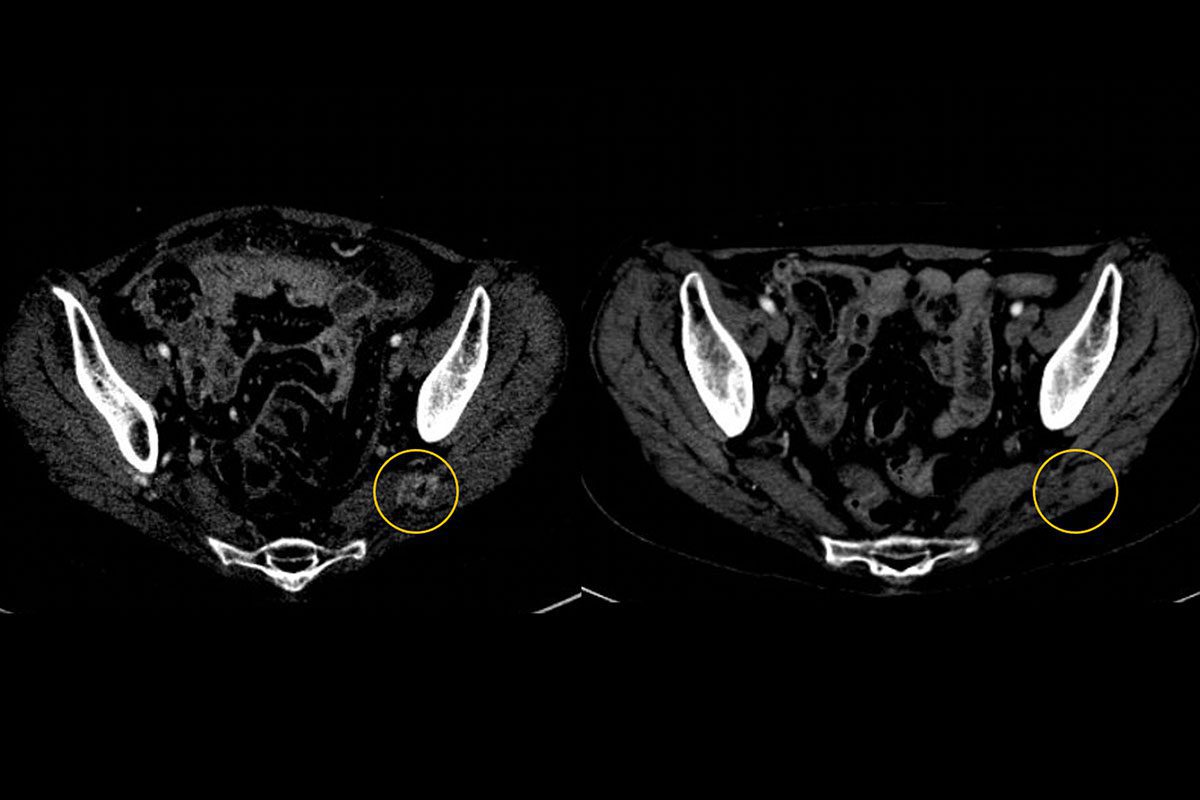
A new study led by Washington University School of Medicine in St. Louis shows that the new drug sotorasib benefits many patients with non-small-cell lung cancer with a specific mutation in the KRAS gene. In a small subset of patients, the drug eliminated all evidence of the tumors. Pictured on the left is a scan showing a lung tumor (yellow circle) that has spread to the muscle. The image on the right shows the same patient after two months of sotorasib therapy. No tumor is visible in the yellow circle on the right. (Photo by Siddhartha Devarakonda)

The effects of sotorasib lasted an average of 11 months, and the drug also showed progression-free survival — meaning the tumor did not continue growing during this time — of almost seven months. In contrast, patients with this lung cancer who receive standard therapy have an average progression-free survival of two to four months. The average overall survival for all patients in the trial was 12 ½ months.

“We are hopeful that this approach will be a new option for patients with lung cancer driven by this specific type of KRAS gene alteration,” said Govindan, who treats patients at Siteman Cancer Center at Barnes-Jewish Hospital and Washington University School of Medicine. “KRAS gene alterations have long been considered not amenable for targeted therapies. A number of combination regimens are being tested here at the Siteman Cancer Center and at other leading cancer centers around the world. This highlights work that Washington University has excelled at over the past few decades — studying the genomic alterations in tumors with the goal of identifying treatment targets. This early cancer genome research is now coming full circle to help our patients.”

Govindan and his team have led pioneering studies to define genomic alterations in lung cancer, including making key contributions to The Cancer Genome Atlas, a national effort supported by the National Institutes of Health (NIH).

“The excitement surrounding this trial result is that sotorasib is now the first targeted therapy for lung cancer patients with KRASmutations,” said co-corresponding author Vamsidhar Velcheti, MD, of NYU Langone Health. “KRAS-targeted treatments, decades in the making, are urgently needed for these patients with limited treatment options.”

About 7% of patients stopped sotorasib treatment because of severe side effects, but no side effects were life-threatening, and no patient died as a result of the treatment. The drug caused adverse events severe enough to require a reduced dose of the drug in about 22% of patients. Almost 70% of patients experienced side effects of some kind related to the drug; the most common were diarrhea, fatigue, nausea and increased liver enzyme levels, the latter an indicator of liver damage.

“Sotorasib showed clinically significant benefit without any new safety concerns in patients with this specific form of KRAS mutant lung cancer,” Govindan said. “Moving forward, our team will seek to inform the development of combination therapies featuring sotorasib and other emerging drugs, and to determine which best fit the mix of mutations in each patient’s cancer cells.”

The researchers currently are conducting a phase 3 clinical trial comparing the effectiveness of sotorasib with a chemotherapy drug called docetaxel in 345 patients who have non-small-cell lung cancer and this specific KRAS mutation.