Promising role for whole genome sequencing in guiding blood cancer treatment

For certain blood cancers, such as acute myeloid leukemia (AML) and myelodysplastic syndrome (MDS), deciding whether patients need an aggressive treatment typically hinges on a set of lab tests to identify genetic changes. Some of these tests rely on technology that was invented more than 60 years ago and has been used clinically for the past three decades.

Now, a new study from Washington University School of Medicine in St. Louis shows that whole genome sequencing is at least as accurate and often better than conventional genetic tests that help determine the treatment for a patient’s blood cancer. Genome sequencing technology continuously is decreasing in cost and recently reached a level similar to that of conventional testing. In addition, results can be returned to patients in just a few days, making whole genome sequencing a potentially viable approach for determining the best treatment regimen for a particular patient.

The study is published in the March 11 issue of The New England Journal of Medicine.

“Choosing the appropriate therapy for cancer patients often depends on identifying a range of different types of genetic changes in a patient’s tumor cells,” said senior author David H. Spencer, MD, PhD, an assistant professor of medicine and medical director of the clinical sequencing facility at the McDonnell Genome Institute. “Our study suggests whole genome sequencing is a reliable and practical approach for detecting all of the changes that are important for assessing the risk of relapse for AML and MDS patients, using a single test. This approach can be performed when conventional testing methods are unsuccessful and also could be applied to other cancers, including solid tumors. This means that patients with other cancer types eventually could benefit from rapid clinical genome sequencing.”

The study focused on patients with AML, a blood cancer that arises in the bone marrow, and MDS, a group of disorders in which the bone marrow does not make enough normal blood cells. Both often are deadly, but many patients can be treated more effectively if they receive the proper therapy.

Patients with leukemia or MDS are divided into three risk categories based on the results of genetic testing. Favorable-risk patients are usually treated with chemotherapy only. Unfavorable-risk patients often need more intensive treatment at the time of diagnosis — usually chemotherapy and a stem cell transplant (formerly called bone marrow transplant). For intermediate-risk patients, the optimal treatment approach is not as clear-cut, and their treatment regimens can vary, depending on each patient’s state of health, personal preferences, and doctors’ guidance.

For nearly three decades, patients have been assigned to these risk categories based on the way their chromosomes look under a microscope. More recently, doctors have begun to incorporate the genetic sequencing of a limited number of genes into the analysis, but such sequencing does not typically identify all of the changes that are important for guiding treatment decisions. Whole genome sequencing can identify changes in chromosomes and genes, but is rarely performed outside of research studies because of its cost and the time it can take to sequence and analyze an entire genome.

“For these types of blood cancers, conventional chromosome analysis is a critical part of the standard diagnostic work-up,” Spencer said. “We know from research studies that whole genome sequencing can detect these types of chromosomal abnormalities, so that part of our study is not terribly surprising. What we showed is that genome sequencing has reached a point that it is now practical, fast, economical, clinically feasible and accessible for the routine testing of patients.”

According to the researchers, the technical costs for sequencing in this study were about $1,900 per patient. This amount is similar to the laboratory cost of conventional genetic testing for an AML patient, which typically is $1,000 to $2,000. Actual charges for clinical use of whole genome sequencing will likely be higher because of additional costs associated with implementing such testing in a clinical laboratory setting.

In the new study, the researchers — including co-authors Eric J. Duncavage, MD, a professor of pathology & immunology; Molly C. Schroeder, PhD, an assistant professor of pathology & immunology; and Timothy J. Ley, MD, the Lewis T. and Rosalind B. Apple Professor of Medicine — evaluated blood samples from 263 patients with these blood cancers by sequencing the patients’ entire genomes, and compared these results with traditional genetic tests from the same patients. The patients were treated at Siteman Cancer Center at Barnes-Jewish Hospital and Washington University School of Medicine.

The researchers found that whole genome sequencing identified all of the same major genomic abnormalities as the conventional method — called karyotyping — and, importantly, it identified additional genetic abnormalities in 17% of the cases. Of the 263 patients, 117 were newly diagnosed patients; the other patients’ samples were analyzed retrospectively. For the newly diagnosed patients, whole genome sequencing found additional genetic information in about 25% of the cases. This new information changed the risk category for 19 patients. Generally, changing the risk category may alter patients’ treatment options. The investigators also showed that this sequencing could be done relatively quickly, returning results in an average of five days but in as few as three.

One of the drawbacks of karyotyping is that some patients have inconclusive results. Karyotyping requires a sample that contains living cells, and sometimes the sample doesn’t contain enough living cells to determine the patient’s risk category. Whole genome sequencing, in contrast, does not require living cells. It uses only a small sample of DNA from a patient’s cancer cells. In this study, the researchers found that whole genome sequencing could accurately risk stratify patients who had inconclusive results from the traditional karyotype-based analyses. According to the investigators, inconclusive results or assay failures can occur in up to 20% of AML patients.

“Inconclusive results are extremely frustrating, because we want to be able to offer patients the most appropriate treatment at the beginning of therapy. Although limited genetic testing is of value, it can miss important findings that are often relevant for therapy choices. We have worked for years to streamline whole genome sequencing so that it can be used routinely,” said Ley, who led the team at McDonnell Genome Institute that sequenced the first cancer genome (from an AML patient) just 12 years ago.

“The sequencing of whole cancer genomes, which was first performed here at Washington University, revolutionized our understanding of cancer and how it can be treated,” Schroeder said. “This project was exciting to work on because it demonstrates that whole genome sequencing has matured into an efficient, practical tool that is clinically useful for patient testing when they receive a diagnosis of AML or MDS.”

According to Spencer, most patients whose risk category changed based on the whole genome approach moved into less favorable risk categories. This suggests that whole genome sequencing may be able to more consistently identify patients in the unfavorable-risk category, allowing them to receive the most appropriate therapy up front.

The researchers will continue to evaluate whole genome sequencing for AML and MDS patients as part of clinical trials. In addition, whole genome sequencing will be offered to patients with AML and MDS treated at Siteman Cancer Center. For those who qualify, funding for the whole genome sequencing assay, called ChromoSeq, will be provided by BJC HealthCare.

“One of the most compelling aspects of this study is that the results are immediately translatable to patient care,” Duncavage said. “As a collaboration with the McDonnell Genome Institute and the Department of Pathology & Immunology, we are pleased to be launching a clinical version of this assay that will be available to patients. We are proud to be able to offer whole genome sequencing for AML and MDS patients, and we hope to extend this to other cancers very soon.”

Peter Campbell, MD, PhD, leads cancer genome sequencing studies at the Wellcome Sanger Institute in Cambridge, U.K. “We stand on the threshold of an era in which we can identify every relevant genetic change in a given patient’s cancer in real time,” said Campbell, who was not involved in this work. “This fascinating study demonstrates, first, that this technology can be implemented in real-world clinical practice, and second, that we can make more accurate choices of treatments for patients with blood cancers. Our task is now to take this blueprint for blood cancers and apply it to all cancers.”

This work was supported by the National Center for Advancing Translational Sciences (NCATS), grant number 3UL1TR002345-02S1; the Alvin J. Siteman Cancer Research Fund, grant number 19-FY19-01; and the National Cancer Institute, grant numbers R33CA217700-01 and K08CA190815. Support for procurement and annotation of human samples was provided by the Genomics of AML Program Project of the NCI, grant number P01 CA101937. Core services were provided by the Alvin J. Siteman Cancer Center Tissue Procurement Core and Biostatistics Shared Resource Core supported by an NCI Cancer Center grant, number P30CA091842. Prospective sequencing was supported in part by reagents provided by Illumina Inc. The staff at the Cytogenomics and Molecular Pathology Laboratory, GTAC, and the McDonnell Genome Institute at Washington University School of Medicine also contributed to this project.

Duncavage EJ, Schroeder MC, et al. Genome sequencing as an alternative to cytogenetics in myeloid malignancies. The New England Journal of Medicine. March 11, 2021.

Washington University School of Medicine’s 1,500 faculty physicians also are the medical staff of Barnes-Jewish and St. Louis Children’s hospitals. The School of Medicine is a leader in medical research, teaching and patient care, ranking among the top 10 medical schools in the nation by U.S. News & World Report. Through its affiliations with Barnes-Jewish and St. Louis Children’s hospitals, the School of Medicine is linked to BJC HealthCare.

Siteman Cancer Center named among top U.S. cancer centers

Siteman Cancer Center at Barnes-Jewish Hospital and Washington University School of Medicine has been named among the top cancer centers nationally by U.S. News & World Report. The recognition is part of the overall ranking of Barnes-Jewish and Washington University, which are No. 18 on the news magazine’s 2020-21 “Best Hospitals” list, released today.

Siteman was named No. 11 in cancer care, based on a review of 899 hospitals. Health-care facilities are chosen largely on patient outcomes and other data and a national survey of physicians.

In addition to their national rankings, Siteman and Barnes-Jewish each were ranked No. 1 in the St. Louis region and No. 1 in Missouri in their respective categories.

“Being recognized as one of the nation’s top cancer programs is an honor,” said Timothy J. Eberlein, MD, Siteman’s director and the Spencer T. and Ann W. Olin Distinguished Professor and head of the Department of Surgery at the School of Medicine. “More importantly, it speaks to the extraordinary care we provide to our patients, care that’s built on one of the top cancer research programs anywhere.”

Siteman’s “Best Hospitals” listing follows recent recognition by the National Cancer Institute (NCI), the principal federal agency for cancer research and training. Based on the NCI’s review of Siteman research programs, the cancer center received the agency’s highest possible rating, “Exceptional.”

Siteman is Missouri and southern Illinois’ only NCI-designated Comprehensive Cancer Center and the only cancer center in that area to be nationally ranked by U.S. News & World Report. The cancer center treats more than 75,000 patients, including 12,000 newly diagnosed patients, every year. Care is provided at six locations in the St. Louis region: on the Washington University Medical Campus and at Northwest HealthCare, part of Christian Hospital; Barnes-Jewish St. Peters Hospital; Barnes-Jewish West County Hospital; Siteman Cancer Center-South County; and Memorial Hospital East in Shiloh, Ill. Siteman also partners with Siteman Kids at St. Louis Children’s Hospital in the treatment of pediatric patients. The facilities all are affiliated with BJC HealthCare.

Barnes-Jewish Hospital and its Washington University physician partners also are part of U.S. News & World Report’s top 20 honor roll of hospitals that excel in complex specialty care.

To determine its rankings, U.S. News & World reviews 16 specialties. Rankings for 12 of them, including cancer, are based on a mathematical model combining mortality rate for particularly challenging cases, patient experience and other data, as well as on the expert opinions of specialized physicians nationally. Learn more about the methodology here.

The 2020-21 “Best Hospitals for Cancer” list is available at https://health.usnews.com/best-hospitals/rankings/cancer. Rankings also will appear in U.S. News & World Report’s “Best Hospitals 2021” guidebook, available Oct. 6.

Siteman Cancer Center director, benefactor named 2019 citizens of the year

Timothy Eberlein, Md

Two people who shared the vision to build what is now Siteman Cancer Center have been recognized as citizens of the year.

Timothy J. Eberlein, MD, Siteman’s director, and Alvin J. Siteman, the benefactor for whom the center is named, were recognized by the St. Louis Post-Dispatch after being selected by a committee of past recipients. The honor, typically given to one person, highlights the partnership the pair have developed since the cancer center’s naming in 1999.

“It has been a shared mission, a labor of love for our patients and our region,” said Eberlein, who also is the Spencer T. and Ann W. Olin Distinguished Professor and Bixby Professor and chairman of the Department of Surgery at the School of Medicine. “This honor is a recognition of the tremendous work and dedication of the many people – our Washington University physicians and researchers, nurses, staff and others – who have helped make Siteman the top-tier cancer center it is today.”

In 1999, Alvin J. and Ruth Siteman committed $35 million to the development of Siteman Cancer Center at Barnes-Jewish Hospital and Washington University School of Medicine. The commitment was the largest gift ever received by Barnes-Jewish and Washington University in support of cancer research, patient care and services, education and community outreach, and it built upon decades of research and therapeutic advances on the Washington University Medical Campus.

Since then, Siteman Cancer Center has grown to include five satellite locations, including two that recently moved into new facilities, on the campuses of Memorial Hospital East in Shiloh, Ill., and Northwest HealthCare, part of Christian Hospital, in Florissant, Mo. The other satellites are at Barnes-Jewish St. Peters Hospital in St. Charles County, Mo.; Barnes-Jewish West County Hospital in Creve Coeur, Mo.; and the Center for Advanced Medicine-South County in south St. Louis County, Mo. An inpatient tower opened on the Washington University Medical Campus in 2018.

In 2015, the National Cancer Institute (NCI) awarded Siteman an “exceptional” rating, based on a rigorous review of the cancer center’s research programs. The rating is the highest possible by the NCI, the principal federal institute that funds cancer research.

Siteman’s reach has extended beyond the St. Louis region, as well. In 2017, the cancer center launched the Siteman Cancer Network, an affiliation with regional medical centers that is aimed at improving the health of individuals and communities through cancer research, treatment and prevention. Network affiliates are: Boone Hospital Center in Columbia, Mo.; Phelps Health and its Delbert Day Cancer Institute in Rolla, Mo.; and Alton Memorial Hospital in Alton, Ill.

“Tim has worked so hard to execute what Al has provided support for,” David H. Perlmutter, MD, executive vice chancellor for medical affairs and the George and Carol Bauer Dean of Washington University School of Medicine in St. Louis, told the Post-Dispatch. “It’s the combination of philanthropy and generosity and execution of a plan, and it’s a great story for St. Louis.”

Phelps County Regional Medical Center joins Siteman Cancer Network

Phelps County Regional Medical Center and the hospital’s Delbert Day Cancer Institute have joined the Siteman Cancer Network to collaborate on efforts to reduce the impact of cancer in south-central Missouri through research, treatment and prevention.

The network is affiliated with Siteman Cancer Center at Barnes-Jewish Hospital and Washington University School of Medicine in St. Louis. Together, the institutions will provide access to cancer prevention and control strategies, and genomic and genetic testing. Patients also will have access to highly specialized treatments and technologies, including clinical trials at Siteman Cancer Center.

“Phelps County Regional Medical Center and the Delbert Day Cancer Institute are proud to partner with Siteman, a nationally recognized cancer center,” said Ed Clayton, CEO of the regional medical center. “This partnership will bring additional resources and care to cancer patients living in south-central Missouri.”

As a network member, Phelps County Regional Medical Center and the Delbert Day Cancer Institute will work with Siteman Cancer Center to assess cancer’s impact on south-central Missouri, develop a plan to lessen the overall burden, and measure results. Possibilities include a greater emphasis on reducing smoking rates and promoting cancer screenings and other healthy interventions.

Key components of the network affiliation include:

  • Navigators to help patients coordinate access to highly specialized care for complex cases, including access to clinical trials, at Siteman Cancer Center.
  • Use of genomic and genetic testing to help identify personalized treatments based on the characteristics of a patient’s disease.
  • Development of a database that incorporates such information (with patients’ permission) to improve clinical care and patient outcomes.
  • Sharing of best practices to improve patient care. Examples include sharing details regarding how nurses and radiation therapists are trained to care for oncology patients, and implementing industry-approved guidelines for screenings, genetic counseling programs and post-treatment care.
  • Implementation of cancer prevention strategies, such as the use of interactive risk-assessment tools, e-books, videos and individual coaching.
  • Development of targeted interventions to reduce cancer risk and of evaluation tools to measure success.


The network’s efforts also are expected to increase the number of people screened for cancer, which should result in earlier detection and improved health outcomes.

“Siteman Cancer Center and Phelps County Regional Medical Center – through the Siteman Cancer Network – are committed to preventing cancer and transforming patient care in the communities we serve,” said Timothy J. Eberlein, MD, director of Siteman Cancer Center and the Bixby Professor of Surgery at Washington University School of Medicine. “Together, we’re working to build a healthier Missouri.”

Through this relationship, the physicians and patients of the Delbert Day Cancer Institute will have access to prevention, diagnosis and treatment resources available through Siteman Cancer Center, with care coordinated by both centers.

“The Delbert Day Cancer Institute was founded on the idea of offering patient-centered care,” Clayton said. “This partnership with Siteman is a natural extension of that initial goal.”

Gift allows Siteman Cancer Center to establish resiliency program for nurses

A $500,000 donation to Washington University School of Medicine in St. Louis will be used to provide resiliency training for nurses at Siteman Cancer Center at Barnes-Jewish Hospital and the School of Medicine. The program will be aimed at improving care for them and, ultimately, their patients.

The gift establishes the Josh Gottheil Memorial Endowment for the Promotion of Resiliency, which will support symposia and other programs to teach nurses scientifically proven methods for maintaining good mental and emotional health so they may continue caring for patients with empathy and understanding.

The donation is from the Josh Gottheil Memorial Fund for Lymphoma Research, which raises money to support nurses who work with patients undergoing bone marrow or stem cell transplantation. Also known as Josh’s Fund, the Urbana, Illinois based nonprofit was established in memory of Gottheil, a lymphoma patient who died in 1989 at age 19.

Since 1995 Josh’s Fund has worked with the Oncology Nursing Society of America to provide educational grants to oncology nurses working in bone marrow and stem cell transplant units.

“Thanks to the generosity of donors to Josh’s Fund over the years, the fund is now in a position to find a second worthy cause,” said Diane Gottheil, Josh’s mother and the fund’s president. “At its outset we were inspired by the dedication of the nurses in the bone marrow transplant unit at Barnes-Jewish Hospital, where Josh was a patient, and we immediately thought of finding a cause specifically for nurses and their colleagues at Siteman Cancer Center. We are grateful to Siteman for identifying this important way in which nurses and their patients can directly benefit from support from Josh’s Fund.”

Resiliency training topics include:

* Compassion fatigue and lowering the effects of stress and burnout

* Providing ongoing support to staff members, recognizing signs of struggling, and using tools to manage everyday challenges

* Using storytelling to strengthen resiliency, energize one’s brain and create a sense of belonging and connectedness

* Writing letters of gratitude, learning to give oneself credit for handling adversity, and identifying ways to reduce negativity

Christi Longnecker, Siteman’s vice president of oncology services and a registered nurse, said caring for the sick, while one of the most rewarding endeavors, can take a toll emotionally.

“You get to know and care for your patients, which isn’t something you shut off at the end of your shift,” she said. “With this generous gift, Josh will be remembered and nurses will receive important support when it’s needed, so they may continue giving their patients the compassionate care they deserve.”

Family and friends remember Josh Gottheil as having a special charm and a big heart. A drummer turned rock music promotor, he established his own production company during high school to promote concerts in Champaign-Urbana. A few months into college he was diagnosed with lymphoma, a cancer of the lymph system, but while undergoing treatment his spirits were high and he continued producing rock shows. After Josh’s cancer went into remission he moved to Chicago to continue his career and had plans for concerts in Chicago and St. Louis. Unfortunately, this was not to be as the cancer returned and, despite Josh undergoing a bone marrow transplant, would take the young man’s life.

“Always remembering Josh, we remain inspired by the oncology nurses who, committed to their profession, meet the challenges of patient care,” Diane Gottheil said. “We are proud of what Josh’s Fund has accomplished to date and look forward to how the Josh Gottheil Memorial Endowment in Support of Resiliency will enable the Siteman Cancer Center to provide for their outstanding team of nurses and their colleagues and to the patients in their care.”

PECaD’s Manshack Appointed to New ACS Board of Directors

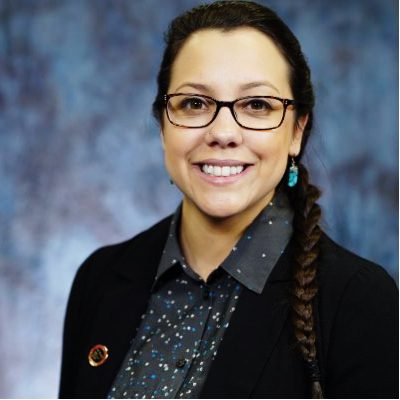
Lindsey Manshack, MPH

Lindsey Manshack, MPH, a member of Siteman Cancer Center’s Program for the Elimination of Cancer Disparities (PECaD), has been appointed to the American Cancer Society (ACS) Missouri Area Board of Directors. In this newly created position, Manshack will work with four other ACS board members to reduce cancer disparities in the Missouri region through creating awareness, fundraising and strategic planning around cancer risk reduction and disparities. Her appointment runs through 2021.

Manshack, who works as a public health research coordinator at Washington University School of Medicine in St. Louis, spends time working with underserved populations to help inform them of cancer prevention strategies and increasing screening opportunities. Recently, Manshack helped lead efforts to increase mammography screening for American Indian women. She is an enrolled member of the Choctaw-Apache Tribe of Ebarb and a Gates Millennium Scholar.

“Lindsey brings great passion to her research and advocacy for the wellbeing of St. Louis community and the American Indian community,” said Aimee James, PhD, MPH, associate professor of surgery at Washington University School of Medicine, and prevention and control research program co-leader for Siteman Cancer Center. “In this role with the American Cancer Society, she brings passion, knowledge and heart.”

PECaD, a National Institutes of Health- and Siteman Cancer Center-funded program, is a national model for eliminating local and regional disparities in cancer education, prevention and treatment. PECaD focuses on strengthening capacity to reduce cancer disparities by working with community organizations, cancer survivors, clinicians, researchers and advocates to enhance education and awareness about cancer risk, prevention, community resources and care centers. The program conducts quality-improvement initiatives and research at Washington University School of Medicine and Siteman Cancer Center, and in the St. Louis community to understand and advance ideas that will eliminate disparities. PECaD works across the region, including the St. Louis metro area, southern and central Illinois and southeast Missouri.

$5 million supports innovative breast cancer trial at Siteman

A $5 million grant from the Department of Defense will support research at Washington University School of Medicine in St. Louis aimed at improving breast cancer therapies. The study, which includes a clinical trial at Siteman Cancer Center at Barnes-Jewish Hospital and the School of Medicine, will focus on HER2-positive breast cancer. Such tumors are dotted with an overabundance of so-called HER2 receptors.

About 20 percent of women with breast cancer have HER2-positive tumors. Drugs that block HER2, such as Herceptin, have improved survival rates dramatically for these patients.

But these drugs’ use has been limited to patients who have too many copies of HER2. Recent studies led by Washington University researchers, however, have shown that other breast cancer patients with different HER2 defects may benefit from HER2 inhibitors. In these patients, mutations in HER2 can fuel cancer growth. Standard testing for HER2 positive breast cancer won’t identify patients with HER2 mutations.

“We’re figuring out how to treat breast cancer based on the mutations present in the specific patient’s tumor,” said co-principal investigator Ron Bose, MD, PhD, an associate professor of medicine and Siteman research member. “We’ve developed a diagnostic test for mutations in HER2 that cause overactive signaling, and we have a good drug for patients with these mutations in their tumors. These new diagnostic and therapeutic tools may let us identify more women with HER2-driven cancers and treat them with HER2 inhibitors.”

Based on data from 2017, Bose and his colleagues estimate that about 4,000 women have metastatic breast cancer with HER2 mutations and could potentially benefit from this strategy. Drug combinations targeting tumor proteins are generally less toxic than standard chemotherapy, which is not very effective in controlling metastatic cancer and is the only current treatment option for these patients.

The clinical trial at Siteman will investigate a HER2 blocker called neratinib. Trial participants will be patients with metastatic breast tumors that have HER2 mutations and are estrogen-receptor positive, meaning these tumors also are fueled by estrogen. Because these tumors are fed by two fuel sources, participants will receive neratinib to block HER2 and fulvestrant to attack the estrogen receptor.

“In a past clinical trial, we tested neratinib alone, and we saw that about 30 percent of patients had a positive therapeutic benefit from the drug,” said co-principle investigator Cynthia X. Ma, MD, PhD, an associate professor of medicine and Siteman research member. “Now, we want to see whether adding fulvestrant will improve that outcome and help more patients.”

To more fully understand how patients respond to the drugs, the researchers will implant the patients’ tumors into mice that then will receive the same treatment regimens. Additional drugs also will be tested in these mouse models to see if other treatment combinations suggest promising directions for future clinical trials.

The mouse models will provide insight into why some tumors become resistant to neratinib therapy. The scientists will perform genome sequencing and protein analysis on these tumors, seeking clues to how some of them develop the ability to evade drugs that had been lethal to them initially.

Collaborating sites for the clinical trial include Dana-Farber Cancer Institute at Harvard Medical School and Baylor College of Medicine.

This work is supported by the U.S. Department of Defense, grant numbers 12473122 and 12473075.