

Donor provides gift for blood cancer research

Anita Palmer Corbin learned to meet challenges head-on when she was diagnosed with Type 1 diabetes at age 10 in 1964. Her mother first noticed the symptoms, and after blood tests confirmed a problem, she was admitted to Cardinal Glennon Children’s Hospital in St. Louis, located one hour north of her home in Ste. Genevieve, Missouri. No visitors were allowed except immediate family members, and since both of her parents worked, she was left with few visitors for nearly two weeks while doctors brought her diabetes under control.

From the time of her diagnosis, Anita, who died in 2023, was told she had a disability that would prevent her from living a full life. On the contrary, she never allowed the disease to stand in her way. She enjoyed a more than 20-year career at St. Louis-based Ralston Purina Co., which became Nestlé Purina PetCare after merging with Nestlé in 2011, and became the company’s youngest and first female officer. In her retirement, Anita traveled the world, riding elephants in Thailand, walking with lions in South Africa, and snorkeling the Great Barrier Reef in Australia.

Anita wanted to create a permanent legacy to honor her medical journey and the experiences of family members who faced serious illnesses. Now, an $11 million gift from her trust, which is expected to grow in the coming years, is helping advance critical work at Washington University School of Medicine. The gift established three endowed funds to drive research and develop new treatments for Type 1 diabetes, leukemia, and lymphoma. The funds augment three corresponding spendable funds created by Corbin in 2022.

Anita hoped to inspire all individuals battling a disease to live boldly, says her husband, Daniel Corbin. “She refused to let her diagnosis define her life and didn’t accept it as a limitation to what she could accomplish,” he says. “Every time she talked with other people facing health challenges, she would tell them, ‘You can do anything you want.’ She encouraged them to take ownership of their disease so it didn’t own them. She left a lasting impression on countless lives.”

Innovative treatments for blood cancers

Anita’s gift is also fueling research at the Alvin J. Siteman Cancer Center, based at Barnes-Jewish Hospital and WashU Medicine. The gift established two endowed funds at the cancer center — $7 million for leukemia research and $1.25 million for lymphoma research.

The Trevor Stuart Palmer Memorial Leukemia Endowed Fund pays tribute to Anita’s nephew, who died from the disease shortly after his diagnosis at age 26. She believed if Trevor had received care at a world-class cancer center like Siteman, he would have been accurately diagnosed earlier and obtained lifesaving treatment.

Payout from the fund will further efforts that are part of the School of Medicine’s Specialized Program of Research Excellence (SPORE) in leukemia, a prestigious grant from the National Cancer Institute. The medical school’s SPORE in leukemia is one of only two such programs in the nation.

The leukemia fund currently supports work with patients who have acute myeloid leukemia and myelodysplastic syndrome with mutations in an important gene called TP53. Outcomes for patients with these types of blood cancers are typically poor, with survival rates of less than a year. Researchers in the lab of Dan Link, MD, professor of medicine and principal investigator for WashU Medicine’s leukemia SPORE, have identified a promising new drug combination that selectively kills leukemia cells with TP53 mutations. A clinical trial based on their observations is in development.

The Daniel E. Corbin Lymphoma Research Endowed Fund created by Anita’s gift recognizes the many years of outstanding care Daniel received at Siteman. “When I initially visited another facility, the providers treated many different types of cancer in one room,” he says. “Siteman was a godsend because my entire care team specialized in lymphoma, and I felt reassured that each person was an expert who could solve any problem that might come up.”

This year, the fund’s resources are bolstering efforts led by John DiPersio, MD, PhD, professor of medicine, to improve an immunotherapy technique called CAR-T cell therapy for individuals with a fast-growing non-Hodgkin lymphoma. Investigators are testing different combinations of cytokines, proteins that help activate the immune system, to enhance the ability of CAR-T cells to kill lymphoma cells.


“Siteman is at the forefront of advancing groundbreaking discoveries that revolutionize the way we understand and treat blood cancers,” says cancer center director Timothy Eberlein, MD, who also serves as the Spencer T. and Ann W. Olin Distinguished Professor and senior associate dean for cancer programs at WashU Medicine and BJC HealthCare. “It is through partnerships with forward-thinking philanthropists like Anita that visionary ideas come to life. Investments in our research have the power to save lives and set new standards of care worldwide.”

A remarkable life
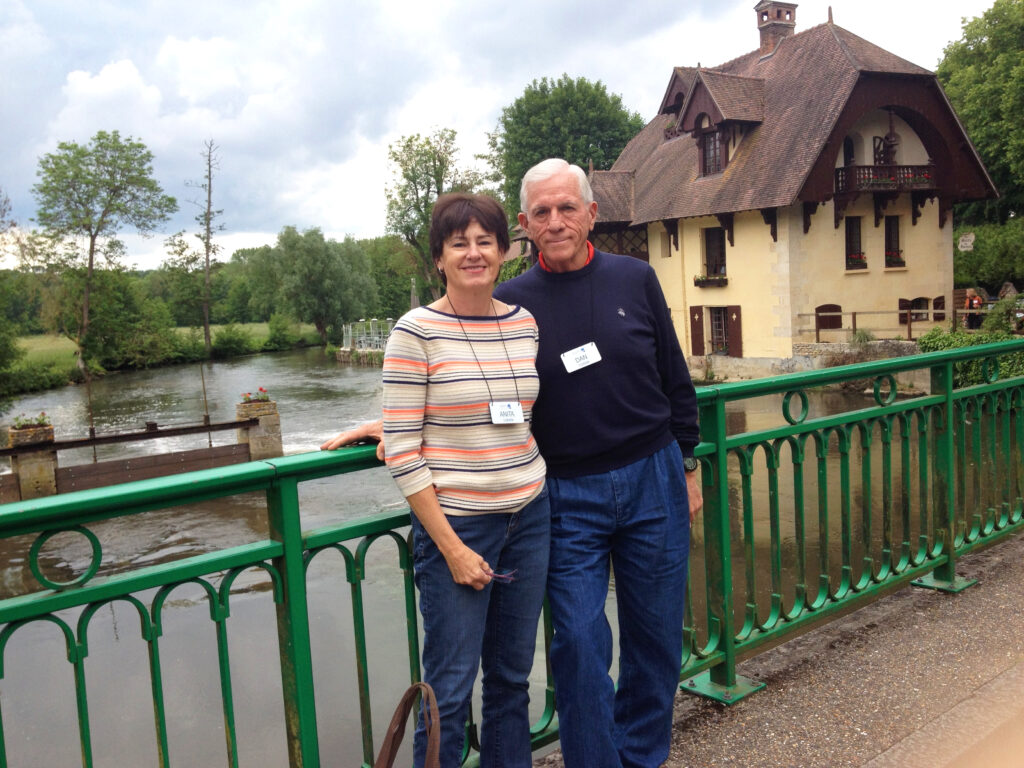
a portrait of a wife and husband over a bridge with a river behind them
Anita Palmer Corbin shared an adventurous spirit with her husband, Dan Corbin. The couple’s many travels included a visit to southern England. (Courtesy photo)

Anita grew up the youngest of four children and the only daughter. As a child, she ran home from school to finish her homework and chores so she had time to play outside. Daniel says her motto was always work first, play second.

Though her family thought it would be difficult for her to go to college, Anita earned her undergraduate degree in accounting from the University of Missouri-St. Louis and received a master’s degree in business administration with a focus on finance from Saint Louis University.

Anita began her career with Ernst and Young LLP and then joined Ralston Purina in 1979 as a senior accountant. She held several positions of increasing responsibility and was named corporate vice president and controller of the company in 1994.

She met Daniel at Ralston Purina, though they did not begin dating until years later after their first marriages had ended. Together, the couple enjoyed logging miles on their motorcycles. Anita was also an avid bicyclist, covering ground from the Blue Ridge Mountains to Florida beaches. Still, she experienced lifelong complications from diabetes, which contributed to her death.

Today, Daniel wears a silver necklace engraved with Anita’s index fingerprint and the inscription “The love of my life, I am a better man and person because of you.” The engraving shows dozens of scars from where she pricked her finger to test her blood.  “Diabetes is a terrible disease,” he says. “If Anita’s gift to WashU Medicine spares even one person from experiencing what she went through, her struggles will have been worthwhile.”

DiPersio Honored with National AACR Research Award

American Association for Cancer Research highlights physician-scientist’s pioneering advances in leukemia biology, stem cell transplantation and cellular immunotherapy

John F. DiPersio, MD, PhD, a pioneering WashU Medicine physician-scientist at Siteman Cancer Center at Barnes-Jewish Hospital and WashU Medicine, will be recognized for his groundbreaking contributions to science at the American Association for Cancer Research (AACR) Annual Meeting 2026 in San Diego.

The AACR will present DiPersio with its Award for Outstanding Achievement in Blood Cancer Research, honoring his decades of innovation that have transformed the understanding and treatment of hematologic malignancies.


Nationally renowned for his work in the lab and clinic, DiPersio specializes in bone marrow transplantation and treats patients diagnosed with leukemia and myelodysplastic syndrome (MDS) at Siteman Cancer Center. As a researcher, he is recognized for pioneering advances in leukemia science and stem cell biology.

“It is a tremendous honor to be recognized by AACR,” said DiPersio, the Virginia E. and Sam J. Golman Endowed Professorship of Medicine, Pathology & Immunology and director of the Center for Gene and Cellular Immunotherapy at WashU Medicine and Siteman. “This award reflects the collaborative work of many colleagues dedicated to improving the lives of patients with blood cancers.”

The award highlights DiPersio’s essential contributions to the development of the hematopoietic stem cell-mobilizing agents plerixafor, known commercially as Mozobil, and motixafortide, also known as Aphexda. His research identifying JAK 1/2 signaling in graft-versus-host disease led to the identification and approval of JAK inhibitors, including ruxolitinib, known commercially as Jakafi.

In addition, DiPersio’s discoveries defining clonal evolution in acute myeloid leukemia (AML) have transformed the understanding of cancer relapse and have advanced novel CAR T and CAR-iNKT (invariant natural killer T) therapies for AML and multiple myeloma, expanding treatment options for patients with difficult-to-treat cancers.

In March, the U.S. Food and Drug Administration (FDA) granted Breakthrough Therapy designation for an innovative immunotherapy he led the development of for rare and aggressive types of blood cancer. The therapy — called WU-CART-007, also known as soficabtagene geleucel, or sofi-cel — targets T-cell acute lymphoblastic leukemia (T-ALL) and T-cell lymphoblastic lymphoma (T-LL) in patients who haven’t responded to earlier treatments or who have relapsed.

In the clinic, DiPersio is also known for his bedside manner and care and concern for those he treats.

“Dr. DiPersio is an amazing doctor,” one patient said on the clinician’s WashU Physicians profile page. “I cannot say enough good things about him. I consider myself blessed to have him as my doctor.”

In 2014, DiPersio received the AACR-Joseph H. Burchenal Memorial Award for Outstanding Achievement in Clinical Cancer Research.

This year’s AACR award presentation will coincide with DiPersio’s lecture at the annual meeting, which runs from April 17–22. His talk, titled “Killing the bad without the good: CART for T-cell malignancies,” is at 4:15 p.m. PT in Room 30 in the upper level of the San Diego Convention Center.

FDA Breakthrough Therapy Designation Reflects Practice-Changing Trends Only at Siteman

Recognition follows strong early clinical results for a novel off-the-shelf CAR T therapy targeting rare and aggressive T-cell malignancies

A novel off-the-shelf CAR T-cell therapy pioneered at Siteman Cancer Center at Barnes-Jewish Hospital and WashU Medicine is gaining national recognition after delivering striking clinical results in patients with rare and aggressive blood cancers.

The FDA has granted Breakthrough Therapy Designation to WU-CART-007, an allogeneic anti-CD7 CAR T-cell therapy developed by WashU Medicine researchers. In early global trials, 73% of adults and adolescents with relapsed or refractory (R/R) T cell acute lymphoblastic leukemia or T cell lymphoblastic lymphoma (T-ALL/LBL) achieved full remission following treatment — an outcome that positions the therapy as a potential gamechanger in T-cell malignancies.

“Relapsed T-cell leukemias and lymphomas represent one of the most challenging areas in hematologic oncology,” said oncologist John DiPersio, MD, PhD, director of the Center for Gene and Cellular Immunotherapy at WashU Medicine and an internationally recognized cell therapy leader at Siteman Cancer Center. “We are leading transformative advances for patients with these rare and aggressive cancers. Developing an off-the-shelf CAR T platform that can induce high remission rates in this population reflects the translational depth and cellular therapy infrastructure we’ve built at Siteman.”

DiPersio and Matthew Cooper, PhD, developed the therapy — manufactured using an off-the-shelf approach from healthy donors — to target CD7+ malignancies. The two founded the biotech company Wugen in 2018 to advance the research. Further clinical trials are underway in the U.S., Europe, Asia and Australia, including at Siteman Cancer Center and Siteman Kids at St. Louis Children’s Hospital.

In reviewing results from earlier clinical trials in children, researchers at Siteman Kids noted that WU-CART-007 (also known as soficabtagene geleucel, or sofi-cel) could be a gamechanger if the therapy continues to move almost all patients from disease-state to remission, thus enabling patients to undergo stem cell transplantation.

Learn more about:

‘An Eco-System of Innovation and Excellence’

The rapid advance of WU-CART-007 is just the latest example of what Timothy J. Eberlein, MD, director of Siteman Cancer Center, says arises out of a robust eco-system of innovation, collaboration and excellence in cancer research at WashU Medicine.

Siteman is known internationally for its basic and translational research efforts and is one of only a few institutions to receive three prestigious Specialized Program of Research Excellence (SPORE) grants from the National Cancer Institute (NCI), for leukemia, endometrial and pancreatic cancer research.

Blood Cancer United, formerly known as the Leukemia & Lymphoma Society, also has awarded scientists at Siteman a Specialized Center of Research (SCOR) grant for lymphoma research. Such grants are specifically designed to accelerate promising translational research into patient care.

“We are committed to continually advancing treatments for cancer and broadening options for patients,” Eberlein said. “Toward that goal, we have initiated several home-grown clinical trials that have changed the course of treatment for many cancers. Our depth and breadth of oncology research is wide, and our expertise is the result of innovation, dedication and multidisciplinary cross-collaboration that occurs throughout our center.”

Other examples of comprehensive, specialized programs at Siteman include the:

Translational Research Highlights

In addition to the latest breakthrough in leukemia and lymphoma research and care, examples of other research efforts that have changed practice guidelines include:

  • New Standard of Care Established for Locally Advanced Head and Neck Cancers — In the first change in standard-of-care therapy in more than 20 years, the FDA approved the use of the immunotherapy drug pembrolizumab (Keytruda) for treatment of resectable locally advanced head and neck squamous cell carcinoma (HNSCC) in adults. The approval, announced in mid-2025, came after a clinical trial initiated at Siteman in 2013. That trial and later ones, including an international trial, demonstrated greater tumor shrinkage prior to surgery and longer survival rates when immunotherapy was added. “It’s exciting to see our ideas move toward clinical practice with such impressive and potentially life-changing results,” said Douglas Adkins, MD, co-director of the Head and Neck Tumor Center at Siteman, who co-led the clinical trials at Siteman and elsewhere.
  • Addition of Brentuximab Vedotin for Relapsed Diffuse Large B-Cell Lymphoma Results in Statistically Significant Survival Benefit — With approximately 40% of patients diagnosed with diffuse large B-cell lymphoma (DLBCL) having relapsed or refractory disease, researchers at Siteman, led by Nancy Bartlett, MD, found in the ECHELON-Phase Three clinical trial that the use of an antibody-drug conjugate brentuximab vedotin, when combined with either lenalidomide or rituximab, was not only safe but also demonstrated improved survival benefit in patients with R/R DLBCL.
  • Dostarlimab Plus Chemo for Primary Advanced or Recurrent Endometrial Cancer — Matthew Powell, MD, co-led national studies that found adding immune checkpoint inhibitors to standard therapy for endometrial cancer improves outcomes for many patients, with an average increase in overall survival of 31%.
  • T-cell Immunotherapy Effective in Treating Rare Soft Tissue Cancers — Siteman Cancer Center’s Sarcoma program was a major clinical trial site for this study, which found that T-cell immunotherapy, specifically the drug afamitresgene autoleucel, or afami-cel, was effective and generated long-term responses in patients with rare soft tissue cancers.
  • Sotorasib Approved as Targeted Therapy for Patients with Specific Type of Non-Small-Cell Lung Cancer — Following clinical trials at Siteman and globally, the FDA approved sotorasib for patients with non-small-cell lung cancer whose tumors express a G12C mutation in the KRAS gene and who have already undergone previous treatment. Ramaswamy Govindan, MD, who led the study, noted that the drug targeted the most common mutation, reduced tumor sizes, and improved overall survival rates.
  • Medicare Approves Whole-Genome Test for Blood Cancers — A test for acute myeloid leukemia (AML) or myelodysplastic syndrome (MDS) developed at Siteman was the first whole-genome sequencing test for cancer to be approved for reimbursement by the Centers for Medicare & Medicaid Services. Called ChromoSeq, the test is now routinely used by oncologists to guide treatment decisions for patients with blood cancers.

“At Siteman, we have built one of the world’s leading cellular immunotherapy programs focused on developing next-generation treatments for rare and refractory cancers,” Eberlein said. “Many of our most impactful cell therapy trials are investigator-initiated and originated here, reflecting a translational infrastructure designed to bring innovative therapies to patients with the most aggressive and rarest cancers.”