Thyroid Cancer | Risk & Prevention

What Causes Thyroid Cancer? 

Like most cancers, there isn’t a clear cause of thyroid cancer. Researchers are still studying links between risks and the disease. Many patients with thyroid cancer didn’t even suspect something was wrong when they were diagnosed.

Who Is at Risk of Retting Thyroid Cancer?

When it comes to getting cancer, some people are more at likely to get it than others. Even if you have some risk factors, it does not mean you will get thyroid cancer in your life. 

Thyroid cancer risks can increase for a few reasons:

  • Age: Adults 25-65 years old
  • Environment: Exposure to radiation
  • Health history:
    • Radiation treatment during infancy or childhood
    • An enlarged thyroid (goiter)
    • Having multiple endocrine neoplasia (MEN, an inherited disorder)
  • Family history: Thyroid disease in your immediate or extended family
  • Gender: Women (more than men)  

How Can I Lower My Risk of Thyroid Cancer?

Unfortunately, most thyroid cancer risks are things you just can’t change about yourself,  like age or gender. But if you have a number of risk factors and are worried, it’s time to talk with your doctor.


If you had exposure to radiation as a child, your doctor will already be monitoring you. But if you have new information like family health history or an enlarged thyroid, make an appointment. Even if you can’t lower your risks, you have options. Your physician can follow you over time and request specific tests to catch any early signs or symptoms.

Start Here. Get the Care You Need.

Our Siteman care coordinators – oncology-trained nurses who help with scheduling, finding the right specialist, and guidance – can help you through the process.

Call us directly or submit a form, and we will call you back.

Thyroid Cancer | Team & Location

Thyroid Cancer Specialist Team

Medical Oncologists
Radiation Oncologists
Surgeons
Endocrinologists
Radiologists/Nuclear Medicine
Psychologist

Prepare for a Visit

Thyroid Cancer | Treatment & Support

What Treatment Could I Have for My Thyroid Cancer?

At Siteman, we offer many specialized treatments for thyroid cancer, including surgery and radiation therapy. Your doctor will decide to use them alone or combine them to get the best results for you. Your cancer is unique, so your treatment should be too.  


After we have a precise diagnosis and have evaluated your case, your doctor will create a treatment plan designed specifically for you. This plan may combine standard treatments with new therapies that are only available through clinical trials. That’s why getting an accurate diagnosis matters so much. 

Is Surgery Ever Used for Thyroid Cancer?

If you have thyroid cancer or non-cancerous thyroid lumps, you may need surgery as part of your treatment.

The surgery can include:

  • Removing parts of your thyroid
  • Taking a biopsy  
  • Removing nearby lymph nodes  

We decide on the surgical approach based on your individual case. Some patients may be eligible for a scarless thyroidectomy. Our surgeons are some of the only physicians who offer this trans-oral surgical approach in the U.S.


Our head and neck surgeons have advanced training and are experts at protecting your vocal cords and vocal nerves when they remove part or all of your thyroid gland. Before your surgery, a team of experts will meet with you to discuss your surgical plan. They’ll explain whether you’re eligible for new techniques like scarless thyroidectomy, what side effects you might experience, and how we’ll care for you after surgery.

Types of Thyroid Surgery

  • Lobectomy: We remove only the side of the thyroid where we found the cancer. We  may also remove lymph nodes nearby and test them for cancer. 
  • Near-total thyroidectomy: We remove most of your thyroid but leave a small part.
  • Scarless thyroidectomy: We remove part or all of your thyroid or parathyroid  through your mouth (transoral) instead of through your neck. The surgeon makes  three small cuts in the lower part of your mouth and uses special instruments to  perform the surgery. Since the scars are inside your mouth where others can’t see  them, we call this “scarless” surgery. 
  • Total thyroidectomy: We remove your entire thyroid. 
  • Lymph node dissection: We remove lymph nodes in your neck that contain cancer. 

Whatever kind of surgery you have, you will need follow-up care afterwards for monitoring. The thyroid creates important hormones in the body, so you will need to replace them with a supplement.


Synthetic hormone pills work to help your body function like it did before cancer. An added benefit of these supplements is cancer prevention. The right level of thyroid hormones can  stop cancer cells from returning and growing.

When Do Patients with Thyroid Cancer Receive Radiation Therapy?

Radiation therapy plays an important role in treating thyroid cancer. It is often used with surgery to cure patients of the disease. Siteman experts, called radiation oncologists, evaluate patients’ diagnoses to decide what kind of radiation therapy could be best for their kind of thyroid cancer, their cancer stage (1-4), and their symptoms.


One of the earliest cancer treatments used radioactive iodine to deliver small amounts of radiation directly into the gland. There have been many breakthroughs since, but it remains an effective way to combat cancer that has not spread outside of the thyroid gland.

Radioactive Iodine Therapy

Surgery is just one part of most treatment plans. After we remove part or all of your thyroid gland, many patients work with an expert called a radiation oncologist. This doctor uses radioactive iodine to kill any remaining cancer cells.


Radioactive iodine therapy with I-131 can be a pill or a liquid you swallow. The thyroid naturally absorbs iodine, so the radioactive iodine collects in any thyroid tissue left in your body after surgery and kills cancer cells. This is an effective treatment for most kinds of thyroid cancer, but not medullary thyroid cancer.

Intensity Modulated Radiation Therapy (IMRT)

IMRT is an advanced type of external beam radiation therapy. IMRT lets our radiation specialists shape the radiation to match the exact three-dimensional form of your tumor.  This makes IMRT ideal for treating irregularly shaped tumors.


With IMRT, our specialists can also adjust the amount of radiation in each beam aimed at the tumor. They can turn the radiation on and off during treatments. This precise control means there is less radiation in your body and less radiation exposure to healthy tissue.  Siteman often uses IMRT for head and neck cancers, including thyroid cancer. This can reduce the negative side effects of treatment.

Theranostics

Theranostics combines diagnosis and therapy. It uses special medicines called radiopharmaceuticals to create images and deliver targeted radiation therapy to cancer cells. This targeted approach to cancer care combines:

  • High-resolution imaging from PET or SPECT scans with
  • Highly specialized, radioactive medicines that target cancer cells

Each radiopharmaceutical works differently in patients, but all aim to maintain your quality of life during treatment. Theranostics can reduce or even reverse negative side effects like pain, low energy, and hormone imbalances. We usually provide these therapies on an outpatient basis under a physician’s supervision, so you can go home after your treatment. 

Targeted Therapy

Targeted therapy is a treatment we use at Siteman to slow cancer growth. Not every patient can have surgery. And others have cancer that has spread to other parts of the body and metastasized. For these patients, we use tyrosine kinase inhibitors to slow cancer growth. 


Tyrosine kinase inhibitors are an FDA-approved drug that blocks the enzymes that thyroid cancer cells need to keep growing. This drug stops tyrosine kinase and starves the cancer cells, so it can’t cause more damage in the body.

Hormone Therapy

Oral hormones can stop cancer cells from growing. When we treat thyroid cancer, we can use hormones to stop your body from making other hormones that might help cancer cells grow. We also use hormone supplements to replace what your thyroid gland made after we remove your thyroid gland.

Radiofrequency Ablation

Radiofrequency ablation is a non-surgical treatment that uses radiofrequency waves to overwhelm and kill cells inside a thyroid nodule. Radiofrequency ablation (RFA) is used for patients who have non-cancerous nodules or have an early-stage cancer. Because RFA  can be done while you are awake, it can be a good option for patients who can’t undergo surgery.


For an RFA procedure, a WashU Medicine head and neck surgeon uses local anesthesia to numb the area. Then they insert a probe that looks like a large needle into the mass of cells. Intense waves make direct contact with tumor cells. As these cells die, your body naturally removes them. The whole process shrinks the nodules over time. Our physicians monitor all patients who have had RFA very closely. They watch and wait to see if the cells return.

Will Clinical Trials Be Part of My Treatment Plan?

As a research medical center, Siteman Cancer Center can offer you access to many clinical trials. Trials are a kind of research that tests new therapies as researchers develop them. Many WashU Medicine physician-researchers lead these trials. They can focus on finding breakthroughs in medical, surgical, and radiation treatments. We encourage all patients to explore their options with clinical trials. If your doctor hasn’t mentioned them yet, ask how clinical trials might help treat your cancer. 

Your Second Opinion at Siteman 

Siteman wants to be your first choice for cancer care, but that might not always be possible. If you have received a cancer diagnosis, started care somewhere else, or are a physician seeking specialized care for your patient, ask us about a second opinion. You can start the process. To make it easy, our care coordinators guide scheduling for yourself or your patient.   

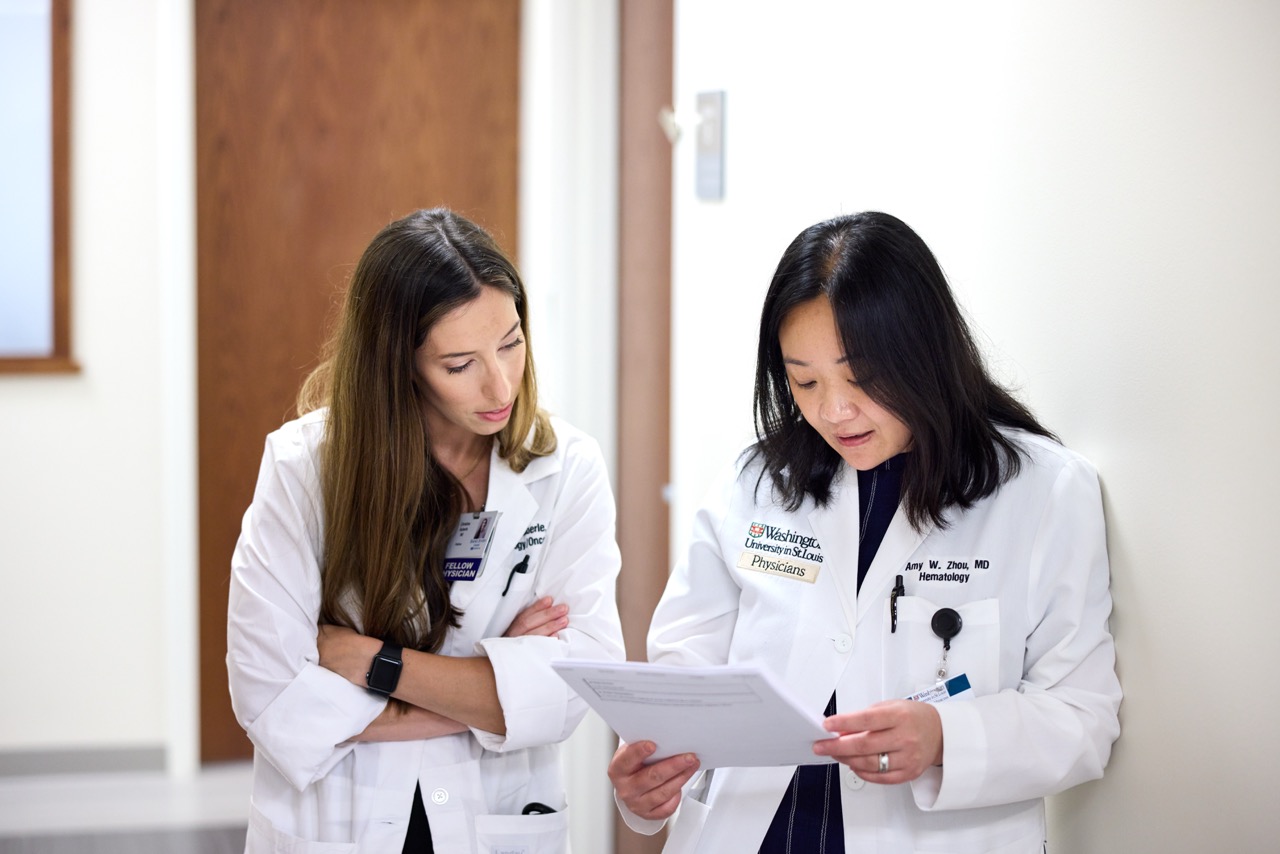
Two physicians converse while reviewing a patient file

Thyroid Cancer | Diagnosing

Many people who learn they have thyroid cancer are surprised. They may have gone in for a  routine checkup or for another reason. This is called an “incidental” diagnosis because the cancer symptoms weren’t why the person went to the doctor. Lab work can be the first sign that something is wrong.

What is the first step in a thyroid cancer diagnosis?

A thyroid cancer diagnosis can be a shock to patients. They may have felt just fine and didn’t suspect anything at all. A routine checkup is often the first step in a thyroid cancer diagnosis. An annual exam in lab work often includes a blood test called a thyroid function test.


A thyroid function test is a blood test that measures thyroid-stimulating hormone (TSH). The thyroid-stimulating hormone shows how well the pituitary gland and the thyroid are working together. The pituitary gland tells the thyroid how much TSH to make. When hormones are too high or too low, there is an issue.


Just because TSH hormones are abnormal does not mean you have thyroid cancer. There are many common thyroid problems. That is why TSH hormones are checked frequently at exams.


Remember that any cancer diagnosis needs multiple tests. If your levels are off, your doctor will order more testing to learn what is going on.   

Common Symptoms of Patients Have

There are very few early symptoms of thyroid cancer. Sometimes a patient doesn’t have any signs that something is wrong. Even more advanced thyroid cancer symptoms can be easy to ignore. Those can seem like a cold or another common illness.


The amount of time you don’t feel well is an important detail to pay attention to. Make an appointment if you have symptoms for two weeks and they don’t go away.


Common thyroid cancer symptoms include:

  • A voice change like hoarseness, lost voice (laryngitis) 
  • Difficulty swallowing 
  • Neck pain 
  • A swelling in the neck 
  • Throat pain
  • A lump in the throat you can feel with your hands

Why Patients Choose Siteman for Their Cancer Diagnosis

Our patients often pick Siteman Cancer Center because we have earned their trust through our reputation. They know we will provide them with expert, cutting-edge care.


Siteman is the only NCI-designated cancer center in Missouri. That means our physicians and experts have the experience, technology, and research focus that you can’t find at other cancer centers.


Our physicians use specialized testing techniques and technology for a precise diagnosis that may include:

  • Lab work and blood tests 
  • Invasive tests, such as a biopsy
  • Imaging and scans like ultrasound, PET, CT, and MRI 

An accurate diagnosis is the foundation for any cancer treatment. Here, our WashU Medicine physicians can learn exactly what kind of thyroid cancer you have and create a unique treatment plan for you.

What to Expect During a Diagnosis

Siteman Cancer Center patients can expect to be an important part of their own diagnosis. This starts at your first appointment as part of a physical exam. 


1) Share your symptoms and history
Your physician will ask about your lifestyle and symptoms to learn how your cancer impacts you. We want to know about your family history and your past health history. This information can help experts understand what kind of treatments and support you need to help you feel your best.


2) Lab work and blood tests
If you’ve been to the doctor before, you are probably familiar with having your blood taken.  A nurse or other technician uses a needle to remove a few tubes of blood from a vein. This quick test can say a lot about your overall health.


An expert, called a pathologist, looks at your blood under a microscope. They can see the cells that are and are not there, how many there are, their shape, and more. What they see tells a lot about how well your cells, hormones, and whole body are working. A pathologist is trained to identify anything that is out of the ordinary.


Your doctor may order one or more of these blood tests:

  • Carcinoembryonic antigen (CEA): Carcinoembryonic antigen is a protein in the body. It is common for people with MTC to have high levels of CEA in their blood.
  • Calcitonin: Calcitonin is a hormone that the thyroid makes that helps control how the body uses calcium. These cells can develop into medullary thyroid cancer (MTC).
  • Thyroid hormone test for T3 and T4: T3 and T4 are the main hormones made by the  thyroid gland. These hormone levels can show how well the thyroid gland is functioning. 
  • Thyroid-stimulating hormone (TSH): Testing blood levels of thyroid-stimulating hormone can check the overall activity of your thyroid gland, or if thyroid hormone replacement therapy after surgery is working for you. 
  • Thyroglobulin: Thyroglobulin is a protein that the thyroid gland makes. This test helps track how much of the protein is in the body, showing how effective surgery was.  

Advanced and Invasive tests 

Doctors may send you to get a lymph node biopsy. A biopsy is a procedure where an expert takes a small sample of tissue to be studied under a microscope. For a lymph node biopsy, you will have local anesthesia to numb the area. Then, a needle is put into the lymph node. A pathologist will look at the tissue under a microscope to check for cancer cells.

Imaging Tests

CT Scan (CAT Scan): A CT scan takes detailed X-ray pictures of your body from different angles. Sometimes a special dye is injected to make organs show clearly in the images.  But if your doctor thinks you might have cancer, they won’t use the dye. It could interfere with treatment you might need later.


MRI (Magnetic Resonance Imaging): An MRI uses magnets and radio waves to create detailed pictures inside of your body. This imaging doesn’t use radiation or needles.


PET-CT Scan: A PET-CT scan uses a small amount of radioactive sugar to make cancer cells visible. An imaging specialist injects the sugar into your vein and then a CT scan is done at the same time. Because cancer cells use more sugar than normal cells, they light up brighter on the scan. This test is only used in very specific situations for thyroid cancer. 


Thyroid Radioiodine Scan: A thyroid radioiodine scan has a few different steps. First, you swallow a small amount of radioactive iodine, which your thyroid naturally absorbs. Then,  an imaging specialist places a special camera near your neck to see where the iodine goes. This test can find thyroid cancer and check if any cancer remains after treatment.


Ultrasound: An ultrasound uses sound waves to create pictures of your thyroid. An imaging specialist takes a small wand-like device and gently presses it over your neck. The sound waves bounce back to create images on a screen. This test can show if a thyroid lump is solid or filled with fluid, how many lumps you have, their sizes, and whether nearby lymph  nodes are swollen

Staging Thyroid Cancer

Staging is an important part of a cancer diagnosis. It tells us how much cancer has spread in the body. There are four stages for thyroid cancer: 1 (I), 2 (II), 3 (III), and 4 (IV). Stage 1 is the earliest. Stage 4 is the most advanced.


Siteman experts look at all of your testing and your overall health to decide what stage your thyroid cancer is. Staging helps decide what kind of treatment is best for your situation.


Papillary, follicular, and medullary thyroid cancers can each be Stages 1-4. Depending on how widespread the disease is. Your age can also become a factor in staging.


Anaplastic thyroid cancer is always considered Stage 4 because of its aggressiveness, and because it has usually spread when it is discovered.  

Chance of Recovery (Prognosis)

Many kinds of thyroid cancer are treatable. Even cancers at an advanced stage can be cured. Your chance of recovery (prognosis) is something your physician will discuss with you. It depends on different factors like:

  • Tumor size 
  • Tumor growth and whether it has spread 
  • The type of thyroid cancer (based on how the cancer cells look under a microscope)
  • If your cancer has come back (recurred) after treatment
Talk with a Care Coordinator

Nurses at Siteman answer every call and every form. Speak with them directly 8:00 am to 4:30 pm CT Monday- Friday for guidance on appointments, second opinions, and referrals.


Thyroid Cancer | Care at Siteman Cancer Center

The thyroid is a gland that is in the front of your neck. If it is a normal size, you can’t feel it. But it rests on both sides of your windpipe (trachea). 


Even though it is small, the thyroid gland has a large role in your overall health. It plays an important part in metabolism and weight, heart health, body temperature, and more. Thyroid issues are common in adults. So physicians often order lab work to test their hormone levels as part of an annual checkup.    

How Does Thyroid Cancer Develop?  

Like most cancers, if the cells in the thyroid start to grow uncontrollably, it is considered a cancer. These cells form a lump in the gland. These lumps are called nodules. Most nodules in the thyroid are not cancerous (benign) and can cause other issues. About 1 in 10 of these nodules are cancerous.  


Most patients who get diagnosed with thyroid cancer do not have a nodule that is large enough to feel with their hands. Many also don’t have symptoms. A checkup each year is helpful and important for finding this disease early.


WashU Medicine physicians at Siteman treat both cancerous and non-cancerous thyroid nodules. Our team of experts includes endocrinologists, head and neck surgeons, medical and radiation oncologists, radiologists, and pathologists. 

Start Here. Get the Care You Need.

Our Siteman care coordinators – oncology-trained nurses who help with scheduling, finding the right specialist, and guidance – can help you through the process.

Call us directly or submit a form, and we will call you back.

Kinds of Thyroid Cancer

Siteman experts have experience treating every type of thyroid cancer. Some of these kinds include:


  • Papillary thyroid cancer 
  • Follicular thyroid cancer 
  • Medullary thyroid cancer
  • Anaplastic thyroid cancer

These cancers range from very common and treatable to rare and aggressive. This is why our WashU Medicine physicians carefully assess new patients. Our complete diagnostic process includes several tests, so we are sure about your diagnosis. Siteman sees about 200 new patients for thyroid cancer each year.

Why Choose Siteman

About 200 new patients with thyroid cancer choose Siteman Cancer Center at Barnes-Jewish Hospital and WashU Medicine for their care each year. These patients have personal reasons for coming to us. Some want to be at an academic research institution, so they have access to cutting-edge treatments. Others want a second opinion and more clinical trial options.  


Whatever a patient’s reason for selecting us for their care, we create a unique treatment plan for them. Our work starts with learning their exact diagnosis. From there, we gather a team of experts from different specialties like endocrinology, pathology, radiology, and more. We call this kind of collaboration “multidisciplinary care.” Cancer does not follow rules or play fair. Multidisciplinary care is our best response to fighting back.  

Experts in Radiofrequency Ablation

Surgery is almost always part of the treatment you would get for thyroid cancer. But not every patient can have surgery. WashU Medicine physicians are experts in non-surgical procedures like radiofrequency ablation. Patients are awake for the procedure, so it is safe for people who can’t have anesthesia. Radiofrequency ablation is very effective for treating thyroid nodules that are very small or that are non-cancerous. 

Innovative Surgical Procedures

WashU Medicine head and neck surgeons at Siteman are known around the world for their skill in scarless thyroidectomy. Because surgeons remove nodules through the mouth and not the neck, scars are invisible to others. The “scarless” procedure is a surgical option for some patients.   

Clinical Trials

WashU Medicine physician-researchers lead and participate in clinical trials to benefit their patients. Clinical trials are a way to develop alternative treatments for patients.  Standard care, like surgery and radioactive iodine aren’t always an option for patients. Our research is discovering new approaches and procedures that are safe and effective. And research like our radiation oncologist’s study on IMRT can show how well treatments can protect your quality of life during and after treatment.  

Clinical Trials at Siteman Cancer Center

Clinical trials are research studies that help us find new ways to prevent, diagnose, and treat cancer. If you have a rare or complex diagnosis or your treatment path seems uncertain, you might qualify for a clinical trial.

Our team will help you find a study that is right for you. Call us to speak with a Siteman care coordinator.