Cell-based immunotherapy shows promise against melanoma

An immunotherapy based on supercharging the immune system’s natural killer cells has been effective in treating patients with recurrent leukemia and other difficult to treat blood cancers. Now, researchers at Washington University School of Medicine in St. Louis have shown in preclinical studies conducted in mice and human cells that this type of cell-based immunotherapy also could be effective against solid tumors, starting with melanoma, a type of skin cancer that can be deadly if not caught early.

The study is published June 29 in Clinical Cancer Research, a journal of the American Association for Cancer Research.

In recent years, an immunotherapy called immune checkpoint inhibitors has revolutionized treatment for advanced melanoma. In one well-known example, this immunotherapy was successfully used to treat former President Jimmy Carter, whose melanoma had spread to his liver and brain.

But the therapy only works in about half of such patients. And even among those who respond well to the initial therapy, about half go on to develop resistance to it. Consequently, researchers have been seeking different ways to harness the immune system to attack melanoma cells. One possibility is to use natural killer (NK) cells, a part of the immune system’s first line of defense against dangerous cells, whether cancer cells or invading bacteria.

Todd A. Fehniger, MD, PhD, a professor of medicine, and his team have had success in clinical trials treating recurrent leukemia with a patient’s own natural killer cells or those from a donor. The NK cells are harvested from the patient’s or a donor’s blood and exposed to a set of chemical signals called cytokines that activate the cells and prime them to remember this activation. When these “cytokine-induced memory-like” NK cells are given to the patient, they are more potent in attacking the cancer because they already have been revved up, as Fehniger puts it.

“These ‘revved-up’ memory-like NK cells attack blood cancers quite well,” said Fehniger, the study’s co-senior author and an oncologist who treats patients at Siteman Cancer Center at Barnes-Jewish Hospital and Washington University School of Medicine. “But relatively little work has been done on whether these cells can be used against solid tumors. This is an unmet need in solid tumor oncology. Our study provides proof of principle that memory-like NK cells respond better than normal NK cells against melanoma, and it serves as a stepping stone to a first-in-human clinical trial of these cells in advanced melanoma.”

Added co-senior author Ryan C. Fields, MD, the Kim and Tim Eberlein Distinguished Professor of Surgical Oncology: “We hope this is also a step toward harnessing NK cells against multiple solid tumors. Melanoma was a good place to start because we know it responds to immune therapy. But because many patients don’t respond or develop resistance, we felt that targeting a different aspect of the immune system was a promising strategy to pursue.”

The standard checkpoint inhibitor immunotherapy that works well in some melanoma patients targets T cells, another type of immune cell that also frequently is harnessed against different forms of cancer. According to the researchers, patients who don’t respond well or stop responding to the T cell-based standard therapy and have no other options would be good candidates for NK cell therapy.

The researchers studied human NK cells from both healthy people and from patients with melanoma and found that the cytokine-induced memory-like NK cells could effectively treat mice harboring human melanoma tumors. Tumors shrank to the point of being almost undetectable in many of the mice, and the memory-like NK cells prevented the tumors from returning in most cases for the duration of the 21-day experiment. While normal NK cells also reduced and controlled melanoma tumors, they did not do so to the same degree.

“We are currently designing a clinical trial to evaluate these NK cells in patients with advanced melanoma who have exhausted all other treatment options,” Fehniger said. “We would like to investigate NK cells from a donor and, separately, a patient’s own NK cells to see if the cytokine-induced memory-like NK cells offer an effective treatment option for patients with this aggressive skin cancer.”

The NK cell-based immunotherapy is potentially safer than other cell-based immunotherapies because the NK cells do not trigger a cytokine storm, as is seen sometimes in CAR-T cell therapy, which often is used for blood cancers, nor do the NK cells cause graft-versus-host disease, which sometimes follows a stem cell transplant.

“Even 10 years ago, we had no effective therapies for advanced melanoma — much like the lack of therapies for glioblastoma or advanced pancreatic cancer today,” said Fields, a surgeon who treats patients at Siteman. “Checkpoint immunotherapy has revolutionized melanoma treatment, but we’re still not satisfied with the 50% response rate. We want to do better, and this NK cell therapy is a promising approach. And in the future, we may be able to combine an NK cell-based therapy with checkpoint inhibition for an even better response.”


Fehniger and his colleagues have worked with Washington University’s Office of Technology Management to license the cytokine-induced memory-like NK cell technology to a company called Wugen. Fehniger is a co-founder of Wugen and serves on its scientific advisory board.


For Your Health: Helping kids lay a foundation for lifelong health

For Your Health Graphic 2020


Summer officially arrives this month, and it feels especially welcome. After a very long 16 months since the pandemic started, life is beginning to return to normal, as COVID-19 vaccination gains ground and rates of infections continue to drop. And while we still have a way to go before we can put the pandemic fully behind us, getting to enjoy the long, warm days of summer feels like a well-deserved reward for how far we’ve come.

As usual, no group may be happier about summer than kids. After yet another disrupted school year, most are likely ready for a good, long break and hopefully a return to more normal routines.

Colditz

Though it may not be at the top of their list, an important part of that return-to-normal for our kids can be helping them get back on track with, or build upon, important healthy behaviors. Over the short term, this can help give a boost to their well-being as we begin to come out of the pandemic. Over the long term, it can help lay a foundation for overall health and even a lower risk of cancer in adulthood.

Many lifelong habits that help protect against cancer begin in childhood. And because youth is a unique time of growth and development, some behaviors and exposures during these early years can actually impact cancer risk later in life.

Help the children, adolescents and teens in your life with these healthy behaviors:

Being sun safe and avoiding indoor tanning. Enjoying time outside is one of the great parts of summer, but being smart about it is key. Youth and teens are especially vulnerable to skin damage from the sun, so help them find shade, use sunscreen and wear sun-protective clothes, like long-sleeved shirts and wide-brimmed hats. Indoor tanning is also risky and should be avoided.

Eating a healthy diet. The quality of kids’ eating habits can slip in summer. So, this can be a good time to help them choose foods rich in fruits, vegetables and whole grains, and steer them away from red meat, fast food, high-calorie snacks and sugary drinks. This is good for both overall health and healthy growth. When kids are old enough, also discuss the dangers of alcohol with them. Among other problems, drinking increases the risk of a number of adult cancers.

Fitting in physical activity and limiting screen time. Regularly give kids the opportunity to be active. A good goal is 60 minutes per day. But any amount is better than none. It’s also important to think about kids’ screen time, which is a good marker for how much time they spend sitting. Time with phones, tablets and TVs kicked up dramatically when much of our lives turned virtual during the pandemic. With health restrictions now starting to lift, it’s a good time to begin to reset our relationships with our screens.

Getting the HPV vaccine. The HPV (human papillomavirus) vaccine is a standard childhood vaccine that protects against six adult cancers. Recommended for both boys and girls ages 9 to 12 years old, it can also be given to teens and young adults. If the vaccine isn’t offered at your child’s regular vaccine appointment, be sure to ask about it.

It’s been a strange and often stressful pandemic for kids and parents, alike. So, be sure to take any healthy changes slowly. Try to set realistic goals and then build up bit by bit from there. And know that even small changes can have important benefits – and for years to come.

It’s your health, and your family’s health. Take control.


Dr. Graham A. Colditz, associate director of prevention and control at Siteman Cancer Center at Barnes-Jewish Hospital and Washington University School of Medicine in St. Louis, is an internationally recognized leader in cancer prevention. As an epidemiologist and public health expert, he has a long-standing interest in the preventable causes of chronic disease. Colditz has a medical degree from The University of Queensland and a master’s and doctoral degrees in public health from Harvard University’s T.H. Chan School of Public Health.

Newly approved drug effective against lung cancer caused by genetic mutation

Medical oncologist and senior author of a new lung cancer study, Ramaswamy Govindan, MD, of Washington University School of Medicine in St. Louis, talks about the newly FDA-approved drug sotorasib. The new study shows that sotorasib benefits some patients who have non-small-cell lung cancer that has a specific mutation in the KRAS gene. Ongoing clinical trials for lung cancer patients are investigating combinations of sotorasib plus other experimental drugs.
The new drug sotorasib reduces tumor size and shows promise in improving survival among patients with lung tumors caused by a specific DNA mutation, according to results of a global phase 2 clinical trial. The drug is designed to shut down the effects of the mutation, which is found in about 13% of patients with lung adenocarcinoma, a common type of non-small-cell lung cancer.

The Food and Drug Administration approved sotorasib May 28 as a targeted therapy for patients with non-small-cell lung cancer whose tumors express a specific mutation — called G12C — in the KRASgene and who have undergone at least one previous therapy for their cancer.

Non-small-cell lung cancer makes up over 80% of all lung cancers. More than 200,000 new cases of non-small-cell lung cancer are diagnosed annually in the United States.

The study, led by researchers at Washington University School of Medicine in St. Louis, Perlmutter Cancer Center at NYU Langone Health in New York, MD Anderson Cancer Center in Houston, and Memorial Sloan Kettering Cancer Center in New York, will be presented June 4 at the annual meeting of the American Society of Clinical Oncology and published the same day in The New England Journal of Medicine.

Sotorasib, also known by the brand name Lumakras, is made by Amgen, which funded the trial.

“This is a group of patients whose tumors have been difficult to treat and for whom we did not have targeted therapies,” said co-senior author and medical oncologist Ramaswamy Govindan, MD, the Anheuser Busch Endowed Chair in Medical Oncology at Washington University.

“The new drug is addressing an unmet need for these patients, targeting the most common mutation that we can go after.

We’re also continuing to investigate this drug in combination with other experimental drugs to see if we can further improve responses and survival.”

The study involved 126 patients with non-small-cell lung cancer that had a specific mutation in the KRAS gene. A single DNA error swaps out an important protein building block, placing a cysteine where a glycine should be. Tumors with the mutation manufacture a version of the KRAS protein that is almost constantly active, driving tumor growth. Sotorasib, taken daily by mouth, blocks tumor growth by trapping the KRAS protein in its inactive form.

Most patients in the trial previously had been treated with standard chemotherapy along with an immunotherapy drug that targets a protein called PD-1. To evaluate this new therapy, all patients enrolled in the study were treated with sotorasib; phase 2 trials evaluating safety and effectiveness often do not include a placebo group.

The drug caused at least some tumor shrinkage in 102 out of 126 patients (82%). About 37% of the patients’ tumors reduced in size at least 30%. In contrast, response rates to standard therapy in these patients range from 6% to 20%.

Forty-two patients’ tumors (34%) showed a partial response to the therapy, meaning the tumor shrank substantially and its growth was controlled for a period of time; and four patients (3%) showed a complete response that left no evidence of disease. For tumors that shrank, the tumor size was reduced by about 60%, on average.

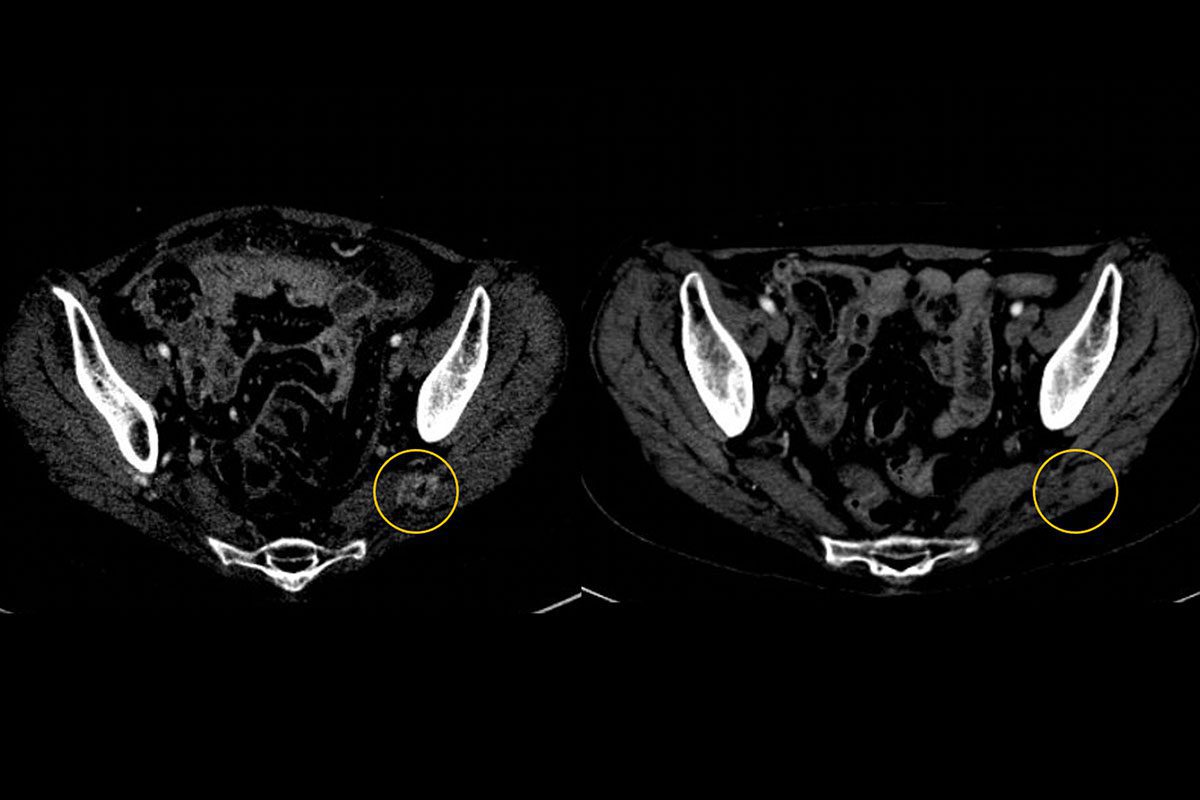
Lungtumor Before After Sized
A new study led by Washington University School of Medicine in St. Louis shows that the new drug sotorasib benefits many patients with non-small-cell lung cancer with a specific mutation in the KRAS gene. In a small subset of patients, the drug eliminated all evidence of the tumors. Pictured on the left is a scan showing a lung tumor (yellow circle) that has spread to the muscle. The image on the right shows the same patient after two months of sotorasib therapy. No tumor is visible in the yellow circle on the right. (Photo by Siddhartha Devarakonda)

The effects of sotorasib lasted an average of 11 months, and the drug also showed progression-free survival — meaning the tumor did not continue growing during this time — of almost seven months. In contrast, patients with this lung cancer who receive standard therapy have an average progression-free survival of two to four months. The average overall survival for all patients in the trial was 12 ½ months.

“We are hopeful that this approach will be a new option for patients with lung cancer driven by this specific type of KRAS gene alteration,” said Govindan, who treats patients at Siteman Cancer Center at Barnes-Jewish Hospital and Washington University School of Medicine. “KRAS gene alterations have long been considered not amenable for targeted therapies. A number of combination regimens are being tested here at the Siteman Cancer Center and at other leading cancer centers around the world. This highlights work that Washington University has excelled at over the past few decades — studying the genomic alterations in tumors with the goal of identifying treatment targets. This early cancer genome research is now coming full circle to help our patients.”

Govindan and his team have led pioneering studies to define genomic alterations in lung cancer, including making key contributions to The Cancer Genome Atlas, a national effort supported by the National Institutes of Health (NIH).

“The excitement surrounding this trial result is that sotorasib is now the first targeted therapy for lung cancer patients with KRASmutations,” said co-corresponding author Vamsidhar Velcheti, MD, of NYU Langone Health. “KRAS-targeted treatments, decades in the making, are urgently needed for these patients with limited treatment options.”

About 7% of patients stopped sotorasib treatment because of severe side effects, but no side effects were life-threatening, and no patient died as a result of the treatment. The drug caused adverse events severe enough to require a reduced dose of the drug in about 22% of patients. Almost 70% of patients experienced side effects of some kind related to the drug; the most common were diarrhea, fatigue, nausea and increased liver enzyme levels, the latter an indicator of liver damage.

“Sotorasib showed clinically significant benefit without any new safety concerns in patients with this specific form of KRAS mutant lung cancer,” Govindan said. “Moving forward, our team will seek to inform the development of combination therapies featuring sotorasib and other emerging drugs, and to determine which best fit the mix of mutations in each patient’s cancer cells.”

The researchers currently are conducting a phase 3 clinical trial comparing the effectiveness of sotorasib with a chemotherapy drug called docetaxel in 345 patients who have non-small-cell lung cancer and this specific KRAS mutation.

Ask the Doctors: How to Check Yourself for Testicular Cancer

Testicular cancer is most common among men ages 15-35. In fact, it is the most common type of cancer for men in this age range. Men can play an important role in detecting testicular cancer through self-examination. Despite the ease and benefit of performing a self-exam, not many men know how to check for testicular cancer, or how to talk to a doctor about sensitive men’s health issues. To help start the conversation, Washington University urologist Zachary Smith, MD, answers some of the most frequently asked questions about performing a testicular self-exam.

Testicular Cancer: Frequently Asked Questions

What is testicular cancer?

Testicular cancer (TC) is—just as it sounds—cancer that forms in the testicle itself. This does not include any tumors or cancer of the other scrotal contents or penis. It is a relatively rare cancer, with only about 9,000-10,000 cases per year in the United States. Fortunately, it is very curable in most situations, even if advanced, and there are only approximately 400 deaths per year in the U.S.

Why should I check myself for testicular cancer?

The goal of testicular self-examination is to find TC early. Compared to other tumors, it has a more rapid growth rate. Early detection decreases a man’s likelihood of the disease spreading and requiring more extensive treatment. While the data is mixed on the absolute benefit of self-examination, since TC is a very treatable disease for most men, it is generally felt that this is an easy and low-risk test to detect tumors early and potentially help men avoid more aggressive treatment.

How do I perform a testicular self-exam?

The examination is best performed in a warm environment, so the scrotum and muscles can relax and hang free. It is often recommended to be done in the shower.

  • Check each testicle one at a time.
  • Gently roll each testicle between the thumb and the other fingers
  • Palpate the entire surface of the testicle, checking for any hard lumps, bumps, or irregularities

Note that the testicle itself (the oval shaped body) is the portion we are generally concerned about. The epididymis (the tube-like structure on the back of the testicle), is a normal part of the anatomy and may often have some asymmetry. Similarly, the spermatic cord (the blood vessels and tubes that the testicle hangs from) may feel different from person to person and is of low risk for cancer. Any change in shape, contour or firmness of the testicle itself should be noted and raise concern.

What should I do if I feel something?

If you feel anything concerning, you should reach out and make an appointment to see your doctor as soon as possible. It is important to make sure that the office knows the reason for your visit. Do not leave the reason for your visit nondescript. That way, the appointment may be scheduled in a time-sensitive fashion. Abnormalities in the testicles are often something for which men delay medical evaluation for a number of reasons. However, there is no reason to be embarrassed, as this is very routine for doctors. This is what we are here for. Early evaluation could make a profound impact on the extent of treatment required if the abnormality turned out to be TC.

How often should I check myself?

It is generally recommended to perform self-examination monthly. Monthly exams help to reduce the chance of missing a tumor. Routine examination also allows a man to be more familiar with what “normal” feels like. This makes it more likely you will be able to detect something “abnormal.” It is easiest to remember to do this monthly if you choose the same day each month (like doing the exam in the shower on the first day or the last day of the month).

What does testicular cancer feel like?

It is important to know that most cancerous tumors are not painful. So just because you “feel fine” or it “doesn’t hurt” doesn’t mean that a lump is fine. If there is any question, seek evaluation. Also, while it is generally easiest to be seen by your primary care physician, since you have an established relationship with them, you can also always reach out to a urology office, where you would generally be seen very soon for any testicular lump. Here at Washington University and Siteman Cancer Center, we specialize in treatment of TC and have the experience and knowledge to walk you through the diagnosis from start to finish.

To make an appointment with a Washington University urologist, please call 314-862-8200 or fill out the online appointment form.

To learn more about testicular cancer treatment at Siteman Cancer Center, please call 1-800-600-3606.

For Your Health: Lung cancer screening can save lives, and now more people can get it

For Your Health Graphic 2020


Even with COVID-19 still dominating health news, stories about new lung cancer screening guidelines were able to break into recent headlines, and for good reason.

Lung cancer is the second most common cancer in the U.S. — and the deadliest, killing more than 130,000 people each year. More people are now eligible for lung cancer screening because of updated guidelines from the U.S. Preventive Services Task Force, which can translate into additional lives saved.

Dr. Graham Colditz

Most lung cancers are currently diagnosed at advanced stages, where treatment is difficult and the chances of surviving five or more years is very low, at just around 6%. Annual screening for people at high risk can help find the disease earlier, when it can be more effectively treated. If found in the earliest stage, the chances of surviving five or more years increases to about 60%.

Screening is done with a scan called low-dose computed tomography, or low-dose CT. And in current and former smokers with a significant smoking history, it lowers the risk of dying of lung cancer by up to 25%. Findings fromlung cancer screening can also help manage some heart conditions.

The new guidelines recommend yearly screening for people ages 50 to 80 who currently smoke or quit in the past 15 years, and have smoked the equivalent of one pack a day for 20 years. This opens up screening to many more people by lowering the age to start scans and lowering the level of smoking needed to qualify.

It’s estimated that 6 million more Americans will qualify for screening now. And, importantly, it is expected to help address inequalities in the original guidelines with greater increases in screening eligibility for women, African Americans, Hispanics and American Indians and Alaska Natives.

Despite the proven benefits, lung cancer screening does have some potential harms, which is why it’s limited to people at increased risk because of their smoking history. Potential harms can include short-term stress and anxiety about unclear scan results, the need for follow-up testing for suspicious findings that turn out not to be cancer, and exposure to low amounts of radiation from a scan – about a third of the amount people are normally exposed to in a year. Overall, the benefits of lung cancer screening are thought to outweigh the harms, though it is a personal balance for each person.

If you’re a current or former smoker 50 to 80 years old, talk to a health-care professional to see if you’re eligible for screening and if it’s right for you. If you choose to get screened, try to have it done at a facility with experience doing lung cancer screening with low-dose CT.

Keeping up with lung screening every year is also key. The benefits come after repeated scans. So if you missed a scan last year because of the pandemic, or just skipped a year or two, call your provider and get back on track.

And, of course, if you smoke it’s important to try to quit, even if you get screened. Screening doesn’t take away the dangers of smoking. Quitting smoking, though, can build on the benefits of screening by lowering the risk of lung cancer as well as other deadly diseases, like heart disease, stroke, COPD and many other cancers. For tips and resources on quitting, call 1-800-QUIT-NOW (1-800-784-8669), or visit smokefree.gov.

This last year has made us appreciate even more than usual the importance of looking after our health, and looking after each other. And lung cancer screening can be a key part of that for many people. If you have a friend or family member who may be eligible for screening, encourage them to talk to a provider about it. And if you think you may be eligible, be sure to do the same.

It’s your health. Take control.


Dr. Graham A. Colditz, associate director of prevention and control at Siteman Cancer Center at Barnes-Jewish Hospital and Washington University School of Medicine in St. Louis, is an internationally recognized leader in cancer prevention. As an epidemiologist and public health expert, he has a long-standing interest in the preventable causes of chronic disease. Colditz has a medical degree from The University of Queensland and a master’s and doctoral degrees in public health from Harvard University’s T.H. Chan School of Public Health.

For Your Health: Welcome spring with healthier comfort foods

For Your Health Graphic 2020


A bright spot for many of us last year was the opportunity to hone our cooking skills. This may have been more from necessity than any real desire to be the next José Andrés or Rachael Ray. Still, reluctantly or not, we’ve joined the ranks of our friends and family who already enjoyed cooking, and we learned how to double recipes, not burn the garlic and quickly convert teaspoons to tablespoons.

While we’ve no doubt missed supporting our favorite restaurants like we did before the pandemic, cooking at home has allowed us to explore a range of dishes we might not otherwise prepare, and to bring our own personal touch to them.

Dr. Graham Colditz

And with a bit of early spring chill still in the air, it’s likely that many home cooks have continued to turn to some of the hearty, flavorful favorites that helped get us through a winter that felt even longer than usual. These may include classic “comfort” foods like chili, casseroles, meatloaf and dumplings but can really be any of the dishes we enjoy on a cold night.

As comforting as they may feel, though, these types of foods typically aren’t the healthiest choices. Red meat, cheese, full-fat dairy and refined grains can often be key ingredients.

But, it turns out, it’s pretty easy to liven up these dishes for spring, making them healthier while keeping the qualities we love about them.

“I like to add ingredients that make these dishes more nutrient-dense, which often results in a lighter version overall,” said Lauren Gallen, a registered dietitian at Siteman Cancer Center in St. Louis. “Amp up the produce by, say, sneaking butternut squash, mushrooms or green pepper into chili, or mushrooms, cherry tomatoes, onions or bell peppers into sauce for lasagna.”

The result can be a healthier dish with even more flavor. Other healthy modifications, Gallen said, can include substituting Greek yogurt or lower-fat half-and-half for some of the cream, mayonnaise or sour cream in recipes; choosing whole-grain pasta over standard refined options; and cutting back on red and processed meats by working in leaner proteins like turkey, chicken, fish, lentils or beans. “Your family might not even notice!”

Outside of individual ingredients, it’s important to keep calories in mind as well, even when making healthier, lighter versions of comfort foods. In normal times, keeping calories and weight in check is hard for many of us. Not surprisingly, there’s some evidence that it’s been even harder than usual during the pandemic.

But some simple tips can be helpful. Following serving sizes listed on recipes is one way, Gallen said. Starting with a reasonable amount of food on a plate when you sit down to eat can make it easier to avoid eating too much. “Another tip is to slow down, really savor each bite,” which gives the stomach more time to tell the mind when it’s had enough, she said.

Coming off this long year, with the pandemic so prominent in our daily lives, it’s important that we not forget about our overall wellness. The foods we prepare and enjoy and find comfort in can be a big part of that.

“Whatever ‘comfort food’ brings to mind for you,” Gallen said, “selecting dishes and meals that are balanced with lean proteins, vegetables and fiber are your best bet.”

It’s your health. Take control.


Dr. Graham A. Colditz, associate director of prevention and control at Siteman Cancer Center at Barnes-Jewish Hospital and Washington University School of Medicine in St. Louis, is an internationally recognized leader in cancer prevention. As an epidemiologist and public health expert, he has a long-standing interest in the preventable causes of chronic disease. Colditz has a medical degree from The University of Queensland and a master’s and doctoral degrees in public health from Harvard University’s T.H. Chan School of Public Health.

Promising role for whole genome sequencing in guiding blood cancer treatment

For certain blood cancers, such as acute myeloid leukemia (AML) and myelodysplastic syndrome (MDS), deciding whether patients need an aggressive treatment typically hinges on a set of lab tests to identify genetic changes. Some of these tests rely on technology that was invented more than 60 years ago and has been used clinically for the past three decades.

Now, a new study from Washington University School of Medicine in St. Louis shows that whole genome sequencing is at least as accurate and often better than conventional genetic tests that help determine the treatment for a patient’s blood cancer. Genome sequencing technology continuously is decreasing in cost and recently reached a level similar to that of conventional testing. In addition, results can be returned to patients in just a few days, making whole genome sequencing a potentially viable approach for determining the best treatment regimen for a particular patient.

The study is published in the March 11 issue of The New England Journal of Medicine.

“Choosing the appropriate therapy for cancer patients often depends on identifying a range of different types of genetic changes in a patient’s tumor cells,” said senior author David H. Spencer, MD, PhD, an assistant professor of medicine and medical director of the clinical sequencing facility at the McDonnell Genome Institute. “Our study suggests whole genome sequencing is a reliable and practical approach for detecting all of the changes that are important for assessing the risk of relapse for AML and MDS patients, using a single test. This approach can be performed when conventional testing methods are unsuccessful and also could be applied to other cancers, including solid tumors. This means that patients with other cancer types eventually could benefit from rapid clinical genome sequencing.”

The study focused on patients with AML, a blood cancer that arises in the bone marrow, and MDS, a group of disorders in which the bone marrow does not make enough normal blood cells. Both often are deadly, but many patients can be treated more effectively if they receive the proper therapy.

Patients with leukemia or MDS are divided into three risk categories based on the results of genetic testing. Favorable-risk patients are usually treated with chemotherapy only. Unfavorable-risk patients often need more intensive treatment at the time of diagnosis — usually chemotherapy and a stem cell transplant (formerly called bone marrow transplant). For intermediate-risk patients, the optimal treatment approach is not as clear-cut, and their treatment regimens can vary, depending on each patient’s state of health, personal preferences, and doctors’ guidance.

For nearly three decades, patients have been assigned to these risk categories based on the way their chromosomes look under a microscope. More recently, doctors have begun to incorporate the genetic sequencing of a limited number of genes into the analysis, but such sequencing does not typically identify all of the changes that are important for guiding treatment decisions. Whole genome sequencing can identify changes in chromosomes and genes, but is rarely performed outside of research studies because of its cost and the time it can take to sequence and analyze an entire genome.

“For these types of blood cancers, conventional chromosome analysis is a critical part of the standard diagnostic work-up,” Spencer said. “We know from research studies that whole genome sequencing can detect these types of chromosomal abnormalities, so that part of our study is not terribly surprising. What we showed is that genome sequencing has reached a point that it is now practical, fast, economical, clinically feasible and accessible for the routine testing of patients.”

According to the researchers, the technical costs for sequencing in this study were about $1,900 per patient. This amount is similar to the laboratory cost of conventional genetic testing for an AML patient, which typically is $1,000 to $2,000. Actual charges for clinical use of whole genome sequencing will likely be higher because of additional costs associated with implementing such testing in a clinical laboratory setting.

In the new study, the researchers — including co-authors Eric J. Duncavage, MD, a professor of pathology & immunology; Molly C. Schroeder, PhD, an assistant professor of pathology & immunology; and Timothy J. Ley, MD, the Lewis T. and Rosalind B. Apple Professor of Medicine — evaluated blood samples from 263 patients with these blood cancers by sequencing the patients’ entire genomes, and compared these results with traditional genetic tests from the same patients. The patients were treated at Siteman Cancer Center at Barnes-Jewish Hospital and Washington University School of Medicine.

The researchers found that whole genome sequencing identified all of the same major genomic abnormalities as the conventional method — called karyotyping — and, importantly, it identified additional genetic abnormalities in 17% of the cases. Of the 263 patients, 117 were newly diagnosed patients; the other patients’ samples were analyzed retrospectively. For the newly diagnosed patients, whole genome sequencing found additional genetic information in about 25% of the cases. This new information changed the risk category for 19 patients. Generally, changing the risk category may alter patients’ treatment options. The investigators also showed that this sequencing could be done relatively quickly, returning results in an average of five days but in as few as three.

One of the drawbacks of karyotyping is that some patients have inconclusive results. Karyotyping requires a sample that contains living cells, and sometimes the sample doesn’t contain enough living cells to determine the patient’s risk category. Whole genome sequencing, in contrast, does not require living cells. It uses only a small sample of DNA from a patient’s cancer cells. In this study, the researchers found that whole genome sequencing could accurately risk stratify patients who had inconclusive results from the traditional karyotype-based analyses. According to the investigators, inconclusive results or assay failures can occur in up to 20% of AML patients.

“Inconclusive results are extremely frustrating, because we want to be able to offer patients the most appropriate treatment at the beginning of therapy. Although limited genetic testing is of value, it can miss important findings that are often relevant for therapy choices. We have worked for years to streamline whole genome sequencing so that it can be used routinely,” said Ley, who led the team at McDonnell Genome Institute that sequenced the first cancer genome (from an AML patient) just 12 years ago.

“The sequencing of whole cancer genomes, which was first performed here at Washington University, revolutionized our understanding of cancer and how it can be treated,” Schroeder said. “This project was exciting to work on because it demonstrates that whole genome sequencing has matured into an efficient, practical tool that is clinically useful for patient testing when they receive a diagnosis of AML or MDS.”

According to Spencer, most patients whose risk category changed based on the whole genome approach moved into less favorable risk categories. This suggests that whole genome sequencing may be able to more consistently identify patients in the unfavorable-risk category, allowing them to receive the most appropriate therapy up front.

The researchers will continue to evaluate whole genome sequencing for AML and MDS patients as part of clinical trials. In addition, whole genome sequencing will be offered to patients with AML and MDS treated at Siteman Cancer Center. For those who qualify, funding for the whole genome sequencing assay, called ChromoSeq, will be provided by BJC HealthCare.

“One of the most compelling aspects of this study is that the results are immediately translatable to patient care,” Duncavage said. “As a collaboration with the McDonnell Genome Institute and the Department of Pathology & Immunology, we are pleased to be launching a clinical version of this assay that will be available to patients. We are proud to be able to offer whole genome sequencing for AML and MDS patients, and we hope to extend this to other cancers very soon.”

Peter Campbell, MD, PhD, leads cancer genome sequencing studies at the Wellcome Sanger Institute in Cambridge, U.K. “We stand on the threshold of an era in which we can identify every relevant genetic change in a given patient’s cancer in real time,” said Campbell, who was not involved in this work. “This fascinating study demonstrates, first, that this technology can be implemented in real-world clinical practice, and second, that we can make more accurate choices of treatments for patients with blood cancers. Our task is now to take this blueprint for blood cancers and apply it to all cancers.”

This work was supported by the National Center for Advancing Translational Sciences (NCATS), grant number 3UL1TR002345-02S1; the Alvin J. Siteman Cancer Research Fund, grant number 19-FY19-01; and the National Cancer Institute, grant numbers R33CA217700-01 and K08CA190815. Support for procurement and annotation of human samples was provided by the Genomics of AML Program Project of the NCI, grant number P01 CA101937. Core services were provided by the Alvin J. Siteman Cancer Center Tissue Procurement Core and Biostatistics Shared Resource Core supported by an NCI Cancer Center grant, number P30CA091842. Prospective sequencing was supported in part by reagents provided by Illumina Inc. The staff at the Cytogenomics and Molecular Pathology Laboratory, GTAC, and the McDonnell Genome Institute at Washington University School of Medicine also contributed to this project.

Duncavage EJ, Schroeder MC, et al. Genome sequencing as an alternative to cytogenetics in myeloid malignancies. The New England Journal of Medicine. March 11, 2021.

Washington University School of Medicine’s 1,500 faculty physicians also are the medical staff of Barnes-Jewish and St. Louis Children’s hospitals. The School of Medicine is a leader in medical research, teaching and patient care, ranking among the top 10 medical schools in the nation by U.S. News & World Report. Through its affiliations with Barnes-Jewish and St. Louis Children’s hospitals, the School of Medicine is linked to BJC HealthCare.

Under 50? What you need to know about colon cancer risk and prevention

In recent years, doctors have noticed an unsettling trend: an increase in the number of people under the age of 50 who are being diagnosed with colon or rectal cancer. While this trend is alarming, there is good news: colon cancer can be prevented entirely or at least caught early, when it’s easier to treat.

Much of the world became painfully aware of this trend when Hollywood’s Chadwick Boseman died tragically at the age of 43 from colon cancer. For many, the question became: what can I do to keep this from happening to me and my loved ones?

How can I prevent colon cancer?

In order to ensure that you can go on to live a longer and healthier life, you must be aware of your family history and be on the lookout for key symptoms. Washington University colorectal surgeon Radhika Smith, MD, who treats colon cancer patients at Siteman Cancer Center, emphasizes the importance of knowing family history of colorectal cancer.

“If anybody in their family has a history of malignancies, especially at a young age, that really should prompt them to seek medical attention. This will allow them to ensure that there’s nothing with their family genes that could increase their risk,” she said.

It is important to be aware of your family history when it comes to taking charge of your health. At the same time, it is just as important to keep an eye out for signs of potential problems.

“Colorectal cancer doesn’t frequently strike young people. However, when you experience symptoms, you never want to ignore them,” says Smith. “You always want to have them evaluated. Make sure that you’re protecting yourself and doing all you can to give attention to any underlying issues you might have.”

Identifying symptoms is essential for effective treatment for colorectal cancer.

It is also important to note that certain genetic syndromes create hereditary risks for colorectal cancer, including Lynch syndrome and FAP. Additionally, Crohn’s disease and ulcerative colitis may potentially increase risk.

What symptoms should I look out for?

When it comes to identifying symptoms prior to diagnosis, it can be a bit tricky. This is because there are routine issues (such as constipation and diarrhea), and then there are alarm symptoms.

“If you have run-of-the-mill constipation, you should address it with changes in the food you eat, fiber supplements, and be sure to take in 64 ounces of an uncaffeinated beverage. If that doesn’t fix it, then you should go see a provider,” says Smith. “Most young people don’t know how to really fix constipation, so engaging a doctor is important.”

Because many young people eat low-fiber diets, they experience constipation, which then becomes their norm. This is why it’s important to stay on top of your health from a young age. It will allow you to be able to identify potential issues in the future.

Constipation can, of course, be just that – constipation. However, it also can be a sign of a larger issue. Here are some symptoms that may be more concerning:

  • Rectal bleeding
  • Change in stool caliber
  • Weight loss
  • Constipation or diarrhea
  • Abdominal pain
  • Fatigue or tiredness

How do I speak with my provider about my concerns?

It can feel uncomfortable to bring up colorectal health concerns with your provider. While this might be the case, doing so is the only way to be proactive when it comes to your health.

“At the end of the day, you just need to remind yourself that every provider at Siteman and at Washington University really just wants to help people,” says Smith. “You won’t feel any sort of judgment. You just need to be honest about the symptoms you’re experiencing. Most of the time, you will simply need to make minor changes in your diet. This can have a huge impact on your overall bowel function and improve your quality of life. But in some rare cases, this may also save your life.”

Early intervention can prevent many problems down the road. All you need to do is take charge of your health and be honest with your provider.

If a larger issue does happen to arise in the future that needs to be addressed, there are many effective treatment options. These colon cancer treatments and colon cancer surgeries can prolong and improve your quality of life.

At what age should I have my initial colon cancer screening?

Siteman recommends that you have your initial screening at age 45, but there are some factors that can lower that recommendation. If you have a first-degree family member who has had colorectal cancer, you should get tested 10 years before the age of their diagnosis. In this case, you should be tested at 5-year surveillance intervals following your initial screening. However, if you experience any symptoms, you should get screened, regardless of your age.

Smith underlines the importance of symptom surveillance.

“If you have any symptoms that concern your doctor, even if they’re minor, you should get a colonoscopy. Then you can go forward with a clean bill of health, knowing this is your baseline. If you have a departure from that baseline down the road, you’ll know it’s time for more medical attention.”

What healthy practices can I bring into my life to avoid future colon risks and issues?

Looking out for symptoms and establishing a relationship with your provider are key elements to taking charge of your health. Additionally, there are many healthy habits that you can adopt before and after symptoms arise. These include:

  • A high-fiber diet with low amounts of processed foods and smoked meats
  • Exercise
  • Normal weight
  • Avoiding excessive amounts of alcohol
  • Avoiding tobacco
  • Knowing your family history so that you can be on a proper colorectal surveillance program

Learn more

  • Your Disease Risk — Find out your risk of colorectal cancer and other diseases and get personalized tips to help prevent them.
  • 8IGHTWAYS® to Prevent Colon Cancer — Seventy-five percent of all cases could be avoided by things you can do or start doing now. Use these eight tips as a guide to lowering your risk.
  • The Young-Onset Colorectal Cancer Program at Siteman is one of the first in the country to focus exclusively on providing care for colorectal cancer patients under 50 while addressing concerns that are especially important to younger people.

For Your Health: Roll up our sleeves to fight COVID-19

For Your Health Graphic 2020


We’re coming up on a full year since the pandemic began to drastically impact our lives, so it’s wonderful to be able to greet spring with a feeling of optimism about our fight against the coronavirus.

We now have three very effective vaccines that have been found to prevent COVID-19. There are two 2-dose vaccines that have around 95 percent protection against the illness, and the newest, a one-dose vaccine that has around 66 percent protection against moderate or severe illness, and that greatly protects against hospitalizations.

Colditz

Each of the vaccines has been rigorously studied in clinical trials that had more than 100,000 total participants, and more than 65 million shots have already been given across the United States. As that number increases, we should continue to see a significant drop in infections and hospitalizations from their recent peaks earlier in winter. Over time, this likely means a welcome return of more normal everyday activities, even as many basic pandemic safety measures will remain important.

“People should sign up and get the vaccine when it’s their turn,” said Dr. Marci Moore-Connelley, chief medical officer for Southern Illinois Healthcare. “The approved vaccines are safe, effective and our opportunity to turn the course of the pandemic.”

Some minor side effects can be expected following a shot, which is a normal reaction to the vaccine. Serious side effects, though, are rare. Since vaccination began in the U.S., frequently reported reactions include a sore arm, fatigue, headache, muscle ache and chills. With the two-dose vaccines, these have more often followed the second dose than the first. But for all the vaccines, most side effects tend to go away within a day or so.

With high demand and currently limited supplies, the vaccines are being rolled out in a prioritized order. The specific order of vaccination groups varies from state to state but generally gives priority to essential workers and those at increased risk from COVID-19. Groups such as health-care workers and nursing home residents were typically vaccinated first. Younger, generally healthy people who aren’t part of any other priority group will generally be vaccinated after others.

A quick web search or call to a local or state health department can help you find out which group you belong to and how to sign up for your turn to be vaccinated. Most appointments are scheduled online, and that can be a challenge for those who could use help with technology, Dr. Moore-Connelley said. If that’s the case, don’t be shy about asking. Pick up the phone and call your doctor, health department or teenage grandchild. And if you’re good with computers, be sure to reach out to people you know who might need assistance.

We’re all in this together. And that highlights one of the great benefits of getting vaccinated against COVID-19. It not only protects each of us individually from the disease, but it helps protect the health our family, neighbors and community, as well. If we can keep the rates of infections and hospitalizations down overall, we all win.

Thinking about her own experience rolling up her sleeve and getting the vaccine, Dr. Moore-Connelley shared the excitement of the moment and the promise it held.

“Everyone was upbeat and happy to be there,” she said. “There was a real feeling of hope for the future.”

It’s your health – and your family’s and community’s health. Take control.


Dr. Graham A. Colditz, associate director of prevention and control at Siteman Cancer Center at Barnes-Jewish Hospital and Washington University School of Medicine in St. Louis, is an internationally recognized leader in cancer prevention. As an epidemiologist and public health expert, he has a long-standing interest in the preventable causes of chronic disease. Colditz has a medical degree from The University of Queensland and a master’s and doctoral degrees in public health from Harvard University’s T.H. Chan School of Public Health.

For Your Health: Reduce heart disease and cancer risk at the same time

For Your Health Graphic 2020


Dr. Graham Colditz

Even in parts of the country experiencing an early thaw, winter starts to feel a bit long come February, particularly during the ongoing pandemic. The days are still short. The temps are still low. And the trees are still mostly bare.

Yet, even amidst all that, we can take heart. Not just because we’re about to crest into the first days of spring and the promise of highly effective COVID-19 vaccines, but because February is literally “Heart” month – American Heart Month, a federally designated month focused on the importance of heart disease and taking steps to help prevent and manage it.

On top of this, February also is National Cancer Prevention Month, which is quite apt, since heart disease and cancer are typically the top two leading causes of death in the U.S. Together, they account for about 1.2 million deaths each year, taking an incredible toll on individuals and families, and on the nation’s health as a whole.

But there’s a positive message in the middle of such depressing numbers. About three out of four heart disease cases and two out of four cancers could be avoided with overall healthy lifestyles. And most of the steps that lower the risk of one disease also lower the risk of the other.

Shared health behaviors that can lower the risk of both heart disease and cancer include:

  • Avoiding tobacco (and secondhand smoke)
  • Maintaining a healthy weight
  • Being physically active
  • Eating a healthy diet rich in fruits, vegetables and whole grains, and low in unhealthy fats and red or processed meat
  • Getting screening tests for certain cancers and heart disease risk factors. Talk with a doctor about which apply to you.

Health recommendations often fall into silos of information. Breast cancer in this silo. Heart disease in that one. And colon cancer over there. This can make it easy to miss how important some basic healthy behaviors can be for preventing many key chronic diseases. Yet it’s hard to overstate the potential impact of a handful of healthy behaviors.

So, while we’re getting ready to shed some layers and get safely outside more often as the calendar moves toward spring, why not use these last weeks of winter to think about one or two things you can do to give a boost to your health and lower your risk of heart disease and cancer?

Here are a handful of ideas to consider:

  • Add one more piece of fruit to your lunch a few days a week
  • Buy that cereal that has whole grains as a first ingredient
  • Search for some new meatless recipes to try
  • Visit smokefree.gov for information about quitting smoking
  • Try to do something physically active most days – no matter how easy
  • Call your clinic or doctor’s office to see if you’re up-to-date on recommended health screenings. If you’re not, make a plan with your provider to get back on track. Your county health department can be another great resource.

Unfortunately, the pandemic is going to be with us through much of this year, at least. So it remains important to keep ourselves and others safe as we make progress against it. But it’s also important that we continue to look after our overall health as well, even if that’s more complicated to do than it has been in past years. The benefits are well worth it. You’ve got this.

It’s your health. Take control.

For personalized prevention plans and an estimate of your risk of cancer, heart disease and other conditions, see yourdiseaserisk.com.


Dr. Graham A. Colditz, associate director of prevention and control at Siteman Cancer Center at Barnes-Jewish Hospital and Washington University School of Medicine in St. Louis, is an internationally recognized leader in cancer prevention. As an epidemiologist and public health expert, he has a long-standing interest in the preventable causes of chronic disease. Colditz has a medical degree from The University of Queensland and a master’s and doctoral degrees in public health from Harvard University’s T.H. Chan School of Public Health.