

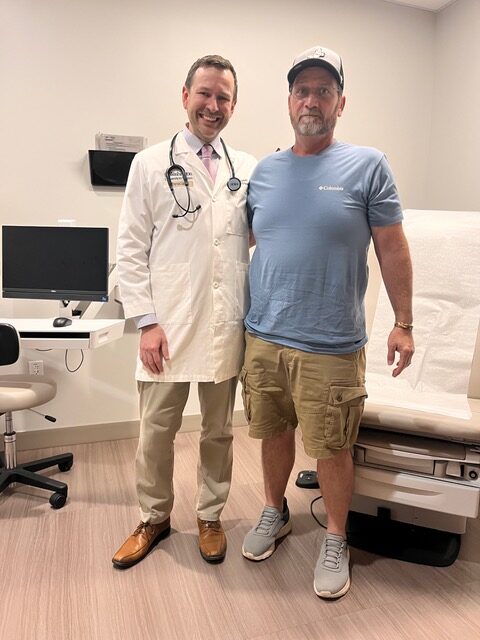
Driven by science, the multidisciplinary team of WashU physicians and researchers is ‘about helping people thrive after treatment’
In just three years, Siteman Cancer Center’s comprehensive Head and Neck Tumor Center has cared for more than 1,000 patients. It is a milestone that reflects the growing impact of a program that was among the first of its kind in the country when it was established to bring together multidisciplinary expertise, innovative treatment approaches and leading-edge research to improve outcomes and quality of life for patients with any type of head or neck cancer.
“We’re here to optimize clinical care and, especially, outcomes for our patients,” said Sidharth V. Puram, MD, PhD, Lindburg Professor and chair of WashU Medicine’s Department of Otolaryngology–Head and Neck Surgery and co-director of the Head and Neck Tumor Center at Siteman, based at Barnes-Jewish Hospital and WashU Medicine.
“We offer advanced surgical techniques, innovative chemotherapy and radiation treatments, and we have a robust portfolio of clinical trials focused on improving treatment options for head and neck cancers that is truly making a difference in the lives of our patients,” he said.
The Head and Neck Tumor Center — also led by co-directors Wade L. Thorstad, MD, a radiation oncologist, and Douglas R. Adkins, MD, a medical oncologist — brings together specialists in otolaryngology, medical oncology, radiation oncology, neurosurgery, ophthalmology, vascular surgery, thoracic surgery, plastic surgery, palliative care, endocrinology and radiology. The center also includes dentists, oral surgeons, prosthodontists, speech pathologists, nutritionists, social workers, clinical trial coordinators and patient navigators to support and guide patients along their cancer care journey and recovery.
A hallmark of the center is a multidisciplinary head and neck tumor board, a group of specialists across an array of disciplines that meets regularly to discuss patient cases. These comprehensive reviews of medical records and broad discussions of the latest treatment options result in optimal treatment plans for individual patients that take into consideration their unique circumstances.
‘We wanted to go to Siteman’
Rick Sparrow is among the latest patients treated at the center. Sparrow, from La Belle, a small town in northeast Missouri, came to Siteman after noticing a lump on the side of his neck. His primary care physician sent him for tests, and he was soon diagnosed with tonsillar squamous cell carcinoma associated with the human papillomavirus (HPV).
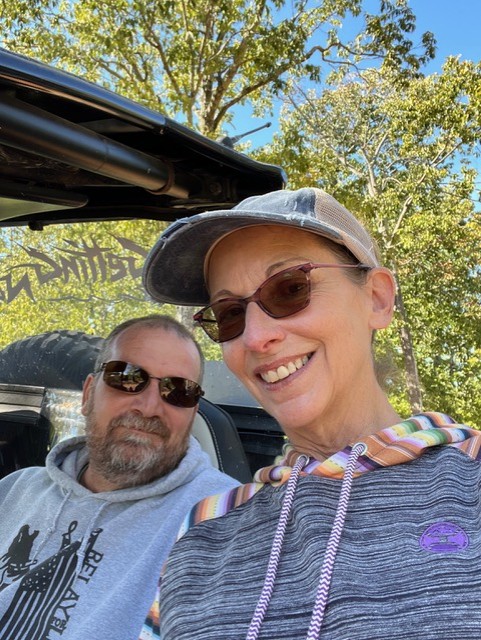
“We wanted to go to Siteman,” Sparrow recalled. “And once I had the initial consultation here, I wouldn’t have gone anywhere else. I was seen by Dr. Puram, and he checked me out, looked at some lab and imaging results and sat us down that day to go over a game plan. It was such a relief to not only have a doctor with a great bedside manner, but one who very quickly said to us that my cancer could be treated.”
The treatment plan included surgery to remove both tonsils and 33 lymph nodes on the right side of Sparrow’s neck. (A typical adult can have more than 100 lymph nodes on each side of the neck.) Sparrow also would receive chemotherapy under the direction of WashU Medicine medical oncologist Peter Oppelt, MD, then 15 doses of radiation under the direction of Sana Karam, MD, PhD, the Elizabeth H. and James S McDonnell III Distinguished Professor of Radiation Oncology and chair of the Department of Radiation Oncology at WashU Medicine.
Sparrow also agreed to participate in a novel clinical trial known as The Minimalist Trial-2, also known as MINT-2. The Phase II trial is evaluating the effectiveness of fewer radiation treatments and less chemotherapy to treat throat cancers affiliated with HPV.
“There already were very high cure rates for patients with HPV-positive oropharynx cancer when treated with surgery followed by radiation or chemotherapy,” said Adkins, principal investigator for the MINT clinical trials. “We are exploring different de-escalated (reduced) schedules of adjuvant (after surgery) radiation and chemotherapy with the overarching goal to lower some of the side effects of these treatments while maintaining the high rate of cure.”
Thorstad and Puram are co-principal investigators of the MINT trials.
In the Phase I clinical trial, called MINT-1, 90% or more of patients who received fewer radiation treatments and less chemotherapy were alive four years later without their cancer recurring. They also experienced fewer side effects, such as swallowing complications, painful mouth sores, weight loss or kidney injury.
MINT-2 is currently exploring even lower doses of post-surgery radiation. The Head and Neck Tumor Center’s leadership team says that, as a result, Siteman has emerged as a national leader in the treatment and study of HPV-associated throat cancers, which now account for most cancers affecting the tonsils and the base of the tongue.
“The MINT trials represent a true paradigm shift in head and neck cancer treatment,” Karam said. “Dr. Wade Thorstad’s visionary work and quiet dedication to minimizing patient toxicity while maintaining exceptional cure rates have been the conceptual engine behind this approach. His foresight is a major reason why Siteman is a national pioneer in HPV-associated throat cancer research.”
Navigating Care
A major resource within the Head and Neck Tumor Center is the team of oncology-trained nurse care coordinators and oncology nurse navigators who guide patients throughout their cancer journey. Services include coordination of all physician appointments, lab and imaging tests, as well as surgery, radiation and chemotherapy scheduling and referrals to supportive services such as nutritional planning, speech and swallowing rehabilitation services and social-work assistance.
“It was amazing having all of these resources available in one place,” said Dianna Sparrow, Rick’s wife of 27 years. “And the help of our nurse navigator, Crystal, was a lifesaver because it took a lot of pressure off us to figure out what was next and who to see. She made our experience at Siteman extra special and went above and beyond for us.”
Puram agrees, noting that the patient navigator program is a core principle in providing a full range of services to patients.
The day after Rick Sparrow’s last radiation treatment, he and Dianna went out and purchased a new off-road utility terrain vehicle (UTV) and got right back into a hobby they both loved — camping and having fun outdoors.
“We spent six hours climbing over rocks and just celebrating our life together,” he said. “It was a great feeling!”
Looking Ahead
The Head and Neck Tumor Center’s long-term vision extends well beyond current treatment approaches. Researchers are studying tumors at the molecular and cellular levels, analyzing DNA, RNA and proteins to better understand why cancers develop, how they respond to therapy and which patients may benefit from emerging treatments.
“The next era of head and neck cancer care will be driven by science,” Puram said. “We’re identifying new biomarkers, discovering new therapeutic opportunities and working to deliver more personalized treatment for every patient.”
Said Karam, the chair of radiation oncology: “Mr. Sparrow’s experience is especially meaningful because it illustrates our ultimate goal: not only curing cancer but also helping patients return to the activities that matter most to them. Hearing he was able to resume riding his UTV, camping and hunting so soon after treatment is a wonderful example of the impact that coordinated, patient-centered care can have on both outcomes and quality of life.”
Puram agrees. “The Head and Neck Tumor Center is unique because patients benefit from both comprehensive clinical care and breakthrough research,” he said. “Reaching more than 1,000 patients in just three years reflects the success of a model built around multidisciplinary care, and it demonstrates how strongly patients value having surgeons, medical oncologists, radiation oncologists, navigators and support specialists working together as one team.”
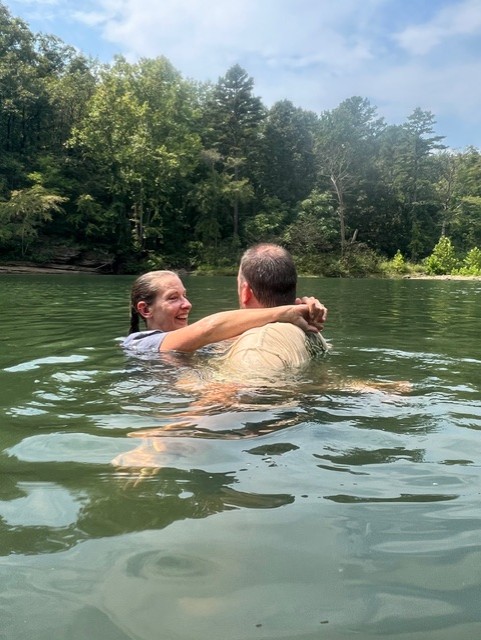
Rick and Dianna Sparrow are now putting his treatment in the rearview mirror.
“We’ve got seven grandchildren, and we’ve got a lot of living to do,” she said. “We don’t sweat the small stuff anymore, and we don’t take life for granted.”
Puram smiles as he hears about the active lifestyle the Sparrows have returned to.
“Every advancement we’re making ultimately comes back to patients,” he said. “The future is not only about improving survival. It’s about helping people thrive after treatment. Seeing patients return to their families, their work and the activities they love reminds us why this work matters.”
Learn more