

- Home
- Prevention
- Genetic Services at Siteman Cancer Center
Genetic Services
Jump to:

WashU Medicine certified genetic counselors and physicians at Siteman Cancer Center lead hereditary and genetic counseling for cancer as part of our multidisciplinary care. Certain cancers have genetic markers that can be inherited, increasing a person’s lifetime risk of getting cancer.
At Siteman, genetic specialists assess your family history to help evaluate the potential risk of developing cancer in your lifetime and develop plans with you and your family to help reduce it. For people who have a family history of cancer, they can educate and advise when to consider genetic testing for cancer – and what happens after the results.
Genetics tests look for specific mutations in genes or chromosomes that are linked to higher cancer risk, such as BRCA1 and BRCA2 for breast, ovarian, and pancreatic cancers – as well as genetic indicators for other cancer risks. Testing is a personal choice that has many benefits but can also come with risks. Your provider will consult with you to help you make the best decision for you and your family.
If you do go forward with a genetic test, physicians will order a blood draw or saliva sample. Genetic counselors will review your results with you after you receive them, usually 2 to 4 weeks after testing.

Benefits of Genetic Testing
- Predicts your risk of developing a certain type of cancer
- Find out if you have genes that increase cancer risk that you might have passed on to your children
- Helps with family planning
- Provides information to guide your healthcare
The Role Genetics Play in Cancer
Genes are a part of our DNA that determines physical traits and functions in our body. Chromosomes, which we inherit from our parents, contain strands of DNA. Everyone receives 23 chromosomes from each parent for a total of 46.
Each chromosome contains thousands of genes that code proteins — around 25,000 of them are contained in each cell in our body. The proteins send signals to our cells to tell them how quickly they can grow, how often to divide, and determine how long they will live. The total number of genes, called the genome, contains the entire genetic code in our cells.
99.9% of our DNA is identical between humans, and only 0.1% is what makes us truly unique. That 0.1% is where scientists can find genetic variants or mutations.
Gene variants or gene mutations are what happens when a gene changes, is missing, or is moved to the wrong place (referred to as translocation). Genes can also turn some functions on or off in the body — such as triggering hair growth or puberty.
When cancer happens, it happens at a genetic level. When a gene mutates, or changes, it can cause abnormal growth of cells. Sometimes the environment causes genetic mutations to occur; other times, a gene you inherited is the cause.
Your genes are not fixed. They can change the way they behave from outside influences, such as the food you eat, the air you breathe, the radiation or chemicals you are exposed to, or the habits you form. Some gene behaviors, however, are inherited from our parents and do not change no matter what environment they are exposed to.
As part of a complete cancer diagnosis or investigational research on cancer, physicians and researchers analyze genes that might be driving tumor growth or triggering certain immune responses. They study the genetic makeup of tumors to determine the best treatment type for specific cancers and work closely with patients to observe their progress.
By taking a thorough look at your genes, your care team at Siteman personalizes cancer treatment specific to your cancer to promote better outcomes.
Understanding Your Family’s Cancer Risk
Most cancers develop spontaneously: from chance causes, random genetic errors, environmental factors, or behaviors such as smoking, exposure to UV rays, or aging. Sometimes, cancer can develop after exposure to a virus or previous cancer therapy. Not all cancers have a known cause.
In some cases, however, cancer might have developed from a gene you inherited from one or both of your parents. Scientists estimate that roughly 10% of cancer patients have an inherited genetic change that puts them at moderate or high risk of cancer. It’s important to distinguish that it’s the genetic markers that increase your risk of developing cancer — cancer itself does not get passed on through families. In other words, simply carrying a cancer-related gene does not necessarily guarantee you will get cancer.
If more than one of your family members has gone through cancer — your parents, siblings, cousins, or grandparents — a hereditary syndrome might be the cause. Inherited genetic causes of cancer risk can also be present without a family history of cancer. This is where genetic counseling and testing can be a benefit. A genetic counselor or physician can help you understand your risks and manage your long-term health.
Note:
Sometimes a shared environment and shared risk factors can make it seem like cancer runs in the family; however, you may simply be exposed to the same risk factors and not have an inherited gene.
For example, nutrition and home environments are often the same or very similar for family members. So are levels of education or access to healthcare. These things can be shared by your parents, but they are not passed on through your genes.
Why Choose Siteman for Genetic Counseling
Institutions from around the world recognize WashU Medicine for its participation and leadership with the Human Genome Project — a major undertaking in scientific discovery that spanned from 1990 to 2003. That work has contributed to a deeper understanding of the role genetics plays in cancer – and influences research across cancer discovery at Siteman Cancer Center. Genetic providers bring a depth of expertise to provide quality patient support at Siteman Cancer Center that you won’t find anywhere else.
WashU Medicine genetic counselors at Siteman are certified by the American Board of Genetic Counseling, Inc. (ABGC), which promotes high standards and ethics in genetic counseling. Together with physicians and researchers at WashU Medicine from other specialties, they lead genetic research and clinical practice to support patients with compassion as they search for clues in their DNA.
That means when you choose to pursue genetic counseling here, you have access to comprehensive genomic testing, active clinical trials, and the latest sequencing technology. This improves your odds of finding answers to even the most rare or ambiguous genetic variants.
Genetic Services Offered
WashU Medicine genetic counselors and physicians at Siteman provide services that cover the whole lifespan of a person, from preconception to old age. They offer a variety of clinics and programs to meet patients’ needs.
Genetic Counselors at Siteman Offer:
- Genetic counseling: Our providers are highly skilled at reviewing personal and family medical history before helping you decide whether genetic testing is right for you. They are here to answer questions and provide support both before and after genetic testing.
- Prenatal diagnosis: Our specialists use state-of-the-art diagnostic techniques, including cytogenetics, microarray, non-invasive prenatal testing, and molecular diagnosis to safely carry out genetic testing during pregnancy.
- Newborn screening: Missouri’s newborn screening does not directly test for cancer, but it does identify rare genetic and metabolic disorders that can predispose children to certain cancers or require early intervention to prevent cancer related complications. Lysosomal diseases and other metabolic disorders can cause organ damage, immune suppression, or chronic inflammation, which may increase cancer risk or complicate cancer treatment.
- Pediatric screening: WashU Medicine’s Department of Pediatrics and Medicine offers a unique Cancer Predisposition Program at St. Louis Children’s Hospital that diagnoses and treats children who are more likely to develop cancer through Siteman Kids. Our exceptional providers offer support, counseling, and education to families in addition to facilitating treatment when necessary.
- Predictive testing: Our physicians and counselors perform genetic testing to identify a patient’s risk of developing certain types of cancer before symptoms show.
- Referrals: Genetic counselors can refer you to specialists who can provide the appropriate level of care to manage your cancer risk. They can schedule cancer screenings or consult with you about risk reduction.
Genetic Testing Siteman Offers:
Siteman can order genetic tests for the following, including but not limited to:
- Genetic predispositions for breast cancer, including male breast cancer
- Genetic predispositions for ovarian cancer
- Genetic predispositions for pancreatic cancer
- Genetic predispositions for prostate cancer
- Genetic predispositions for colon cancer
- Genetic predispositions for uterine (endometrial) cancer
- Lynch syndrome genetic testing
- Neurofibromatosis genetic testing
- Li Fraumeni genetic testing
Should I Consider Genetic Testing for Cancer?
Hereditary and genetic counseling could be considered:
- For certain cancer types
- For people who have multiple family members diagnosed with cancer
- For people who develop cancer at a young age
- For people diagnosed with more than one type of cancer
- For people with a certain ethnic background, such as Ashkenazi Jews

Genetic Clinics at Siteman
To schedule an appointment at one of these clinics, you can call our care coordinators. They are nurses trained in oncology with years of clinical experience and serve as a consistent point of contact during your journey. They have inside knowledge of the health systems and different genetic health clinics and their offerings, including their times and locations, and have direct access to care teams.
They know all the right doctors for all the right care – and how to coordinate your needs better than a call center. You do not need a referral to get started.
Genetic Counseling Clinics
Genetic counselors at Siteman Cancer Center help individuals and families understand how inherited conditions and genetic information might affect their risk of developing cancer in their lifetime.
High-Risk Breast Cancer Clinic
The High-Risk Breast Cancer Clinic at WashU Medicine and Siteman Cancer Center evaluate and care for patients with a strong family history or elevated risk of breast cancer.
Tuberous Sclerosis Center and Clinic
The Tuberous Sclerosis Center and Clinic at WashU Medicine serves patients diagnosed with this genetic disease, leading in multidisciplinary care and research.
Stem Cell Transplants
Occasionally, patients might need genetic testing before a stem cell (or bone marrow) transplant at Siteman Cancer Center. The bone marrow and stem cell transplant program at Siteman Cancer Center is one of the largest in the world, completing nearly 500 transplants each year.
Adult Cancer Predisposition Clinic
The Cancer Predisposition Clinic diagnoses and treats adults who are predisposed, or more likely to develop cancer. They can order screenings and help manage other manifestations of various genetic syndromes.
Multi-Disciplinary Gynecologic Oncology Clinic
The Multi-Disciplinary Gynecologic Oncology Clinic sees patients with known or suspected hereditary cancer predispositions or otherwise have an increased risk for gynecologic cancer. They consult with patients, facilitate genetic testing, refer to genetic counselors, and connect patients to the appropriate teams for additional screening or surveillance, where appropriate. When indicated, they can perform risk-reducing surgeries.
Neurofibromatosis Center
WashU Medicine researchers and physicians are experts in Neurofibromatosis Type 1, NF2-Schannomatosis, and non-NF2-Schannomatoses and have a team of experts who provide specialized care.
The Adult Clinical NF Program is run by Angela Hirbe, MD, PhD; while the Pediatric Clinical NF Program is run by David Gutmann, MD, PhD. Learn more about the Neurofibromatosis (NF) Center at WashU Medicine.
Talk with a Care Coordinator
Nurses at Siteman answer every call and every form. Speak with them directly 8:00 am to 4:30 pm CT Monday- Friday for guidance on appointments, second opinions, and referrals.
Physician Highlights
Getting the right answers and guidance begins with genetic specialists who understand the risks of hereditary cancer and are recognized internationally for their expertise. Below are some of the WashU Medicine physicians at Siteman Cancer Center who lead in research and patient care.
Kelly Bolton, MD, PhD
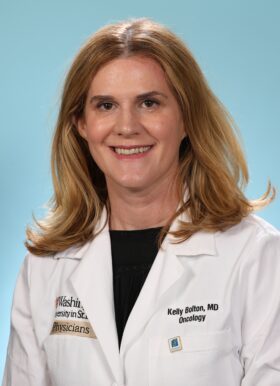
Kelly Bolton, MD, PhD, is a medical oncologist on the leukemia specialist team at Siteman Cancer Center. She is a physician- scientist whose research has paved the way in earlier detection and prevention strategies for patients who develop cancer.
Patricia Dickson, MD
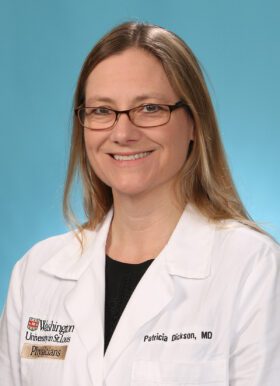
Patricia Dickson, MD is a geneticist and the Chief of the Division of Genetics and Genomic Medicine at WashU Medicine. This division of WashU Medicine works with pediatric patients at St. Louis Children’s Hospital and through Siteman Kid’s to provide care for children with genetic disorders. She is also the Principal Investigator at the Dickson Lab, which focuses on MPS disorders.
Andrea Hagemann, MD, MSCI
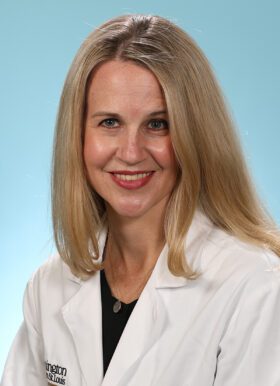
Andrea Hagemann, MD, MSCI, is a gynecologic oncologist and surgeon at WashU Medicine. She is a member of the ovarian, cervical, and uterine (endometrial) specialist teams at Siteman Cancer Center, and the current Clinical Co-Leader of Project 3 in Siteman’s SPORE grant in endometrial cancer.
Common Questions about Genetic Counseling
The decision to undergo genetic testing for cancer is personal and complex. It is a choice best made after consulting with your family members, health care team, and genetic counselor.
The American Society of Clinical Oncology (ASCO) recommends considering genetic testing when personal or family history suggests a genetic cause of cancer. Those situations include:
- Individuals diagnosed with cancer at a young age
- Individuals diagnosed with more than one type of cancer
- Individuals diagnosed with certain types of cancer, including ovarian, pancreatic, and high-grade prostate cancers, or individuals diagnosed with rare cancers
- Individuals with a family history of multiple types of cancer
- Individuals of Ashkenazi Jewish heritage
Genetic testing will clearly show if there is a specific genetic mutation or mutations in your DNA. When results find an abnormality, they help with the diagnosis and/or management of a condition. Results can also help other family members be better informed about their health and manage their lifetime risks.
Main Steps in Genetic Counseling:
- Assess
- Consult
- Test
- Manage
Genetic providers will ask you questions about your family’s medical history, and from there determine which type of genetic testing is most appropriate, if any. After taking a test, they will help you interpret the results from the test and give you recommendations for reducing your risk and managing your health.
Depending on your results, they can also help you with family planning, such as prenatal diagnosis or newborn screening, or guide you through different treatment options if you develop the disease.
Before your appointment, you might be asked to fill out a questionnaire with questions about your family history of cancer. If you have any pathology reports or other documentation, be sure to gather them and bring them with you to your appointment.
At your appointment, genetic counselors will:
- Review your family history including the different types of cancer they had and the ages at which doctors diagnosed them.
- Estimate the likelihood of a hereditary cancer syndrome and whether the pedigree matches a pattern appropriate for testing.
- Inform you about what genetic testing can and cannot tell you, the specific panels they might order, and what the possible results will imply.
- Discuss how results can help you manage your healthcare with early detection and screening, surgeries, or other targeted therapies.
- Review implications for other members of your family and discuss ways to share your test results with them.
- Review your rights to privacy regarding insurance coverage and employment, as well as how your results will be stored or used for research purposes.
From there, they will let you decide if you want to proceed with a genetic test. Sometimes, they can test you at your first appointment with a blood draw or saliva sample. Most patients get results in 2 to 4 weeks after testing.
After you receive your results, you will have a follow-up appointment to discuss what the results mean for you and your family.
Since everyone has a different insurance plan and carrier, there is no simple answer to this question. In some cases, your insurance might cover the cost of genetic testing 100%; other patients may need to pay out of pocket. Patients who are on Medicare often pay little to nothing for most genetic tests.
Your genetics provider is ready to discuss the cost and your insurance coverage during your appointment to help you make the best choice for yourself and your family.
There are two main types of genetic testing that look for specific genes associated with cancer or cancer risk. To search for inherited genes, physicians use germline tests, which look at the inherited genetic variants present in every cell in your body.
Doctors order somatic tests to examine the variants unique to your tumor after they have already diagnosed you with cancer. Sometimes, doctors might locate a germline variant after receiving the results from a somatic test.
Among these two different types of genetic testing, there are single-gene or multigene panel tests. Doctors order single-gene tests if there is already a known familial variant, but more commonly, they order multigene panels, which look at multiple genes in the same test. This helps doctors look at a range of genes rather than focusing on one or a small number.
Once you undergo a test, the lab will provide you with either a positive, negative, or variant of uncertain significance (VUS) result for the specific genes tested. You might also see a true negative or uninformative negative in your results.
A positive result indicates that the lab found a genetic variant that might increase your risk of developing cancer. A negative result implies that the lab did not find the genetic variant.
Variants of unknown significance show up when there is not enough data available to know if the genetic variant increases your risk of developing cancer or not. These come up with lesser-known genetic variants and could be something researchers will understand more about in the future.
Your genetic provider will discuss what your specific results imply for your health care and family.
DNA biobanking is a secure way for physicians to store a person’s DNA in a lab. They will freeze and lock the sample in a secure bank so that they can make it available if needed in the future — this might help if new tests become available or if you would like to test a relative’s DNA for another type of genetic variant. This also helps researchers advance medicine through scientific studies.
Your care team will ask for your consent before storing your DNA sample in WashU Medicine’s BioBank, and your information will be kept private. Lab technicians assign your sample a unique random code to identify it and do not store any other identifying information from your medical record.
Yes. Your care team at WashU Medicine and BJC HealthCare take your privacy seriously. Researchers and practitioners here helped shape the ethical, legal, and social implications (ELSI) of extracting and using genetic information to advance medicine as participants in the Human Genome Project.
Further, GINA, the Genetic Information Non-Discrimination Act, protects all U.S. citizens. This places restrictions on employment and health insurance discrimination based on genetic results.
If you have any questions or concerns about how your genetics provider stores or shares your genetic information, be sure to discuss them during your appointment before undergoing any tests.
You can start by getting in touch with our care coordinators. They are nurses trained in oncology with years of clinical experience and serve as a consistent point of contact during your journey. They have inside knowledge of the health systems and different genetic health clinics and their offerings, including their times and locations, and have direct access to care teams.
They know all the right doctors for all the right care – and how to coordinate your needs better than a call center. You do not need a referral to get started.
Start Here. Get the Care You Need.
Our Siteman care coordinators – oncology-trained nurses who help with scheduling, finding the right specialist, and guidance – can help you through the process.
Call us directly or submit a form, and we will call you back.
Clinically reviewed by:
Kelly Bolton, MD, PhD,
Blood and Marrow Transplant & Cellular/Gene Therapy Specialist
Amy Cyr, MD,
High-Risk Breast Clinic
Angela Hirbe, MD, PhD,
Medical Oncologist