Online Resources
Not all resources are the same. View other organization’s websites that Siteman Cancer Center trusts for evidence-based information and support.


Eight healthy behaviors can go a long way toward improving your health and lowering your risk of many cancers – as well as heart disease, stroke, diabetes and osteoporosis. And even small changes can have a big impact.
Eight healthy behaviors can go a long way toward improving your health and lowering your risk of many cancers – as well as heart disease, stroke, diabetes and osteoporosis. And even small changes can have a big impact.
So take control of your health, and encourage your friends and family to do the same. Choose one or two behaviors to start with. Once you’ve got those down, move on to the others.
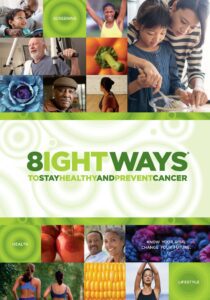
Download the 8IGHTWAYS® to Stay Healthy and Prevent Cancer PDF in English
Keeping weight in check can be hard, but it has amazing health benefits, including lowering the risk of 13 different cancers. A few simple tips can help. First off, if you’re overweight, focus on not gaining any more weight. This by itself has real benefit. Then, when you’re ready, try to take off some extra pounds for an even greater health boost.
Few things are as good for you as regular physical activity. While it’s not always easy to find the time, it’s important to fit in at least 30 minutes of activity every day. More is even
better, but any amount is better than none.
Tobacco causes many types of cancer, along with other serious problems. So, stay tobacco-free. If you smoke or use smokeless tobacco (like chewing tobacco, snuff or snus), quitting is one of the best things you can do for your health. Yes, it’s hard, but you can do it!
The basics of healthy eating are pretty simple. Focus on fruits, vegetables and whole grains, and keep red meat and processed meat to a minimum. It’s also important to cut back on bad fats (saturated and trans fats), and choose healthy fats (polyunsaturated and monounsaturated fats) more often.
Drinking alcohol can increase the chances of developing six different types of cancer. And just ½ to 1 drink a day can increase the risk of breast and colon cancer. Zero alcohol is the healthiest choice overall.
While the warm sun can feel great, too much exposure to it can lead to skin cancer, including melanoma. And tanning beds can be just as harmful. Skin damage starts early in childhood, so it’s especially important to protect children.
Sexually transmitted infections – like human papillomavirus (HPV), hepatitis and HIV – can cause a number of different cancers. Protecting against these infections can lower risk. Try to always practice safer sex, which lowers the chance of getting a sexually transmitted infection. It’s also important to follow HPV vaccine recommendations for children and adults. Boys and girls should get vaccinated at 9 to 12 years old, which helps prevent cancer later in life. But the vaccine is recommended up to age 26, and can be given up to age 45. Talk to a healthcare provider or visit cdc.gov/HPV for more information.
There are a number of important screening tests that can help protect against cancer. Some of these tests find cancer early when it is more treatable, while others can actually help keep cancer from developing in the first place.
Guidelines can vary, but talk with your healthcare provider about screening at these ages:
If you have a family history of cancer, you may need to get tests at a younger age.