


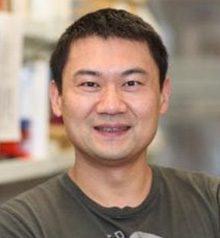

Ting Wang, PhD

Medical School Department Genetics
Research Program Solid Tumor Therapeutics
Ting Wang

Researcher Background

Primary Academic Title

Professor of Genetics, WashU Medicine

Training

  • 2006 - 2009: Postdoctoral Fellow, Computational Biology, University of California, Santa Cruz, CA

Education

  • 2001: MS, Computer Sciences, Washington University, St. Louis, MO
  • 2006: PhD, Computational Biology, Washington University, St. Louis, MO

Research & Selected Publications

Research Interest

Computational genomics and epigenomics. The evolution and adaption of human regulatory networks, with a focus on mobile elements (i.e., transposable elements) and their impact on gene regulation, their genetic and epigenetic control, and their roles in human biology and diseases. In particular, we are studying how DNA methylation changes in transposable elements influence tumorigenesis.

Research Publications

Accelerating discovery of cancer causes for prevention in the era of rising early-onset cancers.
Authors:

Shi M, Patti GJ, Gunter MJ, one or more additional authors omitted Wang T, one or more additional authors omitted Cao Y

Journal & Year:

Cell • 2026

Fully T2T pedigree assemblies reveal genetic stability and epigenetic plasticity of human centromeres across inheritance and cell-fate transitions.
Authors:

Dong S, Xing X, Cechova M, one or more additional authors omitted Wang T

Journal & Year:

bioRxiv • 2026

Leveraging Human Pangenome for Improved Somatic Variant Detection.
Authors:

Fu Q, Xin Z, Miao B, one or more additional authors omitted Wang T

Journal & Year:

bioRxiv • 2026

An integrated view of the structure and function of the human 4D nucleome.
Authors:

Dekker J, Oksuz BA, Zhang Y, one or more additional authors omitted Wang T, one or more additional authors omitted Yue F

Journal & Year:

Nature • 2026

Unmasked: transposable elements as drivers and targets in cancer.
Authors:

Grinwald MF, Saintilnord WN, Wang T

Journal & Year:

Trends Genet • 2026

INSM1 governs a neuronal progenitor state that drives glioblastoma in a human stem cell model.
Authors:

DeSouza PA, Ishahak M, Qu X, one or more additional authors omitted Wang T, one or more additional authors omitted Kim AH

Journal & Year:

Nat Commun • 2025

Cross-tissue molecular responses in the liver and blood after toxicant exposures.
Authors:

Zhang B, Miao B, Fu S, one or more additional authors omitted Wang T

Journal & Year:

Res Sq • 2025

Non-canonical functions of DNMT3A in hematopoietic stem cells regulate telomerase activity and genome integrity.
Authors:

Xavier Raj I, Kyun Koh W, Harrison J, one or more additional authors omitted Wang T, one or more additional authors omitted Challen GA

Journal & Year:

Cell Stem Cell • 2025