

A brain tumor diagnosis changes everything. Getting it right is the most important first step.
There are many different types of brain tumors. Some are cancerous, or “malignant.” Others are non-cancerous, or “benign.” They are treated very differently, which is why knowing the exact type and subtype of your tumor is essential. A precise diagnosis directly shapes your treatment plan.
What Is the First Step In a Brain Tumor Diagnosis?
Most people with brain tumors first notice symptoms and make an appointment with their primary care physician to find out what is happening. Sometimes, they have severe symptoms that prompt a visit to the emergency room.
What Are the Symptoms of a Brain Tumor?
Brain tumors cause different symptoms depending on where they are located. Common symptoms include:
- Headaches, which may be worse in the morning
- Nausea and/or vomiting
- Seizures
- Dizziness or trouble balancing
- Fainting
- Loss of vision or visual disturbances
- Changes in personality
- Memory loss
- Weakness on one side of the body
Having one or even several of these symptoms does not always mean you have a brain tumor. But if any symptoms concern you, make an appointment. Trust your instincts.
What Are the Risk Factors for a Brain Tumor?
Most brain tumors can’t be traced to one specific cause. However, certain life experiences or genetic conditions can raise a person’s risk.
These factors include:
- Previous radiation therapy to the head
- Neurofibromatosis types 1 and 2
- Von Hippel-Lindau disease
- Tuberous sclerosis
Why Choose Siteman for Your Cancer Diagnosis?
At Siteman, we recognize that every brain tumor is different. Each tumor contains a mix of aggressive cells that multiply quickly and more stable cells. It’s this combination that determines how the tumor behaves and how it will respond to treatment.
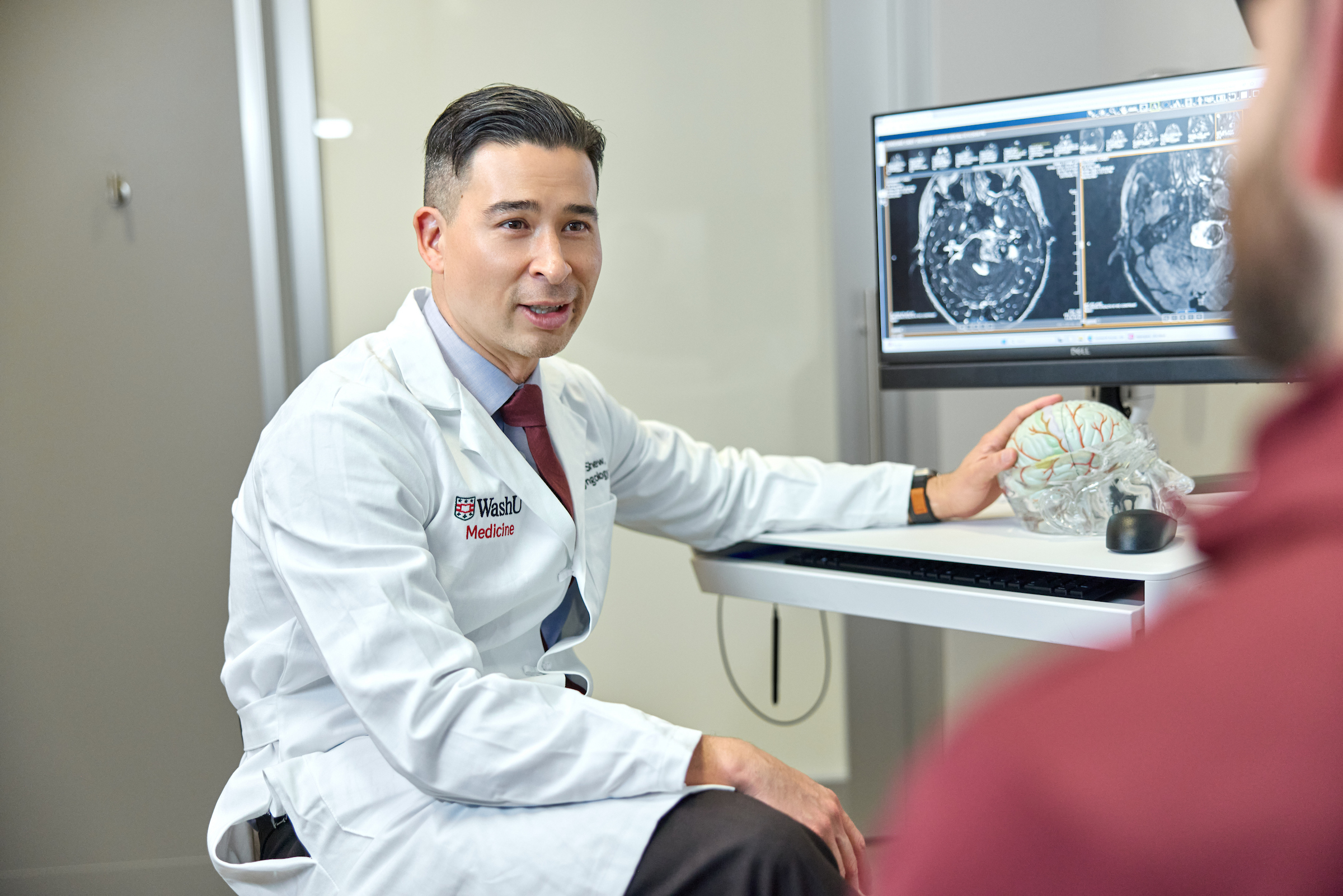
When you come to Siteman, experienced WashU Medicine physicians will work together to ensure your diagnosis is accurate. Every physician who reviews your imaging or test results will be an expert in brain tumors. We use advanced imaging to capture the clearest, most precise picture of your tumor possible.
WashU Medicine neuropathologists will study your tumor. They will consider how its unique cellular makeup will respond to treatment. From there, your WashU Medicine physicians, oncologists, and surgeons will build a treatment plan specific to your diagnosis.
What to Expect During a Diagnosis
Getting a brain tumor diagnosis involves several steps. Your Siteman care team will guide you through each one.
We understand that diagnostic testing can be stressful. Your care team of physicians, nurses, and other specialists is here to answer every question and help you feel supported at every step.
Tests to diagnose a brain tumor include:
- Neurological Exam: A quick, painless test your doctor can perform in the office. You may be asked to follow simple commands, such as walking in a straight line, while your doctor checks your pupils with a special light. If anything requires a closer look, they will recommend next steps.
- Imaging Tests: MRI and CT scans take pictures of the inside of the brain—an effective way to see whether a tumor is present. Your doctor may recommend one or both.
- Biopsy: A biopsy checks tissue for cancer cells and determines whether a tumor is cancerous or benign. It may be done during surgery to remove the tumor, or through a minimally invasive “stereotactic needle biopsy” performed in an operating room while you are under anesthesia.
Grading Brain Tumors
Your WashU Medicine physicians will determine how aggressive your tumor is through a process called “grading.” Grades range from 1 (least aggressive) to 4 (most aggressive).
Some tumor types always carry a specific grade. A glioblastoma is always Grade 4, while others, like adult astrocytoma, can range from Grade 2 to 4.
Brain tumor grades are not the same as “stages.” Other cancers are staged based on how far they have spread from their origin. Because brain tumors don’t spread outside the brain, they are measured by how aggressive the cells are—not how far they have traveled.
Our Siteman care coordinators – oncology-trained nurses who help with scheduling, finding the right specialist, and guidance – can help you through the process.
Call us directly or submit a form, and we will call you back.