Strategy seeks to expand immunotherapies for leukemia, other malignancies
For highly aggressive types of blood cancer, stem cell transplantation is often the only potentially curative therapy, yet even after a transplant, these cancers often return.
Now, a clinical trial, led by researchers at Washington University School of Medicine in St. Louis, shows that a stem cell transplant in which the donor cells have been genetically engineered to remove a particular protein helps prevent toxic side effects and potentially improves the effectiveness of therapies given after a transplant to help prevent cancer recurrence.
The study was conducted at Siteman Cancer Center, based at Barnes-Jewish Hospital and WashU Medicine, and 14 other sites in the U.S. and Canada. The findings are published May 12 in the journal Nature Medicine.
According to the study’s corresponding author, John F. DiPersio, MD, PhD, the Virginia E. & Sam J. Golman Professor of Medicine at WashU Medicine, this gene-editing technology could help address a longstanding frustration in the field: CAR-T cell therapy — an immunotherapy that effectively treats some aggressive blood cancers — has not worked against all blood cancers, including acute myeloid leukemia (AML) and myelodysplastic syndrome (MDS).
According to DiPersio, who treats patients at Siteman and is a research member there, myeloid cancers like AML and MDS are tricky to treat with CAR-T cells because the same proteins on cancer cells that the immunotherapy homes in on for destruction are also present on healthy myeloid cells, including therapeutic donor stem cells. As such, the anti-cancer therapy carries a high risk of toxicity because it also destroys healthy blood stem cells, which can trigger a dangerous inflammatory cascade. This effect also could dilute the effect of the anti-cancer therapy because so many of the CAR-T cells are attacking the wrong targets, leaving many cancer cells untouched.
This basic concept was first described by Miriam Y. Kim, MD, now an assistant professor of medicine at WashU Medicine. She began this research as a postdoctoral researcher at the University of Pennsylvania and continued the work in the DiPersio lab before becoming an independent investigator in the WashU Medicine Division of Oncology. She treats patients at Siteman and is also a research member there.
For this clinical trial, patients with AML and MDS received donor stem cells that had a target protein, called CD33, removed, in hopes that immunotherapy targeted against CD33 would kill the cancer and ignore the healthy cells.
“We are encouraged by the results of this study showing that a CD33-deleted stem cell transplant looks very similar to the outcomes of standard stem cell transplantation,” said DiPersio, who also directs WashU Medicine’s Center for Gene and Cellular Immunotherapy. “In the future, we are hopeful we will be able to combine this with CD33-targeted immunotherapies, such as CAR-T cells, and improve treatment options for patients with these very aggressive blood cancers.”
To that end, DiPersio and his collaborators have also published a single case study of a patient with high-risk AML who received a CD33-deleted stem cell transplant and later, upon relapse after the transplant, received a CD33-targeted CAR-T cell therapy, which used T cells from the same donor who provided the stem cell transplant. The patient — who had one of the most aggressive types of AML — achieved complete remission and remains cancer free over one year after receiving the CAR-T cell therapy. The patient also had normal blood cell production return with all blood cells lacking CD33, providing evidence that the genetically engineered donor cells had established themselves in the bone marrow. DiPersio is the senior author of this study, published in October 2025 in JCO Precision Oncology.
Shielding Healthy Cells
CD33 is an appealing protein to delete from donor stem cells because it is only present on blood-forming cells and not in other tissues, and because there is evidence it is not required for the proper function of blood stem cells, given that individuals born without CD33 have no apparent health problems. After a patient has successfully received this type of stem cell transplant, any remaining cells in the body with CD33 on the surface should, in theory, only be the cancer. Then, CAR-T cells or another immunotherapy designed to target CD33 would kill only the cancer cells and leave healthy donor stem cells untouched.
In this phase 1/2 multicenter clinical trial, 30 adult patients with AML or MDS at high risk of relapse received a stem cell transplant in which CD33 had been removed from the donor cells using CRISPR gene editing technology before the transplant procedure. The CD33-deleted stem cell product is called tremtelectogene empogeditemcel (trem-cel) and was made by Vor Biopharma, which funded the study.
As proof of concept, the patients also received a maintenance therapy that targets CD33, after they underwent the stem cell transplant. While not a CD33-targeted CAR-T cell, the maintenance therapy, called gemtuzumab ozogamicin, is a type of engineered antibody that targets CD33 and carries an anti-cancer drug. Gemtuzumab ozogamicin is approved by the Food and Drug Administration to treat CD33-positive AML and is in clinical trials for CD33-positive MDS. While it helps prevent relapse, the drug’s use is limited because it can cause liver toxicity and damage to blood cells, including dangerously low counts of white blood cells, red blood cells and platelets.
All patients achieved engraftment of their transplanted stem cells by day 28, meaning the cells had gathered in the bone marrow and started working. Some patients met this goal sooner, and platelet production returned by day 16, on average. These timeframes are comparable to those of standard transplanted stem cells.
Average survival was just over 14 months. Nineteen patients received at least one cycle of the antibody maintenance therapy as part of a dose-escalation protocol, and the researchers were able to establish the recommended dose. The researchers found that patients maintained blood cell counts across all doses, suggesting that the gene-edited stem cell transplant protected patients from the dangerously low blood cell counts typically seen during this maintenance therapy following a standard stem cell transplant.
Side effects during the treatment were similar to those of standard transplants, including anemia, low platelets, fever, infections and graft-versus-host disease, in which the donor cells attack the patient’s healthy tissues. Seven patients died during the study, with four due to the cancer progressing and three due to transplant-related causes, including kidney failure, liver toxicity and sepsis.
DiPersio said the results of the study lay the groundwork for developing paired CD33-deleted stem cell transplant and CD33-targeted immunotherapy interventions that avoid destruction of healthy donor cells in the course of cancer treatment.
# # #
DiPersio JF, Koehne G, Shah NN, Bernard L, Suh HC, Koura D, Tamari R, Mushtaq MU, Maakaron J, Rimando J, Kennedy VE, Patel SS, Hudson C, Loken M, Stanizzi DA, Lee-Sundlov MM, Thosar S, Mundelboim G, Guo G, Ge HG, Li BE, Xavier-Ferrucio J, Hyzy SL, Lin MI, Raffel GD, Cooper BW. Phase 1/2 trial of trem-cel CD33-deleted allogeneic hematopoietic cell transplantation with gemtuzumab ozogamicin maintenance in adult high-risk AML. Nature Medicine. May 12, 2026. DOI: 10.1038/s41591-026-04362-1.
This work was supported by Vor Biopharma. Several co-authors were employees of the company when the work was conducted.
Participants in early clinical trial had increased immune response, slowed tumor progression
A personalized vaccine to treat glioblastoma, a fast-growing and incurable brain cancer that affects four in 100,000 people in the U.S., is safe and elicits robust and broad immune responses that appears to increase recurrence-free survival in a subset of patients after surgery, according to an early-stage clinical trial co-led by researchers at Washington University School of Medicine in St. Louis.
In patients with an especially aggressive form of glioblastoma, the vaccine caused no serious side effects and prolonged patients’ overall survival compared to historical outcomes after standard-of-care surgery and chemo-radiotherapy. One long-term survivor remains recurrence-free nearly five years later.
The results of the phase 1 trial, conducted at Siteman Cancer Center, based at Barnes-Jewish Hospital and WashU Medicine, were published May 12 in Nature Cancer. The study was led jointly by Mass General Brigham and Geneos Therapeutics, a Philadelphia-based biotechnology company.
“We are extremely encouraged by these results,” said Tanner M. Johanns, MD, PhD, lead author of the study and an assistant professor in the Division of Oncology in the John T. Milliken Department of Medicine at WashU Medicine. “This kind of vaccine is a first for glioblastoma, and it is exciting to think how we can leverage this individualized therapeutic DNA cancer vaccine platform to make a positive impact on the lives of patients who are fighting this disease. Additionally, combination therapies leveraging this personalized platform are currently being investigated at WashU to test if outcomes may be improved further.”
The novel treatment uses engineered DNA molecules designed to stimulate the patient’s immune system against the cancer. Each patient’s tumor has unique proteins specific to that tumor, and this vaccine activates the patient’s immune system to recognize those proteins and eliminate the tumor cells.
Johanns said that although some immunotherapies targeting glioblastoma have shown promise in previous studies, they ultimately are ineffective in significantly delaying or preventing recurrence. That’s likely because glioblastoma can evolve and escape immune attack, but Johanns’ vaccine was designed to help the immune system recognize many different targets on cancer cells. So even if the tumor loses several of these targets, the vaccine is still able to generate responses to many others.
Additionally, glioblastoma is termed a “cold” tumor, meaning that the tumor environment is able to hide from the immune system. The cancer vaccine that was used in this trial, developed by Geneos Therapeutics, transforms cold tumors into “hot” tumors that are then susceptible to immune-mediated eradication. The vaccine is thus able to improve the patient’s immune response by targeting proteins on the cancer cell and by making the environment within the tumor more favorable to immune activation.
“We chose a DNA-based platform because it would allow us an opportunity to target more cancer proteins than any vaccine had targeted before,” said Johanns, who treats patients at Siteman and is a research member there. “Our thinking was that if we could generate a broader range of immune responses against those proteins then it may lead to a more potent vaccine compared to other vaccine platforms with more limited protein targets.”
This DNA-based vaccine platform was able to activate each patient’s immune system to seek out as many as 40 cancer proteins specific to each patient’s tumor — twice as many as had been targeted by any cancer vaccine therapy to date.
More Targets, More Chances for Success
The vaccine in the study, called GNOS-PV01, targets so-called neoantigens — proteins unique to an individual patient’s cancer cells that their immune cells can recognize. The neoantigens were identified and selected using an algorithm developed at WashU Medicine by computational biologists and co-authors Obi Griffith, PhD, a professor of medicine, and Malachi Griffith, PhD, an associate professor of medicine, both in the Division of Oncology and research members at Siteman. Johanns and his colleagues selected neoantigens from different regions of a patient’s tumor, a method they incorporated to further increase the number of cancer cell proteins targeted by the vaccine.
A vaccine platform using a different DNA-based technology developed for breast cancer by co-author William Gillanders, MD, the Mary Culver Distinguished Professor of Surgery at WashU Medicine who treats patients at Siteman, inspired the idea to bring Geneos’ GNOS-PV01 vaccine to WashU Medicine for use against glioblastoma, Johanns said.
The trial enrolled nine adult patients who had been recently diagnosed with glioblastoma. All patients were treated at Siteman Cancer Center. The team prepared a synthetic DNA molecule encoding the unique information for each patient’s tumor neoantigens. The vaccine was manufactured at the Biologic Therapy Core Facility at Siteman during the patient’s post-operative recovery and subsequent radiation treatment.
The vaccine injections started, on average, 10 weeks after the patient’s surgery and were administered every three weeks for a nine-week period, and then every nine weeks thereafter as long as patients were able to participate. All participants, except one who was taking an immune-suppressing steroid, showed an increase in immune-cell activity indicating a response to the vaccine intervention.
Two-thirds of the patients had no progression of their cancer six months out from their surgeries, and two-thirds survived one year. Typically, around 40% of glioblastoma patients reach either milestone.
One-third of the participants were still alive after two years, which is twice the historical survival rate for this patient population. One participant is still alive and recurrence-free today, almost five years after her initial diagnosis.
An Investment in the Future
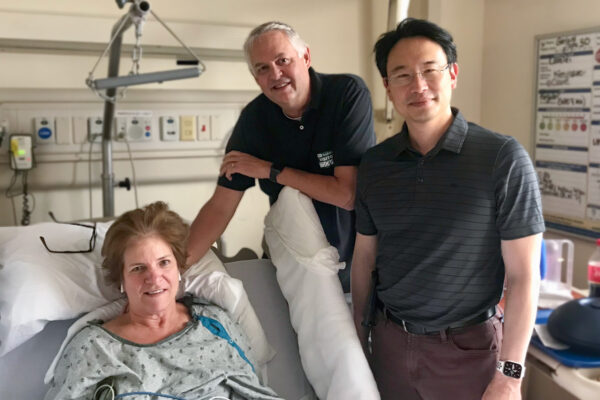
A WashU Medicine-led clinical trial conducted at Siteman Cancer Center has found that a personalized vaccine to treat glioblastoma appears to increase recurrence-free survival in a subset of patients after surgery. Trial participant Kim Garland (left) has had no recurrence of her tumor in the nearly five years since her surgery, which was performed by Albert Kim, MD, PhD (right), the August A. Busch, Jr. Professor of Neurological Surgery at WashU Medicine. Kim’s husband Scott Garland pictured in middle.
Kim Garland is a retired school nurse who lives in Kirkwood, Missouri, with Scott, her husband of 31 years. In June 2021, at age 62, Kim was volunteering at a youth camp in Ironton, Missouri, when her daughter-in-law, also volunteering at the same camp, noticed that Kim was struggling with confusion and forgetfulness, as well as headaches that would come and go throughout the day.
“I was forgetting things, things that should have been very obvious,” said Kim.
A scan at a local hospital’s emergency room back in St. Louis revealed a 6.5-centimeter mass in Kim’s brain — about the size of a small avocado. Within the week, Albert Kim, MD, PhD, the August A. Busch, Jr. Professor of Neurological Surgery at WashU Medicine, director of The Brain Tumor Center at Siteman, and co-author of the study, performed the initial surgery to remove her tumor. The grim diagnosis of grade 4 glioblastoma came after the tumor was removed.
When offered the opportunity to participate in a clinical trial, Kim Garland agreed in hopes that her participation would improve future treatments. After receiving this prognosis, both Kim and Scott did not expect that she would be alive with no recurrence nearly five years after her initial diagnosis.
“We know we are fortunate to have the kind of care that Kim has been able to receive, just a 30-minute drive from our home,” Scott said. “We see many other patients who are traveling long distances for their treatments. Having this level of care and treatment so close to home has been a huge blessing.”
With the support of their team, the couple have gained the confidence to make longer-term plans, including a long-delayed vacation this summer and spending quality time with their children and 15 grandchildren — a big change from the week-by-week life they were living in the aftermath of Kim’s initial diagnosis.
“Cancer vaccines have a long history, and the development of personalized neoantigen-targeting therapeutic vaccines now represents a highly compelling approach in glioblastoma and in other cancers,” said co-senior author Gavin Dunn, MD, PhD, a neurosurgical oncologist at Mass General Brigham Cancer Institute. “These programs require a high degree of integrated teamwork, and we are fortunate to have collaborated with many dedicated team members in this effort.”
Kim Garland’s cancer, along with those of the other patients in the trial, was an unmethylated MGMT subtype of glioblastoma, which is particularly hard to treat because it is not responsive to available treatment options such as chemotherapy. Johanns said the next step is to assess the vaccine’s efficacy in a larger group of patients, and to expand the treatment to all types of glioblastomas. The goal of Johanns and his team is to improve the vaccine response to ensure that more patients can experience benefits like those experienced by Kim Garland.
The knowledge that their participation in the trial has potentially advanced care is a comfort to the Garlands, who still need to steel themselves before each follow-up appointment, out of concern that Kim’s tumor could yet return.
“What we’re hopeful for is that through research like this, someday, when another person hears the words ‘you have glioblastoma’ as their diagnosis, it will not cause as much anxiety,” said Scott. “Maybe, they will be told ‘this is the cancer you have, but it is very treatable.’ We are fortunate and blessed to be at the right place and at the right time, to be part of this clinical trial and have a small part in the battle against this terrible disease.”
# # #
Garfinkle EAR, Perales-Linares R, Gimple RC, Livingstone AJ, Kaleigh F. Roberts KF, Butt OH, Goedegebuure. SP, McLellan MD, Chang GS, Hundal J, Yan J, Navarro JB, Paxton SA, Chattopadhyay S, Cooch N, Perales-Puchalt A, Stavroulaki K, Rochestie S, Peters J, Junker B, Campian JL, Chheda MG, Chicoine MR, Kim AH, Willie JT, Zipfel GJ, Dowling JL, Miller CA, Griffith OL, Griffith M, Gillanders WE, Miller, KE, Mardis ER, Sardesai NY, Dunn GP, Johanns TM. Adjuvant personalized multivalent neoantigen DNA vaccination induces tumor-specific immune responses in newly diagnosed glioblastoma patients. Nature Cancer. May 12, 2026. DOI: 10.1038/s43018-026-01163-w
Funding for this study came from the Mark Foundation for Cancer Research Momentum Fellowship, National Institutes of Health (NIH) National Institute of Neurological Disorders and Stroke (NINDS) grants R01NS117149 and R01 NS107833, the Nationwide Foundation Pediatric Innovation Fund, NIH K12CA167540 and The Alvin J. Siteman Cancer Center Investment Program along with The Foundation for Barnes-Jewish Hospital, NIH NINDS R01NS112712 and The Schnuck Family Fund and The Knight and Christopher Davidson Family Fund. Additional study support for development, manufacture, and administration of the treatment and monitoring of the immune responses was provided by Geneos Therapeutics. The content is solely the responsibility of the authors and does not necessarily represent the official views of the NIH.
R.P.L., J.Y., N.C., A.P.P., S.R., J.P., and N.Y.S are either current or previous Geneos Therapeutics employees.
Siteman Cancer Center at Barnes-Jewish Hospital and WashU Medicine is pleased to announce funding for 13 new projects, including two clinical trials and community outreach and engagement efforts.
Through this research, investigators aim to improve the understanding of tumor formation and growth, develop safer, more effective therapies, and remove barriers to precision medicine.
The funding is awarded through the Siteman Investment Program, which supports and accelerates the pace of innovation in cancer research. The money awarded comes from a variety of sources, including The Cancer Frontier Fund at The Foundation for Barnes-Jewish Hospital, which includes gifts from Pedal the Cause, the Foundation’s annual Illumination Gala, and donations throughout the year; the Cancer Center Support Grant (CCSG) from the National Cancer Institute; the Alvin J. Siteman Cancer Research Fund; Swim Across America – St. Louis; and various philanthropic gifts.
Please see below for more details about each funded project.
New Clinical Trial Category
Project Title: A Phase II, Single-Center, Open-Label Study of First-Line Ipilimumab plus Nivolumab and Nogapendekin Alfa Inbakicept (N-803) in Patients with Stage IV or Recurrent Non-Small Cell Lung Cancer (FLINN)
Goal: The study tests the hypothesis that adding nogapendekin alfa inbakicept (N-803), a drug that helps boost the immune system, to the already FDA-approved drug combination of nivolumab (anti-PD-1) and ipilimumab (anti-CTLA-4) will enhance anti-tumor responses in patients with stage IV or recurrent non-small cell lung cancer (NSCLC). Each drug activates the immune system through distinct but complementary mechanisms. Together, these agents may improve the depth and durability of clinical benefit compared with nivolumab and ipilimumab alone. In this study, patients will receive all three agents (nivolumab, ipilimumab, and N-803), and researchers will measure progression-free survival, overall clinical efficacy and the safety of this combination. They will also collect blood and tumor samples to understand how this treatment affects the immune system and the area around the tumor. The results of this study will clarify whether N-803 can further enhance the therapeutic effect of first-line immunotherapy and could establish a foundation for a future definitive trial aimed at improving outcomes for patients with advanced NSCLC.
Morgensztern
Project Summary: Lung cancer is the leading cause of cancer-related death in the U.S., and most patients are diagnosed only after the disease has already spread and can no longer be cured with radiation or surgery. At this stage, the main goals of treatment are to relieve symptoms, slow cancer progression and help patients live longer. One of the most important advancements in lung cancer care has been the development of immunotherapy, a class of medications that help the body’s immune system recognize and attack cancer cells. Two immunotherapy drugs, nivolumab and ipilimumab, are already FDA-approved for first-line treatment of advanced non-small cell lung cancer (NSCLC). These medicines work by “releasing the brakes” on the immune system, allowing immune cells to attack the cancer more effectively. Although some patients achieve a long-lasting response to the immunotherapy combination, most either do not benefit or eventually experience cancer progression, highlighting the need for more effective and durable treatment options. Our study will test whether adding a new medicine called nogapendekin alfa inbakicept (N-803) can improve how well nivolumab and ipilimumab work in controlling lung cancer. N-803 acts like a natural protein that boosts the activity of two key immune cells: natural killer (NK) cells and CD8+ T cells. Earlier research has shown that combining N-803 with nivolumab is safe and may help control the cancer. N-803 is already FDA-approved for the treatment of early-stage bladder cancer. By giving all three medicines together, we hope to strengthen the immune system’s ability to fight lung cancer and achieve a more durable response. If successful, this study could lead to a new, more effective, chemotherapy-free treatment option for patients with advanced lung cancer and pave the way for a larger national study.
Project Title: A Double-Blind, Placebo-Controlled Phase lb Study Evaluating the Safety and Toxicity of Recombinant Human IL-7 (NT-I7) in Relapsed/Refractory Multiple Myeloma Following BCMA CAR-T Therapy (Cilta-cel)
Goal: This is a two-arm, double-blind, placebo-controlled, randomized, phase Ib study testing the safety and toxicity of adding NT-I7 to BCMA CAR-T (standard of care) therapy in patients with relapsed/refractory multiple myeloma (RRMM). The hypothesis is that NT-I7 will help CAR T cells expand more and persist longer in the body, which will help get rid of multiple myeloma cells while still being safe. Patients receiving standard of care therapy will be randomized to either receive the addition of NT-I7 or a placebo. Correlative studies will evaluate CAR-T cell expansion, persistence, immune-phenotype, function and correlate with clinical outcomes.
Project Summary: Multiple myeloma is treated with medical therapy and stem cell transplant, but none of these therapies are curative. An alternate approach in myeloma therapy is to engineer patients’ own immune cells to detect and destroy myeloma cells. These chimeric antigen receptor T cell (or “CAR T cell”) therapies cause the cancer to shrink in 9 of 10 patients and can sometimes control myeloma for years, but are still not curative. Based on work in the researchers’ laboratory, the addition of a naturally occurring protein messenger called interleukin 7 (IL-7) can improve the ability of CAR T cells to get rid of blood cancer cells. In response to IL-7, CAR T cells divide more and persist longer, raising the possibility that the combination may be able to permanently eradicate myeloma cells. This study proposes the use of NT-I7, a long-acting version of IL-7, to improve myeloma-directed CAR T cell therapy. Similar drugs have been used to treat patients with severe infections and have been shown to be safe in that setting, with few side effects reported. By combining NT-I7 with standard-of-care CAR T cells, the researchers hope to enhance CAR T cell efficacy, achieve deeper remissions and achieve cures for patients with myeloma.
Pre-R01 Category
Project Title: Metabolic Control of Antigen Presentation in aCD40 Cancer Immunotherapy
Goal: To uncover how a chemical called itaconate affects the way our body recognizes and attacks harmful invaders called antigens. The researchers want to discover which antigens are most important for making our immune system respond strongly. By using advanced tools to study genes, metabolites and DNA, they will learn which immune cells are involved and how they can help the cells identify and destroy tumors more effectively.
Project Summary: This project explores how immunometabolic regulation within myeloid cells affects tumor antigen presentation and response to immunotherapy. The labs of Artyomov and Robert Schreiber, PhD, have long investigated mechanisms of tumor rejection, emphasizing the role of myeloid antigen-presenting cells. Their joint studies reveal that during effective immunotherapy, myeloid cells undergo a shift toward a pro-inflammatory and metabolically remodeled state — highlighting the metabolite itaconate as a key player in this transformation. Itaconate is produced in activated myeloid cells and has been shown to regulate immune responses. Preliminary data from the Artyomov lab show that mice deficient in itaconate (Irg1-/-) completely reject EG7 tumors when treated with αCD40 immunotherapy, while wild-type mice fail to do so. Mechanistically, itaconate inhibits GILT, a thiol reductase crucial for processing disulfide-rich neoantigens, thus impairing effective antigen presentation in wild-type settings. These findings support a novel hypothesis: Itaconate suppresses tumor antigen processing via GILT inhibition, thus limiting anti-tumor immunity. The significance and innovation of this proposal lie in several novel insights: (1) New Mechanistic Insight: It is the first to suggest that itaconate modulates cancer immunotherapy by directly impacting antigen processing through covalent modification of GILT and other endosomal proteases; (2) Complete Tumor Rejection Phenotype: Unlike previous studies focused on T cell–centered therapies like checkpoint inhibitors, αCD40 therapy in Irg1-/- mice results in complete tumor clearance, revealing the central role of myeloid metabolism in driving anti-tumor responses; and (3) Cutting-edge Tools and Expertise: The team possesses all required platforms — from in silico neoantigen prediction to in vivo validation — to dissect antigen presentation and immune responses.
Project Title: Defining and Targeting the Non-Transcriptional Functions of MYC in Acute Myeloid Leukemia
Goal: To understand the different ways the MYC protein helps leukemia grow, both inside and outside the cell’s nucleus. By figuring out how MYC moves around the cell and controls RNA, the researchers hope to uncover new weaknesses in leukemia cells. Ultimately, this work aims to create safer and more effective treatment strategies for patients with acute myeloid leukemia (AML).
Project Summary: AML is one of the most aggressive blood cancers. Many patients relapse after treatment, and older adults often cannot tolerate intensive options like chemotherapy or bone marrow transplant. Because AML is driven by many different genetic changes, it has been very difficult to develop effective, targeted and less toxic treatments. One protein, called MYC, is abnormal in almost every case of AML and is a major driver of the disease. MYC normally works inside the nucleus of the cell to turn genes on and off. However, we still do not fully understand how MYC causes leukemia, especially because traditional drugs that try to block its gene-regulating role have not worked well in patients. Our recent research shows that MYC does more than control genes. We found that certain mutations in MYC can cause leukemia by changing where MYC is located inside the cell and by altering how it interacts with RNA. These effects happen outside the nucleus and represent a completely different way MYC may drive cancer. These discoveries suggest that MYC has additional, “extranuclear” functions that help leukemia grow, and that these functions could be targeted separately from MYC’s usual gene-regulating role. By revealing these new and unexpected roles of MYC, this research aims to lay the groundwork for more effective and less toxic treatments for AML and potentially other MYC-driven cancers.
Project Title: The Role of Endogenous Memory NK Cells in Non-Small Cell Lung Cancer
Goal: To improve a type of immune cell called memory-like (ML) natural killer (NK) cells to help fight lung cancer. The researchers want to study these special immune cells in lung cancer patients to learn more about how they work. This understanding will give them the tools to develop better NK cell therapies for lung cancer. They will apply this knowledge to optimally design clinical trials that boost the patient’s own immune system to fight cancer.
Project Summary: Lung cancer is the leading cause of death from cancer. Recent therapies have been aimed at activating the patient’s immune system and have seen improved responses, but only a subset of patients have benefitted from this treatment. Therefore, new treatment options are needed. In this proposal, we are focused on natural killer (NK) cells, a type of immune cell that can kill cancer. We previously found that when we treat NK cells in the lab with three specific proteins, the NK cells develop memory, which means they are better at fighting cancer. For instance, lab-created memory NK cells have been shown to be effective at treating blood cancer. The researchers believe that memory NK cells could improve outcomes for solid tumor patients as well. They have found that memory NK cells were increased in lung cancer patients and that this increase remained even in lung cancer that has spread to the brain. However, researchers do not understand why memory NK cells, which are more effective at fighting blood cancer, are increased within lung cancer. This is the first study to identify that memory NK cells can reside in cancer without first creating them in the lab. This proposal will determine the ability of the endogenous — the body’s own — lung memory NK cells to fight off lung cancer. The researchers will measure the cells’ abundance. Also, they will measure the cells’ proximity to the tumor. Researchers will also identify how to can make the endogenous memory NK cells better at fighting cancer. These results are expected to provide critical data for longer-term funding. Working with collaborators, the researchers expect to develop a new clinical trial to activate endogenous memory NK cells in the future.
Project Title: A Novel Targeted Treatment Combination for BRAF Mutant Melanoma
Goal: To improve the effectiveness of current melanoma treatments to shrink tumors more and for a longer time. The researchers will test the combination of two FDA-approved drugs, dabrafenib and entrectinib, against human melanoma tumors previously isolated from patients and now grown in mice to mimic the natural behavior and growth environment of these tumors. This would establish a novel combination of FDA-approved drugs for melanoma that has a specific mutation (in a gene called BRAF) and no longer responds to current treatments. Success would support future clinical trials for this drug combination in humans.
Project Summary: Melanoma usually arises first on the skin and is extremely dangerous due to its tendency to spread, sometimes early, to other organs. Newly developed drugs have improved our ability to treat melanoma and prolong many patients’ lives. However, even our most quickly effective treatments, called targeted therapies, often work only for a limited time as melanoma eventually becomes resistant to these drugs and continues to grow and spread. For many patients, these targeted therapies are the last line of treatment that they can tolerate due to other medical issues or because of ongoing negative effects from prior treatments that overactivate the immune system. In this proposal, we seek to understand how melanoma becomes resistant to current targeted therapy and determine if we can overcome this resistance with other drug combinations. In our studies thus far, we have found an exciting new combination of existing and readily available drugs that may overcome this resistance in certain melanomas. This combination of two drugs works in resistant melanoma cells grown in the lab, and we now aim to test their effectiveness against human cells in mouse models. If successful, this study would provide essential support for future clinical trials for this drug combination in patients who have exhausted currently available treatments and who desperately need these additional treatment options for melanoma that would otherwise be nearly untreatable.
Project Title: Tumor-Associated Macrophage Modulated Radioimmunotherapy of Head and Neck Squamous Cell Carcinoma
Goal: Head and neck squamous cell carcinoma (HNSCC) is a serious type of cancer that is hard to treat successfully. The area around the tumor (called the tumor microenvironment, or TME) can weaken the body’s immune response, making treatments less effective. To tackle this problem, the researchers have developed a new type of treatment that uses radiation to target certain immune cells called tumor-associated macrophages (TAMs). By doing this, they hope to change the TME so other treatments, like chemotherapy or immunotherapy, work better. The goal is to create a targeted radiation therapy that attacks specific TAMs called CD163+ to improve treatment for people with HNSCC.
Project Summary: Despite advances in prevention and treatment, survival for HNSCC patients has minimally improved over the past 30 years. The substantial morbidity and mortality rates for HNSCC and the toxicity associated with the standard treatment options emphasize the need to seek alternatives. Targeted radionuclide therapy (TRT) is a kind of treatment that delivers radiation directly to the cancer cells to minimize damage to healthy cells. This method has helped improve outcomes for some types of cancer. However, TRT can still cause problems over time, like treatment resistance and cancer coming back. So, the researchers need new ways to use TRT for treating HNSCC. Tumor-associated macrophages (TAMs), especially CD163+ TAMs, are an essential component of the tumor microenvironment and maintain a critical role in orchestrating tumor progression, metastasis and resistance to therapies. The goal of this application is to develop CD163+ TAM- targeted therapy for HNSCC. The researchers believe that using a special probe labeled with radioactive copper (64Cu/67Cu) can help them see and change the tumor environment, making other treatments like immunotherapy work better.
Project Title: Targeting COPS5 to Overcome PARP Inhibitor Resistance in Ovarian Cancer
Goal: To develop and test a new therapy for the most common type of ovarian cancer by targeting a protein called COPS5. Through rigorous mechanistic, translational, and preclinical studies, this work aims to establish COPS5 as a target for a new therapy that will weaken the tumor and make it more susceptible to other known treatments, such as PARP inhibitors.
Project Summary: Most patients with ovarian cancer develop resistance to standard treatments, including platinum chemotherapy and PARP inhibitors, resulting in a low five-year survival rate. Once resistance develops, there are limited effective treatment options. This research focuses on a protein called COPS5, which helps cancer cells repair DNA and survive therapy. Early results show that blocking COPS5 makes resistant ovarian cancer cells more sensitive to PARP inhibitors and increases treatment-related DNA damage. Patients with high COPS5 levels have worse outcomes. In this project, the researchers will determine whether COPS5 is elevated in tumors that do not respond to PARP inhibitors, test whether blocking COPS5 safely strengthens PARP inhibitor effectiveness, and study how COPS5 helps cancer cells resist therapy. This work will lay the foundation for developing new treatments that overcome resistance and help more women benefit from PARP inhibitors.
Project Title: Predicting Response of HER2-low Breast Tumors to Trastuzumab-Deruxtecan Through Quantitative Imaging
Goal: The vast majority of patients with advanced breast cancer become resistant to anti-HER2 antibody-drug therapies. The use of predictive biomarkers (genes, proteins, or other molecules in the body) to guide antibody-drug response is necessary for improving survival in patients with breast cancer and for sparing them from unnecessary side effects. This proposal seeks to optimize a whole-body imaging approach that can identify how well Trastuzumab-drug conjugates will work against HER2-low breast tumors.
Project Summary: Breast cancer leads to a significant number of deaths each year. To reduce these numbers, we need effective ways to detect the disease and treat it. Antibody-drug conjugates, which are a combination of antibodies that specifically target cancer cells and a drug that kills them, have shown promise in treating breast tumors with high levels of a protein called HER2. Recently, some of these drugs have also been found to be effective in patients with tumors that have lower levels of HER2, but resistance occurs over time. In this proposal, the researchers will test approaches of whole-body imaging to identify which breast tumors will benefit most from antibody-drug therapies, reducing unnecessary side effects for those who may not respond well. In addition, the researchers will combine antibody drugs with other treatments to improve their efficacy. This approach will lead to future clinical trials that offer more effective options for diagnosing and treating breast cancer.
Project Title:Targeted Radionuclide Therapy for Cervical Cancer
Goal: To evaluate a new treatment for cervical cancer that uses a radioactive peptide that sticks to a specific protein (called integrin αvβ6) on the surface of tumor cells. If successful, this method will boost the effectiveness and safety of radiation treatment.
Project Summary: Cervical cancer is among the top cancers in incidence and mortality of young women worldwide, with about 350,000 cancer-related deaths per year. Following standard-of-care treatment, many locally advanced cervical cancer patients experience recurrence and have a five-year survival rate below 10%. Therefore, more sophisticated targeted therapeutic options are urgently needed to improve clinical outcomes. To address this, the researchers propose to deliver radiation in a specific manner to a protein that is highly expressed on cervical cancer cells but not on normal tissues. This protein is ideal for delivery of highly toxic radiation that can kill the cancer cells while not being toxic. The researchers have developed a novel peptide that carries radiation and, when injected into a living subject, will seek out this protein and bind strongly to it. In this proposal, the researchers will investigate the radioactive peptide for its binding properties to cervical cancer cells in a dish, followed by its evaluation in mice that have cervical cancer tumors. At the conclusion of these studies, the researchers anticipate they will have a well-characterized radioactive peptide that is ready to be moved into the clinic for the treatment of cervical cancer. In addition, this peptide can also be used for the treatment of other cancers, such as pancreatic, lung or breast cancer, since the protein it binds to is also highly expressed in these cancers.
Project Title: Imaging, Phenotyping, and Molecular Targeting of CD38-Resistant Multiple Myeloma Cells
Goal: Multiple myeloma (MM) is an incurable blood cancer that nearly always relapses, and patients who fail CD38-targeted immunotherapies have poor survival measured in months. This project directly addresses an urgent clinical need by investigating mechanisms of resistance to CD38-targeted therapies. The findings of this proposal will ultimately guide development of new interventions to improve survival in patients with relapsed and refractory MM. The overall goal is to address the unmet clinical need to identify these aggressive and highly metastatic MM cells early on and identify effective treatments that will improve patient outcomes.
Project Summary: MM is the second most common blood cancer. It arises from abnormal plasma cells in the bone marrow that multiply uncontrollably and produce harmful levels of antibodies. This disease damages the bones, weakens the immune system, and can lead to kidney failure. Current treatments often work well at first, but nearly all patients eventually relapse with more aggressive disease, and no existing therapy can cure MM. A new class of drugs has targeted a protein called CD38, which is found in high amounts on most myeloma cells. Drugs such as daratumumab and isatuximab initially work well, but many patients either do not respond or become resistant, with survival dropping to less than six months once these treatments fail. Because CD38-targeted therapies are now being used earlier in treatment, resistance is expected to become even more common. Our research focuses on understanding why MM becomes more aggressive when CD38 is lost. In laboratory mouse models, myeloma cells without CD38 caused more bone damage, spread to the kidneys, and grew faster than normal myeloma cells. We also observed changes in several cellular pathways and abnormal blood chemistry, indicating that “CD38-low” myeloma is particularly dangerous. This project will study both the tumor cells themselves and the surrounding microenvironment to uncover how CD38 loss drives aggressiveness and resistance. By identifying the key pathways and markers of these high-risk cells, the researchers aim to develop strategies to detect them earlier and create more effective treatments. The long-term goal is to improve survival and quality of life for patients facing this incurable and often devastating disease.
Project Title: Identifying a DHX9 Pathway Vulnerability in Triple Negative Breast Cancer
Goal: To define why triple negative breast cancer (TNBC) depends on the RNA helicase DHX9. The work will determine how TNBC cells use DHX9 to grow and survive. The project will test the DHX9 inhibitor ATX968 in TNBC models and measure its ability to slow growth and kill tumor cells. The results aim to provide the evidence needed to support a clinical trial in TNBC patients.
Project Summary: TNBC refers to breast cancers that lack estrogen, progesterone and HER2 receptors. This aggressive subtype of breast cancer is often metastatic and is associated with lower overall survival across all stages compared to other breast cancer subtypes. TNBC poses significant challenges to patients, clinicians and researchers due to a lack of effective therapies, its high mortality rate and the absence of a well-defined molecular target. Recent work points to a new opportunity. DHX9 is a protein that plays a crucial role in several important functions within cells, including how genes are turned on and off, and how genetic material is kept stable. Many cancers produce high levels of DHX9, and this pattern is linked to poorer outcomes. TNBC cells appear to rely on DHX9 to manage complex RNA structures that would otherwise trigger stress or cell death. This makes DHX9 a promising target for therapy. The researchers’ work shows that DHX9 is highly active in breast tumors with worse prognosis. The scientists reduced DHX9 in aggressive breast cancer cells and found that this led to slower growth and more cell death. These results suggest that TNBC cells depend on DHX9 to survive. Blocking the activity of the DHX9 protein may also help the immune system recognize and attack these tumors. This project will build on these findings using tissue samples from patients and mouse models of TNBC. The researchers will use a new drug called ATX968 that inhibits DHX9 activity and has already been cleared for initial testing in humans.
COE Supplement
Project Title: Leveraging Community Input for AI-based Applications for Cancer Patients and Caregivers
Goal: To define the unique factors that impact molecular cancer testing and outcomes in patients throughout the Siteman catchment area. The researchers aim to deliver community-informed, AI based methods to compare access to precision medicine and its impact on cancer outcomes. They further expect to develop a prototype AI-based application for interactive use by community patients and caregivers to address barriers to molecular testing and precision medicine therapies.
Gomez
Project Summary: In this pilot study, the researchers will leverage large language models (LLM), a type of artificial intelligence designed to standardize and accelerate the review of bulk data, to collate cancer molecular testing data, social determinants of health (SDOH) and cancer-specific outcomes from notes extracted from medical records. LLM-extracted data will be compared to manually abstracted data performed by an oncology clinical coordinator from the same patient charts.
In parallel, the researchers will seek input and feedback from their community partner, the Cancer Support Community of Greater St. Louis. Through that network, the researchers will engage participants to understand their knowledge of precision medicine, the barriers they have faced and their thoughts on artificial intelligence.
Linnenbringer
The researchers will incorporate their input into a prototype AI-based application and elicit additional feedback via testing of the improved prototype.
Siteman Cancer Center at Barnes-Jewish Hospital and WashU Medicine is pleased to announce funding for 12 new projects, including four clinical trials. Through this research, investigators aim to improve the understanding of tumor formation and growth, develop safer, more effective therapies, and explore new cancer screening strategies.
The projects will benefit from $2.42 million in new grants awarded through the Siteman Investment Program. The goal of the grants is to support and accelerate the pace of innovation in cancer research. The money awarded comes from a variety of sources, including The Cancer Frontier Fund at The Foundation for Barnes-Jewish Hospital, which includes gifts from Pedal the Cause’s annual bike challenge, the Foundation’s annual Illumination Gala, and donations throughout the year; the Cancer Center Support Grant (CCSG) from the National Cancer Institute; the Alvin J. Siteman Cancer Research Fund; Swim Across America – St. Louis; and various philanthropic gifts.
Please see below for more details on each funded project.
New Clinical Trial Category
Project Title: Phase II Study of Stereotactic Body Radiotherapy plus FAK and RAF/MEK inhibition in Advanced Pancreas Adenocarcinoma
Goal: This is a phase II, single-institution, open-label trial treating patients with borderline resectable (difficult to remove surgically) or locally advanced (cannot be removed by surgery) pancreatic cancer. The hypothesis is that advanced pancreatic cancer patients receiving treatment of adaptive (change the plan each day to adapt to patient’s anatomical changes in bowel and tumor position) stereotactic body radiotherapy (SBRT) plus defactinib + avutometinib at the same time will have more time after treatment during which the cancer will not progress (otherwise known as increased progression-free survival, or PFS) compared to historical PFS rates for patients receiving adaptive SBRT alone.
Project Summary: Pancreatic ductal adenocarcinoma (PDAC) has a five-year survival rate of 12%. The only potential for a cure is surgical removal of the tumor (resection). However, despite 48% of patients presenting with advanced non-metastatic disease, only 10-15% of these patients are surgically resectable. Current standard of care for these locally advanced PDAC (LAPC) patients who are surgically unresectable is chemotherapy followed by consolidation stereotactic body radiation therapy (SBRT). However, more than half of these patients will progress to metastatic disease in one year. Current SBRT strategies infrequently generate sufficient tumor regression to enable a surgical option in LAPC patients. Thus, more effective treatment strategies for LAPC that lead to greater prevention of metastatic disease would directly improve PDAC patient survival. This application seeks to build on exceptional scientific, pre-clinical, clinical and biomarker findings. We will conduct a phase I/II study of SBRT plus FAK inhibition (Defactinib) and a RAK-MEK inhibitor (Avutametinib) in advanced pancreatic cancer patients. Our hypothesis is that this combination will be safe and lead long-term survival through modulation of tumor-intrinsic and immune pathways.
Project Title: Therapeutic RSK1 Targeting in Myeloid Malignancies
Goal: This study investigates a new approach to treating certain types of blood cancers. Currently available treatments for these blood cancers are only partially effective. Thus, there is a desperate need to develop more effective treatments for these diseases. The proposed study involves the repurposing of a treatment that is currently in development for breast cancer. This would be the first study of this treatment in blood cancers. This study hypothesizes that PMD-026, an oral inhibitor of ribosomal protein S6 kinase A1 (RSK1), is safe and well tolerated in participants with MF and MDS/MPN and will improve spleen response, symptom response and bone marrow histopathological response.
Project Summary: Myelofibrosis is a chronic myeloproliferative neoplasm (MPN) characterized by anemia, enlargement of the spleen, bone marrow fibrosis, fever, night sweats, fatigue and weight loss. Life expectancy with MF is limited, with a median survival of only five years. MF exhibits a propensity for transformation to post-MPN secondary acute myeloid leukemia (sAML), for which the prognosis is dismal (median survival < 6 months). Despite vigorous research, therapies capable of effectively treating MF and preventing progression to sAML remain elusive. Thus, there is a pressing need to develop novel therapeutic strategies for patients with these diseases. We initially identified aberrantly increased expression of the phosphatase DUSP6 in CD34+ hematopoietic stem/progenitor cells (HSPCs) from patients with MPNs transformed to sAML. Genetic and pharmacologic inhibition of DUSP6 inhibited MPN cell proliferation and suppressed downstream signaling effectors including phosphorylated RSK1 (pRSK1). To further understand the role of RSK1 (encoded by RPS6KA1), we performed patient-derived xenograft (PDX) experiments with sAML patient CD34+ HSPCs subjected to RPS6KA1 shRNA knockdown. Remarkably, RPS6KA1 knockdown led to near complete elimination of human CD45+ cells in the peripheral blood and bone marrow of engrafted mice. Our clinical trial challenges current treatment paradigms by investigating therapeutic targeting of a novel signaling pathway in myeloid malignancies. This investigator-sponsored study will be the first study with PMD-026 in blood cancers. The study additionally incorporates laboratory correlative studies (RNA-sequencing, mass cytometry, multiplex cytokine profiling, molecular genomics) to characterize how treatment with PMD-026 impacts downstream signaling effectors, inflammatory markers, and molecular response. This proposal leverages novel scientific concepts to address important unmet needs for patients with myeloid malignancies.
Project Title: Phase II Trial of Surgery followed by Risk-Directed Post-Operative Adjuvant Therapy for HPV-Related Oropharynx Squamous Cell Carcinoma: “The Minimalist Trial-2 (MINT-2)”
Goal: To reduce the dose of radiation and chemotherapy a patient receives after undergoing surgery for human papillomavirus (HPV)-related oropharynx squamous cell carcinoma (throat cancer)
Project Summary:
Despite improvements in operative techniques (e.g. transoral robotic surgery, or TORS), which have reduced short-term surgical morbidity for HPV+ oropharyngeal squamous cell carcinoma (OPSCC), otherwise known as throat or tonsil cancer, radiation and chemo after surgery remain a cause of significant long-term morbidity. While surgery is well-tolerated, post-surgery therapy often causes serious acute and chronic adverse events (AEs), including debilitating inflammation of the mucous membranes that line your mouth and GI tract, severe dry mouth, taste disorders and neck fibrosis/scarring among others, potentially resulting in long-term dependence on a feeding tube. Given the overall high rates of cure for HPV+ throat or tonsil cancer, there has been a strong focus on de-escalation of chemoradiation therapy (POACRT) in these patients to improve long-term morbidity. Our prior MINT trial (MINT-1) was a major step forward in de-escalation of HPV+ OPSCC patients. We believe this new proposal will significantly alter the standard of care adjuvant therapy of HPV+ throat and cancer patients and improve the therapeutic potential of current treatments. Importantly, MINT-1 was a non-randomized study; thus, at a minimum, confirming and extending the results of that study through MINT-2 represents a critical advance that is likely to yield adoption of this approach nationally and change the standard of care.
Project Title: A Multicenter Phase II Study of Propranolol for the Treatment of Kaposi Sarcoma in Adults
Goal: This is a phase II, open-label, multicenter, single-arm treatment trial evaluating the use of propranolol (a beta blocker) to treat Kaposi sarcoma (KS), a disease in which cancer cells are found in the skin or lymphatic or visceral sites in the body. The hypothesis of this study is that an overall response rate (ORR = CR + PR rate) of at least 45% (as assessed by the AMC KS response criteria) will be achieved in participants, and that propranolol will be safe and well-tolerated by patients with KS. Our goals are to determine: 1) the safety and response of propranolol for KS, and 2) the effect on KS-associated gene expression.
Project Summary: Infectious agents cause 20% of cancers worldwide. Kaposi sarcoma (KS) is caused by the KS γ-herpesvirus (KSHV). KSHV is also associated with primary effusion lymphoma, a B cell lymphoproliferative, preneoplastic disease, multicentric Castleman’s disease (MCD), and KS inflammatory cytokine syndrome (KICS). Treatment of KS involves immune reconstitution and/or systemic liposomal anthracyclines, taxanes, pomalidomide, or immune checkpoint inhibitors, but most of these therapies are not available low-income countries, and KS is one of the most common cancers in sub-Saharan Africa in HIV-negative or positive individuals.
Although remissions are obtained in most patients, complete remissions are rare, and continuous therapy is required. Propranolol is an inexpensive, globally available beta blocker, which is highly effective therapy for infantile hemangioma, and other vascular lesions and anecdotal reports describe successful treatment of KS with oral propranolol. Therefore, it is logical to assess the safety and activity of propranolol in a prospective clinical trial, and identify biomarkers of response. Single cell transcriptomics (scRNAseq) provides in-depth data about KS interactions with the tumor microenvironment, which will be utilized with baseline and on-treatment biopsies. We are uniquely qualified for this project given our extensive KS biological, pathological, epidemiological, translational and clinical experience.
Up to 25 eligible patients will be enrolled in a 2-stage phase 2 clinical study (18 at Washington University and 7 at the Kenya Medical Research Institute), with different KS subtypes, and treated with up to 20 weeks of propranolol. Successful completion of this study trial may provide a new, inexpensive, well-tolerated, globally available therapy for KS, and identification of biomarkers of response. This should prompt an assessment of beta blockers in other malignancies.
Team Science
Project Title: Elucidating Mechanisms and Translational Strategies to Enhance Therapeutic Anti-Tumor Immunity
Goal: The Cancer Immunity Team Science group is a translational, interdisciplinary research program with the overarching goal to develop new forms of immunotherapy that enhance a patients’ anti-tumor T cell immunity by design and thereby improve clinical outcomes or achieve cure.
Project Summary: The Cancer Immunity program is a group of physicians and scientists united in the goal of discovering new strategies that initiate or promote a patient’s own T cells to destroy their cancer. These discoveries will then be translated into multiple novel treatment strategies that may have a broad impact on multiple cancer types. The projects utilize solid tumor (sarcoma) and blood cancer (lymphoma) immunocompetent mouse models to evaluate these new ideas, with translational relevance enhanced by confirming findings within lymphoma patient samples. The first project established these two cancer models in mice, defined key cancer cell proteins (neoantigens) targeted by T cells, developed neoantigen vaccines to initiate cancer immunity, and discovered a new CD4+ Tr1 cell that suppresses effective CD8+ T cell responses to these malignancies. This project serves as an integrative hub for the other projects. A second project investigates how chimeric antigen receptor (CAR) T cells bring about cancer immunity, and correlates key findings in samples from patients undergoing CAR T cell therapy. The third project defines the ability of CAR natural killer (NK) cells to increase anti-tumor immunity by enhancing neoantigen release via direct killing, dendritic cell localization and maturation, antigen presentation and T cell localization. Concepts discovered will be confirmed in humanized mouse models. The fourth project advances CAR dendritic cells, evaluating mechanisms to promote robust cancer immunity through epitope spreading, and combining with strategies that target suppressive cells, including Tr1 cells. The projects are highly integrated by evaluating Tr1 cells in each strategy, performance of inter-project experiments to address resistance to a single immunotherapy, and have shared model profiling that evaluates Tr1, T cells, NK cells and DCs across projects. The projects will be supported by research cores that facilitate uniform immunology and informatics analysis, biostatistics and shared mouse modeling, in a planned extramural team science program application.
Pre-R01 Category
Project Title: Optimizing Targeted Alpha-Emitter Radiopharmaceutical Therapy for Intraperitoneal Carcinomatosis
Collaboration with University of Missouri – Columbia
Goal: This proposal aims to develop a safer, more effective radiotherapy treatment for patients with advanced colorectal cancer that has spread to the abdomen — helping improve both survival and quality of life.
Project Summary: Colorectal cancer often spreads to the lining of the abdomen, forming small tumors called peritoneal metastases. These tumors are especially hard to detect and treat and current therapies like systemic chemotherapy offer only limited benefit. There is a critical need for more effective and targeted treatments. This project explores a promising new strategy called intraperitoneal targeted alpha therapy (IP TAT). This approach delivers powerful cancer-killing radiation — known as alpha particles — directly into the abdominal cavity, where it can precisely target cancer cells while minimizing damage to healthy tissue. Alpha-emitters deliver extremely potent radiation and are increasingly being used in cancer patients, often successfully treating tumors for which other therapies have failed.
In the first part of this study, we will test a group of specially designed radioactive drugs that are made to seek out and attach to colorectal cancer cells. These agents are developed by our collaborators at the University of Missouri, who bring expertise in radiochemistry and tumor biology. By comparing different versions, we aim to find the one that most effectively reaches and sticks to tumors and stays in place long enough to be effective. In the second part of the project, we will use advanced imaging techniques and computer modeling—developed by the physicists and radiobiologists of the Washington University team — to precisely measure where the radiation accumulates and how much radiation the tumors receive. This will help us determine how best to eliminate cancer cells while avoiding harmful side effects.
Project Title: Diet-Related Therapies to Enhance Radiation Anti-Tumor Responses and Minimize Toxicity
Goal: The primary objective of this proposal is to investigate how cellular processes, such as autophagy and the activation of specific metabolic pathways, may enhance the effects of radiation therapy on tumors and protect the heart from radiation-induced damage. Our goal is to develop treatments that improve radiation’s helpful effects on cancer and reduce its harmful effects on the heart.
Project Summary: Radiation therapy (RT) is an important component of modern cancer treatment; it is received by over half of all patients with cancer. Despite recent advances, RT does not cure all patients, and some experience harmful side effects — especially to the heart when the chest is treated. This highlights the need for new strategies to improve RT. We recently demonstrated that intermittent fasting (IF), a dietary approach that alternates periods of fasting with normal eating, enhances RT’s ability to kill tumors and also protects against RT-induced heart damage in animal models. IF can cause a wide range of effects, including increased cycling of a process called autophagy, which is linked to health and aging, as well as altered tumor metabolism. Our preliminary data from pre-clinical laboratory models suggest that IF and RT alter autophagy in tumors and the heart, which may lead to the favorable effects of combining IF and RT. Our metabolomics and other data from pre-clinical models suggest that regulation of branched-chain amino acid metabolism may also mediate the enhanced anti-tumor effects of IF on radiation. Our objective in this proposal is to use innovative preclinical techniques to determine how IF and RT impact autophagy and branched-chain amino acid metabolism in preclinical models of cancer and heart damage using RT. Our findings have the potential to identify translatable interventions that replicate the beneficial effects of IF, thereby enhancing radiation outcomes in patients with cancer. For instance, approved drugs used for other conditions may mimic IF, potentially improving RT efficacy in patients. These studies may lead to clinical trials and ultimately improved outcomes for patients with cancer.
Collaboration with University of Missouri – Columbia
Goal: The long-term goal of this project is to develop a new treatment for glioblastoma (GBM) by leveraging the immune-boosting effects of a safe and weakened version of a bacterium, Brucella melitensis, which we call SPIKE1.0.
Project Summary: A major challenge in the treatment of patients with GBM is that patients’ immune systems do not attack the tumor. The tumor suppresses the number and function of immune cells around it. Researchers from the laboratories of Drs. de Figueiredo (University of Missouri) and Chheda (Siteman Cancer Center/Washington University) are working together on a new strategy using a safe, genetically modified bacterium that carries activating molecules, to lure and unleash anti-tumor defenses to attack and clear the tumor. Before moving to treatment in humans, they will rigorously test the hypothesis that this new treatment will improve the anti-tumor immune response in mice bearing brain tumors and significantly increase their survival. Upon successful completion of the specific aims of the project, the investigators will have the necessary preliminary data for an R01 proposal in which they will delve deeper into how this treatment works and develop even better therapeutic interventions. If successful, this research will eventually lead to a new treatment for glioblastoma patients that will improve their quality of life and help them live longer.
Project Title: Adapting a Multi-Level Intervention to Increase Lung Cancer Screening and Reduce Rural Cancer Disparities
Goal: To change practice, increase lung screening, and reduce the elevated rates of lung cancer mortality in rural southern Illinois
Project Summary: Many rural communities, including those in the Siteman catchment area, experience persistently elevated rates of cancer and cancer mortality compared to more urban areas. This holds true for lung cancer. Low-dose CT (LDCT) scans are recommended for adults aged 50 to 80 years who have a 20 pack-year smoking history and currently smoke or have quit within the past 15 years. Less than 1 in 5 eligible adults are up to date with lung cancer screening, and rates are lower in rural areas. Rural southern Illinois is no exception to this trend and has areas that are health professional shortage areas and experience longer distances to care, persistent poverty and higher rates of tobacco use. We must find effective ways to increase lung cancer screening rates. Our team collaborated with Southern Illinois Healthcare, a rural health system, to develop, implement, and test a bundle of multi-level interventions (a “toolkit”) to increase colon cancer screening. We successfully partnered with providers to distribute patient education, deliver provider nudges, make systems changes and, and provide community awareness. In clinics that participated in the intervention, the likelihood of patients being screened for colon cancer was increased. We now propose to collaborate similarly to increase lung cancer screening. To transition this work to a successful NCI R01 trial, our toolkit must be substantially revised. As such, for this pre-R01 Siteman Investment Program study, we propose: Aim 1 — Identify primary care providers’ challenges in lung screening and preferences for intervention support. We will conduct interviews and site visits at primary and specialty care, to examine the context and challenges of lung cancer screening and identify provider-proposed strategies to increase screening. We will interview patients to identify potential areas of hesitance or needs for support. Aim 2 — Build on prior work and Aim 1 findings to create a toolkit to help primary care providers increase lung cancer screening. We will adapt our existing materials, while bringing in new LDCT specific elements. Aim 3 — Prepare for successful R01 by completing two key foundational steps: (1) Begin adaptation of health maintenance page in EHR to make screening easier to find and (2) add lung cancer screening materials to SIH’s community outreach. We will observe and investigate perceptions of these materials for improvement in our trial. This work is necessary for our future R01 and will directly lead to a stronger NCI application. Our likelihood of success with NCI funding is better if we have developed these components, which we feel we can do with this SIP research. We plan to submit the R01 in 2026.
Project Title: Characterizing Hepatocellular Carcinoma (HCC) Tumor Immune Microenvironments to Inform Rationale Combination of Y-90 Radioembolization and Immune Checkpoint Inhibitors through Spatial Transcriptomics
Goal: To identify predictive biomarkers of treatment response and resistance, supporting future precision strategies to optimize the use of Y-90-RE and ICIs in early and intermediate stage hepatocellular carcinoma, a type of liver cancer
Project Summary: Hepatocellular carcinoma (HCC) is a leading cause of cancer-related death globally, with increasing incidence in the United States driven by metabolic-associated steatotic liver disease (MASLD, or fatty liver disease) and alcohol-related liver disease. While Yttrium-90 radioembolization (Y-90-RE) is a highly effective liver-directed therapy capable of achieving complete tumor response in early-stage HCC, a substantial proportion of patients, particularly those with more advanced disease, experience recurrence due to minimal residual disease (MRD). This failure to eradicate all viable tumor cells is likely driven by underlying differences between tumor cells, such as the presence of treatment-resistant cancer cells and the ability to avoid detection by the immune system. Although immune checkpoint inhibitors (ICIs) have shown promise in advanced-stage HCC, their use in early and intermediate HCC stages in combination with Y-90-RE is currently empirical and lacks molecular guidance. This proposal aims to identify molecular and tumor immune microenvironment (TME) features associated with response or resistance to Y-90-RE, and to determine which patients may benefit from the addition of ICIs. Using a unique biobank of pre-treatment biopsies and explant specimens from HCC patients treated with Y-90-RE with or without ICIs, we will analyze how genes are active in different parts of the tumor using advanced spatial mapping technology called Xenium.
Project Title: Targeting c-Myc Transcriptional Stress in Cancer
Goal: To understand the workings of a specific pathway (RNF113A-ASCC) that maintains genome stability and is lethal to cells with the c-Myc oncogene, a gene that plays a crucial role in cell growth and cancer proliferation
Project Summary: The main goal of this proposal is to understand the mechanism of a specific pathway that maintains genome stability and is lethal to cells with the c-Myc oncogene, a gene that plays a crucial role in cell growth, proliferation, and cancer metabolism. Our team discovered a new signaling pathway that starts when cells face damage to their DNA and RNA bases, a common effect of cancer treatments. This pathway involves two key proteins, RNF113A and SMYD3, which help bring repair enzymes to the damaged DNA. We’ve found that RNA signaling is crucial for activating this repair pathway. Our findings suggest that a certain protein (known as ASCC3 helicase) helps separate the spliceosome from the DNA, which is important when there’s increased stress from high c-Myc activity. We believe this pathway works during active RNA transcription and processing, which makes targeting it in tumors with high c-Myc levels a promising strategy. In this proposal, we plan to inhibit the RNF113A-ASCC pathway using genetic tools and existing drugs that act as inhibitors of SMYD3 to see if it can effectively fight small cell lung cancer (SCLC), a deadly cancer often linked to c-Myc amplification. We will also study how this pathway helps manage stress from high transcription to prevent harmful DNA-RNA structures and replication issues (Aim 2). This research aims to enhance our understanding of genome stability and its application in cancer treatment.
Project Title: Functional Impact and Clinical Application of DNA Methylation Epimutations in Acute Myeloid Leukemia
Goal: To define the changes in DNA methylation (chemical changes in DNA) that occur in acute myeloid leukemia and leverage these insights to improve our understanding of the way the disease forms and our ability to predict its potential return after treatment
Project Summary: Acute myeloid leukemia (AML) is a lethal hematologic malignancy characterized by mutations in hematopoietic (blood) stem cells. Prior research has shown that AML can develop from pre-existing clonal bone marrow diseases, including clonal hematopoiesis (CH) and myelodysplastic syndromes (MDS), and there is extensive overlap in the mutational spectrum across these conditions. In some CH and MDS patients, transformation to AML can occur with little change in the genetic composition of the cancerous cells, indicating a role for other contributing factors. DNA methylation is a chemical change in DNA that is essential for normal tissue development and is universally abnormal in AML patients. Recent studies by our lab have used new methods to directly sequence native DNA molecules without modifying them first, which improves our ability investigate changes in DNA methylation as a potential source of novel contributing factors to AML development. This approach identified specific regions in the DNA of patients with AML where DNA methylation was different between the maternal and paternal copies of specific genes that are important for blood cell function. These methylation patterns stayed the same in samples from the same patients at the start of their illness as when the illness came back, and they were also seen in these patients when they did not have active disease but still had signs of cancer cells based on genetic tests. Many of these “methylation spots” were recurrent across multiple patients and affected how easily parts of the DNA could be accessed, and they affected genes that control how stem cells grow and renew themselves, including a gene called GATA2 that is known to be very important for blood cell development.
Based on this evidence, we hypothesize that specific changes in DNA methylation represent clonal “epimutations” that can disrupt normal gene regulation and be selected for during the formation of leukemia. We further hypothesize that epimutations create a unique pattern in leukemia cell populations, which means they could help detect leftover leukemia cells when patients are in remission. In this proposal, we will study how DNA methylation epimutations affect the GATA2 gene by closely examining the structure of the chromatin in leukemia cells. After that, we will create a new testing method to detect both genetic mutations and these epimutations. This test will help us find remaining leukemia cells in patients who seem cured after chemotherapy. Overall, these studies will help us understand how DNA methylation epimutations impact the GATA2 gene in leukemia and offe