

- Home
- About Siteman Cancer Center
- Our History & Key Milestones
Our History & Key Milestones
Jump to:
1900 – 1998
1905: St. Louis Skin and Cancer Hospital is founded to provide free cancer care for the underserved. The hospital is later renamed “Barnard Free Skin and Cancer Hospital,” which eventually becomes part of the Alvin J. Siteman Cancer Center.
1930: Mallinckrodt Institute of Radiology (MIR) at WashU Medicine is established with funding from the Rockefeller Foundation and the family of Edward Mallinckrodt Sr.
1933: Evarts A. Graham, MD, performs the world’s first successful surgical lung removal.
1941: WashU Medicine receives the first cyclotron installed at a U.S. academic medical center.
1950: Evarts A. Graham, MD, and medical student Ernst Wynder publish a landmark study that provides the first evidence linking smoking and lung cancer.
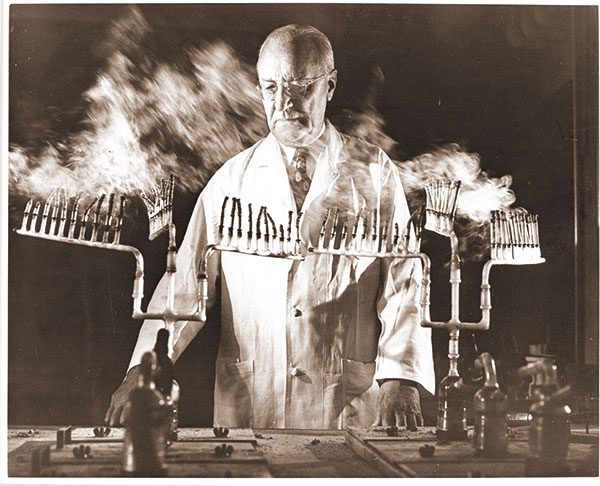
1963: Mallinckrodt Institute of Radiology installs the Picker Cobalt 60, one of the country’s first high-energy linear accelerator units used to treat cancers, especially of the head and neck.
1966: Carlos Perez, MD, initiates a program for the training of radiation therapy technologists. This program, the first of its kind in the U.S., becomes nationally recognized for its standard of excellence.
1972: Michel M. Ter-Pogossian, PhD; William Bernard, MD; and Henry G. Schwartz, MD, are among the first to use a short-lived radioactive tracer to locate brain tumors.
WashU Medicine establishes one of the country’s first adult bone marrow transplant programs. Today, it is among the largest in the world.
Investigators at WashU Medicine invent positron emission tomography (PET) imaging, which shows physiological activity rather than anatomical form.
Radiology clinicians and physicians produce a prototype linear accelerator – a precursor of today’s radiation therapy.
1974: Mallinckrodt Institute of Radiology joins forces with London-based EMI, Ltd. to develop the prototype of the first CT head scanner.
1977: The Cancer Information Center opens as the first facility in the country devoted to providing education and support for cancer patients and their families, becoming a national model. Now called the Barnard Health and Cancer Information Center, it serves more than 22,000 people each year.
1984: Michael J. Welch, PhD, and John Katzenellenbogen, PhD, (University of Illinois) develop fluoroestradiol (FES), the first radioactive form of estrogen used as a PET imaging agent for detecting breast cancer.
1986: Mallinckrodt Institute of Radiology implements its mobile mammography unit, the first in the St. Louis region and one of only five in the United States.
Virgil Loeb Jr., MD, is elected as national president of the American Cancer Society.
1988: Radiation oncology physicists led by James Purdy, PhD, develop a 3-D treatment planning system for cancer.
1989: William J. Catalona, MD, initiates a landmark study that establishes the prostate-specific antigen (PSA) blood test as an effective screening tool for prostate cancer.
1990: Stanley J. Korsmeyer, MD, uncovers an important new mechanism for cancer development with the discovery that the gene “bcl-2” blocks the naturally occurring cell suicide process known as “programmed cell death.” This work led to a Nobel Prize.
The National Institutes of Health (NIH) establishes a Human Genome Center at WashU Medicine under the direction of David Schlessinger, PhD.
Ralph V. Clayman, MD, Lou Kavoussi, MD, and Nathaniel J. Soper, MD, perform the world’s first laparoscopic kidney removal to treat renal cancer.
1991: Mallinckrodt Institute of Radiology opens St. Louis’ first 3D cancer treatment planning center. This technique allows physicians to tailor radiation therapy while minimizing damage to normal tissues.
Urologic surgeons at WashU Medicine publish a study establishing (PSA) as a screening test for prostate cancer, and later lead the Prostate Cancer Intervention Versus Observation Trial, or PIVOT, one of the largest and longest trials involving cancer patients.
1993: Robert H. Waterston, MD, PhD, and colleagues receive a $42 million grant from the NIH to continue sequencing the genome of the roundworm. Scientists are interested in its genetic makeup because 40% of its genes are similar to those of humans.
WashU Medicine is named one of nine sites in the U.S. invited to participate in the largest randomized cancer screening study ever undertaken for prostate, lung, colorectal and ovarian cancers (PLCO study).
1994: A blood test is developed to detect a thyroid cancer gene mutation, which allows for the first surgical prevention of cancer via thyroid removal.
Lee Ratner, MD, is the first to develop an infectious molecular clone of a human T-cell leukemia virus.
1997: Timothy J. Ley, MD, and colleagues develop a mouse model of promyelocytic leukemia.
1998: Jeffrey I. Gordon, MD, and colleagues develop a mouse model of prostate cancer.
WashU Medicine’s Department of Radiation Oncology acquires the Gamma Knife, one of only 36 in the U.S. that administers very precise high doses of radiation to treat inoperable brain tumors.
Ralph G. Dacey, MD, performs the world’s first brain surgery using magnetic stereotaxis to biopsy a brain tumor. This technique uses magnetic fields to precisely manipulate surgical tools within the brain.
1999
1999: Alvin and Ruth Siteman’s gift of $35 million establishes the Alvin J. Siteman Cancer Center at Barnes-Jewish Hospital and WashU Medicine.
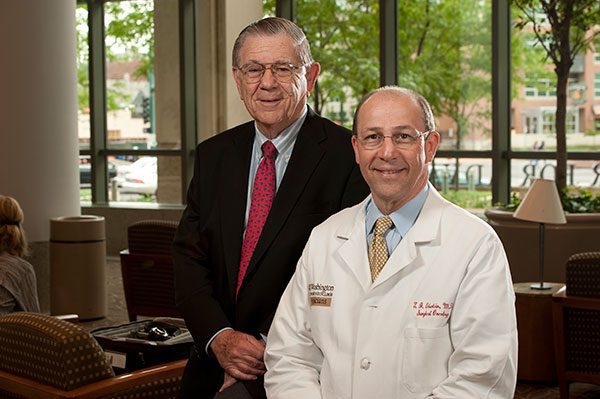
Timothy J. Eberlein, MD, is named director of the Alvin J. Siteman Cancer Center.
Siteman Cancer Center investigators participate in the STAR (Study of Tamoxifen and Raloxifene) trial, one of the largest breast cancer prevention studies ever conducted in the U.S.
The NIH awards $218.4 million to the Genome Sequencing Center.
The Genome Sequencing Center completes the sequence of one-third of the human genome. The International Human Genome Sequencing Consortium, which includes Washington University, publishes a nearly complete sequence of the human genome. This landmark achievement will have a profound impact on the understanding of disease, including cancer.
WashU Medicine radiation oncologists are instrumental in developing the world’s first big bore CT scanner, featuring an 85-centimeter bore to allow for better positioning and imaging for patients with immobilization devices. Today, it is the de facto standard for real-time simulation and CT imaging.
2001
2001: Robert D. Schreiber, PhD, and colleagues publish the first conclusive evidence that the immune system helps prevent tumor formation.
The 14-story Center for Advanced Medicine opens. The building consolidates the cancer-related outpatient services of WashU Medicine and Barnes-Jewish Hospital and houses Siteman Cancer Center.
Siteman Cancer Center is named a National Cancer Institute (NCI) Designated Cancer Center, the only one within 240 miles of St. Louis. The NCI is the principal federal institute that funds cancer research.
2004 – 2014
2004: Siteman Cancer Center establishes a Good Manufacturing Practice (GMP) facility, one of only a handful in U.S. academic medical centers and the first to be built in partnership with the FDA. The GMP facility produces clinical-grade cellular and biological products for clinical research.
Siteman Cancer Center is awarded the prestigious Comprehensive Cancer Center designation from the NCI, placing Siteman among the most highly ranked cancer institutions in the nation.
2005: Siteman Cancer Center is awarded the prestigious Comprehensive Cancer Center designation from the NCI, placing Siteman among the most highly renowned cancer institutions in the nation.
Siteman Cancer Center begins delivering world-class care to St. Charles County by opening a new center at Barnes-Jewish St. Peters Hospital.
2006: Siteman Cancer Center is selected to join the National Comprehensive Cancer Network (NCCN), an alliance of the world’s premier cancer centers, charged with setting the standard for cancer care.
2007: BJC Institute of Health at Washington University is established. The Institute will house the Center for Cancer Biology as part of BioMed 21, the university’s innovative research initiative designed to speed scientific discovery and breakthroughs to patient care.
2008: The Institute for Public Health at Washington University is established through a partnership of Siteman Cancer Center, WashU Medicine and the George Warren Brown School of Social Work.
Timothy J. Ley, MD, Elaine Mardis, PhD, and Richard Wilson, PhD, working in conjunction with many colleagues at The Genome Center and Siteman Cancer Center, sequence the first human cancer genome from a patient with acute myeloid leukemia (AML), as published in Nature.
Siteman Cancer Center expands services at Barnes-Jewish West County Hospital by increasing chemotherapy services, adding radiation oncology therapy and integrating surgical services.
2009: The 24/7 cancer care center opens in the Schoenberg Pavilion, providing urgent care for Siteman Cancer Center patients.
Siteman Cancer Center is awarded a Specialized Program of Research Excellence Grant (SPORE) from the NCI to study endometrial cancer. This is the first SPORE awarded to WashU Medicine and the first ever dedicated to endometrial cancer.
WashU Medicine and Siteman Cancer Center urologists partner with Envisioneering Medical Technologies to develop TargetScan Touch, a stereotactic prostate biopsy and treatment system.
2010: Siteman Cancer Center is re-certified as a Comprehensive Cancer Center, recognizing its scientific excellence, delivering medical advances to patients and their families, educating health care professionals and the public, and reaching out to underserved populations.
2011: Siteman Cancer Center performs its 5,000th bone marrow transplant, placing it among the top five cancer centers in the United States.
2013: Siteman Cancer Center in South County opens.
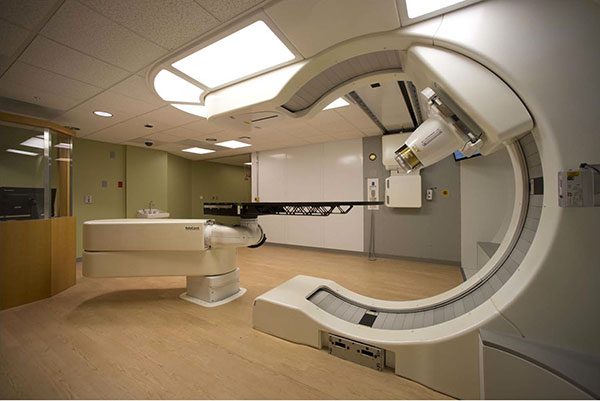
The S. Lee Kling Proton Therapy Center, the first single-vault proton therapy center in the country, opens at Siteman Cancer Center’s main campus. Proton beam radiation is a highly precise form of therapy that delivers radiation especially suited to cancers that occur in close proximity to critical tissues, such as the brain, eye or spinal cord.
2014: Kelle Moley, MD, is elected to the Institute of Medicine of the National Academy of Sciences, one of the highest honors medical scientists in the U.S. can receive.
The world’s first MRI-guided radiation therapy treatment is performed at Siteman Cancer Center. The treatment technique allows tumors to be visualized and treatment adapted.
2015
2015: Siteman Cancer Center research member Elaine Mardis, PhD, is elected to the board of directors of the American Association for Cancer Research (AACR), one of the world’s oldest and largest cancer research organizations. Research member Timothy Ley, MD, is named to the National Cancer Advisory Board, which advises the U.S. Secretary of Health and Human Services, the director of the NCI and the president on the nation’s cancer program and reviews proposals awarded by the NCI.
Expansion begins at Siteman Cancer Center South County and Siteman Cancer Center at Barnes-Jewish St. Peters Hospital. The projects will add space for additional care providers, exam rooms and chemotherapy infusion stations.
The NCI awards Siteman an “exceptional” rating, based on a rigorous review of Siteman’s research programs. The rating, which accompanies Siteman’s re-certification as a Comprehensive Cancer Center, is the highest possible by the NCI.
2016
2016: The Siteman-South County expansion is completed.
Timothy J. Eberlein, MD, is elected chairman of the board of directors of the National Comprehensive Cancer Network (NCCN), a not-for-profit alliance of 27 leading U.S. cancer centers devoted to patient care, research and education. Siteman is the only NCCN member institution in Missouri.
Siteman and St. Louis Children’s Hospital establish “Siteman Kids at St. Louis Children’s Hospital,” a partnership focused on caring for children and adolescents with cancer, using the latest, most effective treatments, in a setting geared to younger patients and their families.
The NCI awards WashU Medicine researchers and physicians at Siteman a $10.4 million, five-year Specialized Program of Research Excellence (SPORE) grant to lead a national group of experts in collaborative pancreatic cancer research. They are tasked with developing more effective chemotherapies, a vaccine and other new treatments for the deadliest form of the disease, pancreatic ductal adenocarcinoma.
2017
2017: Siteman becomes one of the first cancer centers nationwide to offer the newly approved CAR-T cell therapy called Yescarta. At the heart of the new therapy are so-called T cells, which are part of a person’s immune system. Typically, T cells fight off disease. However, in cancer patients, T cells lose the ability to recognize and attack cancer cells. CAR-T cell therapy involves extracting a patient’s own T cells and supercharging them to home in on cancer cells and destroy them.
Siteman opens its fifth location, at Christian Hospital in north St. Louis County, in July and announces plans to move the outpatient clinic to Northwest HealthCare nearby upon completion of a new facility in 2019.
Siteman launches the Siteman Cancer Network, an affiliation with regional medical centers that is aimed at improving the health of individuals and communities through cancer research, treatment and prevention. Boone Hospital Center and its Stewart Cancer Center, both in Columbia, Missouri, are named the first affiliate.
WashU Medicine physicians at Siteman perform their 7,500th bone marrow transplant. The adult bone marrow and stem cell transplant program, which began in 1982, is one of the largest in the world, performing nearly 500 transplants each year.
Siteman meets the standards of the American Society for Radiation Oncology (ASTRO) Accreditation Program for Excellence (APEx). An independent radiation oncology practice accreditation program, APEx is based on 16 evidence-based standards of radiation oncology practice, focused on these five areas: the process of care, the radiation oncology team, safety, quality management and patient-centered care.
The expanded Siteman Cancer Center-St. Peters reopens with nearly double the space the facility had when it first opened in 2005. The St. Peters location now also has a second linear accelerator for external beam radiation treatments.
2018
2018: The state-of-the-art Parkview Tower opens on the Washington University Medical Campus, consolidating and expanding existing inpatient services and complementing outpatient care provided at Siteman’s five outpatient facilities. The tower also serves patients of Siteman Cancer Network affiliates.
The NCI awards Washington University researchers and physicians a second $11.3 million, five-year Specialized Program of Research Excellence (SPORE) grant to further high-level investigations into leukemia and related blood cancers.
Siteman announces it will build a second proton therapy system that will incorporate pencil-beam scanning. The newest form of the technology, it delivers extremely precise treatments of proton therapy for cancers of the head, chest, spine and other particularly sensitive areas, as well as pediatric cancers. Construction is scheduled to begin in early 2019 and end in early 2020.
Phelps County Regional Medical Center and its Delbert Day Cancer Institute, both in Rolla, Mo., join the Siteman Cancer Network.
2019
2019: Alton Memorial Hospital in Alton, Ill., joins the Siteman Cancer Network.
Siteman Cancer Center at Northwest HealthCare opens in north St. Louis County in affiliation with Christian Hospital.
2020
2020: Siteman Cancer Center at Memorial Hospital East opens in Shiloh, Ill.
The Siteman Cancer Network welcomes its fourth member, SIH Cancer Institute, in Carterville, Ill.
2021
2021: The Brain Tumor Center at Siteman is established. Combining the multidisciplinary expertise of physicians and scientists, the center provides leading-edge, patient-centric care for brain tumor patients while also developing transformative basic, translational and clinical research to develop new therapies and improve patient outcomes.
Following clinical trials at Siteman and globally, the FDA approves sotorasib for certain patients with non-small-cell lung cancer who have already undergone previous treatment. Ramaswamy Govindan, MD, who led the study, noted that the drug targeted the most common mutation, reduced tumor sizes and improved overall survival rates.
2022
2022: WashU Medicine researchers, supported by a $5.3 million federal grant, launch a national study aimed at identifying patients with early-stage lung cancer who are at high risk of having the cancer return, even after surgery and chemotherapy appear to have eliminated their tumors.
The WashU Medicine Cardio-Oncology Center of Excellence at Siteman is designated a Center of Excellence at the highest level, Gold, by the International Cardio-Oncology Society. The distinction recognizes an “exceptionally high concentration of expertise” and the delivery of care “to afford the best patient outcomes possible.”
2023
2023: Siteman earns a prestigious merit extension from the National Cancer Institute. This extends the center’s current Cancer Center Support Grant for an additional two years, until 2027, and provides continued NCI support for cancer research, training, prevention and community outreach programs.
WashU Medicine researchers receive an $11.6 million SPORE grant to advance endometrial cancer research. Partnering with universities in New Mexico and Oklahoma, they will focus on treatment, prevention and addressing racial disparities.
The Head & Neck Tumor Center at Siteman is established. Among the first of its kind in the country, the multispecialty practice emphasizes individualized, patient-centered care with complementary research programs.
Surgeons perform the first robotic liver transplant in the U.S. The successful transplant extends to liver transplants the advantages of minimally invasive robotic surgery: a smaller incision resulting in less pain and faster recoveries, plus the precision needed to perform one of the most challenging abdominal procedures.
The lung transplant program at WashU Medicine and Barnes-Jewish Hospital, in its continued advancement of transplant care and research, celebrates its 2,000th lung transplant. The program becomes the fourth lung transplant program in the U.S., and one of just a few worldwide, to meet the milestone.
The S. Lee Kling Proton Therapy Center at Siteman completes an upgrade, adding the latest, most innovative technology for the treatment of a wide range of tumors, including pediatric, lung, brain, head and neck, gastrointestinal and gynecologic cancers, and other complex cases. The center, which opened in 2013, now includes two treatment units with pencil beam scanning technology. This enables the precise delivery of proton therapy to tumors while avoiding healthy organs nearby.
A $10.9 million SPORE grant is awarded to WashU Medicine to advance pancreatic cancer therapies. The funding supports clinical trials addressing immunotherapy resistance, vaccine effectiveness and a drug that enhances chemotherapy, seeking to improve outcomes for patients diagnosed with pancreatic ductal adenocarcinoma, the deadliest form of pancreatic cancer.
National studies co-led by Matthew Powell, MD, show that adding the immunotherapy drug dostarlimab to standard chemotherapy for advanced or recurrent endometrial cancer significantly improves outcomes for many patients, with an average increase in overall survival of 31%.
2024
2024: The Gary C. Werths Building at Siteman Cancer Center opens on the Washington University Medical Campus. The nine-story, 657,250-square-foot building incorporates an innovative model of treatment, allowing most patients to receive coordinated, multidisciplinary care during a single visit.
A small clinical trial shows promising results for patients with triple-negative breast cancer who received an investigational vaccine designed to prevent recurrence of tumors. The trial is the first to report results for this type of vaccine — known as a neoantigen DNA vaccine — for breast cancer patients.
Astudy of nearly 150,000 adults finds that people born after 1965 are aging faster at the cellular level than those born from 1950 to 1954, raising their risk of cancer by 17%. The findings suggest accelerated biological aging may help explain rising cancer rates among younger generations.
An innovative method of analyzing mammograms significantly improves the accuracy of predicting the risk of breast cancer development over the following five years. Using artificial intelligence (AI), the method spots subtle changes over time, identifying high-risk individuals 2.3 times more accurately than the standard method.
With a goal of understanding and addressing immunotherapy’s limitations, researchers discover that type 1 regulatory T cells (Tr1) inhibit immunotherapy effectiveness against cancer. By using a drug that boosts killer T cells, they overcome this issue in mice, enhancing the treatment’s success. This finding could significantly broaden the benefits of immunotherapy for cancer patients.
GatewaySeq, a genetic test developed at Washington University to identify cancer mutations in solid tumors, is approved for reimbursement by the Centers for Medicare & Medicaid Services (CMS). The test identifies mutations in solid tumors like lung, colon and pancreas cancers, which can be targeted with existing drugs, thus advancing precision medicine treatment strategies for these patients.
The FDA approves a cellular therapy, afamitresgene autoleucel, or afami-cel, to treat certain patients diagnosed with metastatic synovial sarcoma, a soft-tissue sarcoma. It’s the first federal approval of a T-cell receptor (TCR) therapy for cancer and is based on the positive results of clinical trials at Siteman and other leading cancer centers.
The Gary C. Werths Building at Siteman Cancer Center opens on the Washington University Medical Campus. The nine-story, 657,250-square-foot building incorporates an innovative model of treatment, allowing most patients to receive coordinated, multidisciplinary care during a single visit.
Continuing their role as leaders in leukemia research, WashU Medicine researchers receive a five-year, $10.8 million extension of their federal SPORE grant. One of only two SPOREs in leukemia in the country.
WashU Medicine physicians at Siteman perform their 10,000th bone marrow transplant.
An international team led by Cao, ScD, receives a grant of up to $25 million over five years from Cancer Grand Challenges to understand what is driving the increase in young-onset colorectal cancers globally.
WashU Medicine receives a five-year, $7.8 million federal grant to support a radiation oncology center, part of a select national network of centers aimed at understanding the biologic effects of radiation therapy in cancer treatment. Named the MicroEnvironment and Tumor Effects of Radiotherapy Center (METEOR), it is one of only five centers that comprise the Radiation Oncology-Biology Integration Network.
The Outpatient Cellular Therapy Center opens on the Washington University Medical Campus. The center offers CAR T-cell therapy, autologous stem cell transplantation and immunotherapy with the use of bispecific T-cell engagers (BiTEs) for qualifying patients diagnosed with lymphoma or multiple myeloma.
2025
A new technology that harnesses artificial intelligence (AI) to analyze mammograms and improve the accuracy of predicting a woman’s personalized five-year risk of developing breast cancer received Breakthrough Designation from the FDA.
The FDA approves a new standard of care for certain locally advanced head and neck cancers — the first change in standard-of-care therapy for affected patients in more than two decades. This follows the promising results of clinical trials first launched at Siteman in 2013.
The FDA approves a drug combination —brentuximab vedotin along with lenalidomide and rituximab — to improve survival benefits in patients diagnosed with diffuse large B-cell lymphoma who see their disease return or not respond to earlier treatment. Approval came after results of a multicenter investigator-initiated clinical trial led by WashU Medicine medical oncologist Nancy L. Bartlett, MD, at Siteman.
A new cell-based immunotherapy using CAR-NK cells shows promise for B-cell lymphomas and could lower costs and improve accessibility due to streamlined manufacturing. A phase 1 trial, co-led by WashU Medicine, finds CAR-NK therapy safe for B-cell lymphoma patients. Early data suggests it may offer a less toxic alternative to FDA-approved CAR-T therapies, with larger studies needed to confirm effectiveness.
Lee Ratner, MD, PhD, is awarded a five-year, $9.86 million federal Program Project Grant to investigate cancers caused by human retroviruses. The research is focused on developing ways to prevent and treat cancers caused by human T-cell leukemia virus type 1 (HTLV-1).
WashU Medicine receives a four-year, $7.5 million grant to lead a large-scale, multicenter trial aimed at developing evidence-based recommendations for getting more cancer survivors to quit smoking.
Siteman launches the “Health on the Move” community van, operated by the Program for Elimination of Cancer Disparities (PECaD), to deliver cancer screenings and other resources directly to residents of St. Louis and 82 counties in Missouri and Illinois.
2026
WU-CART-007, a WashU Medicine-developed CAR-T immunotherapy licensed to Wugen, receives Food and Drug Administration (FDA) Breakthrough Therapy designation after early clinical evidence showed promise treating aggressive, treatment-resistant T-cell blood cancers with targeted tumor elimination and manageable side effects.
Sheila A. Stewart, PhD, Siteman’s associate director of basic science, is elected to the board of directors of the AACR.