
At Siteman Cancer Center, specialists across multiple disciplines bring every available cancer treatment option to your care, including cryoablation, one of the most precise, minimally invasive treatments available today. WashU Medicine radiologists and imaging specialists at Siteman are among the few experts in the country offering this advanced technique, and their research is actively shaping how cryoablation will be used to treat cancer for years to come.
Siteman was one of only two in the Midwest and remains one of the few cancer centers nationally to provide cryoablation as a cancer treatment option. For many patients coming to Siteman means they do not have to leave the region for this type of care – that simply is not available elsewhere nearby. simply is not available elsewhere nearby.
Our Siteman care coordinators – oncology-trained nurses who help with scheduling, finding the right specialist, and guidance – can help you through the process.
Call us directly or submit a form, and we will call you back.
What Is Cryoablation?
“Cryoablation” combines “cryo,” or cold with “ablation,” which means removal or destruction. For cancer, cryoablation is a treatment that uses extreme cold to freeze and destroy cancer cells, without the need for traditional surgery.
Cryoablation is an image-guided treatment that destroys targeted tissue through the controlled application of extreme cold. As advances in imaging, technology and procedural expertise continue to expand treatment options, cryoablation has become an important tool for select patients, offering a minimally invasive approach that can effectively treat disease while preserving surrounding structures and function.
Cryoablation is a treatment option for patients with small, localized tumors. WashU Medicine physicians at Siteman will also evaluate if the procedure is suitable for patients who are not candidates for surgery because of health conditions and patients who want to avoid more invasive procedures.
Patients at Siteman who are candidates for cryoablation are under the care of a WashU Medicine radiologist— a specialist trained in image-guided procedures. The procedure involves inserting a thin, needle-like probe through the skin directly into the tumor. The probe delivers freezing gases that create a ball of ice that surrounds the tumor, destroying the cancer cells on contact. Advanced imaging, including ultrasound, CT, or MRI, guides the probe with precision, so healthy tissue around the tumor is protected throughout the whole process. Visualizing the treatment area is a benefit of cyroablation since the ball of ice that forms can be seen in real-time advanced imaging, ensuring safe and accurate ablation margins.
Cryoablation is a versatile treatment option and is used for many different kinds of cancer, so the treatment requires different procedures for comfort and the best outcomes. Most patients with breast cancer who undergo cryablation can remain awake during treatment. Rather than having anesthesia, local numbing medicine is used so the procedure is comfortable, and patients typically go home the same day. But for others, including patients with liver or renal cancers, general anesthesia and a night’s stay in the hospital for observation is necessary.
Because cryoablation targets the tumor without large incisions or removal of surrounding tissue, recovery is often faster and side effects are milder than with traditional surgery or radiation. For some patients, it can also be used alongside other cancer therapies as part of a broader treatment plan.
For carefully selected patients, cryoablation can provide an effective treatment option while preserving surrounding tissue, reducing procedural burden and helping maintain function and quality of life.
Your care team will evaluate whether cryoablation is right for your specific cancer type, stage, and overall health. Not every patient is a candidate, and your physicians will walk you through all your options.
Clinical trials are research studies that help us find new ways to prevent, diagnose, and treat cancer. If you have a rare or complex diagnosis or your treatment path seems uncertain, you might qualify for a clinical trial.
Our team will help you find a study that is right for you. Call us to speak with a Siteman care coordinator.
Siteman’s National Leadership in Cryoablation
WashU Medicine radiologists at Siteman Cancer Center are not just offering cryoablation as a treatment option — they are leading the research that will define how this treatment is used nationwide.
Heather Garrett, MD and Julie Margenthaler, MD are the principal investigators on the first clinical trial ever to compare outcomes for cryoablation and lumpectomy in breast cancer. It is a study that could reshape standard of care for thousands of women.
Also, Garrett is leading a national registry to follow cyroablation outcomes for patients with breast cancer who aren’t eligible for surgery. The aim of the COOL IT Pro clinical trial is to prove its long-term effectiveness.
Cryoablation for breast cancer was recently approved by the FDA, and WashU Medicine radiologists at Siteman are currently conducting multiple clinical trials to establish its role in standard care. Their work is bringing this treatment from academic research to widespread patient access.
For nearly two decades Siteman has led cryoablation for painful bone and soft tissues metastases. Jack Jennings MD, Ph.D was the lead principal investigator in the MOTION (Multicenter Study of Cryoablation for Palliation of Painful Bone Metastases) trial for adults with metastatic bone disease who were not candidates for or had not benefited from standard therapy. An ongoing study of cryoablation and its real-world outcomes for patients with symptomatic, high-risk metastatic bone lesions is being led by Cliff Robinson MD and Jack Jennings MD, PhD. And local PI’s Resten Imaoka and Joanna Yang MD, MPH.
Siteman Cancer Center is recognized with the highest ranking of ‘exceptional’ by the National Cancer Institute (NCI) and is the only NCI-designated Comprehensive Cancer Center in the region and is the only area member of the National Comprehensive Cancer Network (NCCN). That designation reflects a rigorous review of research quality, clinical excellence, and commitment to advancing cancer care. For you, it means you are being cared for by a team that meets the highest national standards. That designation reflects a rigorous review of research quality, clinical excellence, and commitment to advancing cancer care. For you, it means you are being cared for by a team that meets the highest national standards.
With 600+ therapeutic clinical trials, Siteman provides access to investigational therapies not generally available everywhere. Our cryoablation team participates in a weekly multidisciplinary tumor board, where specialists from interventional radiology, oncology, surgery, and imaging review cases together and determine the most personalized approach for each patient.
Most advanced. Most precise. Most personalized.
At Siteman, cryoablation is part of a comprehensive, individualized treatment strategy — not a one-size-fits-all solution. Our specialists use:
- The most advanced real-time imaging, including ultrasound, CT, and MRI guidance, so every probe is placed exactly where it needs to be
- Personalized treatment planning that accounts for tumor location, size, proximity to vital structures, and your overall health
- Minimally invasive techniques that preserve tissue and protect quality of life
- Active clinical trial access, including investigational applications of cryoablation for cancers where it is not yet standard care
Your Second Opinion at Siteman
Siteman wants to be your first choice for cancer care, but that might not always be possible. If you have received a cancer diagnosis, started care somewhere else, or are a physician seeking specialized care for your patient, ask us about a second opinion. You can start the process. To make it easy, our care coordinators guide scheduling for yourself or your patient.
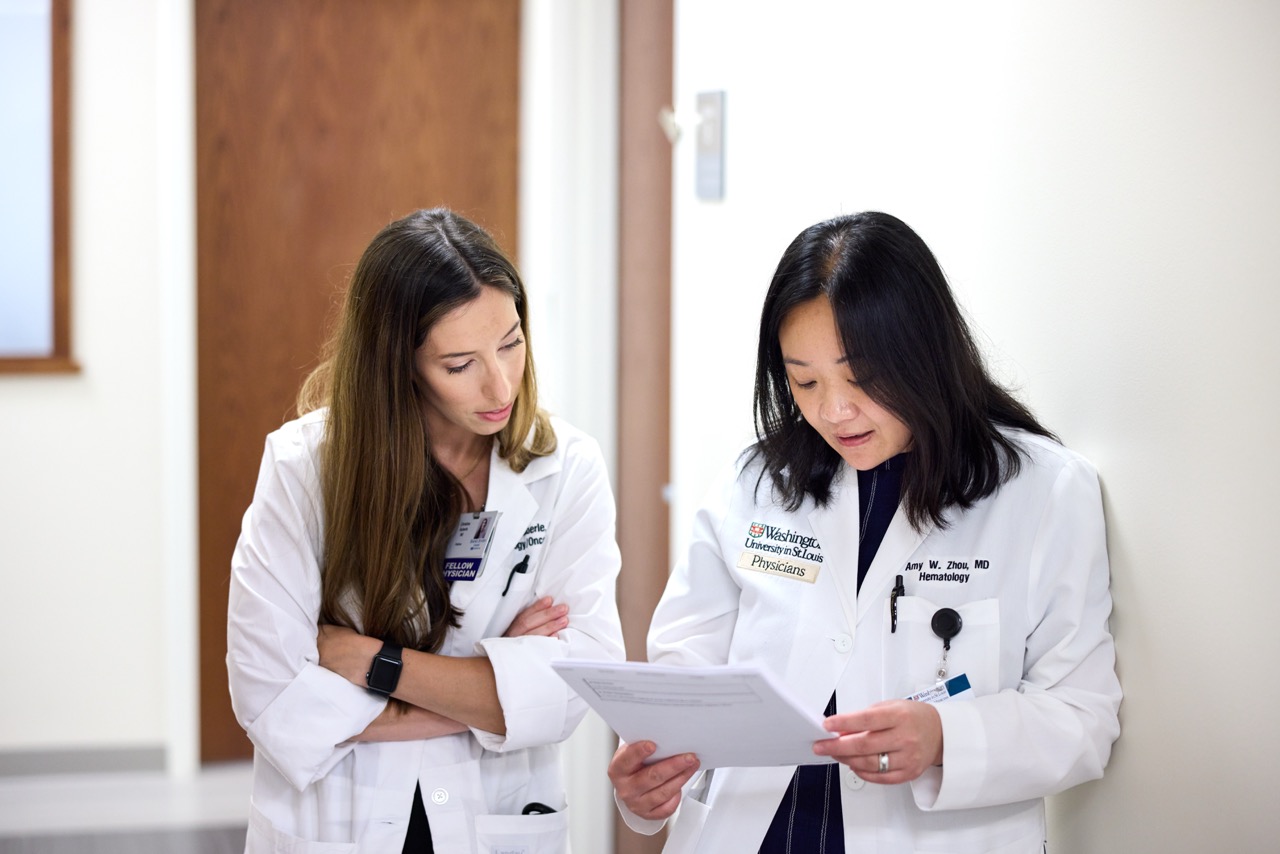
The science and treatment of cryoablation requires specialized expertise, advanced technology and careful multidisciplinary coordination. Siteman Cancer Center is among a select group of cancer centers with the clinical and research infrastructure to offer these capabilities, providing patients throughout the region access to cryoablation treatment options only available at Siteman.
Meet the Physicians Leading Cryoablation at Siteman
Heather Garrett, MD
Heather Garrett, MD, is a WashU Medicine radiologist at Siteman Cancer Center and one of the country’s leading experts in breast cryoablation. As the principal investigator on the first trial ever to directly compare breast cryoablation with lumpectomy, she is doing work that will inform how physicians treat early-stage breast cancer for years to come. Dr. Garrett is committed to finding the most minimally invasive approach that gives patients the best possible outcomes — and she is building the evidence base to support it.
Learn more about breast cryoablation research
Frequently Asked Questions About Cryoablation
Your care team at Siteman — including your oncologist, radiologist, and other specialists — will evaluate your cancer type, stage, tumor location, and overall health to determine if cryoablation is a good fit. It is particularly well-suited for patients with small, localized tumors; patients who are not candidates for surgery due to other health conditions; and patients who want to avoid more invasive procedures when a less disruptive option is available.
You do not have to face this decision alone. Your physicians will walk you through every option and help you understand what cryoablation can and cannot do for your specific cancer type.
For eligible patients, cryoablation offers several meaningful advantages:
- No large incisions — the probe is inserted through the skin with a small needle
- No general anesthesia required — most patients are awake and use only local numbing medicine
- Shorter recovery — most patients return to normal activities within days, not weeks
- Less tissue removal — surrounding healthy tissue is largely preserved
- Outpatient procedure — patients go home the same day
- Fewer long-term side effects compared with more invasive approaches in appropriate patients
Cryoablation is generally well tolerated, but like any medical procedure, it does carry some risks. Common side effects include temporary soreness, swelling, or bruising at the treatment site in the days following treatment. Depending on the location of the tumor, your care team will discuss specific risks related to nearby structures.
Your Siteman care team will monitor you closely throughout treatment and follow-up appointments. They are prepared to address any complications quickly and are available to answer your questions at every step.
Before treatment, you will meet with your care team to review your imaging, confirm your diagnosis, and develop a personalized treatment plan. Your physicians will explain exactly what will happen and answer any questions.
On treatment day, you will check in and be taken to a procedure room. The radiologist will use imaging guidance to carefully position the cryoablation probe at the tumor site. The treatment itself typically takes one to three hours depending on tumor size and location. Afterward, you will rest briefly while the team monitors you, and then you can go home.
Follow-up imaging is scheduled in the weeks and months after treatment to confirm the cancer cells were destroyed and monitor for any changes.
Most patients feel well enough to return to light activity the next day after treatment. Full recovery depends on the size and location of the treated tumor, but cryoablation generally involves a significantly shorter recovery compared with open surgery. Your care team will give you specific guidance based on your situation.
Coverage for cryoablation varies depending on your insurance plan, the cancer type being treated, and whether it is being provided as standard care or within a clinical trial. Cryoablation for kidney, prostate cancer, and other well-established applications are commonly covered. Newer applications, such as breast cryoablation, may depend on your plan and trial eligibility.
You don’t have to face the cost of treatment alone. Our financial wellness team is here to assist you, and they will let you know about all your options for coverage.
Yes, Siteman Cancer Center is actively conducting clinical trials in cryoablation. Plus we are leading the landmark trial comparing breast cryoablation with lumpectomy and the TRIBUTE trial with percutaneous ablation and palliative radiation therapy (RT) for symptomatic, high-risk metastatic bone lesions These trials give eligible patients access to the most current thinking and techniques, often before they are widely available anywhere else.
Your care team will let you know if there is a clinical trial available for your specific cancer and review all your options for treatment. Ask your care team about open trials. They will review your diagnosis and let you know which, if any, trials might be right for you.