
Leukemia treatment is among the most complex in oncology. The right approach depends on which of the many leukemia types you have, the genetic profile of your specific cancer, your overall health, and whether you are newly diagnosed or experiencing a relapse. A treatment plan built for another patient will not look the same for you.
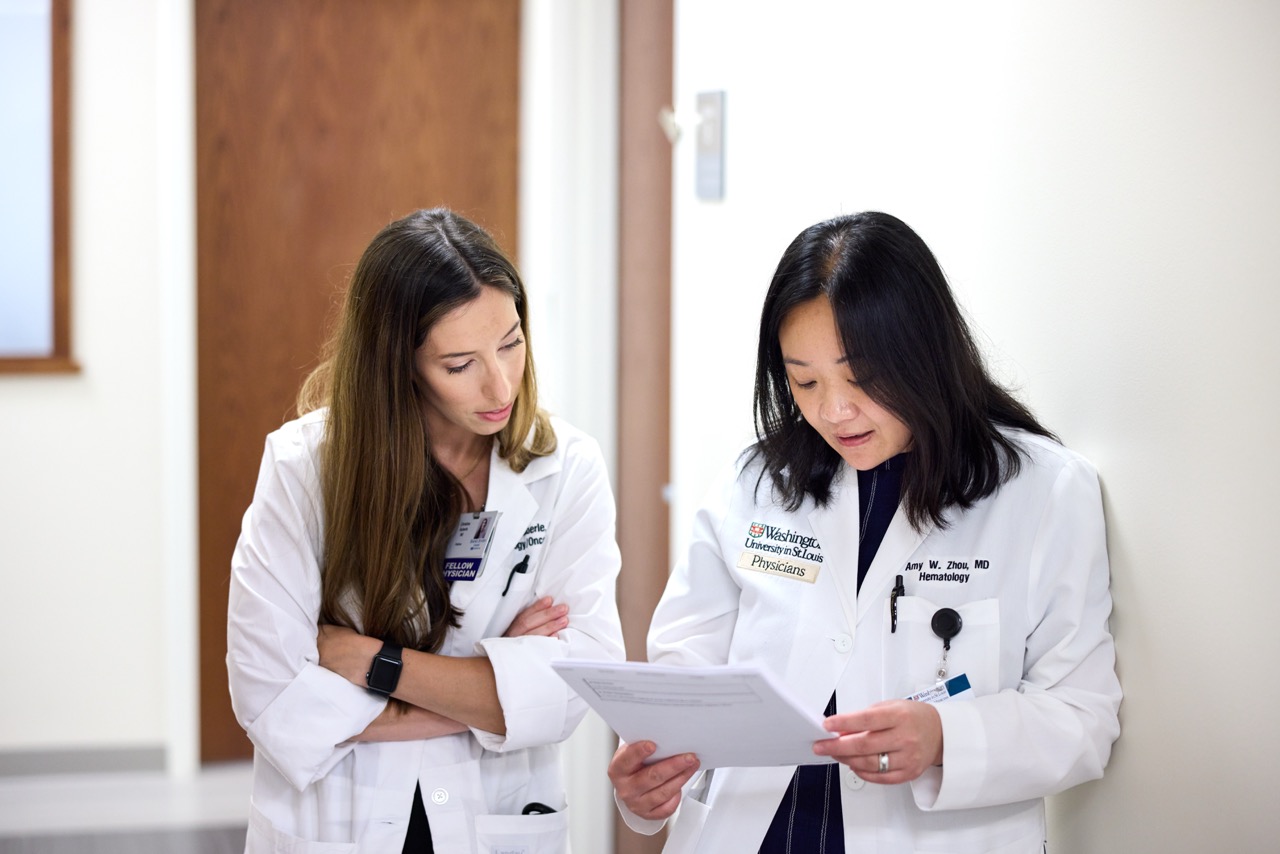
At Siteman Cancer Center, our WashU Medicine oncologists specialize in leukemia and dedicate research efforts to understanding the disease. That subspecialty depth means your care team brings targeted expertise to every decision about your treatment. Whatever your treatment plan may include, your physicians have the experience and the resources to deliver it.
We encourage all of our patients to explore clinical trials – and this is especially pertinent for those who have leukemia. Siteman offers more clinical trials than any other cancer center in the region, giving you access to new treatments before they are available in other parts of the country.
Clinical trials for leukemia at Siteman open up new and unique treatment options for our patients. We give patients a level of access and options they can’t find everywhere. That means patients at Siteman have a distinct advantage over their disease.
Your Siteman care team will walk through every option with you. You will never be handed a plan without a full explanation of why it is the right one for you.
Why Your Leukemia Type Determines Your Treatment
Each type of leukemia behaves differently, responds to different drugs, and requires different sequencing of therapies. Acute leukemias move quickly and often require immediate treatment. Chronic leukemias may be managed over a longer timeline. Getting the classification right is what makes the treatment right.
Common treatment approaches by leukemia type
- Acute lymphoblastic leukemia (ALL): Chemotherapy, blood and marrow transplant, CAR T-cell therapy
- Acute myeloid leukemia (AML): Chemotherapy, targeted therapy, blood and marrow transplant
- Chronic lymphocytic leukemia (CLL): Chemotherapy, immunotherapy, targeted therapy, blood and marrow transplant
- Chronic myeloid leukemia (CML): Targeted therapy, chemotherapy, blood and marrow transplant
These are starting points, not fixed paths. Your treatment plan at Siteman will be built around your specific diagnosis, your genetic profile, and your overall health.
Medical Treatments for Leukemia
Chemotherapy for leukemia
Chemotherapy remains one of the primary treatments for many leukemia types. These drugs target rapidly dividing cancer cells in a way that is especially effective for blood cancers.
Depending on your diagnosis, you may receive chemotherapy as an oral medication or as an IV infusion, often in treatment cycles that alternate between active treatment days and recovery days.
Side effects like nausea and fatigue are common, and your Siteman care team will manage them proactively. There are interventions that can improve your comfort and protect your quality of life throughout treatment.
Targeted therapy for leukemia
Targeted therapies are drugs designed to block the specific biological pathways that leukemia cells depend on to survive and grow. Unlike chemotherapy, they act precisely on cancer cells rather than healthy tissue.
Targeted therapies have transformed treatment for several leukemia types, and may have fewer side effects than chemotherapy. This therapy is particularly helpful in chronic myeloid leukemia, where drugs like tyrosine kinase inhibitors turned a once-difficult diagnosis into a manageable condition for many patients.
Your care team will determine whether targeted therapy fits your specific leukemia profile after you receive a diagnosis.
Immunotherapy for leukemia
Under normal circumstances, your immune system is designed to recognize and destroy abnormal cells. With leukemia, cancer cells evolve mechanisms that make them difficult to recognize. This is where immunotherapy can change the outcome of disease progression.
Immunotherapy works by restoring the immune system’s ability to see and attack cancer cells. At Siteman, immunotherapy for leukemia includes several approaches, the most advanced of which is CAR T-cell therapy.
CAR T-cell therapy: Siteman’s landmark contribution to leukemia care
CAR T-cell therapy is one of the most significant advances in leukemia treatment in the past decade. It works by collecting a patient’s own T-cells, genetically reprogramming them to recognize leukemia cells, and returning them to the body so it can destroy the cancer.
This advancement in immunotherapy was developed by physicians through clinical trials, with Siteman leading as one of the first cancer centers in the United States authorized to administer it.
Stem cell transplants
For some patients with leukemia, a stem transplant (also referred to as a blood and marrow cell transplant) can be a path to remission. Leukemia can damage the stem cells in bone marrow so severely that they can no longer produce healthy blood cells. A transplant replaces those damaged cells with healthy ones, either from the patient’s own stored cells or from a matched donor.
Siteman Cancer Center has one of the largest stem cell transplant programs in the world. Since our program began in 1982, our physicians have performed more than 10,000 transplants and conduct an average of 400 transplants per year. That volume translates directly into refined protocols, experienced teams, and better outcomes for our patients.
Our Blood and Marrow Transplant Program and Outpatient Cellular Therapy Center allow patients to receive this highly specialized care while spending fewer days in the hospital.
Your Second Opinion at Siteman
Siteman wants to be your first choice for cancer care, but that might not always be possible. If you have received a cancer diagnosis, started care somewhere else, or are a physician seeking specialized care for your patient, ask us about a second opinion. You can start the process. To make it easy, our care coordinators guide scheduling for yourself or your patient.