

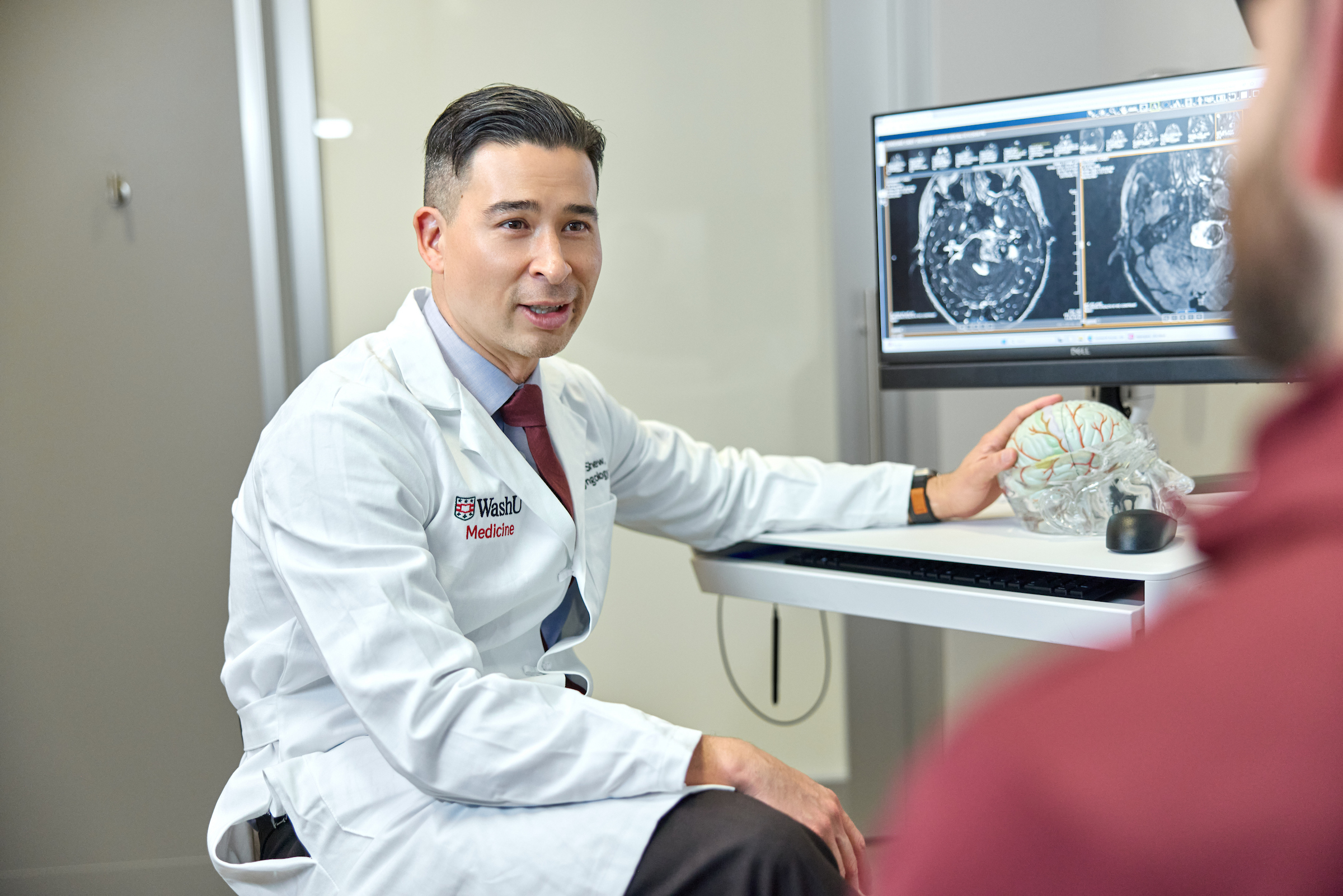
When you come to Siteman Cancer Center, WashU Medicine physicians will design a treatment plan around your specific brain tumor, your diagnosis, and your life. Cancer is personal. Your treatment should be, too.
Surgery for Brain Tumors at Siteman
Our WashU Medicine neurosurgeons are national leaders in image-guided and minimally invasive procedures. They were the first in the world to lead magnetically controlled surgery and continue to develop new techniques that reduce risk. At Siteman, our team will find a plan even for tumors other centers have called inoperable.
Neurosurgery at Siteman Cancer Center
For many patients with brain tumors, surgery is the first, and sometimes the only, treatment needed.
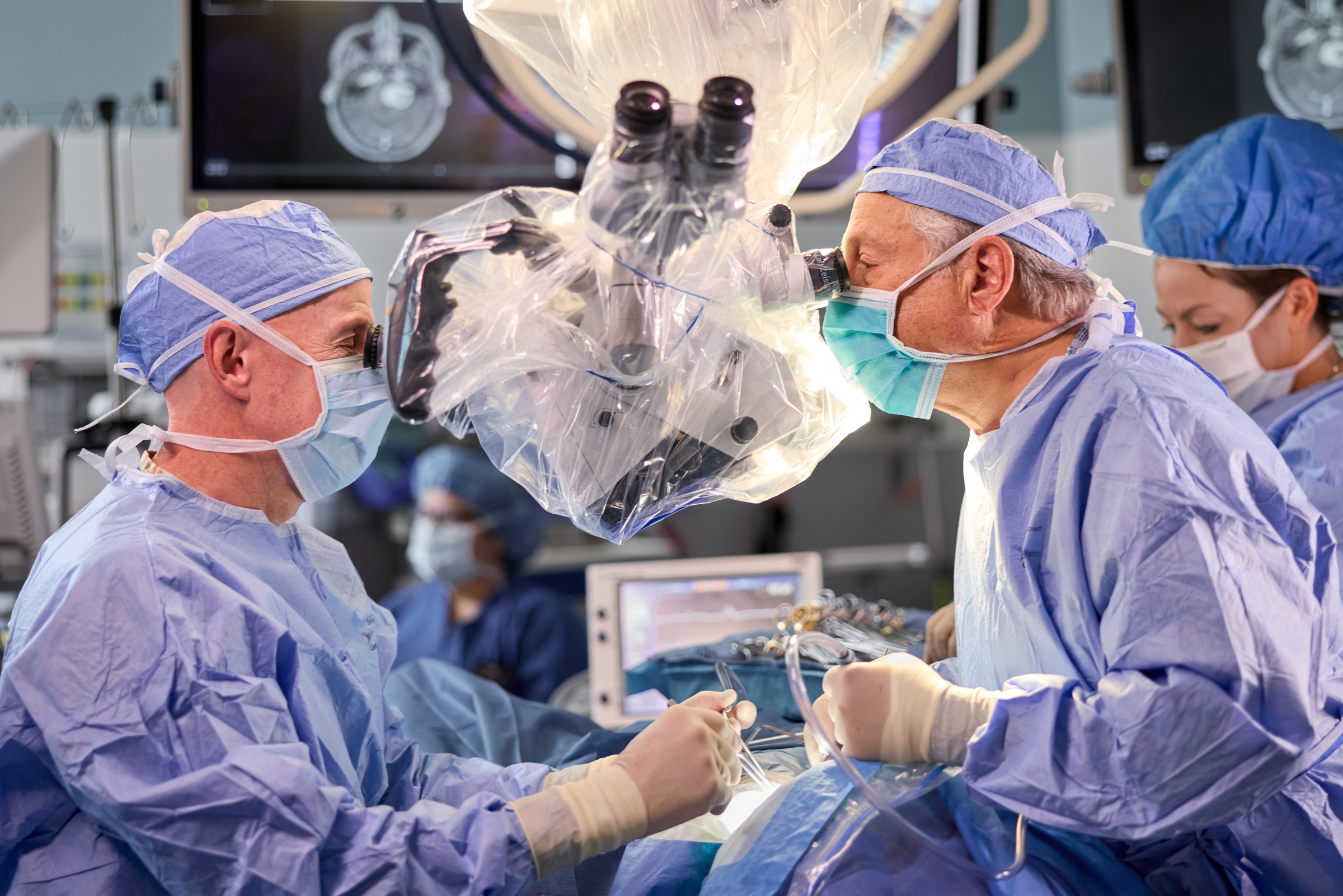
Our surgical advantages include:
- MRI Brain Mapping: Our WashU Medicine neurosurgeons use cutting-edge MRI imaging to map areas of the brain that must be avoided during surgery. This is a capability that’s unique to Siteman. This protects patients and improves recovery.
- Intraoperative MRI: MRI scans performed during surgery allow surgeons to make real-time adjustments and remove more of the tumor safely. WashU Medicine neurosurgeons are among the most experienced in the nation at this technique.
- Minimally Invasive Surgeries: We can remove tumors in ways that are less invasive, like through the nose or the orbits of the eyes. These approaches prevent patients from undergoing skull removal and shortens recovery time.
- Laser Tumor Removal (LITT): MRI-guided laser interstitial thermal therapy (LITT) treats tumors that are too deep to remove safely by conventional surgery. A small hole in the skull guides a laser probe directly to the tumor, where heat destroys the cancer cells.
What is Drug Therapy for Brain Tumors?
Drug therapy, medications that stop or slow cancer cell growth, is often a key part of treatment for malignant brain tumors.
You may receive drug therapy before surgery to shrink the tumor, or after surgery to eliminate remaining cancer cells. Your plan may include one or more types:
- Chemotherapy: Chemotherapy drugs kill cancer cells. Your plan may include one drug or a combination, depending on your tumor type.
- Targeted Therapy: Targeted therapies block specific features of cancer cells to stop them from multiplying. Because they are more selective than chemotherapy, which moves throughout the body, they are often easier for patients to tolerate.
- Immunotherapy: Immunotherapies harness your own immune system to fight cancer. WashU Medicine physicians at Siteman are studying promising new approaches. A study of a personalized vaccine for glioblastoma made from the patient’s own tumor tissue, has been shown to extend survival.
When Do Patients with Brain Tumors Receive Radiation Therapy?
Many patients with brain tumors receive radiation therapy where beams of radiation kill cancer cells and cause tumors to shrink.
Some patients with smaller, benign tumors may find that radiation therapy is the only treatment they need. For patients with larger or malignant tumors, radiation therapy may be used alongside surgery to slow tumor growth.
Our WashU Medicine radiation oncologists are internationally renowned. Their innovations, including MRI-guided radiation therapy, have made treatment safer and more effective for patients around the world. At Siteman, you will have access to every type of radiation treatment available. The care you receive will never be limited by the technology we have.
We have every modality available:
- Gamma Knife radiosurgery
- Edge radiosurgery
- LINAC radiosurgery
- Proton beam therapy
- Intensity-modulated radiation therapy (IMRT)
- MRI-guided radiation therapy
In certain cases, a radiation source can be placed inside the body. This is called brachytherapy.