Surgery, Chemotherapy or Radiation Therapy for Testicular Cancer
Patients with testicular cancer are usually treated with surgery and follow-up chemotherapy and/or radiation. At Siteman, each cancer has a wide range of treatments that can be used alone or in combination to give the best outcome for your specific cancer, including standard therapies and novel therapies only available in clinical trials. That’s why careful diagnosis is so important.
Clinical Trials
As part of a research medical center, physicians at the Siteman Cancer Center at Barnes-Jewish Hospital and WashU Medicine have access to a wide range of clinical trials to test new therapies as they emerge. Many of our physicians are principal investigators in these trials, which cover medical, surgical, and radiation therapies.
Clinical Trials at Siteman Cancer Center
Clinical trials are research studies that help us find new ways to prevent, diagnose, and treat cancer. If you have a rare or complex diagnosis or your treatment path seems uncertain, you might qualify for a clinical trial.
Our team will help you find a study that is right for you. Call us to speak with a Siteman care coordinator.
Fertility Preservation
Certain treatments for testicular cancer can cause infertility that may be permanent. Because most testicular cancer patients are young, those who may wish to have children should consider sperm banking before having treatment. Read more about fertility preservation.
Talk with a Care Coordinator
Nurses at Siteman answer every call and every form. Speak with them directly 8:00 am to 4:30 pm CT Monday- Friday for guidance on appointments, second opinions, and referrals.
Symptoms and Diagnosis of Testicular Cancer
Testicular cancer forms in the cells of the testicles, glands that produce semen and sperm and are found just below the penis in the scrotum. It is the most common cancer in men 20 to 35 years old. The main goal at the Siteman Cancer Center is to get a correct diagnosis of your condition and decide what treatment is needed. Specialists here excel in using the technology and experience to make an accurate diagnosis, often down to the genetic level so the best treatment options may be identified.
Symptoms of Testicular Cancer
- A painless lump or swelling in either testicle
- A change in how the testicle feels
- A dull ache in the lower abdomen or the groin
- A sudden build-up of fluid in the scrotum
- Pain or discomfort in a testicle or in the scrotum
Diagnosis
Diagnosing testicular cancer requires more than one approach.
The following tests and procedures may be used:
- Physical exam and history: The doctor reviews and examines the patient’s past illnesses and treatments and any signs of disease, lumps or tenderness in the testicle or other abnormalities.
- Ultrasound exam of the testicles: This painless procedure can show dense areas that may indicate a tumor.
- Serum tumor marker test: A sample of blood is examined to measure any increased amounts of certain substances called tumor markers that are released into the blood. Tumor markers used to detect testicular cancer include alpha-fetoprotein (AFP), beta-human chorionic gonadotropin (β-hCG), and lactate dehydrogenase (LDH).
- Inguinal orchiectomy: This surgical procedure removes the entire testicle through an incision in the groin. A tissue sample from the testicle is then viewed under a microscope to check for cancer cells. That’s because if the surgeon were to cut through the scrotum into the testicle to remove a sample of tissue for biopsy, and cancer is present, it could cause the cancer to spread into the scrotum and lymph nodes.
Staging of Testicular Cancer
Staging is ranked 0 through 3 and recurrent, meaning the cancer comes back after treatment, either in the other testicle or another part of the body. Because stage is an important factor in treatment options, additional testing to determine stage may include:
CT-PET Scan: This shows detailed pictures of organs to reveal cancer within the testicles if it is present and glucose uptake activity of tumor cells, which locates involvement with other organs or lymph nodes.
Abdominal lymph node dissection: This surgical procedure removes lymph nodes in the abdomen to obtain a sample of tissue to check under a microscope for signs of cancer. This procedure is also called lymphadenectomy. For patients with nonseminoma, removing the lymph nodes may help stop the spread of disease. Cancer cells in the lymph nodes of seminoma patients can be treated with radiation therapy.
Tumor marker levels are measured again after surgery in order to determine the stage of the cancer. It helps to show if all of the cancer has been removed or if more treatment is needed.
Talk with a Care Coordinator
Nurses at Siteman answer every call and every form. Speak with them directly 8:00 am to 4:30 pm CT Monday- Friday for guidance on appointments, second opinions, and referrals.
Why Choose Siteman Cancer Center?
Patients who come to Siteman Cancer Center at Barnes-Jewish Hospital and WashU Medicine for treatment of testicular cancer receive comprehensive, cutting-edge care. Our patients are seen by a team of WashU Medicine physicians — surgical, medical and radiation oncologists — often during the same visit. A health psychologist is also available as needed. Experienced nurses then spend time with you, answering your questions and putting you in touch with resources that may help during this stressful time. These nurses offer patient literature on your condition, chemotherapy, radiation therapy, surgery and other related issues.
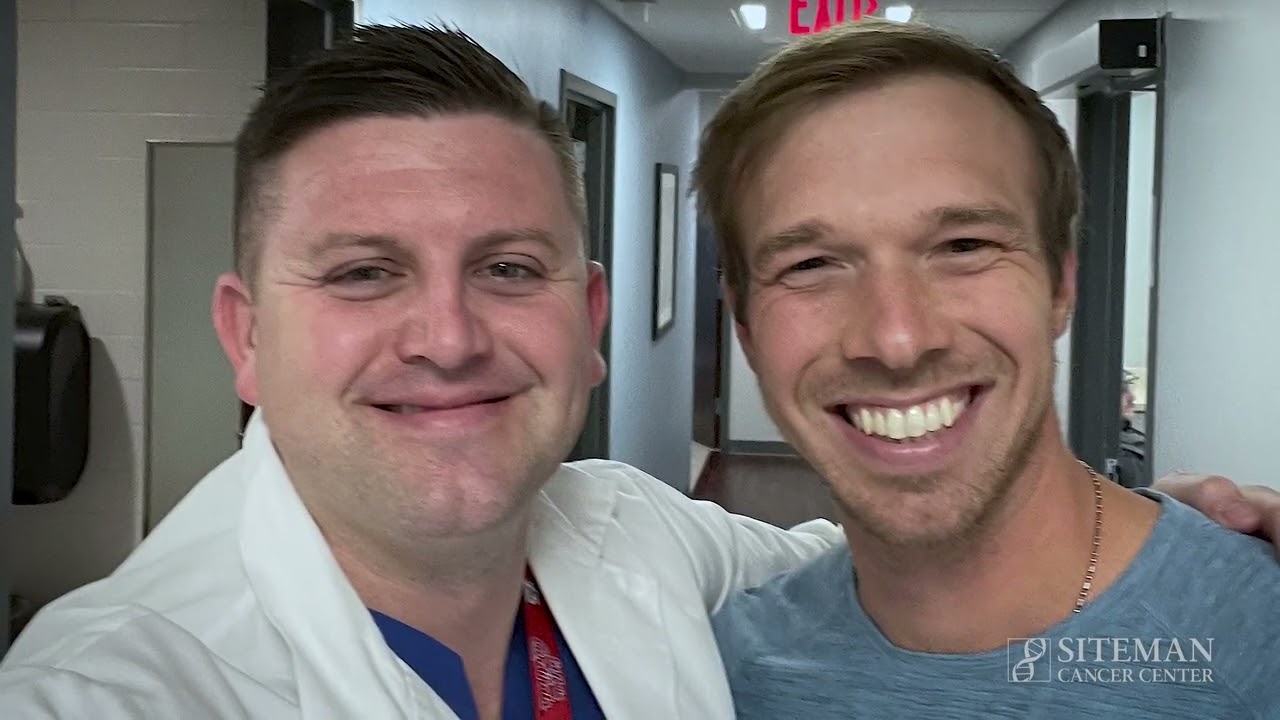
Facing Testicular Cancer at 26: A Story of Miracle, Family, and Healing
“To hear a doctor tell you that you have cancer, it does shake you. It can rock you to your core.” When Zach, campus minister and football coach, was diagnosed with testicular cancer, his life felt like it was just getting started. Zach shares his powerful journey from the initial fear and uncertainty to finding peace and world-class care at Siteman Cancer Center. Today, he is 2 years cancer-free, a proud dad to a miracle second baby and living a life that is everything he dreamed of and more.
What is Testicular Cancer?
Testicular cancer occurs in the testicles located inside the scrotum underneath the penis. The testicles produce male sex hormones and sperm. While a relatively rare cancer, testicular cancer is the most common cancer in men 20 to 35 years old. Our experts see, on average, about 42 cases a year. Testicular cancer is highly treatable, even when it has spread beyond the testicles. Doing a regular testicle self-exam may pick up growths early. Most are picked up by the patient.
The majority of testicular cancers start in the germ cells. The two main types of testicular germ cell tumors are:
- Seminomas: These are more sensitive to radiation.
- Nonseminomas: These tend to be diagnosed is older men 45 to 60 years old, and grow and spread more quickly.
The mainstay of treating testicular cancer is removal of the affected testicle. Removal of some types or grades may be followed by chemotherapy or radiation.
Types of treatment used for testicular cancer depend on the stage at which it is diagnosed, whether the cancer has spread outside the testicle, the patient’s age and personal wishes. Most men who get testicular cancer can be cured.
Having your cancer treated at Siteman gives you access to new therapies that are as good as – or potentially better than – current standard therapies available elsewhere.
Start Here. Get the Care You Need.
Our Siteman care coordinators – oncology-trained nurses who help with scheduling, finding the right specialist, and guidance – can help you through the process.
Call us directly or submit a form, and we will call you back.