Some sarcoma patients improve with T cell immunotherapy

Strategy effective against some rare, aggressive sarcomas with no other treatment options

A clinical trial led by researchers at Washington University School of Medicine in St. Louis has shown that a T cell immunotherapy — in which the patients’ own T cells are genetically modified to attack and kill cancer cells — is effective in treating some patients with rare cancers of the body’s soft tissues.

The study, which focused on the rare cancers synovial sarcoma and myxoid round cell liposarcoma (MRCLS), is inThe Lancet.


“When these rare sarcomas have spread, patients have few treatment options, and five-year survival rates are very low,” said senior author Brian A. Van Tine, MD, PhD, a Washington University professor of medicine who treats patients at Siteman Cancer Center, based at Barnes-Jewish Hospital and Washington University School of Medicine. “There is a great need for more effective therapies, but standard immunotherapies don’t work well for sarcomas. With this T cell immunotherapy, there is a subset of patients who have experienced an excellent long-term response. But for some patients, the treatment works for a little while and the cancer returns; and for others, it doesn’t work at all. We are hopeful we can build on the success of this clinical trial and make this type of therapy effective for more patients.”


The investigational immunotherapy that was used in the trial, called afamitresgene autoleucel (afami-cel), involves collecting a patient’s T cells and engineering them in the lab with a viral vector, a virus designed to deliver genetic material into cells. The viral vector adds a specific protein onto the surface of the T cells. When the modified T cells are returned to the patient, the new surface protein — a T cell receptor — directs the T cells to home in on the cancer cells for elimination. Most of these types of sarcomas have a protein on their surface called MAGE-A4, which the newly engineered T cells can then seek and destroy.


The immunotherapy was developed by the biopharmaceutical company Adaptimmune, which funded the international clinical trial. Siteman, which is a major referral center for sarcoma patients nationally, was one of the trial’s major sites.


The clinical trial involved 52 patients treated at 23 medical centers in North America and Europe. The trial included 44 patients with synovial sarcoma and eight with MRCLS. To participate in the trial, patients’ immune systems had to meet certain criteria in how they present antigens to T cells, to teach the T cells to identify the cancer.


About 36% of the patients (19 of 52) responded to the therapy with tumors shrinking or, in some cases, disappearing entirely. The treatment was more effective for patients with synovial sarcoma than with MRCLS. On average, the duration of the tumor response was just over 11 months for patients with synovial sarcoma and just over four months for patients with MRCLS; most patients’ cancers returned after a period of remission. To date, a small number of patients whose tumors disappeared following initial therapy remain cancer-free.


Among all of the patients, average survival was just over 15 months. The probability of survival at one year was 60%. Among patients with synovial sarcoma whose tumors showed a complete response to initial therapy — meaning the tumors disappeared entirely following the single treatment — the probability of survival was 90% at one year and 70% at two years.


The most common side effects of the treatment involved low red and white blood cell counts due to the chemotherapy needed to prepare the body to receive the engineered T cells. Many of the patients required treatment to control cytokine release syndrome, a common inflammatory response to T cell therapies. All 28 deaths that occurred during the follow-up period were found to be due to the cancer eventually progressing and not the investigational treatment.


“We have some patients we’re still watching who continue to have a deep, durable response to this single treatment,” Van Tine said. “In some cases, the engineered T cells can get into the bone marrow and establish a niche, and these patients haven’t needed further treatment. As long as the T cells continue to divide and the tumor continues to carry the target protein, it’s an effective therapy in these patients. We’re trying to understand what is different about the individuals who do so well, so we can extend this type of effect to more patients in the future.”


D’Angelo SP, Araujo DM, Razak ARA, Agulnik M, Attia S, Blay J, Garcia IC, Charlson JA, Choy E, Demetri GD, Druta M, Forcade E, Ganjoo KN, Glod J, Keedy VL, Le Cesne A, Liebner DA, Moreno V, Pollack SM, Schuetze S, Schwartz GK, Strauss SJ, Tap WD, Thistlethwaite F, Morales CMV, Wagner MJ, Wilky BA, McAlpine C, Hudson L, Navenot J, Wang T, Bai J, Rafail S, Wang R, Sun A, Fernandes L, Van Winkle E, Elefant E, Lunt C, Norry E, Williams D, Biswas S, Van Tine BA. Afamitresgene autoleucel for advanced synovial sarcoma and myxoid round cell liposarcoma (SPEARHEAD-1): an international, open-label, phase 2 trial. The Lancet. March 27, 2024.


This work was supported by Adaptimmune. Van Tine reports no financial interest in Adaptimmune.


About Washington University School of Medicine


WashU Medicine is a global leader in academic medicine, including biomedical research, patient care and educational programs with 2,900 faculty. Its National Institutes of Health (NIH) research funding portfolio is the second largest among U.S. medical schools and has grown 56% in the last seven years. Together with institutional investment, WashU Medicine commits well over $1 billion annually to basic and clinical research innovation and training. Its faculty practice is consistently within the top five in the country, with more than 1,900 faculty physicians practicing at 130 locations and who are also the medical staffs of Barnes-Jewish and St. Louis Children’s hospitals of BJC HealthCare. WashU Medicine has a storied history in MD/PhD training, recently dedicated $100 million to scholarships and curriculum renewal for its medical students, and is home to top-notch training programs in every medical subspecialty as well as physical therapy, occupational therapy, and audiology and communications sciences.


Writer: Julia Evangelou Strait, Senior Medical Science Writer | 314-286-0141 | [email protected]


Media Contact: James Goodwin, Associate Director of Strategic Communication, Siteman Cancer Center | 314-680-8251 | [email protected]
Is a Nerve-Sparing Prostatectomy the Best Surgery for My Prostate Cancer?

If you have been diagnosed with prostate cancer, a nerve-sparing prostatectomy may be a good surgical option for you. At Siteman Cancer Center, a multidisciplinary team of experts will base a treatment plan on your specific diagnosis and determine if this kind of robotic surgery is your best option. WashU Medicine surgeons excel at nerve-sparing prostatectomies, removing cancer while protecting your quality of life.

Is prostate cancer common?

Each year more than 330,000 men will be diagnosed with prostate cancer according to the American Cancer Society. A conservative estimate is that one in eight men will receive a prostate cancer diagnosis in his lifetime. To catch prostate cancer in early stages men are encouraged to discuss their prostate cancer risks including family history with their doctor.

Siteman Cancer Center follows the National Comprehensive Cancer Network guidelines, so we recommend men start annual prostate cancer screenings at age 45. Men who are at increased risk, like African American men or men who have family history of prostate cancer may seek out screening at even younger ages, sometimes starting around age 40. The majority of prostate cancer patients are age 65 or older when they are first diagnosed.

What are the symptoms of prostate cancer?

In its early stages, there are usually no symptoms of prostate cancer. As the disease progresses, men can experience a wide range of symptoms, including urinary symptoms or hip/back pain. Men may rationalize these as a natural part of aging and fail to mention them to health care providers.

Symptoms associated with both prostate cancer and a natural enlarging of the prostate gland include:

  • Difficulty emptying their bladder, including a hard time starting to urinate and maintaining a steady stream of urine
  • Increased frequency urinating, especially at night

Symptoms that suggest a more concerning process may include:

  • Pain and burning when urinating
  • Pain when ejaculating
  • Seeing blood in urine
  • Seeing blood in semen
  • Pain in the lower back, hips, and lower abdomen that is constant

While these symptoms may feel uncomfortable to mention to your doctor, they are important to report. They may indicate prostate cancer, may indicate an enlargement of the prostate, or may be an issue with another organ. Likely your provider will refer you to get screened or will conduct a screening themselves.

How can I get screened for prostate cancer?

The first step in a screening for prostate cancer is very straightforward. It is a simple blood test called a prostate-specific antigen test, or PSA test for short. Siteman recommends men begin annual screenings for prostate cancer at age 45. Learn more about prostate cancer screening.

How could prostate cancer impact me every day?

Aside from the initial concern of hearing a cancer diagnosis, many men don’t just worry about surviving, they also have quality of life questions during and after treatment. It’s very common to wonder, “how will I pee after a prostatectomy?” or “can I still get an erection if my prostate is removed?”

Your physician will address all of your questions about your diagnosis and how treatment will impact your day-to-day activities. Advances in prostate cancer detection, treatment, and post-treatment survivorship have greatly improved patient outcomes over the past few decades. Many men are treated for prostate cancer and subsequently live cancer-free with a high quality of life.  When diagnosed with prostate cancer, it is important for men to speak with a urologist to discuss treatment options and the personalized impact these treatments may have.

What are some prostate cancer treatment options?

Today there are many prostate cancer treatment options to consider after a diagnosis. Surgery is not a given, in fact some approaches involve purposefully waiting to see how the cancer develops. Different treatments can also be combined for a unique-to-you plan. The standard options for prostate cancer treatment at Siteman include:

  • Active surveillance and watchful waiting
  • Focal therapy
  • Surgery (includes nerve-sparing prostatectomy and other surgical approaches)
  • Radiation therapy
  • Systemic therapy

Will a nerve-sparing prostatectomy protect my sex life?

Unlike the past, where a prostate cancer diagnosis and surgery removing the prostate meant impotence, today, physicians specialize in nerve-sparing prostatectomy approaches. This surgical approach means more men get the cancer care they need and after recovery can have an erection, helping the quality of their sex lives.

There are multiple approaches that surgeons can take that try to protect the nerve bundles located on both sides of the prostate. While those approaches vary from surgeon to surgeon, they are each considered to be a nerve-sparing prostatectomy. Any surgery on the prostate does open up the possibility for nerves to be damaged during the surgery itself or while healing. But when planning the surgical approach, the cancer’s location, and other factors, and the patient’s desire for maintained sexual health and function are all considerations.

Self-advocacy in cancer care is important and welcome. Often patients request a nerve-sparing prostatectomy from their physician following a prostate cancer diagnosis. This is an excellent preference to voice to your physician, but a nerve-sparing prostatectomy may not even be necessary when looking at the medical history and factors about the cancer itself. WashU Medicine experts at Siteman Cancer Center will be able to make a well-informed recommendation on what kind of care is needed. A nerve-sparing prostatectomy is a kind of surgery and because of medical advances, sometimes, surgery for prostate cancer is not needed at all. For instance, radiation or a systemic therapy could be options that lead to a cancer-free future without undergoing surgery.

Can a nerve-sparing prostatectomy impact my fertility?

Nerve-sparing prostatectomy or any other kind of surgery on the prostate can potentially impact male fertility since the gland plays an important role in the production of semen. Family planning and fertility are important considerations when creating a treatment plan. There are several options and resources to consider. If your care is taking place at Siteman Cancer Center, you can request a referral to the Infertility and Reproductive Medicine Center at WashU. Even if you aren’t getting care at Siteman, you can become a new patient at the Center to explore your options. Fertility preservation before treatment can be an option for patients who wish to become a parent.

How is Siteman advancing prostate cancer care?

At Siteman Cancer Center experts are driving the standard of care forward through multidisciplinary care. Depending on the case, patients may receive a combination of different interventions like radiation, chemotherapy, and surgery. Or newer interventions like focal therapy and proton beam therapy or systemic therapies like hormone therapy and immunotherapy may be what your oncologist feels are best. Taking a team approach with combined expertise and specialties opens up many possible plans based on every patient’s specific cancer and life circumstance. Clinical trials for prostate cancer are also ongoing at Siteman. These trials are shaping the next phase of research-based cancer care.

You can ask your doctor about these advances, or request an appointment at Siteman for a consultation. Getting a second opinion about your care is always an option at Siteman at any stage of your journey.

Colon cancer surgery: what to expect and how to prepare

When it comes to colon cancer, surgery is the most common treatment. Types of colon cancer surgery depend on the stage of the cancer and where the cancer is in the colon. For early-stage colon cancers and young-onset colorectal cancer, surgeons may recommend minimally invasive surgery. For more advanced colon cancers, surgery may be performed to remove parts of the colon or to reconnect healthy parts of the colon. All types of colon cancer surgery involve the removal of nearby lymph nodes where the cancer may have spread.

How to prepare for colon cancer surgery

Prior to your surgery, there are steps you can take to prepare.

A week or more before your surgery:

  • Make a list of all your medications and any allergies you have.
  • Fill any prescriptions you will need after surgery.
  • Ask your surgeon about when you should stop taking your medications. Don’t stop taking your medications without speaking to your surgeon.
  • Ask your surgeon if it’s safe to take ibuprofen or aspirin.
  • Arrange for family or friends to help care for you while you’re in the hospital and after you go home.
  • Plan for a caregiver to drive you home after you are discharged from the hospital.

24 hours before your surgery:

  • Don’t eat any solid foods and only drink clear liquids.
  • You may be advised not to eat or drink anything (including water) after midnight.
  • Ask your nursing team about the specific eating and drinking guidelines you’ll need to follow the night before surgery.
  • Your colon must be completely empty before the procedure. Follow your surgeon’s “bowel prep” instructions. You may need to use laxatives and/or enemas to get all the stool out of your colon.

The day of surgery and your hospital stay

When you arrive at the hospital for your surgery, you will be escorted to the pre-operation (pre-op) area to prepare for the operation. A nurse will take your vital signs and will insert an IV to administer fluids, including antibiotics to decrease the risk of infection, anesthetic medications and pain medications.

You’ll also meet with an anesthesiologist who will review your medical history, speak with you about your safety during surgery, go over the type of anesthesia you’ll receive and answer any questions you may have. Your family and/or friends will then go to the waiting room, where they will remain throughout the procedure.

Once the surgery is over, you will be taken to the recovery room. You will stay in recovery anywhere from one to two hours for observation and for the anesthesia to wear off. Then, you will be transferred to your room once you’re in stable condition.

You may stay in the hospital for two to five days after surgery. Depending on whether you have minimally invasive surgery or open surgery, your hospital stay may be shorter or longer. While you’re in the hospital, your nurses will teach you and your caregivers how to care for yourself during the recovery process.

Discharge and going home

Right after surgery, you will need to be on a clear liquid diet. This diet continues for the rest of that day. The day after surgery, you will get back to a regular diet. A dietitian will be available to help you while you’re in the hospital. Additionally, your nurses and physical therapists will help you move around and will teach you deep breathing and leg exercises. These exercises will help you regain mobility and improve your circulation.

Before discharging you from the hospital, your surgeon will write your prescriptions and give you written discharge instructions. Your surgeon will review these with you before you leave. Because medication and anesthetic can slow your reaction time and thought processes, make sure you have someone to drive you home.

Recovery at home

Once you’re home, you will be encouraged to steadily increase your activity level. Avoid strenuous activity – walking helps to prevent blood clots and keep your lungs clear, though you can climb steps and engage in light activity as soon as you feel up to it. Don’t take baths or submerge yourself in water until your incisions have healed.

Your surgeon will schedule a follow-up appointment after your surgery, but it’s a good idea to contact your surgeon right away if you experience any of the following:

  • Nausea/vomiting
  • Fever
  • Diarrhea
  • Wound is red, more painful or has drainage
  • No bowel movement within a few days of returning home

The Siteman approach to colon cancer surgery

With expert physicians, skilled support staff and the latest technology, we ensure that our colon cancer surgery patients receive the comprehensive care they need.

Our surgeons were the first in the region to perform laparoscopic colectomy for cancer. They use minimally invasive and robotic techniques whenever possible, making the recovery process easier while keeping risks down.

Our colon cancer specialist team

The multi-disciplinary colon cancer specialist team at Siteman comprises outstanding Washington University medical oncologists, radiation oncologists, surgeons, gastroenterologists, radiologists and others. The diverse expertise of our specialists allows them to create individualized treatment plans for all colon cancer patients.

While many colon cancers may be treated with surgery alone, some are treated with a combination of surgery, chemotherapy and radiation. Not all colon cancer patients will undergo the same course of treatment, so it’s important to have a team of providers across a wide range of disciplines.

You’ve been diagnosed with colon cancer. Now what?

If you’ve been diagnosed with colon cancer, you may be experiencing a wave of emotions including fear, anger and sadness. 50Siteman providers are here to support you every step of the way throughout your cancer journey. With our exceptional physicians, psychology services and survivorship care, we are committed to caring for your body, mind and wellness, even after treatment ends.

If you are experiencing symptoms of colon cancer and are concerned about your risk, please make an appointment with your primary care provider. If you have been diagnosed with colon cancer and would like a second opinion from a colon cancer specialist at Siteman, please call 800-600-3606.

Subtle signs of ovarian cancer women should look out for

The first symptoms of ovarian cancer are easy to miss, which is why it has long been called the “silent killer.” But ovarian cancer isn’t really a silent killer; the early signs are often ignored or mistaken for other benign conditions. Gynecologic symptoms for cervical, uterine and ovarian cancers are all easy to brush off, but being able to identify early symptoms is crucial. While uterine cancer rates have recently climbed past ovarian cancer’s, it remains a gynecological cancer needing special attention. Spotting the signs of ovarian cancer earlier means catching the cancer when it’s easier to treat.

What is ovarian cancer? Who does it affect?

Ovarian cancer is an overgrowth of abnormal cells that start in the ovaries, fallopian tubes or peritoneum. According to the American Cancer Society (ACS), ovarian cancer ranks fifth in cancer deaths among women, accounting for more deaths than any other cancer of the female reproductive system. While this statistic may seem daunting, ovarian cancer rates have been slowly falling over the past 20 years.

This cancer is more common among white woman than Black women. It also primarily affects older women who have already gone through menopause. In fact, about half of women diagnosed with ovarian cancer are age 63 or older.

Types of ovarian cancer

There are three types of ovarian cancer. The type of cancer you have – and the best course of treatment for you – will depend on the type of cell where the cancer begins.

  • Epithelial ovarian cancer: this is the most common type of ovarian cancer. It develops in the tissue surrounding the ovaries.
  • Stromal tumors: these rare tumors form in the ovaries’ structural connective tissue cells that produce estrogen and progesterone.
  • Germ cell tumors: these rare tumors begin in the ovarian cells that develop into eggs.

Wondering if you might have ovarian cancer? You’re not alone.

If you are concerned that you might have ovarian cancer, you may have fears about fertility; relationships and sexual health; the physical, emotional and financial impacts of treatment; and death.

While your fears and concerns are entirely valid, it’s important to keep in mind that many women with ovarian cancer go on to lead full lives. Being able to spot the subtle signs of ovarian cancer ultimately gives you the best chances for a positive outcome.

Signs of ovarian cancer

Symptoms of ovarian cancer include:

  • Bloating
  • Abdominal discomfort or back pain
  • Pelvic pain
  • Irregular bleeding
  • Change in bowel or bladder habits
  • Feeling full too quickly or lack of appetite

Risk factors for ovarian cancer

Certain factors may increase a woman’s risk of ovarian cancer. These include:

  • Getting older. Generally, most ovarian cancers develop after menopause.
  • Being overweight or obese. Obesity raises the risk of ovarian cancer. It may also have a negative impact on the overall survival of women with ovarian cancer.
  • Having children later or never having a full-term pregnancy. Women who have their first full-term pregnancy after age 35 or who have never had a full-term pregnancy are at higher risk for ovarian cancer.
  • Undergoing hormone therapy after menopause. Women who take estrogen alone or with progesterone are at higher risk for ovarian cancer than women who have never taken hormones.
  • Having a family history of ovarian, breast or colorectal cancer. Ovarian cancer runs in families. Additionally, due to gene mutations, a family history of breast or colorectal cancer increases a woman’s risk for ovarian cancer. Genes linked to hereditary ovarian cancer include ATM, BRCA1, BRCA2, BRIP1, RAD51D, PALB2, MLH1, MSH2, MSH6 and PMS2.
  • Having a family cancer syndrome. According to the ACS, up to 25 percent of ovarian cancers are a part of family cancer syndromes caused by inherited gene mutations.

Types of family cancer syndromes

  • Hereditary breast and ovarian cancer syndrome (HBOC). This syndrome results from inherited mutations in the genes BRCA1 and BRCA2. Mutations in these genes are responsible for most inherited ovarian cancers. BRCA1 and BRCA2 gene mutations are about 10 times more common in women of Ashkenazi Jewish descent.
  • Hereditary nonpolyposis colon cancer (HNPCC)/ Lynch syndrome. The lifetime risk of ovarian cancer in women with this syndrome is up to 10 percent. In addition, up to one percent of all ovarian epithelial cancers occur in women with HNPCC.
  • Peutz-Jeghers syndrome. This rare genetic syndrome causes polyps to form in the stomach and intestine during adolescence. It is linked to a high risk of cancers of the digestive tract. Women with this syndrome are at increased risk for both epithelial ovarian cancer and a type of stromal tumor called sex cord tumor with annular tubules (SCTAT).
  • MUTYH-associated polyposis. This syndrome causes polyps to form in the colon and small intestine. People with this syndrome are at high risk for colon cancer. They are also more likely to develop cancers of the ovary and bladder.

When should I talk to my doctor?

Symptoms of ovarian cancer can be mild and may be confused with other issues. Just because you’re experiencing one or more symptoms doesn’t mean that you have ovarian cancer. Still, if your symptoms last three weeks or longer, you should make an appointment with your provider.

What will happen at my initial doctor’s visit?

First, your provider (typically a gynecologist) will perform a pelvic exam. They will also ask questions about your medical and family history.

Next, your provider may use one or more of the following tests to screen for ovarian cancer:

  • Ultrasound. This test uses sound waves to create pictures of structures inside the body. Your provider will be able to see if either ovary looks abnormal. If something abnormal is found, further testing will be recommended.
  • CA-125 blood test. This test looks for CA-125, a protein that may be found at higher levels in women with ovarian cancer. However, just because a woman has a high CA-125 level does not mean she has ovarian cancer. Many other conditions can raise CA-125 levels, such as pregnancy and liver problems.
  • Surgery. In some cases, an ovary will need to be surgically removed and tested for signs of cancer to confirm a diagnosis.
  • Genetic testing. Your provider may recommend testing a sample of your blood to look for gene mutations that increase ovarian cancer risk. Knowing you have an inherited gene mutation will help your provider when putting together your treatment plan.

The Siteman approach to ovarian cancer

Our nationally renowned gynecologic oncology program is the largest in the Midwest. With expert physicians, nurses, skilled support staff and the latest technology, we ensure that our ovarian cancer patients receive the comprehensive care they need. Our physicians are also actively involved in clinical trials that investigate new therapy approaches. Patients who undergo ovarian cancer treatment at Siteman have access to new therapies that are as good as – or even better than – current standard therapies available at other cancer centers.

In addition, Siteman Cancer Center and WashU Medicine offer the latest fertility preservation treatments for women undergoing ovarian cancer treatment.

Our ovarian cancer specialists

The ovarian cancer specialist team at Siteman comprises outstanding WashU Medicine gynecologic oncologists, radiologists, genetic counselors, psychologists, pathologists and nurses. The diverse expertise of our specialists allows them to create personalized treatment plans for all ovarian cancer patients.

Be your own ovarian cancer care advocate

If you are experiencing any early symptoms of ovarian cancer, don’t brush them off. While other conditions could be causing them, it’s important to rule out the possibility of ovarian cancer. Being aware of these subtle signs and understanding your own individual risk increases your chances of catching ovarian cancer early, when it’s easier to treat.

You’ve been diagnosed with ovarian cancer. Now what?

If you have received an ovarian cancer diagnosis, you may be feeling a wave of emotions including fear, anger and sadness. Siteman providers are here to support you every step of the way throughout your cancer journey. With our exceptional physicians, psychology services and survivorship care, we are committed to caring for your body, mind and wellness, even after treatment ends.

If you are experiencing symptoms of ovarian cancer, or if you have received an ovarian cancer diagnosis and would like a second opinion from an ovarian cancer specialist at Siteman, please call 800-600-3606.

How Siteman approaches triple-negative breast cancer treatment

According to the American Cancer Society (ACS), triple-negative breast cancer (TNBC) accounts for 10-15 percent of all breast cancers. It develops more quickly, is more likely to spread and is harder to treat than other breast cancers. Because it’s such an aggressive cancer, TNBC has a poorer prognosis than other invasive breast cancers.

What is triple-negative breast cancer?

Triple-negative breast cancer is a type of breast cancer whose cells have tested negative for estrogen receptors (ER), progesterone receptors (PR) and human epidermal growth factor 2 (HER2). Unlike other invasive breast cancers, TNBC does not respond to hormone therapy or therapies that target HER2.

Diagnosed with triple-negative breast cancer? You’re not alone.

If you have recently received a TNBC diagnosis, you likely feel a great deal of fear. Common fears that TNBC patients have include:

  • Lack of targeted drug treatments
  • Treatment not working
  • Cancer recurrence
  • Dying

While a TNBC diagnosis can be scary, remember that it is not a death sentence. There are effective treatments for this cancer and many women go on to beat TNBC and live full lives, cancer-free. The earlier the cancer is caught, the easier it is to treat. This is why mammograms and early detection are so important.

Survival rates for triple-negative breast cancer

Survival rates for TNBC depend on how far the disease has progressed. According to the ACS, 5-year survival rates are as follows:

  • Localized (contained to the breast): 91 percent
  • Regional (spread outside the breast to nearby structures or lymph nodes): 65 percent
  • Distant (spread to distant parts of the body such as lungs, liver or bones): 12 percent
  • All stages combined: 77 percent

It’s important to keep in mind that survival rate statistics for TNBC are an estimate. Your experience as a TNBC patient is unique, and statistics reflect outcomes of previous patients and past treatments. Speak with your doctor about your specific situation and what your prognosis looks like.

The Siteman approach

With expert physicians, skilled support staff and the latest technology, we give our TNBC patients the comprehensive care they need to fight their cancer. In addition to clinical care, our researchers are making strides in developing ways to use the body’s immune system to fight breast cancer, including vaccines.

TNBC treatment options at Siteman

As a TNBC patient, making treatment decisions can be stressful. At Siteman, our exceptional providers offer a variety of triple-negative breast cancer treatment options:

  • Surgery: oftentimes, patients first need to have either the lump removed (lumpectomy) or the entire breast removed (mastectomy). Then, they will receive chemotherapy to target any remaining cancer cells.
  • Chemotherapy: because hormone therapy and HER2 drugs aren’t effective treatment options for women with TNBC, chemotherapy is the main systemic treatment option. Patients may receive chemo prior to surgery (neoadjuvant chemo), either by itself or with pembrolizumab to shrink a large tumor. Patients may also receive chemo after surgery (adjuvant chemo) to reduce the chances of recurrence.
  • Targeted drugs: for women with TNBC who have a BRCA mutation and whose cancer no longer responds to more common breast cancer chemo drugs, their treatment teams may turn to other chemo drugs (such as carboplatin) or targeted drugs (called PARP inhibitors).
  • Radiation therapy: radiation usually comes after lumpectomies or mastectomies. High-energy radiation targets the breast to kill any remaining cancer cells. The process takes about 20 minutes. Most women receive radiation four to five days a week for about six weeks.

Populations at increased risk for TNBC

There are certain risk factors that put a woman at greater risk for TNBC. You may be at increased risk if:

There are many factors that contribute to these racial disparities that are still unknown. However, Black and Hispanic patients are more likely to have unsatisfying communication with their doctors, experience discrimination in health-care settings and have a harder time getting to and from their appointments.

Clinical trials for TNBC

Clinical trials are often used for triple-negative breast cancer treatment. Prior to taking part in a clinical trial, patients will first undergo standard treatments. However, if those treatments haven’t been successful, patients may choose to take part in a clinical trial in the hopes of a better outcome. If you are a TNBC patient interested in participating in a specific clinical trial, please speak with your physician about the trial.

The choice to participate in a clinical trial is highly personal, and one you should make after speaking with your provider about potential benefits and risks. While most health insurance plans cover clinical trials, make sure to first verify your coverage with your insurance carrier.

Our breast cancer specialists

The breast cancer specialist team at Siteman comprises outstanding Washington University medical oncologists, radiation oncologists, surgeons, radiologists, geneticists and psychologists. The diverse expertise of our specialists is what allows them to create individualized treatment plans for all triple-negative breast cancer patients.

Success among Siteman triple-negative breast cancer patients

In 2016, when Celina Campbell found a quarter-sized lump in her breast, she assumed it was just a swollen area due to a minor injury. However, breast cancer runs in Celina’s family and her cousin had just received a TNBC diagnosis. Because of this, she began to suspect the lump could be cancer. After following up with a breast surgeon, it was indeed confirmed that Celina, too, had TNBC.

While triple-negative breast cancer treatment was very emotionally and physically draining, Celina remained determined to overcome her diagnosis. And, after eight sessions of chemotherapy, no more lump could be found. Now, six years later, Celina lives a full life and her cancer is considered fully cured.

Throughout her cancer journey, Celina received the most exceptional care and support from Siteman’s breast cancer specialist team. Former Washington University medical oncologist William Popovic, MD, laid out a thorough and personalized treatment plan for Celina, putting her at ease with his warm demeanor and genuine concern. All of the staff dedicated themselves fully to Celina’s journey, always working to help her understand her cancer and her treatment. The expertise, commitment and compassion of Washington University breast cancer specialists at Siteman allowed Celina to take charge of her life and to become an incredible inspiration to other TNBC patients.

Patient support

In addition to providing unmatched clinical care, Siteman provides compassionate support to help each and every patient cope with the emotional and physical tolls of cancer treatment.

  • Nurses: specially trained to help breast cancer patients cope with symptoms, treatment and side effects.
  • Nurse navigators: clinically trained to provide guidance and answer questions at any point.
  • Registered dietitians: provide guidance about nutrition and meals or snacks that will be good for you as you move through treatment.
  • Psychologists: provide free mental health care for you and your family members.
  • Palliative care specialists: provide support to help you manage pain and other side effects of your treatments.

You’ve been diagnosed with triple-negative breast cancer. Now what?

If you’ve received a TNBC diagnosis, you may be experiencing a range of emotions including fear, anger and sadness. Siteman providers are here to support you every step of the way throughout your cancer journey. With our exceptional physicians, psychology services and survivorship care, we are committed to caring for your body, mind and wellness, even after treatment ends.

If you are experiencing symptoms that may point to breast cancer, or if you have received a TNBC diagnosis and would like a second opinion from a breast cancer specialist at Siteman, please call 800-600-3606.

How Siteman approaches metastatic breast cancer treatment

Finding out you have metastatic breast cancer (also known as advanced or stage IV breast cancer) can be very scary. While there is no cure, treatment can slow the cancer, extend the patient’s life and improve quality of life.

What is metastatic breast cancer?

Metastatic breast cancer refers to cancer that originated in the breast and has spread to another part of the body. First, cancer cells break away from the original tumor in the breast. Then, they travel through the bloodstream or lymphatic system to other parts of the body. When breast cancer spreads, it most commonly does so to the liver, brain, bones, lymph nodes or lungs.

Which breast cancers are most likely to metastasize?

All breast cancers have the potential to metastasize. However, human epidermal growth factor receptor 2 (HER2)-positive and triple-negative breast cancers are more aggressive. For this reason, these types of breast cancer are more likely to spread than others.

Afraid of your metastatic breast cancer diagnosis? You’re not alone.

If you or a loved one has recently been diagnosed with metastatic breast cancer, you may be feeling a great deal of fear. Common fears of stage IV breast cancer patients include:

  • Fear of cancer progression
  • Making treatment decisions
  • Worry about loved ones
  • Uncertainty about the future
  • Financial pressures
  • Dying

Your fears and concerns are surely valid. Still, it is important to remember that many metastatic breast cancer patients continue to live full and meaningful lives. Siteman breast cancer specialists are here to provide you with only the most exceptional care to give you the best possible chances for a positive outcome.

Risk factors for metastatic breast cancer

Although all breast cancers have the potential to spread, there are certain factors that increase the chances of that happening. These include:

  • Previous breast cancer diagnosis
  • Type of cancer (HER2-positive or triple-negative)

Metastatic breast cancer survival rates

Breast cancer is the second leading cause of cancer death in women, with metastatic breast cancer causing the vast majority of those deaths. According to the American Cancer Society (ACS), the five-year survival rate for women with metastatic breast cancer is 28 percent. For men with metastatic breast cancer, that rate is 22 percent.

While these statistics may seem daunting, keep in mind that metastatic breast cancer is treatable at any stage. What’s more, treatments are continuously improving and have proven to help metastatic breast cancer patients live longer and more fulfilling lives.

Bone metastasis and pain management

Breast cancer can spread to any area of the body. However, breast cancer most often metastasizes in the bones. Bone metastases affect more than half of women who develop stage IV breast cancer. The most common sites of bone metastasis are the ribs, spine, pelvis and long bones in the arms and legs.

Patients with bone metastases are at risk of bone fractures, spinal cord compression and bone pain. This pain tends to be constant. It may get worse with physical activity and usually doesn’t go way with rest. As a result, sleeping can be difficult.

The good news is that there are drugs that can reduce these symptoms by strengthening and protecting your bones. There are many benefits to these drugs for those suffering from bone metastasis. These include:

  • Reduced pain due to bone metastasis
  • Lower risk of bone fractures
  • Reduced need for surgery to repair bone fractures
  • Reduced need for radiation to treat bone pain
  • Blocked progression of bone metastasis

The Siteman approach to metastatic breast cancer

With expert physicians, skilled support staff and the latest technology, we ensure that our metastatic breast cancer patients receive the comprehensive care they need. In addition to clinical care, our researchers are making strides in developing ways to use the body’s immune system to fight breast cancer, including vaccines.

Siteman conducts more clinical trials than any other cancer center in the region. Several new drugs have emerged from our clinical studies that have had a promising impact on metastatic breast cancer. Meanwhile, more and more innovative breast cancer drugs continue to be developed.

Metastatic breast cancer treatment options

Washington University breast cancer specialists at Siteman offer the following treatment options for all types of metastatic breast cancer.

  • Chemotherapy: to destroy as many cancer cells as possible
  • Radiation therapy: to relieve or control pain in a specific area
  • Hormone therapy: to shrink or slow the growth of hormone receptor-positive metastatic breast cancer
  • Targeted therapy: to target specific characteristics of cancer cells, such as proteins that foster cancer cell growth
  • Surgery: to prevent broken bones or cell blockages in the liver

The type of treatment you receive will depend on the type of breast cancer that you have.

Hormone therapy for metastatic breast cancer

Hormone therapy differs based on the hormone receptor (HR) status and the human epidermal growth factor receptor 2 (HER2) status of your cancer. For example:

HR-positive – If you have estrogen receptor-positive (ER+) or progesterone receptor-positive (PR+) breast cancer, hormone therapy will likely be the first treatment you’ll receive. Hormone therapy drugs lower estrogen levels or block estrogen receptors. Hormone receptor-positive cancers tend to grow more slowly than hormone receptor-negative cancers.

HR-negative – This type of breast cancer doesn’t have any hormone receptors. For this reason, the cancer won’t be affected by treatments intended to block hormones in the body. Instead of hormone therapy, chemotherapy is the main treatment for hormone receptor-negative breast cancers.

HER2-positive – This type of breast cancer involves an overabundance of HER2, a protein that promotes the growth of cancer cells. Treatment for HER2-positive breast cancers involves a combination of chemotherapy and drugs that target the HER2 proteins. These drugs block the HER2 receptors from receiving growth signals in order to slow or stop the growth of the cancer. HER2-positive cancers tend to be more aggressive than HER2-negative cancers.

HER2-negative – This type of breast cancer involves cancer cells that have a small amount or none of the HER2 protein. HER2-negative cancer cells may grow more slowly and are less likely to come back or spread than HER2-positive cancer cells. If your cancer is HER2-negative and hormone receptor-positive, hormone therapy will likely be the first treatment you’ll receive.

Siteman advances in metastatic breast cancer treatment

Washington University experts at Siteman continue to pave the way for innovative breast cancer treatments through cutting-edge research. Some of our groundbreaking studies include:

Low-dose estrogen study – Research conducted at Washington University in 2009 revealed that raising estrogen levels may benefit women whose metastatic breast cancer no longer responds to standard anti-estrogen treatment. In 30% of study participants, their tumors either shrank or stopped growing.

Nanoparticles chemotherapy study – In 2018, our researchers discovered that when chemotherapy agents are exposed to radiation emitted by visible light, the drugs produce reactive particles that are toxic to cells. In contrast to traditional light therapy, this technique can target and attack cancer cells deep inside the body.

Breast cancer vaccine study – Washington University surgeon William Gillanders, MD, has led the development of personalized breast cancer vaccines. In this study, the research team took a small tissue sample from a patient’s tumor. Then, they used it to develop a personalized vaccine based on the tumor’s unique genetic information.

Our metastatic breast cancer specialists

The breast cancer specialist team at Siteman comprises outstanding Washington University medical oncologists, radiation oncologists, surgeons, radiologists, geneticists, psychologists and others. The diverse expertise of our specialists allows them to create individualized treatment plans for all metastatic breast cancer patients.

Success among Siteman metastatic breast cancer patients

Debbie Davis was only 34 when she was diagnosed with stage I breast cancer in 1993. She had no family history of cancer. While Debbie was terrified of her diagnosis and the uncertainty that came with it, she quickly transformed that fear into determination. She made the decision not to let her breast cancer stop her from living a fulfilling life. She maintained this mindset even after being diagnosed with metastatic breast cancer seven years later.

Throughout her decades-long cancer journey, Debbie has continuously received the most exceptional care and support from physicians at Siteman. Her treatment has included chemotherapy, radiation therapy and clinical trials. The expertise, dedication and compassion of Washington University breast cancer specialists at Siteman have allowed Debbie to take charge of her life and to be an incredible inspiration to other breast cancer patients.

Debbie’s cancer journey is just one of Siteman’s many breast cancer success stories.

Patient support

In addition to providing unmatched clinical care, Siteman provides compassionate support to help patients cope with the emotional and physical tolls of cancer treatment.

  • Nurses: specially trained to help patients cope with symptoms, treatment and side effects
  • Nurse navigators: clinically trained to provide guidance and answer questions at any point
  • Registered dietitians: provide guidance about nutrition and meals or snacks that will be good for you as you go through treatment
  • Psychologists: provide free mental health care for you and your family members
  • Palliative care specialists: provide support to help you manage pain and other side effects of your treatment

You’ve been diagnosed with metastatic breast cancer. Now what?

If you’ve been diagnosed with metastatic breast cancer, you may be experiencing a wave of emotions including fear, anger and sadness. Siteman providers are here to support you every step of the way throughout your cancer journey. With our exceptional physicians, psychology services and survivorship care, we are committed to caring for your body, mind and wellness, even after treatment ends.

If you are experiencing symptoms that may indicate your breast cancer has spread, or if you have received a stage IV breast cancer diagnosis and would like a second opinion from a breast cancer specialist at Siteman, please call 800-600-3606.

Newly approved drug effective against lung cancer caused by genetic mutation

Medical oncologist and senior author of a new lung cancer study, Ramaswamy Govindan, MD, of Washington University School of Medicine in St. Louis, talks about the newly FDA-approved drug sotorasib. The new study shows that sotorasib benefits some patients who have non-small-cell lung cancer that has a specific mutation in the KRAS gene. Ongoing clinical trials for lung cancer patients are investigating combinations of sotorasib plus other experimental drugs.
The new drug sotorasib reduces tumor size and shows promise in improving survival among patients with lung tumors caused by a specific DNA mutation, according to results of a global phase 2 clinical trial. The drug is designed to shut down the effects of the mutation, which is found in about 13% of patients with lung adenocarcinoma, a common type of non-small-cell lung cancer.

The Food and Drug Administration approved sotorasib May 28 as a targeted therapy for patients with non-small-cell lung cancer whose tumors express a specific mutation — called G12C — in the KRASgene and who have undergone at least one previous therapy for their cancer.

Non-small-cell lung cancer makes up over 80% of all lung cancers. More than 200,000 new cases of non-small-cell lung cancer are diagnosed annually in the United States.

The study, led by researchers at Washington University School of Medicine in St. Louis, Perlmutter Cancer Center at NYU Langone Health in New York, MD Anderson Cancer Center in Houston, and Memorial Sloan Kettering Cancer Center in New York, will be presented June 4 at the annual meeting of the American Society of Clinical Oncology and published the same day in The New England Journal of Medicine.

Sotorasib, also known by the brand name Lumakras, is made by Amgen, which funded the trial.

“This is a group of patients whose tumors have been difficult to treat and for whom we did not have targeted therapies,” said co-senior author and medical oncologist Ramaswamy Govindan, MD, the Anheuser Busch Endowed Chair in Medical Oncology at Washington University.

“The new drug is addressing an unmet need for these patients, targeting the most common mutation that we can go after.

We’re also continuing to investigate this drug in combination with other experimental drugs to see if we can further improve responses and survival.”

The study involved 126 patients with non-small-cell lung cancer that had a specific mutation in the KRAS gene. A single DNA error swaps out an important protein building block, placing a cysteine where a glycine should be. Tumors with the mutation manufacture a version of the KRAS protein that is almost constantly active, driving tumor growth. Sotorasib, taken daily by mouth, blocks tumor growth by trapping the KRAS protein in its inactive form.

Most patients in the trial previously had been treated with standard chemotherapy along with an immunotherapy drug that targets a protein called PD-1. To evaluate this new therapy, all patients enrolled in the study were treated with sotorasib; phase 2 trials evaluating safety and effectiveness often do not include a placebo group.

The drug caused at least some tumor shrinkage in 102 out of 126 patients (82%). About 37% of the patients’ tumors reduced in size at least 30%. In contrast, response rates to standard therapy in these patients range from 6% to 20%.

Forty-two patients’ tumors (34%) showed a partial response to the therapy, meaning the tumor shrank substantially and its growth was controlled for a period of time; and four patients (3%) showed a complete response that left no evidence of disease. For tumors that shrank, the tumor size was reduced by about 60%, on average.

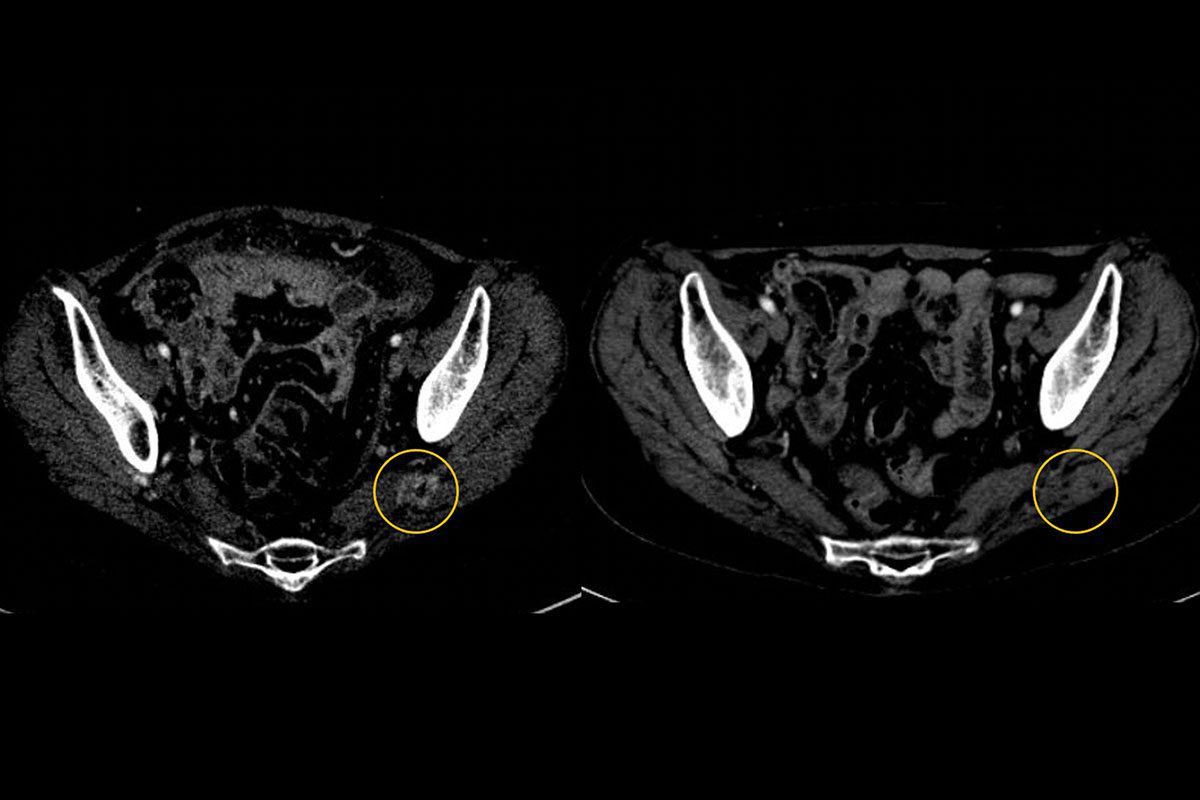
Lungtumor Before After Sized
A new study led by Washington University School of Medicine in St. Louis shows that the new drug sotorasib benefits many patients with non-small-cell lung cancer with a specific mutation in the KRAS gene. In a small subset of patients, the drug eliminated all evidence of the tumors. Pictured on the left is a scan showing a lung tumor (yellow circle) that has spread to the muscle. The image on the right shows the same patient after two months of sotorasib therapy. No tumor is visible in the yellow circle on the right. (Photo by Siddhartha Devarakonda)

The effects of sotorasib lasted an average of 11 months, and the drug also showed progression-free survival — meaning the tumor did not continue growing during this time — of almost seven months. In contrast, patients with this lung cancer who receive standard therapy have an average progression-free survival of two to four months. The average overall survival for all patients in the trial was 12 ½ months.

“We are hopeful that this approach will be a new option for patients with lung cancer driven by this specific type of KRAS gene alteration,” said Govindan, who treats patients at Siteman Cancer Center at Barnes-Jewish Hospital and Washington University School of Medicine. “KRAS gene alterations have long been considered not amenable for targeted therapies. A number of combination regimens are being tested here at the Siteman Cancer Center and at other leading cancer centers around the world. This highlights work that Washington University has excelled at over the past few decades — studying the genomic alterations in tumors with the goal of identifying treatment targets. This early cancer genome research is now coming full circle to help our patients.”

Govindan and his team have led pioneering studies to define genomic alterations in lung cancer, including making key contributions to The Cancer Genome Atlas, a national effort supported by the National Institutes of Health (NIH).

“The excitement surrounding this trial result is that sotorasib is now the first targeted therapy for lung cancer patients with KRASmutations,” said co-corresponding author Vamsidhar Velcheti, MD, of NYU Langone Health. “KRAS-targeted treatments, decades in the making, are urgently needed for these patients with limited treatment options.”

About 7% of patients stopped sotorasib treatment because of severe side effects, but no side effects were life-threatening, and no patient died as a result of the treatment. The drug caused adverse events severe enough to require a reduced dose of the drug in about 22% of patients. Almost 70% of patients experienced side effects of some kind related to the drug; the most common were diarrhea, fatigue, nausea and increased liver enzyme levels, the latter an indicator of liver damage.

“Sotorasib showed clinically significant benefit without any new safety concerns in patients with this specific form of KRAS mutant lung cancer,” Govindan said. “Moving forward, our team will seek to inform the development of combination therapies featuring sotorasib and other emerging drugs, and to determine which best fit the mix of mutations in each patient’s cancer cells.”

The researchers currently are conducting a phase 3 clinical trial comparing the effectiveness of sotorasib with a chemotherapy drug called docetaxel in 345 patients who have non-small-cell lung cancer and this specific KRAS mutation.

Siteman Cancer Center named among top U.S. cancer centers

Siteman Cancer Center at Barnes-Jewish Hospital and Washington University School of Medicine has been named among the top cancer centers nationally by U.S. News & World Report. The recognition is part of the overall ranking of Barnes-Jewish and Washington University, which are No. 18 on the news magazine’s 2020-21 “Best Hospitals” list, released today.

Siteman was named No. 11 in cancer care, based on a review of 899 hospitals. Health-care facilities are chosen largely on patient outcomes and other data and a national survey of physicians.

In addition to their national rankings, Siteman and Barnes-Jewish each were ranked No. 1 in the St. Louis region and No. 1 in Missouri in their respective categories.

“Being recognized as one of the nation’s top cancer programs is an honor,” said Timothy J. Eberlein, MD, Siteman’s director and the Spencer T. and Ann W. Olin Distinguished Professor and head of the Department of Surgery at the School of Medicine. “More importantly, it speaks to the extraordinary care we provide to our patients, care that’s built on one of the top cancer research programs anywhere.”

Siteman’s “Best Hospitals” listing follows recent recognition by the National Cancer Institute (NCI), the principal federal agency for cancer research and training. Based on the NCI’s review of Siteman research programs, the cancer center received the agency’s highest possible rating, “Exceptional.”

Siteman is Missouri and southern Illinois’ only NCI-designated Comprehensive Cancer Center and the only cancer center in that area to be nationally ranked by U.S. News & World Report. The cancer center treats more than 75,000 patients, including 12,000 newly diagnosed patients, every year. Care is provided at six locations in the St. Louis region: on the Washington University Medical Campus and at Northwest HealthCare, part of Christian Hospital; Barnes-Jewish St. Peters Hospital; Barnes-Jewish West County Hospital; Siteman Cancer Center-South County; and Memorial Hospital East in Shiloh, Ill. Siteman also partners with Siteman Kids at St. Louis Children’s Hospital in the treatment of pediatric patients. The facilities all are affiliated with BJC HealthCare.

Barnes-Jewish Hospital and its Washington University physician partners also are part of U.S. News & World Report’s top 20 honor roll of hospitals that excel in complex specialty care.

To determine its rankings, U.S. News & World reviews 16 specialties. Rankings for 12 of them, including cancer, are based on a mathematical model combining mortality rate for particularly challenging cases, patient experience and other data, as well as on the expert opinions of specialized physicians nationally. Learn more about the methodology here.

The 2020-21 “Best Hospitals for Cancer” list is available at https://health.usnews.com/best-hospitals/rankings/cancer. Rankings also will appear in U.S. News & World Report’s “Best Hospitals 2021” guidebook, available Oct. 6.

New gene-altering treatment offered for blood cancers

Siteman Cancer Center at Barnes-Jewish Hospital and Washington University School of Medicine in St. Louis is one of the first centers nationwide to offer a new immunotherapy that targets certain blood cancers. Newly approved by the Food and Drug Administration (FDA) for types of advanced non-Hodgkin lymphoma in adults, the CAR-T cell therapy harnesses a patient’s own immune system to fight cancer.

Washington University doctors and researchers were involved in clinical trials that led to the FDA approval of the new CAR-T cell therapy, called Yescarta, and are working to develop other immunotherapies that attack cancer.

“This is the beginning of a new era of cancer therapy,” said Washington University oncologist Armin Ghobadi, MD, an assistant professor of medicine at the School of Medicine who treats patients at Siteman. “With CAR-T cell therapy, we can take patients’ own cells and turn them into a powerful weapon to attack cancer. It’s a highly personalized, innovative therapy and one we hope also will prove to be effective against many different types of cancer.”

At the heart of the new therapy are the immune system’s T cells, which typically fight off disease. In cancer patients, T cells lose the ability to recognize and attack cancer cells. CAR-T cell therapy involves extracting a patient’s own T cells and genetically altering – or supercharging – those cells to home in on cancer cells and destroy them.

The first cancers to be treated with CAR-T cell therapy include advanced lymphomas in adults and acute lymphoblastic leukemia (ALL) in children. CAR-T cell therapy for pediatric ALL was approved by the FDA at the end of August and is available through Siteman Kids at St. Louis Children’s Hospital. These cancers are characterized by the production of too many B cells, a type of white blood cell that is also a part of the immune system.

Currently, CAR-T therapy for adults with non-Hodgkin lymphoma is available only to patients whose cancer has not responded to standard treatments — including chemotherapy and bone marrow transplantation. Kite Pharma, a Gilead company, developed the new treatment.

Clinical trials of CAR-T therapy have shown what doctors have called remarkable remission rates among children with ALL and adults with lymphomas and multiple myeloma. In patients whose disease has not responded to standard therapies or has relapsed, CAR-T therapy has achieved from 40 to 80 percent remission rates. Some patients have remained in remission for several years.

“The availability of this new treatment offers a novel and very effective option for patients whose choices were once limited to joining a clinical trial of an investigational drug or entering hospice care,” Ghobadi said.


These modified T cells have been dubbed CAR-T cells, which stands for chimeric antigen receptor T cells.
A patient’s T cells are isolated from the blood and modified in a way that lets the T cells specifically home in on the type of cell affected by the cancer. These modified T cells have been dubbed CAR-T cells, which stands for chimeric antigen receptor T cells. Once a CAR-T cell finds its target, it behaves as any T cell should — triggering a chain of reactions that destroys the target cell. HUY MACH


If cancerous cells find ways to fly under the radar of immune surveillance, the new therapy renders these cancers visible again.

“The immune system can’t always see cancer cells as threats — the T cells are sometimes blind to them,” said John F. DiPersio, MD, PhD, the Virginia E. and Sam J. Golman Professor of Medicine in Oncology and director of the Division of Oncology at the School of Medicine and deputy director of Siteman Cancer Center. “By modifying these T cells, we tell them what to look for. Now they can go right to the leukemia or lymphoma and eliminate the cancerous cells.”

Over decades, an extensive body of research gradually has revealed the details of what many types of cancers look like on the cell surface. And in this new therapy, that information is, in a sense, programmed into the T cell. A patient’s T cells are isolated from the blood and modified in a way that lets the T cells specifically home in on the type of cell affected by the cancer. These modified T cells have been dubbed CAR-T cells, which stands for chimeric antigen receptor T cells.

Once a CAR-T cell finds its target, it behaves as any T cell should — triggering a chain of reactions that destroys the target cell. CAR-T cells often are referred to as a living drug because they expand their numbers dramatically once in the bloodstream. And like other T cells, they remember what their targets look like, sometimes long after the offending cells have been eradicated. While long-term data is still being gathered, there is evidence that some CAR-T cells may maintain their active surveillance and ramp up again in response to cancer recurrence. The fact that CAR-T cells can be given different programming, locking them on to different cell surface features, suggests the strategy could be expanded to other cancers.

But because the therapy induces a heightened immune response, there can be a range of side effects, from fever and shortness of breath to kidney failure and seizures. Many of the side effects are manageable, but some are severe and a few can be life-threatening, which is why the first centers selected to administer the new therapy are those with extensive expertise in treating blood cancers. That expertise includes long histories of success in bone marrow transplantation and management of the sometimes severe side effects of that similarly intensive, but standard, therapy for many blood cancers.

“The toxicities of bone marrow transplantation and CAR-T cells are completely different, but we are well-equipped to manage both,” DiPersio said. “We have approved therapies we can give to counter one of the primary side effects of CAR-T cells called cytokine release syndrome, which causes symptoms like low blood pressure, high fevers, chills, swelling and kidney failure. Some patients who receive CAR-T therapies also can experience life-threatening neurologic toxicities that we are still working to understand.”

Washington University doctors at Siteman also are evaluating CAR-T cell therapy in a clinical trial for leukemia and soon will begin a trial in patients with multiple myeloma, another type of blood cancer, and ovarian cancer. Clinical trials currently available for sarcoma, a cancer of bones and connective tissue; lung cancer; and melanoma, a skin cancer, involve therapies very similar to CAR-T cell therapy.

For more information about CAR-T cell therapy, patients should visit siteman.wustl.edu or call toll free 800-600-3606.