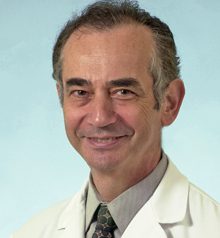
Dehdashti honored by Radiological Society

Award recognizes her career contributions in research

Physician-scientist Farrokh Dehdashti, MD, the Drs. Barry A. and Marilyn J. Siegel Professor of Radiology and senior vice-chair and director of the Division of Nuclear Medicine at WashU Medicine, is being recognized by the Radiological Society of North America for advancing the radiologic sciences throughout her career in research.

For her scientific accomplishments, she will receive the 2025 Outstanding Researcher award at the society’s annual meeting, Nov. 30-Dec. 4 in Chicago.

The Radiological Society of North America represents professionals spanning the full breadth of radiologic subspecialties in more than 160 countries around the world and publishes six peer-reviewed journals.

Dehdashti is credited with expanding the role of positron emission tomography (PET) imaging in the field of oncology. She conducted some of the first studies in people of several novel PET diagnostic compounds related to several types of cancers, including cervical, breast, pancreatic and prostate cancers. Her other research interests include imaging estrogen receptors and progesterone receptors in breast cancer; Chemokine receptor imaging, such as CCR2 imaging in pancreatic and head and neck cancers; PARP imaging of solid tumors; and imaging tumor proliferation. See her research profile here.

Dehdashti also is co-leader of the Oncologic Imaging Program at Siteman Cancer Center at Barnes-Jewish Hospital and WashU Medicine, medical director of PET imaging at the Center for Clinical Imaging Research and a member of the leadership team at Mallinckrodt Institute of Radiology.

She earned her medical degree from Pahlavi University School of Medicine in Iran in 1977 and completed her radiology residency in 1980 at the same institution. She served as chief resident and then research fellow in PET imaging in the Division of Nuclear Medicine at WashU Medicine before joining the faculty in 1990.

Bennett named Evens Professor of Women’s Health

WashU Medicine breast cancer imaging specialist Debbie L. Bennett, MD, chief of breast imaging at Mallinckrodt Institute of Radiology (MIR), was installed Aug. 14 as the Ronald and Hanna Evens Endowed Chair in Women’s Health at Barnes-Jewish Hospital.

Bennett oversees screening and diagnostic mammography services at Siteman Cancer Center, based at WashU Medicine and Barnes-Jewish Hospital, and is a member of the breast cancer specialist team. As a member of several national panels, she is helping shape national guidelines and policies relating to breast imaging and cancer screening. She is also a co-author on the most recent version of the ACR Breast Imaging Reporting and Data System Atlas, the international standard for breast imaging reporting. Bennett was named chief of breast imaging in 2020.

“We’re forging history and moving forward with new techniques that support women,” said Pamela K. Woodard, MD, the Elizabeth E. Mallinckrodt Professor of Radiology and director of MIR. “Debbie has been a mentor to many residents who have chosen breast imaging as their career.”

A physician committed to providing high-quality care throughout the community, Bennett specializes in the diagnosis of benign breast conditions and breast cancer. Her research focuses on the early diagnosis of breast cancer and the impact of screening mammography on population outcomes, and she is a co-investigator on multiple collaborative research projects focused on mammogram-based risk prediction, risk reduction interventions and use of novel technologies to reduce benign biopsies.

At her installation ceremony, Bennett presented “Building Community Through Breast Imaging,” in which she discussed the evolution of MIR’s breast imaging section. “This is the house that Barbara built,” she said, referring to Barbara Monsees, MD, professor emeritus of radiology, who was the first chief of breast imaging and later the inaugural Ronald and Hanna Evens Endowed Professor of Women’s Health. The impact of her decades-long career is still felt today, with accomplishments including co-developing the Joanne Knight Breast Health Center and launching the mammography van in 1986 — bringing breast cancer screening to underserved areas across the region.

Established in 2004 by The Foundation for Barnes-Jewish Hospital, the Ronald and Hanna Evens Endowed Chair in Women’s Health honors the distinguished career of Ronald Evens, MD, longtime MIR director who oversaw a time of booming growth for the department. He held many other leadership roles, including president and CEO of St. Louis Children’s Hospital, president of Barnes-Jewish Hospital, vice chancellor for financial affairs at WashU and vice president of Washington University Medical Center. Hanna Evens is a 1960 graduate of Barnes Hospital School of Nursing and a former nurse at St. Louis Children’s Hospital.

Bennett was installed in a ceremony held at WashU Medicine. She punctuated the night with the nexus of her medical philosophy: “Always bring it back to the patient.”

Thaker named Chief of Gynecologic Oncology

Nationally recognized clinical trials expert, also known for outstanding patient care

Premal H. Thaker, MD, MS, a physician-scientist recognized for her expertise in conducting clinical trials, authoring numerous medical and scientific publications and outstanding patient care, has been named chief of the Division of Gynecologic Oncology at WashU Medicine. In this role, she oversees a continuum of research and clinical approaches aimed at improving the treatment of ovarian, cervical, endometrial and other gynecologic cancers at Siteman Cancer Center, based at Barnes-Jewish Hospital and WashU Medicine.

A member of WashU Medicine’s faculty since 2006, Thaker has served as interim director of the division for the past 17 months. She also is the David G. and Lynn Mutch Distinguished Professor of Obstetrics and Gynecology and director of Gynecological Oncology Clinical Research at WashU Medicine. As a surgeon, she is a member of the multidisciplinary teams at Siteman that provide personalized care incorporating the specific needs of each patient.

“I am honored and humbled to lead such a great team of physicians, nurse practitioners, nurses, scientists and staff who are committed to excellent patient care and cutting-edge research in gynecologic malignancies,” Thaker said. “I am excited by the opportunity to continue to expand our service line both locally and regionally to help more patients receive care from Wash U Medicine and Siteman Cancer Center.”

She succeeds Matthew A. Powell, MD, the Ira C. and Judith Gall Professor of Obstetrics and Gynecology, who served as chief of the Division of Gynecologic Oncology from 2015-2024.

The division’s mission is to improve care through exceptional clinical service, research, education and community engagement. Specialties within the division include advanced minimally invasive benign gynecologic surgery and gynecologic oncologic surgeries, fertility-sparing medical and surgical options for gynecologic oncology diseases, and reconstructive surgery. Pediatric, adolescent and young adult gynecologic care is also offered.

Thaker earned her undergraduate degree in biology from Villanova University in Villanova, Pa., and her medical degree from Allegheny University of the Health Sciences in Philadelphia through a prestigious six-year BA/MD program. She completed her residency in obstetrics and gynecology at the Hospital of the University of Pennsylvania, also in Philadelphia, and her fellowship in gynecologic oncology at the University of Texas MD Anderson Cancer Center in Houston. She also holds a master’s degree in cancer biology from the University of Texas Graduate School of Biomedical Sciences, also in Houston.

Additionally, Thaker received training in laparoscopic lymph node dissection at Charité – Universitätsmedizin Berlin in Germany.

In recognition of her outstanding patient care, she has been consistently named to the St. Louis Magazine and Castle Connolly Top Doctors lists since 2013 and 2021, respectively.

Thaker also is an accomplished clinical investigator in translational research and is recognized for her expertise in conducting clinical trials. She has co-led a collaborative R01 program that explored biobehavioral influences such as social isolation on ovarian cancer progression. This work began during her fellowship at MD Anderson and resulted in a landmark publication in 2006 in Nature Medicine titled, “Chronic stress promotes tumor growth and angiogenesis in a mouse model of ovarian carcinoma.” This collaborative research has resulted in more than 24 articles in such journals as Cancer, the Journal of Clinical Oncology and Brain, Behavior, and Immunity.

She also has been part of WashU Medicine and Siteman’s endometrial Specialized Program of Research Excellence (SPORE), first received in 2009, evaluating ERK signaling in endometrial cancer and its potential for therapeutic targeting. Thaker continues to engage in translational research evaluating stress on ovarian cancer immunology, with her colleague Melanie Flint, PhD, at the University of Brighton in the United Kingdom. This work was published by their mutual graduate student Marta Falcinelli, PhD, in Brain, Behavior and Immunity in 2023. Thaker has published more than 200 peer-reviewed manuscripts, nine reviews and 11 chapters. See her research profile here.

Under Thaker’s leadership, WashU Medicine has been named among the top five sites for patient accrual for Lead Academic Participating Site (LAPS) and GOG Partners clinical trials. She has been the national principal investigator of two GOG Foundation clinical trials, four national pharmaceutical trials and three investigator-initiated trials. Thaker also serves on several Data and Safety Monitoring Boards for clinical trials. She has chaired the Early Business Development Subcommittee for GOG Partners since 2021 and has led efforts of the Association of Community Cancer Centers to educate the greater medical oncology community about ideal ovarian cancer care, leading to a white paper in Cancer in 2022. Thaker also represents Siteman Cancer Center on the ovarian cancer guidelines committee of the National Comprehensive Cancer Network (NCCN), an alliance of 33 leading cancer centers that convenes world-renowned experts to create national clinical practice guidelines.

Since joining the WashU Medicine faculty, Thaker has shown a strong commitment to education and has mentored many medical students, residents, fellows and faculty members. She also contributes to continuing medical education programs locally, nationally and internationally.


De Los Santos, Hugo recognized by ASTRO

Two WashU Medicine professors of radiation oncology – Jennifer De Los Santos, MD, and Geoffrey Hugo, PhD – have been named fellows of the American Society for Radiation Oncology (ASTRO).

ASTRO counts 10,000 members worldwide, including physicians, physicists and cancer biologists, whose work advances care, education, professional development and research in the radiation oncology field. Only 541 of ASTRO’s members have been named fellows since the program began in 2006.

This year, De Los Santos and Hugo are among 43 members to receive the ASTRO Fellow (FASTRO) designation. They will be recognized Sept. 30 at an awards ceremony during ASTRO’s 67th Annual Meeting in San Francisco.

“These distinguished leaders embody ASTRO’s core principles of excellence, innovation and unwavering dedication to improving patients’ lives through radiation oncology,” said Howard M. Sandler, MD, chair of the ASTRO Board of Directors. “On behalf of ASTRO, we celebrate their elevation to FASTRO status and their meaningful contributions to cancer care.”

De Los Santos and Hugo are affiliated with Siteman Cancer Center, based at Barnes-Jewish Hospital and WashU Medicine, where De Los Santos treats patients at the Head and Neck Tumor Center. Her research interests include the development of paradigm-shifting treatment approaches across several cancer sites, and translational work to define populations who may successfully proceed with these approaches.

Hugo is vice chair of the Medical Physics Division in the Department of Radiation Oncology at WashU Medicine His research interests include image-guided adaptive radiotherapy particularly for lung cancer, image registration and analysis, and the use of machine learning in radiation oncology.

They join other recently named fellows, including WashU Medicine professors and radiation oncologists Clifford Robinson, MD, and Julie Schwarz, MD, PhD, who were appointed last year. Radiation oncologist Jeff Michalski, MD, MBA, the Carlos A. Perez Distinguished Professor at WashU Medicine, is the immediate past chair and a past president of the ASTRO Board of Directors.

The Brain Tumor Center at Siteman announces associate directors

Huang is promoted, and Chheda joins the leadership team of the multidisciplinary practice

The Brain Tumor Center at Siteman Cancer Center, a multidisciplinary practice of physicians and scientists, has named two board-certified WashU Medicine faculty members as associate directors.

They are:

“We are proud to announce Dr. Huang’s new leadership role, which reflects his deep commitment to advancing clinical and translational care for brain tumor patients,” said WashU Medicine neurosurgeon Albert H. Kim, MD, PhD, director of The Brain Tumor Center and the August A. Busch Jr. Professor of Neurological Surgery, a professor of genetics, neurology and developmental biology, and the senior vice-chair of the Department of Neurosurgery. “We are equally excited to welcome Dr. Chheda as a key leader of our center. His strategic insights and deep understanding of the field will be instrumental in shaping the future of The Brain Tumor Center.”

Huang previously served as clinical director of The Brain Tumor Center. He has led investigations into the use of novel drugs in glioblastoma and meningioma and the late effects of treatment following radiation therapy for brain tumors.

Chheda researches new ways to eradicate cancer cells that are resistant to conventional therapies and new methods to activate the body’s immune system to recognize and clear tumors. His laboratory is also pursuing the relationship between the aging brain and brain tumors.

The Brain Tumor Center at Siteman is a multidisciplinary practice of WashU Medicine physicians and scientists whose mission is to provide leading-edge, patient-centric care for brain tumor patients while also developing transformative basic, translational and clinical research to develop new therapies and improve patient outcomes.

Other leaders of The Brain Tumor Center are:

To make an appointment at The Brain Tumor Center at Siteman, call 314-747-7222 or 800-600-3606, or complete this form.

Cornelius receives research achievement award

American Skin Association recognizes her work in public policy, education

Lynn Cornelius, MD, the Winfred and Emma Showman Professor of Dermatology and chief of the Division of Dermatology at WashU Medicine, has been honored with the 2025 Research Achievement Award in Public Policy and Education from the American Skin Association.

The award, given May 9 at the Society of Investigative Dermatology Annual Meeting in San Diego, recognizes established scientists in investigative dermatology and cutaneous biology. Cornelius was honored for advancing the association’s work in public policy and education.

She sees patients at Siteman Cancer Center at Barnes-Jewish Hospital and WashU Medicine, where she also is a research member. Her clinical and research focus is on melanoma and skin cancer.

At the American Skin Association, Cornelius is a founding member of Sun Protection Outreach Teaching by Students (SPOTS), a public health outreach educational program. Through SPOTS, medical students teach adolescents about early detection and prevention to reduce their risk of cancer over their lifetimes.

Learn more about SPOTS efforts in the St. Louis region.

Hall recognized with Provost Impact Award

Honored for breast health outreach to high school students

Lannis Hall, MD, MPH, a WashU Medicine associate professor of clinical radiation oncology and radiation oncologist at Siteman Cancer Center, has been honored with a 2025 Provost Impact Award by the WashU Confluence Collaborative.

The award recognizes her work promoting breast health with young women in the Hazelwood School District. Since 2018, more than 7,000 high school students have benefited from the Breast Health Education initiative, commonly called “Tell Your Momma,” a joint project of the Hazelwood School District and Siteman’s Program for the Elimination of Cancer Disparities (PECaD).

“It is a privilege to educate young women about breast health,” Hall said. “Through the collective efforts of our dedicated breast cancer advocacy groups, PECaD and the Hazelwood School District, we’ve empowered young women with proven strategies to reduce breast cancer risk and improve survival.”

She was recognized along with Nettie Collins-Hart, PhD, superintendent of the Hazelwood School District, at an April 16 ceremony on Washington University’s Danforth Campus.

“Lifestyle and behavioral choices made in early adulthood — like healthy eating, exercise and timely screening can significantly impact health outcomes,” Hall said. “But the real impact lies in what they’ll carry forward by sharing knowledge with their mothers, sisters and communities to promote early screening and healthier futures across generations.”

Hall is involved with other community cancer prevention efforts, as well, including through the:

  • First Ladies of St. Louis, a group of 32 wives of pastors dedicated to promoting health and wellness. This partnership actively advances cancer prevention, awareness and screening throughout the region and hosts an annual cancer screening event.
  • Prostate Cancer Coalition, a group Hall co-founded to promote the timely screening, management and treatment of men with prostate cancer. The collective efforts of the group, Siteman Cancer Center and PECaD have helped double the region’s screening rates for prostate cancer over the past five years.

Hall treats patients at Siteman Cancer Center at Barnes-Jewish St. Peters Hospital, where she also is medical director of radiation oncology. She also serves as co-chair of the Clinical Research Committee and director of Clinical Studies Outreach at Siteman Cancer Center.

For tips on cancer prevention and breast health, visit our 8ightWays® to Prevent Breast Cancer, part of the 8ightWays® to Prevent Cancer series.

Improving breast cancer risk assessment for Black women

The National Cancer Institute, part of the National Institutes of Health (NIH), has awarded Washington University investigator Aimilia Gastounioti, PhD, at Siteman Cancer Center a five-year, $3 million grant to improve breast cancer risk assessments for Black women. Gastounioti is an assistant professor of radiology in the Computational Imaging Research Center in for Mallinckrodt Institute of Radiology (MIR) at Washington University School of Medicine in St. Louis. This is her first R01 grant.

The project aims to address an important need for a patient population that is not well served by current risk assessment tools. Black women are slightly less likely to develop breast cancer than white women are, but their mortality rates for the disease are strikingly higher — they are 40% more likely to die from the disease than white women. The risk models that are used to identify and plan treatments for patients who may develop the disease are not well suited, and historically have been less accurate, for Black women.

New tools that provide personalized risk assessments using artificial intelligence have shown enormous promise, but so far have largely been trained on data from digital mammography of white patients. Gastounioti, a principal investigator with MIR’s Computational Imaging Research Center, and her team will develop deep learning and medical imaging informatics tools on a database of more than 95,000 digital breast tomosynthesis (DBT) exams from Black women. The database is a collaboration of WashU, Emory University in Georgia, University of Pennsylvania and Columbia University Irving Medical Center in New York. Unlike standard digital mammography, DBT captures images of breast tissue from multiple angles, resulting in more-detailed tissue representations.

The goal is to develop and distribute an accurate screening tool specific to the patient population, which has the potential to drastically improve early breast cancer detection and prevention for Black women.

Bartlett receives Legacy Leadership Award from Leukemia & Lymphoma Society

Nancy L. Bartlett, MD,the Koman Chair in Medical Oncology at Washington University School of Medicine in St. Louis, has been named a 2018 Legacy Leadership Award honoree by the Gateway Chapter of the Leukemia & Lymphoma Society. She was recognized May 18 at the society’s Man & Woman of the Year gala at The Ritz-Carlton, St. Louis.

Bartlett treats lymphoma patients at Siteman Cancer Center at Barnes-Jewish Hospital and Washington University School of Medicine.

The annual Legacy Leadership Award recognizes individuals who have contributed significantly to the society’s mission of improving the quality of lives of patients with leukemia, lymphoma, Hodgkin’s disease or myeloma, and their families.

In 2017, John DiPersio, MD, PhD, deputy director of Siteman and the Virginia E. and Samuel J. Golman Endowed Professor of Oncology and director of the Division of Oncology at the School of Medicine, received a Legacy Leadership Award.

Strasberg honored by surgical association

Steven Strasberg, MD

Steven M. Strasberg, MD, the Pruett Professor of Surgery at Washington University School of Medicine in St. Louis, has received the 2018 Medallion for the Advancement of Surgical Care from the American Surgical Association.

Strasberg was recognized at the association’s annual meeting in Phoenix as a master surgeon of the hepatobiliary system, which comprises the liver, gall bladder and bile ducts, and for mentoring association members and students.

Among other contributions, he described in 1992 the concept of a targeted approach to identifying the anatomy of the biliary, or bile, system. In 1995, he introduced the term, “Critical View of Safety.”

“By identifying the Critical View of Safety, the surgeon can avoid bile duct injury,” E. Christopher Ellison, MD, president of the surgical association, said while honoring Strasberg during the association’s annual meeting, April 19-21 in Phoenix. “It is taught in every general surgical training program in the world and has become the standard of care.”

The committee that selected Strasberg “believes that the Critical View of Safety is without question one of the most important contributions in general surgery and hence its creator worthy of this award,” Ellison said.

Strasberg, who treats patients at Barnes-Jewish Hospital and Siteman Cancer Center, also was recognized for his contributions to the treatment of pancreatic adenocarcinoma, liver resection, the treatment of cholelithiasis and its complications and the management and prevention of bile duct injury during laparoscopic cholecystectomy. At the School of Medicine, Strasberg also is the Carl Moyer Departmental Teaching Coordinator. In 2005, he received the Evarts A. Graham Resident Teaching Award. He has published more than 290 peer-reviewed manuscripts and presented more than 100 national and international lectures. He also serves on the editorial boards of many journals.