Cynthia Ma Receives Susan G. Komen Leadership Grant

Cynthia X. Ma, MD, PhD, a renowned WashU Medicine physician-scientist at Siteman Cancer Center, has received a Leadership Grant from Susan G. Komen to advance breast cancer research focused on endocrine resistance, a major challenge in treatment for hormone receptor-positive breast cancer.

A medical oncologist, Ma treats patients with this and other types of breast cancer at Siteman Cancer Center, based at Barnes-Jewish Hospital and WashU Medicine.

She will use the grant to study tumor samples collected from postmenopausal women with ER-positive, HER2-negative breast cancer who participated in a major phase III study called the ALTERNATIVE trial, which Ma leads. The tumor samples were collected at diagnosis and then again during surgery after the patients received endocrine therapy, also called hormone therapy. By comparing these samples, her team will investigate the genetic features present before treatment and the changes that occur during therapy that may cause tumors to become resistant. The goal is to better understand why some tumors stop responding to therapy and to identify patients who are at risk of treatment resistance. Ultimately, this knowledge could help guide more personalized treatments that improve patient outcomes and save lives.

Susan G. Komen announced the award July 23, part of $15.4 million total in research grants awarded to 35 leading U.S. researchers, including long-term, well-established researchers such as Ma who have made a profound impact in the field, as well as early-career investigators.

“The researchers receiving grants from Susan G. Komen are making lasting contributions to our understanding of breast cancer and bringing the innovation and technology that’s needed to this disease so that all patients can receive the best care possible and enjoy a high quality of life after a breast cancer diagnosis,” said Ann H. Partridge, MD, MPH, chief scientific adviser for Komen.

Jiang Recognized for Statistical Innovation

Siteman Cancer Center research member co-developed AI platform to predict breast cancer risk

WashU Medicine cancer biostatistician Shu (Joy) Jiang, PhD, a research member at Siteman Cancer Center, based at Barnes-Jewish Hospital and WashU Medicine, has been named the recipient of the 2026 Annie T. Randall Innovator Award.

The award, presented by the American Statistical Association, recognizes early-career statistical innovators with a tenacious and resolute commitment to excellence. Recipients have represented a variety of disciplines.


Jiang, an associate professor of surgery in the Division of Public Health Sciences at WashU Medicine, is the co-developer of technology that harnesses artificial intelligence (AI) to analyze mammograms and improve the accuracy of predicting a woman’s personalized five-year risk of developing breast cancer. Last year, the software received Breakthrough Device designation from the Food and Drug Administration (FDA) and was acquired by Lunit, a leading company in developing AI-based technologies for cancer prevention and early detection.

The award was named in honor of pathbreaking Black female statistician Annie T. Randall for her pioneering career in government amid pervasive racial discrimination.

Jiang will be recognized at the 2026 Joint Statistical Meetings, the biggest conference for statisticians and data scientists globally, Aug. 1-6 in Boston.

Margenthaler Named Inaugural Endowed Chair for Surgical Excellence in Breast Cancer

New endowed chair honors renowned breast surgeon and will advance innovative care and research

WashU Medicine surgeon Julie Margenthaler, MD, FACS — nationally recognized for her surgical expertise and compassionate, personal approach to care — has been installed as the inaugural Endowed Chair for Surgical Excellence in Breast Cancer through The Foundation for Barnes-Jewish Hospital.

The endowed chair was made possible by donors, many of whom have been patients of Margenthaler at Siteman Cancer Center, based at Barnes-Jewish Hospital and WashU Medicine.

“It’s about how many patients she took care of and how many patients she helped and how many patients she cured,” Siteman Cancer Center Director Timothy J. Eberlein, MD, a breast surgeon himself, said during the installation ceremony. “I don’t think there is a better person who could be better feted with this endowed chair than Julie Margenthaler because, as many of you in the audience will attest, she is the most caring, compassionate but superb physician.”

Margenthaler has taken a holistic approach to patient outcomes that incorporates the three pillars of academic medicine: clinical care, research and educating the next generation of physician-researchers.

In the clinic, she is both a surgical oncologist and director of Breast Surgical Services at the Joanne Knight Breast Health Center at Siteman, which emphasizes screening and imaging excellence.

On the research side, Margenthaler’s interests include identifying minimally invasive approaches to breast cancer staging using imaging combined with molecular techniques. She also studies the identification of non-BRCA genes responsible for the development of breast cancer in young women under the age of 40, as well as the design of novel gene-specific approaches to breast cancer treatment.

To prepare those following in her footsteps, Margenthaler is both a professor of surgery and director of the Surgical Fellowship for Advanced Training in Breast Disease at WashU Medicine.

“This endowed chair will allow us to continue to push the envelope in research for advances to come 10 or 20 years from now,” she said. “And it will allow us a regenerating mechanism for research, specifically research that may not be traditionally funded by the National Institutes of Health. It also creates a legacy that will allow us to recruit the best people who want to continue our mission.”

Pam Nicholson is one of Margenthaler’s patients whose generosity led to the creation of the Endowed Chair for Surgical Excellence in Breast Cancer.

“You’re in such a vulnerable position when you’re first diagnosed,” Nicholson said. “Dr. Margenthaler is just that right person who is so calming, and she instills confidence. Your doctor matters and where you go matters. I think Dr. Margenthaler is a jewel for the hospital, for St. Louis and for all the Midwest.”

Nationally, Margenthaler has served in many roles, as well, including as president of the American Society of Breast Surgeons. Currently, she is section editor for the Annals of Surgical Oncology and a member of the editorial board of the Journal of Surgical Research. She also reviews 12 other journals and is the author of more than 240 peer-reviewed publications, reviews, editorials and book chapters.

For the past decade, Margenthaler has been named a Castle Connolly Top Doctor, a recognition of excellence in clinical care, education and research for the top 7% of practicing U.S. physicians. She is board-certified by the American Board of Surgery and is a Fellow of the American College of Surgeons (FACS). She also is a specialist focused on early detection, genetic counseling and proactive management for women with an increased risk of breast cancer.

Read more about Margenthaler’s path to becoming a physician, and her impact. Watch video of her chair installation.

Podany Named to Inaugural NCCN Advocacy Academy

WashU Medicine physician-scientist Emily L. Podany, MD, MPHS, has been selected for a new fellowship program that aims to connect people on the front lines of cancer care to share their knowledge and experience with federal policymakers.

Launched by the National Comprehensive Cancer Network (NCCN), the Advocacy Academy aims to provide oncology fellows and junior faculty at NCCN member institutions with advocacy skills and training to champion policies that will improve the lives of those affected by cancer.


Podany is an assistant professor of medicine at WashU Medicine and a medical oncologist who treats patients diagnosed with breast cancer at Siteman Cancer Center, based at Barnes-Jewish Hospital and WashU Medicine.

Her selection highlights her leadership at the intersection of cancer care and public policy. As part of this inaugural fellowship, she will focus on a critical regional and national issue: improving education around cancer risks linked to Coldwater Creek in north St. Louis County and helping affected individuals navigate the newly expanded Radiation Exposure Compensation Act (RECA).

Through the program, Podany will participate in policy education sessions, receive mentorship from national experts, and collaborate with congressional offices to advance meaningful cancer policy reform.

In addition to this recognition, Podany was also recently named a 2026 Young Investigator Award recipient, further underscoring her commitment to improving cancer care, particularly for patients facing social and structural barriers. Her research focuses on implementing navigation interventions for breast cancer patients with high-risk social determinants of health.

The NCCN is a nonprofit alliance of 33 cancer centers, including Siteman Cancer Center, that is dedicated to improving the quality and effectiveness of cancer care, research and education.

NCCN Recognizes Podany as 2026 Young Investigator Award Recipient

WashU Medicine physician-scientist Emily L. Podany, MD, MPHS, has been named a 2026 recipient of a prestigious NCCN Foundation Young Investigator Award, given by the National Comprehensive Cancer Network (NCCN) and NCCN Foundation.

Podany is an assistant professor of medicine at WashU Medicine and a medical oncologist who treats patients diagnosed with breast cancer at Siteman Cancer Center, based at Barnes-Jewish Hospital and WashU Medicine.

She is being recognized for her research project, titled “From Screening to Action: Implementing Navigation Interventions for Patients with Breast Cancer and High-Risk Social Determinants of Health.” Her work focuses on addressing barriers that can prevent patients from receiving timely and effective cancer care, particularly among populations facing social and economic challenges.

Through this award, Podany will receive funding and support from the NCCN Oncology Research Program over two years. The program provides mentorship and oversight to help early-career investigators advance innovative research aimed at improving cancer outcomes.

“We have a rigorous peer review process for identifying emerging leaders in cancer research through their work,” said Crystal S. Denlinger, MD, CEO, NCCN. “NCCN Young Investigators go on to lead within their institutions and nationally. This year’s recipients identified particularly pressing needs that impact people with cancer. They are exploring solutions to unlock better outcomes for all in the future. We are honored to play a role in their career trajectory and look forward to seeing where it takes them.”

Podany is one of five early-career researchers to be recognized this year. Her project is designed to move beyond identifying patients at risk to actively connecting them with the care and resources they need. By developing targeted patient navigation interventions, she aims to further reduce delays in diagnosis and treatment and improve care coordination, ultimately ensuring that patients with breast cancer receive equitable, timely and high-quality care.

“I am deeply grateful to the NCCN Foundation for this support,” Podany said. “This award will allow us to take meaningful steps toward ensuring that patients facing social and economic challenges are not left behind in their cancer care. Our goal is to translate screening for social determinants of health, such as food insecurity and housing instability, into tangible action by connecting patients to the resources they need to achieve the best possible outcomes.”

Podany’s work reflects the broader mission of the NCCN Foundation to support innovative research that addresses disparities in cancer care and improves outcomes for all patients. Her focus on practical, patient-centered interventions highlights the importance of bridging gaps between diagnosis and treatment. She will present her work at the NCCN 2029 Annual Conference.

The NCCN is a nonprofit alliance of 33 cancer centers, including Siteman Cancer Center, that is dedicated to improving the quality and effectiveness of cancer care, research and education.

New imaging approach reduces unnecessary breast biopsies by nearly 25%

WashU researchers at Siteman Cancer Center are advancing breast imaging to help patients avoid invasive procedures and improve the screening experience

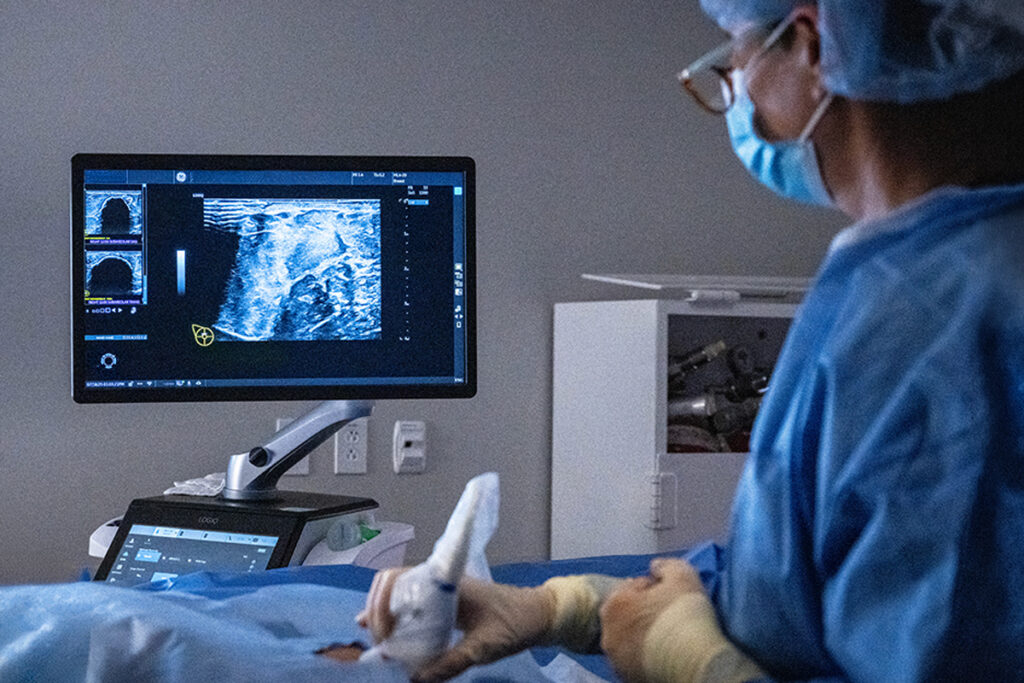
In a new discovery at Siteman Cancer Center at Barnes-Jewish Hospital and WashU Medicine, a team of researchers and physicians found that utilizing ultrasound-guided diffuse optical tomography technology can reduce unnecessary breast biopsy rates by nearly 25%.

Now for the first time in a clinical trial, Siteman Cancer Center is using these new methods first, rather than starting with a biopsy, to determine if additional diagnoses are needed to test for cancer. The research was recently published in Breast Cancer Research and supported by a nearly $2 million grant from the National Cancer Institute of the National Institutes of Health.

Every year in the United States, more than 1 million breast biopsies are performed. Yet 75-80% of those biopsies turn out to be benign, meaning patients undergo an invasive procedure, anxiety, and waiting — only to learn cancer is not present.

New Research in Breast Cancer Imaging

In a double-blind clinical trial involving 226 patients, the WashU Medicine research and physician team at Siteman found that ultrasound-guided diffuse optical tomography (DOT) — used alongside standard breast ultrasound — can reduce unnecessary benign biopsies by nearly 25%, while maintaining a false negative rate below 2%, consistent with American College of Radiology safety standards.

By combining standard ultrasound with diffuse optical tomography, radiologists gain additional information about tissue biology, not just structure.

Why This Matters for Patients Undergoing Breast Imaging

A biopsy remains the only way to definitively diagnose breast cancer. However, many suspicious findings on mammography or ultrasound are not cancer — and the uncertainty between imaging and biopsy can be one of the most stressful periods in a patient’s experience.

This research aims to improve how physicians distinguish which lesions truly require biopsy and which may be safely monitored. For patients, it means care that is not only the most advanced but thoughtfully designed to ensure that cancer is detected as early and screening is as accessible and low-cost as possible for more people.

Leadership in Breast Imaging Innovation

The study was led by:

Their multidisciplinary team included experts in radiology, pathology, engineering and clinical research across Siteman and WashU:

The study team also included Steven P. Poplack, MD, formerly of WashU Medicine and Siteman, who is now a professor of radiology (breast imaging) at Stanford University.

# # #

Zhu Q, Bennett D, Hagemann IS, Mannix J, Wiele K, Luther M, Luo J, Poplack SP. Ultrasound-guided diffuse optical tomography: An adjunct to ultrasound that can reduce unnecessary breast biopsies. Breast Cancer Research, published online Dec. 31, 2025. DOI: https://doi.org/10.1186/s13058-025-02206-3


Funding for this research was provided by the National Cancer Institute of the National Institutes of Health (R01CA228047).

Breast cancer startup founded by WashU Medicine researchers acquired by Lunit

Prognosia’s AI-based imaging tech could improve prevention, early detection of breast cancer

An innovative biotech startup founded by researchers at Washington University School of Medicine in St. Louis has been acquired by Lunit, a leading company in developing AI-based technologies for cancer prevention and early detection. The WashU startup, Prognosia, was created to develop software that harnesses AI to analyze mammograms and more accurately predict a woman’s five-year risk of developing breast cancer.

The startup’s first software package, Prognosia Breast, received Breakthrough Device Designation from the Food and Drug Administration (FDA) earlier this year, putting it on a fast track to full market approval. Lunit’s acquisition of Prognosia can help accelerate the final steps of the process to bring the technology into the clinic.

Prognosia was co-founded by Graham A. Colditz, MD, DrPH, the Niess-Gain Professor of Surgery at WashU Medicine and associate director of prevention and control at Siteman Cancer Center, based at Barnes-Jewish Hospital and WashU Medicine; and Shu (Joy) Jiang, PhD, an associate professor of surgery in the Division of Public Health Sciences in the Department of Surgery at WashU Medicine and a research member at Siteman.

“We are excited to work with Lunit to bring this technology to the clinic,” Jiang said. “Lunit already has the infrastructure in place to streamline production and clinical implementation of our software that would be extraordinarily difficult for a new startup to build from scratch. Integrating our software into their existing systems could help this new technology get into the hands of physicians and patients very quickly.”

The system produces a five-year breast cancer risk score that makes it possible to compare a woman’s personalized risk to an average risk based on national breast cancer incidence rates. This provides a meaningful estimate that is aligned with the U.S. national risk reduction guidelines, so that clinicians will know what options to discuss if a patient’s breast cancer risk is elevated.

“Improved risk prediction can help early detection, which has the potential to increase the likelihood of successful treatment that is less disruptive to people’s lives,” said Colditz, an internationally renowned cancer prevention researcher who has led the field for decades. “We recognized that there is a tremendous wealth of information about breast cancer development already stored and continuing to be newly collected in the form of regular mammograms. Until recently, there was no way to use this information to inform risk prediction or to develop new and better prevention strategies.”

Improving Accuracy

Past research led by Colditz and Jiang has shown their system is more than twice as accurate as the standard method of identifying individuals at high risk of developing breast cancer over the next five years. The standard method is based on questionnaires that include factors such as age, race and family history of breast cancer. Research also has shown that the technology maintains its high performance across multiple demographic groups, including among people of diverse races, ages and differing breast densities.

These results led to the technology’s recent FDA Breakthrough Device designation, which provides an accelerated review process for full market approval with the goal of giving patients and clinicians access to promising new medical devices sooner. The designation recognizes that the software already has undergone rigorous testing and has shown excellent promise in its potential to improve clinical care.

The developers said the technology could be easily integrated into existing clinical workflows and is compatible with both types of mammogram imaging available: the four 2D views of the breast produced by full-field digital mammography and the synthetic 3D view of the breast produced by digital breast tomosynthesis.

A Roadmap for Growth

Colditz and Jiang worked with WashU’s Office of Technology Management (OTM) to found their AI-based biotech startup.

“Prognosia is a superb example of harnessing all the resources available to WashU faculty to accelerate the launch of a company,” said Nichole R. Mercier, PhD, assistant vice chancellor and managing director of OTM. “Dr. Colditz and Dr. Jiang were proactive in adapting and learning through the resources and guidance of WashU’s OTM and the entrepreneurship ecosystem of St. Louis. Through Lunit’s acquisition of Prognosia, we’re excited to see this powerful startup venture become even better positioned to make transformative improvements in breast cancer risk estimation, prevention and early detection.”

Colditz and Jiang said Prognosia would not have been possible without OTM’s GAP funding program, which allowed them to do the work required for the FDA’s Breakthrough Device designation, as well as support from BioGenerator Ventures, which provided both financial support and expertise in business strategy from Entrepreneur-in-Residence David Smoller, PhD.

“With the guidance of OTM and David Smoller, we broadened our perspective beyond the technical aspects of the software to focus on the needs of the health-care providers who will use it to care for patients,” Colditz said. “That shift in mindset has been crucial to developing a technology that’s truly useful in the clinical setting.”

Colditz and Jiang will hold advisory roles at Lunit during the pre-market review process that precedes full FDA approval of the technology and for ongoing development projects. The regulatory plan includes an initial submission for the static model of risk prediction based on mammograms taken at a single timepoint, with a roadmap to expand functionality of the software by analyzing mammograms from the same person taken at multiple timepoints to improve the accuracy of the prediction.

AI-Based Breast Cancer Risk Technology Receives FDA Breakthrough Device Designation

Software developed at WashU Medicine on accelerated path to approval

A new technology that harnesses AI to analyze mammograms and improve the accuracy of predicting a woman’s personalized five-year risk of developing breast cancer has received Breakthrough Device designation from the Food and Drug Administration (FDA). Developed by researchers at Washington University School of Medicine in St. Louis, the software has been licensed to Prognosia Inc., a WashU startup company.

The system analyzes mammograms to produce a risk score estimating the likelihood that a woman will develop breast cancer over the next five years. The technology is compatible with both types of mammogram imaging available: the four 2D views of the breast produced by full-field digital mammography and the synthetic 3D view of the breast produced by digital breast tomosynthesis.

Importantly, the system produces an absolute five-year risk that makes it possible to compare a woman’s risk to an average risk based on national breast cancer incidence rates. This provides a meaningful estimate that is aligned with the U.S. national risk reduction guidelines, so that clinicians will know what steps to take next if a woman’s risk is elevated.

The FDA Breakthrough Device designation provides an expedited review process for full market approval in an effort to give patients and clinicians accelerated access to new medical devices. Products that receive the designation have already undergone rigorous testing and shown excellent promise in their potential to improve treatment or the diagnosis of debilitating or life-threatening conditions.

The software package, called Prognosia Breast, was developed by Graham A. Colditz, MD, DrPH, the Niess-Gain Professor of Surgery at WashU Medicine and associate director of prevention and control at Siteman Cancer Center, based at Barnes-Jewish Hospital and WashU Medicine; and Shu (Joy) Jiang, PhD, an associate professor of surgery in the Division of Public Health Sciences in the Department of Surgery at WashU Medicine. Colditz and Jiang co-founded Prognosia in 2024 in collaboration with WashU’s Office of Technology Management (OTM) and BioGenerator Ventures, the latter of which provided both financial support and business strategy expertise from Entrepreneur-in-Residence David Smoller, PhD.

The software is a pre-trained machine learning system that analyzes mammogram images and provides an estimate of how likely a patient is to develop breast cancer over the next five years, based solely on images and a woman’s age. According to the developers, Prognosia Breast estimates a person’s five-year risk of developing breast cancer 2.2 times more accurately than the standard method, which is based on questionnaires that consider factors such as age, race and family history. The system was trained on past mammograms from tens of thousands of individuals who underwent breast cancer screening through Siteman Cancer Center. Some of them went on to develop cancer, teaching the system what to look for in the earliest stages of tumor development. Such early signs of disease can’t be perceived even by a well-trained human eye.

“We’re excited about the potential of this technology to improve risk prediction and prevention of breast cancer broadly, no matter where a woman is getting screened,” Colditz said. “The long-term goal is to make this technology available to any woman having a screening mammogram anywhere in the world. No matter the type of imaging they receive, our data show the software’s potential to identify women at increased risk of developing breast cancer over the next five years, providing them with opportunities to take targeted steps to reduce that risk.”

The new device could have a large impact on risk prediction because the infrastructure is already in place to begin immediately using the software anywhere mammography is provided. Furthermore, many women already receive regular mammograms. According to 2023 survey data from the Centers for Disease Control and Prevention, more than 75% of women ages 50 to 74 reported having received a mammogram in the past two years.

Even with widespread screening, about 34% of breast cancer patients in the U.S. are diagnosed at later stages of the disease. According to the investigators, being able to assess risk up to five years in advance of the onset of cancer is likely to improve early detection, reducing the number of late-stage cancers diagnosed. Early detection has been shown to make treatment more effective and reduce deaths from breast cancer.

“Receiving a Breakthrough Device designation is a powerful validation of the extraordinary dedication and vision of this research team to improve breast cancer diagnosis and care,” said Doug E. Frantz, PhD, vice chancellor for innovation and commercialization at WashU. “It takes years of concerted effort to produce software that could quickly be integrated into the workflow of any mammography center, significantly enhancing the clinical value of routine mammograms no matter where they are provided. This is a prime example of the vital role of entrepreneurship and commercialization at WashU in transforming cutting-edge research into real-world technologies that improve patient care.”

The device produces a five-year risk score that is intended to complement, not replace, the analysis provided by radiologists, who will continue to review the mammograms following standard protocols. According to the American Society of Clinical Oncology and the U.S. Preventive Services Task Force, a five-year risk score of 3% or higher is considered elevated. According to guidelines from these organizations, women with elevated scores should be referred to specialists who can further advise them on their options for additional screening and prevention strategies.

Image 1

About one in eight women in the U.S. will be diagnosed with breast cancer in their lifetime. Those found to be at elevated risk of this cancer have the option to receive more frequent screening — which may include other types of imaging, such as MRI — and in some cases may choose to take a type of chemotherapy called tamoxifen or endocrine therapy as preventive treatments. With such options available, identifying women at high risk is important so they have access to specialists who can help guide them in making these important choices.

The developers are planning a clinical trial at Siteman Cancer Center that will apply the risk score from Prognosia Breast in combination with the standard mammography screening protocols. Standard screening protocols include the review of mammograms and measures of breast density already provided to all patients. Individuals found to be at elevated risk will be referred to Siteman’s breast health specialists, who focus on helping individuals navigate the options they have for managing high breast cancer risk.

“Despite the sophistication of today’s breast imaging and its broad use for identifying existing tumors, today’s risk prediction for breast cancer is still questionnaire-based and not very good at estimating future risk,” Jiang said. “Our work has focused on filling that need for better methods. Moving to image-based risk prediction — which our studies have shown is much more accurate — has the potential to be revolutionary for patient care.”

The current FDA designation applies to the software’s analysis of mammogram images taken at a single time point. In the future, the researchers plan to update Prognosia Breast to analyze several years of mammograms from the same individual, which may further improve the accuracy of the prediction.