Siteman Cancer Center has seven convenient locations across the St. Louis region, including in southern Illinois. Each location provides exceptional, multidisciplinary cancer care. Call our care coordinators today to help you determine which location best fits your specific needs.
Screenings for head and neck cancer are already part of your routine care. Your annual physician visit and dental cleaning both include steps specifically designed to detect early signs of these cancers. They are so simple and quick you may not have realized what they were checking you at all.
Simple Screenings You May Already Be Getting
A head and neck cancer screening has two components: a visual exam and a physical exam. When your physician looks inside your mouth and throat and feels along your neck, that is a head and neck cancer screening.
Your dentist performs a similar check at every cleaning, examining your mouth, under your tongue, and along your jaw. Because head and neck tumors can often be seen or felt, these routine exams can catch cancer early when it is most treatable.
HPV Screening for Head and Neck Cancer
While HPV-related cervical cancer has a dedicated screening, there currently isn’t a HPV screening test for head and neck cancer. This makes annual exams with your physician and dentist even more important.
Early detection dramatically improves outcomes for head and neck cancer. Going to your doctor and dentist at least once a year is the most reliable way to catch any changes early.
If you have elevated risk factors like smoking history, heavy alcohol use, no HPV vaccination, or prior head and neck radiation, tell your physician. Knowing your history allows them to monitor you more closely and catch any changes as early as possible.
The exact cause of head and neck cancer is not yet fully understood. Tumors develop for many reasons over time, and rarely because of just one factor.
What research does show is that several behaviors and exposures significantly increase risk. The good news is that most of these can be changed. Reducing your risk starts with understanding it.
Who Is at Higher Risk for Head and Neck Cancer?
Certain behaviors and exposures are consistently linked to higher risk. Risk factors include:
Drinking alcohol, especially heavy drinking
Smoking tobacco, marijuana, or vaping
Exposure to and contraction of Human Papilloma Virus (HPV)
Prior radiation therapy to the head and neck
Exposure to the Epstein-Barr virus
Exposure to industrial chemicals (these are common in shoemaking, carpentry, furniture construction, metal-plating)
How to Lower Your Head and Neck Cancer Risk
The most effective steps you can take to reduce your risk are straightforward:
Get vaccinated against HPV
Stop or significantly reduce alcohol consumption
Quit smoking and vaping
The most powerful tool for preventing HPV-related head and neck cancer is also one of the simplest: vaccination. Many cases of head and neck cancer begin with HPV exposure. The vaccine stops that from ever happening.
1. The HPV vaccine prevents cancer
HPV is linked to several cancers beyond head and neck, including cervical, penile, and anal cancers. The HPV vaccine provides protection against all of them.
The CDC recommends the vaccine series beginning at ages 11 or 12 because this is before potential exposure. This step protects children from HPV-related cancers for life. This is one of the most effective cancer prevention tools available.
Adults who were not vaccinated as children still have options. The FDA has approved the HPV vaccine for adults up to age 45. Because older adults may already have been exposed to the virus, the protective benefit varies. Talk with your physician about whether the vaccine makes sense for you.
2. Reduce or eliminate alcohol
Recent research is clear: no amount of alcohol is entirely safe. Alcohol is linked to multiple health conditions, including many kinds of cancer, including head and neck cancers.
If reducing your cancer risk is a priority, stopping or significantly limiting alcohol is one of the most impactful steps you can take. Alcohol-free alternatives and mocktails are increasingly available and easy to enjoy socially.
3. Quit smoking and vaping
The link between smoking and cancer is well established. In fact, WashU Medicine physicians led this discovery in 1950. If you have tried to quit before without success, it may be that you didn’t have the right support. Siteman’s Smoking Cessation Program [LINK] is designed for exactly that moment.
We support patients in quitting both tobacco and vaping. SmokeFree.gov also offers free resources and coaching for wherever you are in the process.
There are many different kinds of head and neck cancer, and each has its own specific biology, location, and treatment approach. That’s why specialist care is essential.
At Siteman, we go beyond identifying where your cancer is located. We study how it behaves at the molecular level to build a plan that is right for your cancer and right for your life.
Treatment plans often include a combination of:
Surgery with minimally invasive and robotic technology
Radiation therapy with IMRT, Proton Beam, and SBRT
Drug therapy with chemotherapy, immunotherapy, and targeted therapy
Your team at Siteman is built around you. Surgeons, radiation oncologists, and medical oncologists collaborate on your care. And specialists in speech therapy, swallowing rehabilitation, reconstructive surgery, and physical therapy support your recovery before, during, and after treatment, so you return to your life as fully as possible.
Is Surgery an Option for Head and Neck Cancer?
Yes. Surgery is an excellent option for many patients with head and neck cancer. WashU Medicine surgeons at Siteman have developed new procedures for removing tumors and lymph nodes that are available here and at only a handful of other cancer centers in the country. This level of surgical expertise is rare, and it matters for your outcome.
When Is Radiation Therapy Used for Head and Neck Cancer?
Radiation therapy is an essential treatment for many patients with head and neck cancer, especially those whose tumor location or size makes surgery difficult or impossible. In some cases, radiation alone can eliminate head and neck cancer without surgery.
Radiation uses focused energy to destroy cancer cells by damaging their DNA. It can be used with chemotherapy to treat advanced disease, or on its own to eliminate cancer completely. Because the head and neck contain many sensitive structures, Siteman’s radiation oncologists use highly specialized techniques to protect healthy tissue while delivering a powerful dose to the tumor.
Types of radiation therapy
Intensity Modulated Radiation Therapy (IMRT) maps radiation doses to the precise three-dimensional shape of your tumor. Physicians can control exactly how much radiation enters each beam and can adjust it in real time. This protects healthy tissue around the tumor—especially important for the complex anatomy of the head and neck.
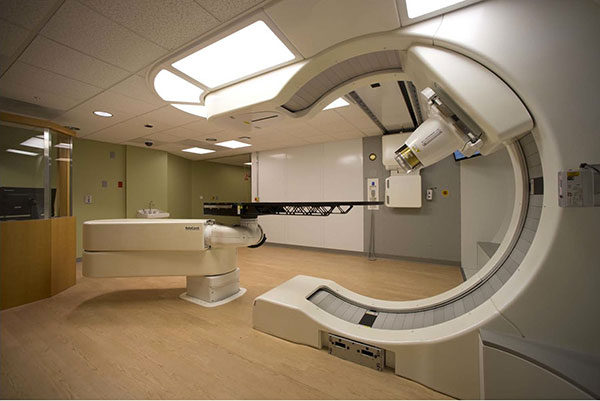
Proton Beam Therapy uses targeted protons to attack cancer with unmatched precision. Unlike conventional radiation that passes through the body, proton beams stop at the tumor, delivering their full energy there and sparing surrounding tissue from exposure. Siteman’s S. Lee Kling Proton Therapy Center was the first in the St. Louis region to offer this technology.
Stereotactic Body Radiation Therapy (SBRT) is used for patients whose cancer has returned or spread. Multiple radiation beams converge precisely on the tumor from different angles, delivering a concentrated dose while protecting surrounding tissue. SBRT can also be used in areas that have previously received radiation. This makes SBRT an important option for recurrent disease.
How Does Drug Therapy Treat Head and Neck Cancer?
Drug therapy is an important option for patients whose cancer cannot be fully addressed with surgery alone, has returned after treatment, or has spread to other parts of the body. At Siteman, WashU Medicine medical oncologists lead this work, using the most current evidence to guide every decision.
Most drug therapy is delivered through an IV so it can travel through the bloodstream and reach cancer cells throughout the body. Siteman offers three primary types of drug therapy for head and neck cancer: chemotherapy, immunotherapy, and targeted therapy.
Types of drug therapy
Chemotherapy uses drugs to destroy cancer cells directly. The most common chemotherapy for head and neck cancer is cisplatin, typically given in cycles over several weeks.
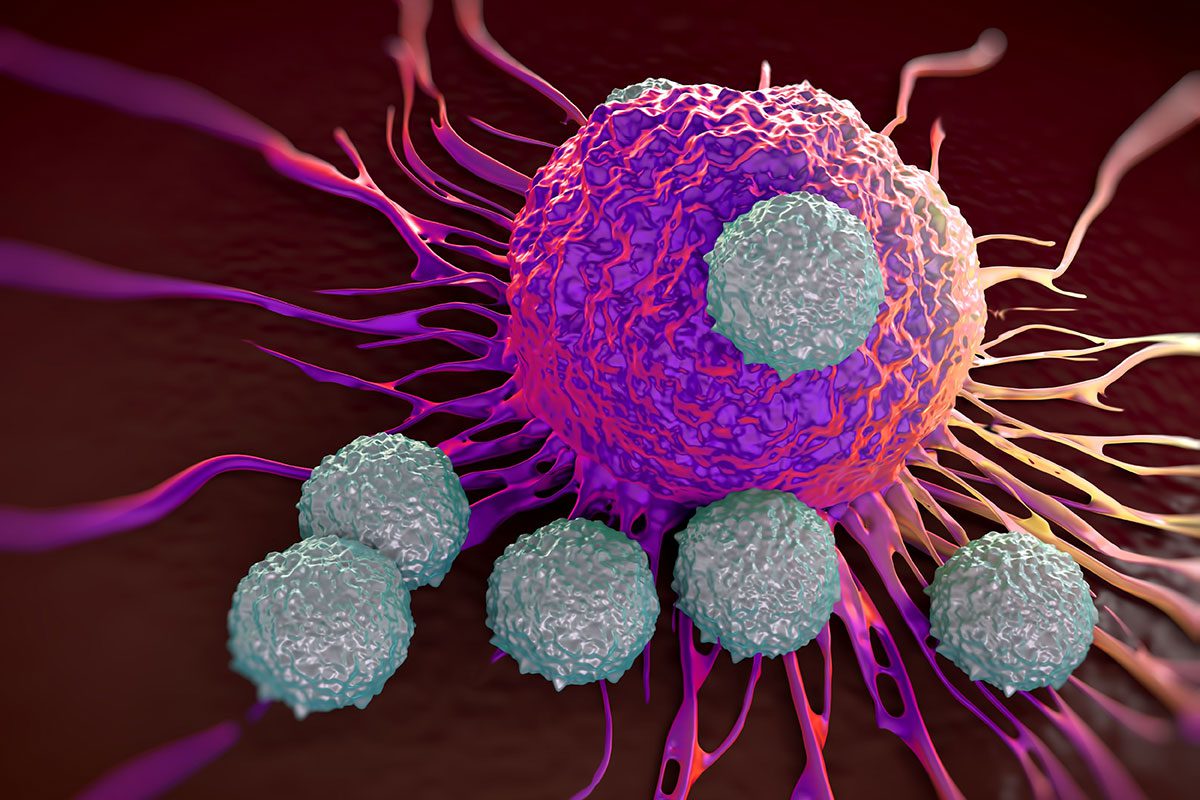
Immunotherapy activates your body’s own immune system to identify and attack cancer cells. These medicines have become a standard treatment for patients with advanced or recurrent head and neck cancers. Pembrolizumab is one of the most commonly used immunotherapy drugs for the disease. Immunotherapy typically causes fewer side effects than chemotherapy and can lead to lasting results for some patients.
Targeted therapy medicines are designed to attack specific features of cancer cells like proteins or genetic changes that allow them to survive and multiply. By blocking these specific targets, targeted therapy causes cancer cells to stop growing and, over time, to die.
Clinical Trials: New Treatments, Here First
Many patients at Siteman have access to breakthrough treatments through clinical trials. This research is studying medicines, combinations, and approaches not yet available at most cancer centers.
When you come here, your care team will review your diagnosis and identify every trial that may open new options for your care.
Clinical Trials at Siteman Cancer Center
Clinical trials are research studies that help us find new ways to prevent, diagnose, and treat cancer. If you have a rare or complex diagnosis or your treatment path seems uncertain, you might qualify for a clinical trial.
Our team will help you find a study that is right for you. Call us to speak with a Siteman care coordinator.
Head and neck cancer symptoms are often subtle at first, and many patients come to Siteman Cancer Center after weeks or months of uncertainty. If you have been diagnosed, are experiencing symptoms, or want a second opinion, you can come directly to Siteman Cancer Center. You do not need a referral to see us.
The WashU Medicine physicians in our Head and Neck Tumor Center diagnose and treat every type of head and neck cancer — including rare, advanced, and difficult-to-diagnose disease. Because our specialists see thousands of patient visits each year and care for hundreds of newly diagnosed patients annually, they have deep experience recognizing complex patterns, identifying subtle findings and distinguishing between cancers that can appear similar but require very different treatments.
That experience matters. An accurate diagnosis is the foundation of effective treatment. Our team uses advanced imaging, pathology, molecular testing, and multidisciplinary review to define the exact type and stage of disease as quickly and precisely as possible. By bringing experts together early, Siteman helps patients avoid delays, gain clarity faster, and move confidently into a personalized treatment plan designed specifically for their cancer.
What Is the First Step in Diagnosing Head and Neck Cancer?
Diagnosis begins with a thorough physical exam. Your physician will look inside your mouth, throat, and nose to check for unusual sores, lumps, or changes in tissue. This exam is painless and happens right in the office.
Your doctor may also check how well the nerves in your head, face, and neck are working. They might ask you to do simple things like shrug your shoulders or move your face in different ways. These are straightforward for you and significant ways for your physician to assess your health.
If your physician finds something that needs a closer look, they will recommend additional testing. At Siteman, our experts in imaging and pathology lead this work, getting a complete, precise picture of your cancer so your treatment plan is built on the most accurate foundation possible.
What Are the Symptoms of Head and Neck Cancer?
Because head and neck cancer can begin in many different locations, early signs and symptoms vary widely. The most common warning signs include:
A lump that can be seen or felt through the skin*
A change in voice quality (like hoarseness)
Difficulty swallowing
Pain in your mouth including tongue, teeth, or even ears
Decreased sense of smell or a total loss of smell
Decreased sense of taste or a total loss of taste
Loose teeth, tooth pain, or change in how dentures fit
A sore that does not heal on face, eyelids, nose, cheek, tongue, roof of mouth, throat, or lip
Many of these symptoms can also be caused by a common illness like a cold or sinus infection. That is why a physician’s evaluation matters. Only diagnostic testing can confirm or rule out cancer.
How long a symptom lasts is an important clue. If symptoms persist beyond two weeks or keep returning, call your doctor or dentist. Don’t wait.
*Note: A lump or mass in your neck is a symptom that always needs prompt attention. For adults with this symptom, cancer has to be ruled out through tests. Unlike other symptoms, a lump or mass is considered cancer until tests prove that it is not.
Why Choose Siteman for Your Head and Neck Cancer Diagnosis?
Your diagnosis is the foundation of everything that follows. An accurate, precise diagnosis that’s informed by research and tailored to your specific cancer determines the treatment that gives you the best possible outcome. At Siteman, our experts in imaging and pathology are among the most experienced in the country for head and neck cancers specifically.
Studying your cancer cells in our lab reveals insights that go beyond a location on a scan. We learn how your cancer grows and changes and discover its vulnerabilities. That information drives a treatment plan that is not just personalized, it is also precise.
Your primary care physician or dentist may refer you to a specialist or oral surgeon for testing. They can begin your evaluation but cannot perform many of the tests a diagnosis requires. You do not need a referral to come to Siteman. Many of our patients come to us first, or come to us for a second opinion that changes their care plan.
Your Second Opinion at Siteman
Siteman wants to be your first choice for cancer care, but that might not always be possible. If you have received a cancer diagnosis, started care somewhere else, or are a physician seeking specialized care for your patient, ask us about a second opinion. You can start the process. To make it easy, our care coordinators guide scheduling for yourself or your patient.
For an accurate head and neck tumor diagnosis, we order these tests:
Lab work and blood tests
Internal tests like biopsies and endoscopy
Imaging and scans like CT, MRI, PET-CT, and ultrasound
Biopsy
A biopsy takes a small tissue sample so our pathologists can examine cells for cancer. There are two primary approaches:
Needle biopsy: A thin needle removes a small number of cells. This is a quick, in-office procedure.
Surgical biopsy: When a larger sample is needed, the biopsy is performed in an operating room. If you are also having a tumor removed, the biopsy may take place at the same time to minimize the number of procedures you need.
All tissue samples are carefully examined by a WashU Medicine pathologists to make sure the diagnosis is accurate.
Endoscopy
An endoscopy uses a small camera on a flexible tube to look directly inside your nose, mouth, or throat. This gives your physician a close-up view of areas a standard exam cannot reach.
What to expect: Most patients remain awake and the exam takes place in the office. It is quick, and most patients tolerate it well. Often your specialist will use a numbing spray to keep you comfortable.
Sometimes the physician may do this test in an operating room while you’re asleep. This allows them to collect tissue samples, if needed.
Imaging tests
Imaging gives your care team a precise view of your tumor’s location, size, and spread. Different technologies are used depending on what your physician needs to see:
CT scans – Takes detailed images with X-rays
MRI scans – Uses magnets to create detailed images
PET scans – Uses a special sugar solution to locate cancer cells
PET-CT scans – Combines a CT and PET-scan for ultra precise imagery
Ultrasound – Uses sound waves to see inside your body. These are often used for tongue tumors.
Types of Head and Neck Cancer
Most head and neck cancers originate from the same type of cells called squamous cells. But the specific diagnosis is determined by where in the body those cells begin to grow abnormally. Each location requires a different specialist and a different treatment approach.
Head and neck cancers include:
Throat cancer
Oral cavity cancer
Nasal cavity cancer / Sinus cancer
Salivary gland cancer
Thyroid cancer
Skin cancer
Cancers that involve the brain, eye, and along the spinal cord are not considered a kind of head and neck cancer.
Siteman Cancer Center at Barnes-Jewish Hospital and WashU Medicine’s Head and Neck Tumor Center at cares for patients facing every type of head and neck cancer — including the most complex, advanced and rare. If you have recently received a diagnosis, are concerned about symptoms, or want a second opinion, you need a team built specifically for the complexity of these cancers.
As one of the nation’s first fully integrated multidisciplinary head and neck tumor centers, Siteman brings together nationally recognized experts in surgical oncology, radiation oncology, medical oncology, reconstruction, speech and swallowing, genomics and supportive care to deliver highly coordinated treatment personalized to you.
WashU Medicine physicians and researchers are advancing surgical techniques, expanding access to clinical trials, and protecting the abilities—breathing, speech, swallowing, and appearance—that matter most to your daily life.
Whether you are self-referring, seeking a second opinion, or a referring physician, our care coordinators will guide you through your first call and every step of your journey.
Why Choose Siteman
Head and neck cancers are among the most complex cancers to diagnose and treat. They can affect how you speak, swallow, breathe, and connect with the world around you. When facing these cancers, experience matters — and so does having the right specialists working together from the beginning.
At Siteman Cancer Center, our experts care for more head and neck cancer patients than any other team in the region, with more than 8,000 patient visits each year. That depth of experience helps us recognize rare and advanced diseases, personalize treatment plans, reduce complications, and help patients recover with the best possible function and quality of life.
As one of the nation’s first fully integrated multidisciplinary head and neck tumor centers, Siteman brings together specialists across surgical oncology, medical oncology, radiation oncology, reconstructive surgery, neuroradiology, pathology, speech and swallowing therapy, dentistry, nutrition and supportive care. Our team works together in a highly coordinated way to move quickly, align treatment decisions and personalize care for you, your goals and your life.
Patients come to Siteman Cancer Center for second opinions, complex diagnoses, advanced surgical expertise, access to innovative clinical trials and highly specialized treatment options that may not be available elsewhere. As the only National Cancer Institute-designated Comprehensive Cancer Center in the region, Siteman combines nationally recognized cancer expertise with leading-edge research designed to bring new therapies to patients faster.
Our multidisciplinary care team is a collaboration among many specialists, including:
Otolaryngologists
Radiation oncologists
Medical oncologists
Radiologists
Pathologists
Oral surgeons
Speech therapists
Audiologists
Psychologists
Nutritionists
Access to this level of care ensures that we cover every aspect of head and neck cancer from diagnosis through treatment and beyond.
Start Here. Get the Care You Need.
Our Siteman care coordinators – oncology-trained nurses who help with scheduling, finding the right specialist, and guidance – can help you through the process.
Call us directly or submit a form, and we will call you back.
WashU Medicine physicians at Siteman are national leaders in research and treatment. They lead clinical trials and have pioneered robotic and transoral laser surgical techniques that other cancer centers follow today. Treatments that are becoming standard practice elsewhere often started here first.
Your care team will explore every option for treatment so you have the best possible outcome.
Refer Your Patient to Siteman Cancer Center
A Siteman care coordinator is the fastest path to referral, consult, or second opinion. Our care coordinators – oncology nurses who help with scheduling and navigation – will guide you from your first call.
In 2023, WashU Medicine physicians and researchers opened a first-of-its-kind Head and Neck Tumor Center at Siteman Cancer Center to provide advanced care for patients with head and neck cancers. Here, physicians focus on patient-centered care while driving research to enhance outcomes and quality of life during and after treatment.
Experts in Head and Neck Cancers
“The Head & Neck Tumor Center [at Siteman] is completely unique – patients benefit from comprehensive medical care and breakthrough research to advance their treatment. We also offer transoral thyroid surgery, complex and advanced reconstruction, and de-escalation of treatment for our HPV+ throat cancer (oropharynx) patients.”
Our Head & Neck Tumor Board meets weekly to review pathology, imaging, and treatment goals. The board includes surgeons, medical oncologists, radiation oncologists, radiologists, pathologists, and reconstructive surgeons.
Research shows that tumor boards significantly improve patient outcomes. In more than half of all reviewed cases, the collaborative discussion changes the treatment plan to better address the disease and protect quality of life. At Siteman, that means you get the best thinking of every specialist working together—before a single decision is made about your care.
Advanced Surgery and Reconstruction, All in One Place
Head and neck tumors grow in some of the most delicate places in the body, the head and the neck—close to structures that enable speech, swallowing, appearance, and breathing. Our surgeons are among the most experienced in the country for these precise, high-stakes operations that protect these abilities.
WashU Medicine surgeons at Siteman have developed new surgical approaches that reduce risk and protect function. These include scarless thyroidectomy, transoral laser microsurgery, and transoral robotic surgery—techniques available here and only at a handful of cancer centers in the country.
Your care plan includes reconstructive surgeons from the start. They often collaborate with your surgical team to complete facial reconstruction during the same operation as tumor removal. Merging these procedures reduces the number of surgeries you need. It also helps protect your appearance and abilities for recovery and quality of life.
Precision radiation therapy that protects healthy tissue
Siteman offers patients the most advanced radiation options available anywhere, including Intensity Modulated Radiation Therapy (IMRT), Stereotactic Body Radiation Therapy (SBRT), and proton beam therapy at our S. Lee Kling Proton Therapy Center— the world’s first compact imaging machine and the first in the St. Louis region to offer this option.
We consider these technologies to be minimally invasive radiation, similar to minimally invasive surgery. Our radiation oncologists are so precise they can protect critical structures—taste buds, salivary glands, vocal cords—while delivering a powerful, targeted dose to your tumor. Doing both means fewer complications and better quality of life during and after treatment.
Head and Neck Cancer Specialists Dedicate Themselves to Patient Care
The Co-Directors of the Head & Neck Tumor Center at Siteman Cancer Center. From left to right: Sidharth Puram, MD, PhD; Wade Thorstad, MD; and Douglas Adkins, MD
Your team at Siteman dedicates itself to your wellbeing and comfort throughout treatment, tailoring it specifically to your lifestyle and needs. Physicians like Wade Thorstad, MD, Co-Director of the Head and Neck Tumor Center, aim to give you “minimally invasive surgery, highly focused radiation therapy, [and] targeted pharmaceutical treatments.”
Siteman’s research team is long dedicated to de-escalation of treatment for patients with head and neck cancers, including those with HPV+ related cancers. De-escalation means using the most conservative intervention needed for the most effective outcome. This might look like a reduction in chemotherapy, radiation dosage, or less-invasive surgical techniques.
Our care team is composed of people who are dedicated to your wellbeing and see patients even years after treatment. Their priority is to provide you with the least invasive treatment available while ensuring the best results.
Clinical Trials: Access to Tomorrow’s Treatments, Today
Head and neck cancer research is expanding rapidly and Siteman is leading the way. WashU Medicine physician-researchers at Siteman actively study HPV-related cancers. They explore new immunotherapy combinations and targeted drugs for specific tumor profiles.
Siteman Cancer Center has one of the best reputations in the research world, so we lead many clinical trials each year. WashU Medicine physicians and scientists who are experts in head and neck cancers will lead your treatment.
Clinical trials give patients the chance to try breakthrough treatments before they are widely available. Because many of our physicians lead these studies as principal investigators, Siteman patients have access to more options than patients who receive care at other institutions. When you come to Siteman, your care team will review your diagnosis and identify trials that may be right for you.
Clinical Trials at Siteman Cancer Center
Clinical trials are research studies that help us find new ways to prevent, diagnose, and treat cancer. If you have a rare or complex diagnosis or your treatment path seems uncertain, you might qualify for a clinical trial.
Our team will help you find a study that is right for you. Call us to speak with a Siteman care coordinator.
Specialists at Siteman have long been at the forefront of treating head and neck cancers. In 1963, the Mallinckrodt Institute of Radiology at WashU Medicine added a Picker Cobalt 60, the first in the country to offer high-energy linear accelerator (LINAC) units. This radiation machine gives physicians greater accuracy in eliminating cancer cells in sensitive areas such as the throat, mouth, and neck.
Since even before Siteman Cancer Center was formed, for more than 60 years, WashU Medicine have helped define how complex head and neck cancers are treated — advancing new surgical techniques, precision radiation approaches, molecular diagnostics and clinical trials before they become widely available elsewhere. Siteman now combines decades of clinical experience with leading-edge research and highly coordinated care designed to improve outcomes, preserve function and move patients to treatment quickly — redefining the standard of care across the country.