
What is Myelodysplastic Syndrome (MDS)?
Myelodysplastic syndromes (MDS), also referred to as myelodysplastic neoplasms, are a group of rare blood cancers that are not very well understood, even by most physicians. At Siteman Cancer Center at Barnes-Jewish Hospital and WashU Medicine, our entire team understands how this cancer develops and identifies the best methods of treatment for patients who have it.
Our WashU Medicine researchers actively explore the onset and treatment of MDS. Their research focuses on genetic drivers, clonal evolution, and how the disease can progress and even lead to another type of cancer, acute myeloid leukemia (AML). Their research is done with the intent to improve quality of life and survivorship for patients who receive a diagnosis.
Approximately 120 new patients with MDS seek out Siteman Cancer Center for their care every year. Since our team has developed and defined the standard of care across other cancer centers for this particular type of blood cancer, patients have more informed treatment options available from the very beginning.
At Siteman, we lead in MDS research and treatment through:
- Myeloid malignancy research
- Low-risk vs. High-risk MDS
- MDS prognosis expertise to AML
- Clinical trials
- Allogeneic stem cell transplant expertise
- Patient-centered health care approach
- Complex case experience
- Academic medicine foundation
Siteman’s Blood Cancer Center further leads research into MDS and other blood cancers. Our specialists actively work to prevent the expansion of blood cancer progression.
Whole-Genome Sequencing Test: The Gold Standard for Blood Cancer Diagnostics, Developed by Our Team
Siteman doesn’t just treat patients with MDS. WashU Medicine researchers here define how to accurately diagnose and treat MDS for better patient outcomes.
WashU Medicine researchers at Siteman developed the ChromoSeq test in 2021. The test is a whole-genome sequencing test designed to diagnose and stage blood cancers, including MDS and AML. This test now sets the gold standard for diagnosing and staging MDS worldwide.
ChormoSeq is a testament to the outstanding research that physicians, including pathologists and geneticists at WashU Medicine are leading for cancers like MDS. Researchers from Siteman pioneered whole-genome sequencing tests for numerous other studies that applied the insights to different types of cancer, which has led to our unique understanding of MDS and how to treat it.
Our Siteman care coordinators – oncology-trained nurses who help with scheduling, finding the right specialist, and guidance – can help you through the process.
Call us directly or submit a form, and we will call you back.
Understanding Your MDS Diagnosis
MDS can be difficult to diagnose since the symptoms look like other ailments, like anemia or fatigue. To receive a thorough diagnosis, an MDS specialist may order a complete blood count, blood smear, biopsy, or genetic testing.
Approximately one-third of patients diagnosed with MDS may see it develop into acute myeloid leukemia (AML), which happens when immature myeloid cells, or myeloblasts, start to multiply in your bone marrow and blood and overwhelm your healthy cells. This makes an early MDS diagnosis extremely important to prevent future disease progression.
Once your Siteman Cancer Center care team has determined your level of risk and other health factors, they will inform you of the prognosis and treatment options best available for you. Your MDS treatment may involve anything from targeted chemotherapy, stem cell transplants, antibiotics, or blood transfusions with immunosuppressive therapy.
Clonal Hematopoiesis (CH) Clinic at Siteman
Siteman researchers are dedicated to discovering top-tier treatment for patients with different blood cancers. They also research how to prevent cancer from developing in the first place. The Clonal Hematopoiesis (CH) Clinic is one of the ways they do that.
CH, a genetic mutation of blood cells, can be a precursor to developing MDS. When this condition arises, the blood creates and clones mutant stem cells. This leads to more cells that have a different genetic makeup than normal, healthy blood cells.
The risk of CH turning into MDS or another blood cancer is low, under 4%. Still, WashU Medicine researchers at Siteman study CH closely to gain a deeper understanding of the connections. This careful study gives physicians insight to produce preventive measures.
Stem Cell Transplants: Why Patients and Physicians Choose Us for MDS Treatment
Many of the MDS treatment options involve active surveillance, which doctors may refer to as a “watch-and-wait” period, to see if the cancer develops further. The only currently known method to cure more aggressive forms of MDS is through stem cell transplants.
At Siteman, we have one of the largest stem cell transplant programs in the United States. As of 2024, our physicians have performed over 10,000 transplants, giving us better outcomes and more refined protocols for treatment. This means you can trust us to guide you through this specialized treatment with the most advanced options.
Patients who have MDS usually receive an allogeneic transplant, which means the stem cells come from a donor. Physicians will find a match using your human leukocyte antigens to determine whether a donor will be a good match or not. A donor may be a close relative or someone found from a registry like the National Marrow Donor Program (NMDP).
Our physicians also have valuable insights on preventing and treating a common side effect of stem cell transplants: graft versus-host disease, or GvHD. Many of our physicians actively research ways to prevent this issue. They also aim to ease the burden for patients who may develop it.
The entire process of stem cell transplants for MDS is a months-long endeavor. Because of the advanced science and precision technologies available at Siteman, your care team at Siteman will use all the best tools available to minimize any risks and ensure your experience is as comfortable as possible. They will also continue to monitor your health and progress long after you leave our center.
A Siteman care coordinator is the fastest path to referral, consult, or second opinion. Our care coordinators – oncology nurses who help with scheduling and navigation – will guide you from your first call.
Experts in MDS Treatment
Getting the right answers and treatment begins with MDS specialists who understand this specific type of blood cancer and are recognized internationally for their expertise. Below are some of the WashU Medicine physicians at Siteman Cancer Center who lead research and provide care to patients with MDS.
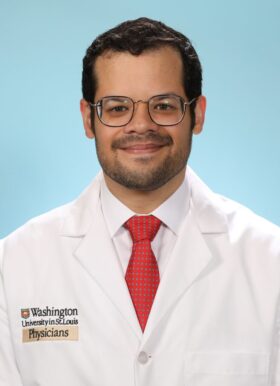
Samuel Urrutia, MD, MS
Samuel Urrutia, MD, MS, is a physician and bioinformatician whose research focuses on developing novel therapies for patients with MDS and AML. He also creates tools to better understand these conditions.
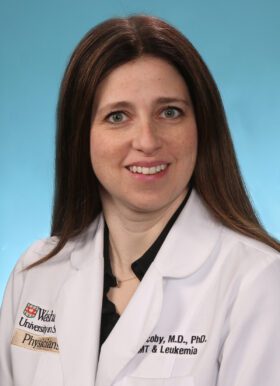
Megan Jacoby, MD, PhD
Meagan Jacoby, MD, PhD, is a professor of medicine in the Division of Oncology, specializing in stem cell biology. Her research focuses on stem cell transplants, MDS, and leukemia.
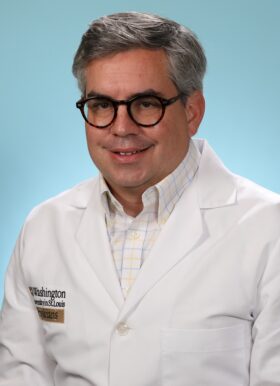
Eric Duncavage, MD
Eric Duncavage, MD is a pathologist who co-led the development of ChromoSeq with David Spencer, MD, PhD, the whole-genome sequencing test that doctors use all over the world to accurately diagnose and guide treatment for patients with MDS. His research helps his fellow physicians determine treatment efficacy and monitoring to prevent disease recurrence.
Clinical Trial Developments for MDS at Siteman
Siteman has more clinical trials available than any other cancer center in the region, giving patients access to novel treatments they can’t find elsewhere. That means patients at Siteman have a distinct advantage over their diseases.
Active trials at Siteman involve the full spectrum from early discovery to late-phase research, leading efforts to help patients with higher-risk MDS or to prevent them from developing further complications, including AML.
One of those MDS clinical trials is being led by Stephen Oh, MD , to test a drug formerly used only in breast cancer treatment, PMD-026, to improve spleen response and stem cell transplant responses in patients. In early lab experiments, this drug nearly eliminated cancer cells, leading to promising results.
Another recent clinical trial, led by David Spencer, MD, PhD, will focus on a test that can detect hidden cancer cells with greater reliability. This test will help identify patients with a higher risk of relapse — especially pertinent to patients whose MDS may progress into AML.
What Sets Siteman Apart for MDS Care
Siteman is proud to be a Certified Center of Excellence by the MDS Foundation, a nonprofit dedicated to improving the care and lives of patients with MDS. This recognition means you can trust us to answer any questions you might have about your diagnosis and to provide you with the best possible treatment options available.
Further, Siteman Cancer Center is recognized with the highest rating of “exceptional” by the National Cancer Institute (NCI) and is the only NCI-designated Comprehensive Cancer Center in Missouri and central and southern Illinois. Because of this credential, our patients receive health care here that they can’t receive anywhere else in the region.
If you are ready to begin your treatment at Siteman or want to refer your patient, connect directly with one of our care coordinators. Our team of registered nurses works closely with referring providers to guide each case with speed and personal touch. They ensure your patient is connected to the right specialist, the right diagnosis, and the right next step.
Your Second Opinion at Siteman
Siteman wants to be your first choice for cancer care, but that might not always be possible. If you have received a cancer diagnosis, started care somewhere else, or are a physician seeking specialized care for your patient, ask us about a second opinion. You can start the process. To make it easy, our care coordinators guide scheduling for yourself or your patient.