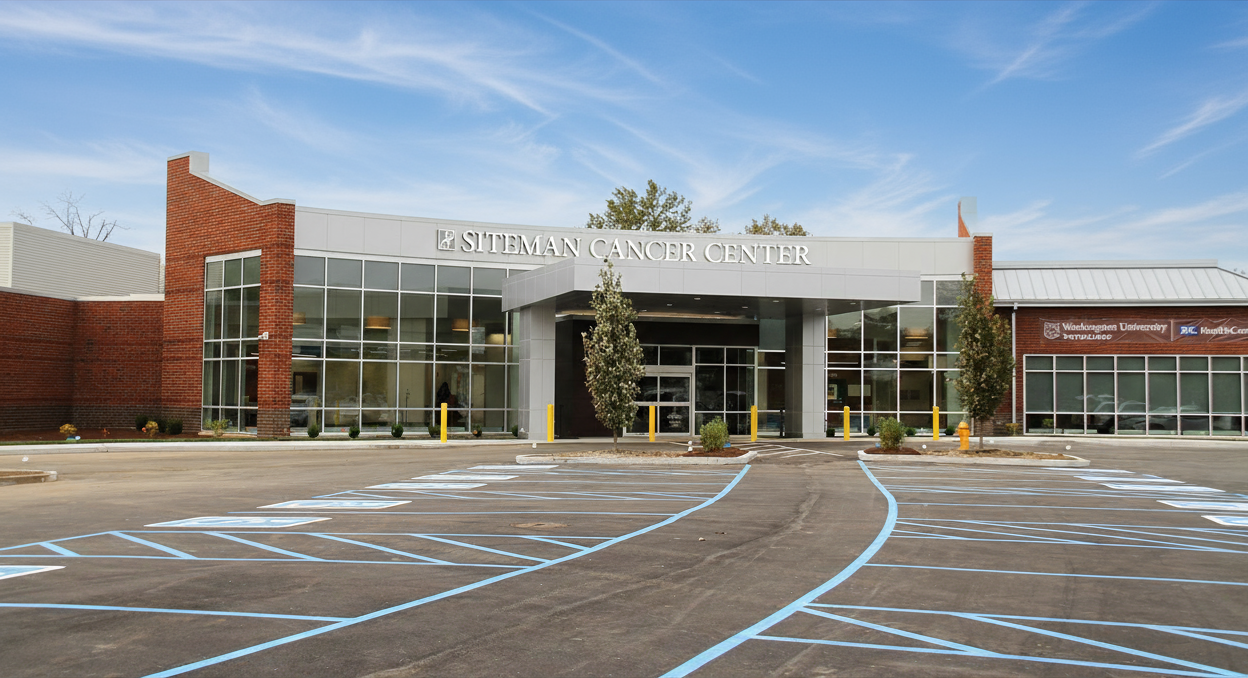
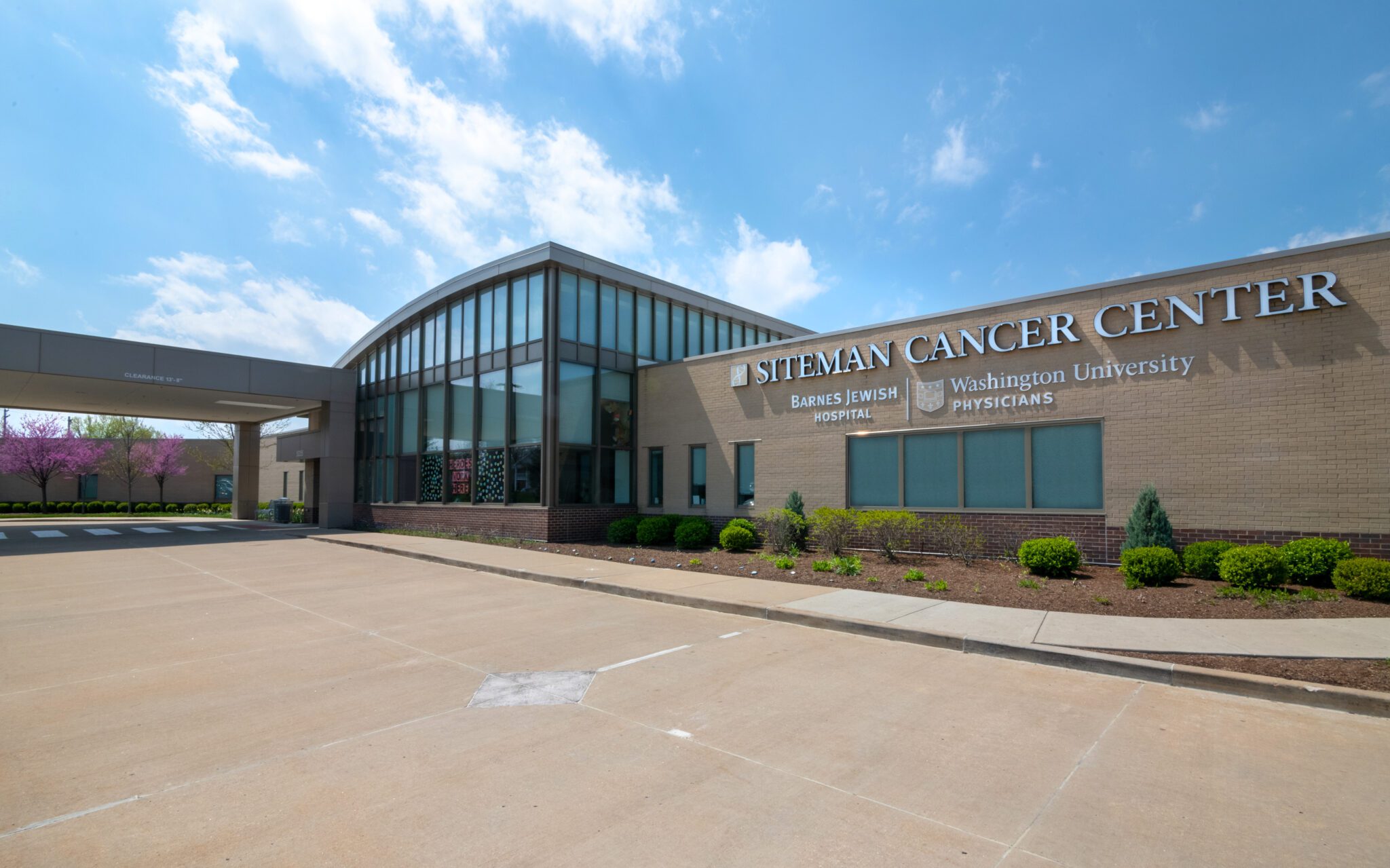
If you have been diagnosed with multiple myeloma, are concerned about abnormal blood test results, or want a second opinion on your current treatment plan, you can come to Siteman Cancer Center at Barnes-Jewish Hospital and WashU Medicine. Here you will receive care from team whose entire focus is on the disease.
The multiple myeloma specialists within our Blood Cancer Center at Siteman Cancer Center treat multiple myeloma every day — in every form, at every stage. Our physicians and researchers at WashU Medicine are among the most experienced in the nation. They are also advancing the science of this complex disease, which means new options reach our patients first.
Multiple myeloma, often simply called “myeloma,” is a cancer of plasma cells. It is usually preceded by a noncancerous condition called monoclonal gammopathy of undetermined significance (MGUS), which can remain stable for many years. In some people, MGUS progresses to myeloma—a chronic disease that requires lifelong expert treatment and monitoring, with periods of remission and relapse.
At Siteman, we make treatment decisions based on our deep knowledge of the disease. We treat multiple myeloma and other plasma cell disorders every day. We consider the likelihood of relapse even at your initial diagnosis to select the best approach to take now.
Whether you are a patient, a family member, or a physician referring your patient, our care coordinators — oncology nurses who help with scheduling and navigation — will guide you from your first call. Ask about a second opinion.
Start Here. Get the Care You Need.
Our Siteman care coordinators – oncology-trained nurses who help with scheduling, finding the right specialist, and guidance – can help you through the process.
Call us directly or submit a form, and we will call you back.
Why Choose Siteman for Multiple Myeloma?
Siteman Cancer Center is internationally recognized for blood cancer and cellular therapies — and is the region’s only NCI-designated Comprehensive Cancer Center. It’s a designation that has direct meaning for your care. It means our research and treatment are interconnected. New therapies developed here set national standards, and our patients benefit from that work first.
Multiple myeloma treatment has transformed over the past five years. The cancer centers achieving the best outcomes are those with dedicated specialists, access to every FDA-approved therapy, and active clinical trials that offer options unavailable elsewhere. Our Blood Cancer Center at Siteman, gives you access to all of them.
National excellence for myeloma in St. Louis
Our WashU Medicine physician-researchers developed ChromoSeq, which can quickly and accurately scan a patient’s whole genome for abnormalities that lead to myeloma and other blood cancers. It is a breakthrough in testing with insights on how to treat the specific cause of a patient’s disease.
We also contribute to national guidelines and cooperative group clinical trials that define how multiple myeloma is treated across the country. Treatments proven here become standard practice elsewhere.
Our myeloma specialists are also active researchers, making the discoveries that set the standard of care. That means our patients have access to new options at the earliest possible point, often through clinical trials unavailable anywhere else in our region.
Subspecialized multiple myeloma physician-researchers
Multiple myeloma is complex enough that specialist experience changes outcomes. Our WashU Medicine physicians focus on just plasma cell neoplasms, including myeloma — not different kinds of cancers.
They know which genetic patterns predict treatment responses. They know how to sequence therapies to protect your future options. And they know when to move beyond standard treatment to something newer.
They are also experts in multiple myeloma genetics. Specific gene changes in your cancer cells determine your risk level and guide which treatment fits your disease. Your care plan at Siteman starts with that precision.
A second opinion that widens options
You do not need a physician referral to come to Siteman. You can refer yourself directly.
Many patients who come for a second opinion for multiple myeloma discover that their care plan changes significantly. Our Siteman assessment and precise diagnosis could change your outcome, if you have:
- Smoldering multiple myeloma (SMM), an early, pre-active stage of myeloma
- Monoclonal gammopathy of undetermined significance (MGUS), an abnormal protein in the blood that is watched closely but not treated
- Solitary plasmacytoma
- Light chain amyloidosis
Because our physicians dedicate their careers to multiple myeloma, they see patterns and options that others may miss — including clinical trial eligibility, genetic features that change treatment strategy, or sequencing decisions that protect future treatment options.
Start your second opinon.
Team-Based Care for a Complex, Chronic Disease
The best myeloma care requires a team. At Siteman you have a care team of multiple specialists. Oncologists, transplant specialists, radiation oncologists, nephrologists, and others all work closely and collaboratively for you. Together, they create a care plan personalized just for you.
Our multiple myeloma tumor board meets every week. In these meetings, your team of experts meet to discuss your specific situation. After reviewing your genetics, your test results, and your treatment history, they agree on a treatment plan.
Research shows that this kind of team review improves outcomes. In many cases, the recommended treatment changes after a group review. At Siteman, you get the best thinking from every specialist before treatment begins.
Multiple myeloma is a disease that often changes over time. Your team will monitor you carefully, even after remission. In fact, WashU Medicine researchers are actively creating a large-scale immune cell atlas to better understand and predict relapse.
If your situation changes, your team adapts so you get the care you need. They will reassemble and evaluate what options you have, especially if you experience a relapse.
Learn more about our myeloma specialists
Advanced Multiple Myeloma Treatment. All at Siteman.
Recent breakthroughs have caused multiple myeloma treatment options to widen. You can find them all at Siteman. The FDA has approved multiple new therapies that have extended the time patients stay in remission. Plus, these treatments have transformed what is possible at relapse.
Your treatment at Siteman is precise and personalized. We analyze your myeloma cells’ genetics, your overall health, your organ function and bone strength, your prior treatments, and your goals.
Siteman’s leadership in CAR T-cell therapy
CAR T-cell therapy is one of the most significant advances in multiple myeloma treatment in the past decade. It’s approved for patients whose disease has returned or stopped responding to other treatments. In CAR T-cell therapy, your own immune cells are collected, genetically engineered in a laboratory to recognize and destroy myeloma cells, and then infused back into your body.
Right now, CAR T-cell therapy is approved for patients with relapsed or refractory myeloma. Trials are studying if it is helpful at even earlier stages.
Siteman is one of the only centers in the country that processes CAR T-cells on-site, at WashU Medicine’s Center for Gene and Cellular Immunotherapy (CGCI). That means we start your treatment faster. Most of our patients begin CAR T-cell therapy in about a week, compared to several weeks at most other centers.
Siteman is an authorized treatment center for FDA-approved CAR T-cell therapies for myeloma, including cilta-cel (Carvykti) and ide-cel (Abecma). Both target BCMA, a protein found on myeloma cells. Our team evaluates every eligible patient for CAR-T as part of treatment planning at relapse.
Bispecific antibodies: a new kind of immunotherapy
Bispecific antibodies give patients whose multiple myeloma has stopped responding to other treatments renewed options and hope. renewed options and hope.
Bispecific antibodies are a newly approved class of immunotherapy. They work by binding your immune cells directly to myeloma cells, so the body’s defenses recognize them as a threat and destroy them. Teclistamab (Tecvayli) and talquetamab (Talvey) are both FDA-approved and available for eligible patients with relapsed and refractory myeloma.
The most experienced stem cell transplant program
Our program is the most experienced in the region. In 2024, our Blood and Marrow Transplant program celebrated its 10,000 transplant, making us the most experienced program in the region. Autologous stem cell transplants remain an important part of the standard treatment approach for eligible myeloma patients.
Patients with multiple myeloma have their own stem cells collected to use after treatment to cause the disease to go into remission. Siteman has performed 1900 transplants for myeloma and is among the highest-volume stem cell transplant programs in our region.
We evaluate each patient’s eligibility for a transplant during your first appointment. This isn’t age dependent. Instead, we consider your overall health. We find a holistic approach means many patients in their 70s are excellent candidates.
The Outpatient Cellular Therapy Center at Siteman makes receiving a stem cell transplant easier for some patients with blood cancers. This means eligible patients with myeloma can get treatment without being admitted for inpatient care.
Maintenance therapy for long-term remission
After a patient’s initial treatment or a stem cell transplant, most continue maintenance therapy to keep multiple myeloma suppressed. Many patients on maintenance therapy live their normal lives: working, traveling, and staying active. Siteman’s specialists manage maintenance therapy with regular monitoring, adjusting your plan to balance effectiveness and quality of life.
Open Clinical Trials Only at Siteman
Clinical trials are a strong first option at Siteman. We evaluate every patient for available trials at their first appointment. Trials open new options for treatment, so you will be considered for them on an ongoing basis.
Siteman has more active multiple myeloma clinical trials than any other cancer center in the region. Our trials span every stage of the disease.
Siteman is also a participant in national cooperative group trials. These are the studies that set national treatment standards for all patients in the U.S. Being enrolled at Siteman means access to more unique therapies that you can only find in a clinical trial.
Our active multiple myeloma trials include options for:
- Newly diagnosed patients with quadruplet induction regimens and novel maintenance strategies
- Patients with smoldering myeloma, with trials studying whether early intervention delays or prevents progression
- Relapsed and refractory patients, with trials of next-generation bispecific antibodies, CELMoD agents, and combination immunotherapy regimens
- CAR T-cell studies, with trials studying if it’s effective treating multiple myeloma at earlier stages
Search open multiple myeloma clinical trials at Siteman
Research at Siteman Is Changing Multiple Myeloma
Multiple myeloma is one of the most rapidly evolving fields in oncology. Siteman’s physician-researchers are at the center of that progress.
Because our researchers have created an extensive tissue bank, our experts in multiple myeloma are able to accurately model the disease sequence, enabling them to develop effective, novel therapies.
Our researchers are currently investigating:
- Minimal residual disease (MRD) testing — a highly sensitive test that can find as few as one myeloma cell in a million, helping guide decisions about how long to continue treatment
- High-risk cytogenetics — why certain gene changes make multiple myeloma more aggressive, and how to overcome them with newer or more intensive treatment
- Next-generation immunotherapy — CAR T-cell therapies that target multiple myeloma proteins at once, and bispecific antibodies aimed at new targets including GPRC5D and FcRH5
- Venetoclax in t(11;14) myeloma — a targeted therapy with strong results in patients whose myeloma carries a specific gene change called t(11;14)
When you come to Siteman, your care team will review whether any clinical trial or research program applies to your diagnosis.
Ravi Vij, MD, MBA, Medical Oncologist + Bone Marrow Transplant Specialist
“In myeloma, we have used tissue banking for next-generation sequencing to better define the spectrum of mutations of patients of multiple myeloma. The tissue bank has also fostered collaboration with a number of basic science researchers who have access now to human tissue, which is much more able to reproduce the human disease than our cell lines and mouse models.”
How does this help our patients? Our ability to study real tissues helps physicians better diagnose patients with multiple myeloma, develop new therapies, and improve their treatment outcomes.
Amanda Cashen, MD, Medical Oncologist, Bone Marrow Transplant Specialist, Blood Cancer Center Director
“Blood cancers are very complex to diagnosis and treat. Specialized molecular testing determines the most effective treatment for leukemias and multiple myeloma. To get the best chance for long-term remission and cure, patients should come to Siteman to see an oncologist who specializes in blood cancers.”
How does this help our patients? Early accurate detection and diagnosis of myeloma can increase the chances of achieving long-term remission and increase your peace of mind and quality of life.
Advanced Options for Relapsed Multiple Myeloma
Our experts know that most patients with multiple myeloma could experience a relapse. That is the nature of this disease. A relapse is something we plan for, and it won’t mean you are at the end of your treatment options. In many cases, relapse is the beginning of a new treatment strategy with therapies that were not available or appropriate at diagnosis.
At Siteman, we plan for a possible relapse from the beginning by basing early treatment decisions on such things as which drugs to use, their sequence, and dosage. That’s why a team of dedicated multiple myeloma specialists is so crucial for care. Their collective experience and judgment inform how to sequence therapies effectively.
At relapse, Siteman evaluates every patient for:
- CAR T-cell therapy
- Bispecific antibodies
- Open clinical trials
- Re-treatment with prior regimens
If you were not initially treated at Siteman, you can self-refer for care here now. Many of our patients transfer their care to Siteman after a relapse for new and more advanced options for treatment and clinical trials.
Talk to a care coordinator about second opinions or to refer a relapsed patient.
For Referring Physicians
To start a referral, connect directly with a Siteman care coordinator. Our team of registered nurses works closely with referring providers to guide each case with speed and personal touch. They ensure your patient is connected to the right specialist, the right diagnosis, and the right next step. With deep experience across cancer types and the Siteman system, they serve as your single point of contact from referral through consultation.
Siteman has the expertise and cutting-edge research your patient needs if they are facing a multiple myeloma diagnosis or their labs and symptoms suggest a plasma cell disorder.
Here, your patient will have everything they need for the best outcome, including CAR T-cell therapy, bispecific antibodies, and clinical trials.
Refer directly to our care coordinators if your patient has:
- A new diagnosis or strong suspicion of multiple myeloma (M-protein, elevated free light chains, unexplained anemia plus bone pain)
- MGUS or smoldering multiple myeloma requiring specialist monitoring or clinical trial evaluation
- Active multiple myeloma being considered for stem cell transplantation
- Relapsed or refractory disease requiring CAR T-cell evaluation, bispecific antibody therapy, or clinical trial access
- High-risk cytogenetic features (del(17p), t(4;14), t(14;16)) requiring intensified or novel treatment strategy
- A need for a second opinion on diagnosis or treatment plan
Ready to Get Started?
Whether you are a patient seeking care, a family member helping with research, or a physician with a patient who needs a multiple myeloma specialist, our care coordinators will guide you. They are your first connection to care at Siteman. They offer support as you schedule your first appointment, can answer questions about what to expect, and will connect you with the right specialist from the first conversation.
Second opinions for multiple myeloma are always available for patients. You can request an appointment at any stage: newly diagnosed, in treatment, in remission, or at relapse. You never need a physician referral to get started.
Start Here. Get the Care You Need.
Our Siteman care coordinators – oncology-trained nurses who help with scheduling, finding the right specialist, and guidance – can help you through the process.
Call us directly or submit a form, and we will call you back.