For Your Health: Young adults, keep eating your vegetables (and other great advice)

For Your Health Graphic 2020


If you’ve finally reached that age when you’re officially an adult and starting to branch out on your own for work, school or another adventure, you’ve likely received a lot of advice from the older adults in your life. Some of it you may have sought out. Most of it, probably not.

And, yes, as you’ve guessed, I’m here to add to that latter list with some tips about a topic that may not be very exciting but is actually quite important: your health.

Dr. Graham Colditz

Admittedly, it may feel a little odd to get advice about health at an age when you, and most of your friends, are probably pretty healthy. But what you do today really does matter, not only in helping to improve how you feel right now but also in laying the foundation for lifelong wellness, so you’re less likely to develop serious diseases like stroke, diabetes and cancer down the road. Start with these tips:

Eat a mostly plant-based diet, and be physically active. A healthy diet and regular exercise are cornerstones of good health. On their own, they lower the risk of many diseases, and they can help keep weight gain in check. Try to build up to at least 30 minutes of activity each day. When it comes to eating, focus on fruits, vegetables, whole grains and beans – and try to cut back on red and processed meats, sugary drinks and fast foods.

Get enough sleep. It’s easy to skimp on sleep, especially when trying to catch up on things you missed during the pandemic shutdowns. But for your mental health and overall well-being, it’s important to make sleep a priority and to try to get 7 to 9 hours a night.

Keep a lid on alcohol. The more we know about alcohol and its many risks, the more we know that not drinking is the healthiest choice overall for people of all ages. If you do drink, try to keep it to a minimum – and be in control.

Keep up with health care and vaccines, including those for HPV and COVID-19. As an adult, you’re now in charge of your health care, and that can be a big change from when you were younger. Be sure to see a doctor for any regular care you may need or if you have any health concerns. And stay up to date on adult vaccines. If you haven’t had them already, this includes the HPV vaccine, which helps prevent multiple cancers, and the COVID-19 vaccine, which is increasingly important to protect against very infectious variants, like Delta.

Stay smoke-free, or get smoke-free. No surprise here. Staying – or getting – smoke-free is one of the best things you can do for your health. So, if you don’t smoke, keep it up. And if you do smoke, try to quit as soon as possible. Smokefree.gov is a great place to get free help, and it has tools for teens, vets, women and Spanish speakers.

Mind your mental health. In regular times, many young adults struggle with depression, anxiety and related conditions. And with the pandemic, rates have become more pronounced. If you have concerns about how you’re feeling, reach out to a health professional. Don’t be shy. You’re not alone, and treatment can help you feel better.

Taking time to look after yourself and your well-being is one of the best gifts you can give yourself as an adult. And it can never start too early. You deserve it.

It’s your health. Take control.

For more tips, see Early Adults’ 8ight Ways to Better Health and Lower Risk of Cancer.


Dr. Graham A. Colditz, associate director of prevention and control at Siteman Cancer Center at Barnes-Jewish Hospital and Washington University School of Medicine in St. Louis, is an internationally recognized leader in cancer prevention. As an epidemiologist and public health expert, he has a long-standing interest in the preventable causes of chronic disease. Colditz has a medical degree from The University of Queensland and a master’s and doctoral degrees in public health from Harvard University’s T.H. Chan School of Public Health.

What is the most common type of skin cancer? What you need to know and what to look out for

Basal cell carcinoma (BCC), the most common type of skin cancer and the most common type of cancer in humans, accounts for about 8 out of 10 skin cancers. Basal cell carcinomas usually develop in skin that has been exposed to sunlight. These cancers grow slowly, meaning that most are curable and cause minimal damage when caught and treated early.

What is basal cell carcinoma?

Basal cells are one of the three main types of cells in the top layer of the skin. When DNA is damaged due to exposure to ultraviolet (UV) radiation from the sun or tanning beds, changes occur in the basal cells in the outermost layer of the skin, resulting in uncontrolled growth. This is when BCC most often occurs. However, it may also result from exposure to ionizing radiation and/or arsenic.

If you have fears concerning BCC and its potential consequences, you’re not alone

Finding out that you have BCC, or worrying that you might have it based on family history or changes in your skin, is a very scary experience and gives way to many types of fear: fear of the unknown, fear of needles, fear of mortality, fear of the future. Know that no matter the fear you may be feeling, Siteman will be there to support you throughout your skin cancer journey. It’s also important to remember that while receiving a diagnosis of BCC can certainly be frightening, it is rarely fatal. Still, if left untreated, it can become locally destructive.

BCC symptoms and skin changes to look out for

Keeping an eye on your skin is crucial to ensuring that you are able to identify abnormalities should they arise. Check for BCC where your skin is most exposed to the sun, such as the face, ears, neck, scalp, chest, shoulders and back (though this cancer can occur anywhere on the body). Five warning signs of BCC are:

  • Lumps or skin nodules that appear shiny or that have visible blood vessels. The lumps may grow over time
  • Areas on the skin that look like scars
  • Itchy patches of skin
  • Red or patchy areas of skin that resemble eczema
  • Sores that have a depression in the middle, look crusty or bleed often

Hereditary predisposition, skin color and increased risk for BCC

There are several genes and hereditary syndromes that are linked to the development of skin cancer. Basal cell nevus syndrome (also known as BCNS, Gorlin syndrome, Gorlin-Goltz syndrome or nevoid BCC syndrome), Bazex-Dupré-Christol syndrome (BDCS), Rombo syndrome and xeroderma pigmentosum are rare inherited skin disorders that can lead to basal cell carcinoma.

People with fair skin, blond or red hair, blue, green or grey eyes, or skin that burns easily are at highest risk of developing BCC. However, all people with a history of sun exposure or indoor tanning are at some level of risk, so ensuring that you are protected any time you’re exposed to UV radiation is critical.

BCC screening, diagnosis and beyond

Regular screening for basal cell carcinoma is not usually recommended, but if you find something on your skin that concerns you, you should make an appointment with your provider right away. During a skin exam, your provider will look for any growths, spots, moles or bumps that might be cancerous or precancerous. If something abnormal is found, your provider may do a biopsy, which will reveal whether you have skin cancer and, if so, what type. Being proactive about examining your skin and getting anything abnormal checked promptly means greatly reducing your risk of developing BCC.

BCC can almost always be cured when caught and treated early. While this type of cancer rarely spreads beyond the original tumor site, the lesions can become dangerous and grow deep into the skin, invading soft tissues, bones or nerves when left untreated. It is very rare that a BCC spreads to lymph nodes or metastasizes, and it almost never endangers life.

The Siteman approach

As a leader in cancer treatment, research, prevention, education and community outreach, Siteman has the expertise, experience and compassion to carry you through your cancer journey. With a multidisciplinary approach, a full team of specialists meets each week to discuss all cases, reviewing each one and determining the best treatment plan for each patient.

Many people diagnosed with skin cancer are concerned about what will happen to their appearance as a result of their cancer, particularly if tumors are on the face. Siteman is a leader in Mohs micrographic surgery, a procedure that minimizes damage to healthy tissue and leaves the smallest possible scar.

BCC treatment options

At Siteman, skin cancer patients receive treatment from multidisciplinary teams made up of dermatologists, dermatologic surgeons, medical and surgical oncologists, radiologists, radiation oncologists, ophthalmologists, otolaryngologists and plastic surgeons. Our physicians meet regularly to coordinate and discuss treatment options, putting together personalized treatment plans for each and every patient. No two cancers are the same; no two treatment plans should be, either.

Siteman currently offers the following treatment options for BCC:

Excision/Mohs micrographic surgery: excision involves the removal of a skin cancer along with some healthy tissue around it. Mohs micrographic surgery involves removing individual layers of cancer tissue in stages, allowing for the removal of the greatest number of cancer cells. Mohs has the highest cure rate of any BCC treatment.

Radiation therapy: low-energy X-ray beams are used to destroy the tumor, with no need for excision or anesthesia. It may take several treatments over the course of a few weeks, or daily treatments for a specified amount of time, to fully destroy the tumor.

Vaccines/immunotherapy: HPV is strongly linked with BCC and other non-melanoma skin cancers. The 9-valent HPV vaccine has been proven not only to prevent BCC from forming in the first place, but also to effectively treat BCC when injected directly into tumors. Immunotherapy involves the use of medicines to stimulate a person’s immune system to identify and destroy cancer cells.

Topical chemotherapy: this type of chemotherapy is put directly on the skin (usually in the form of a cream or ointment), rather than being given by mouth or injected into a vein. Since the drug is only applied to the skin and doesn’t spread to other areas of the body, it doesn’t cause the same side effects as systemic chemotherapy. Because topical chemotherapy can’t reach deep cancer cells or those that have spread to other organs, it is only ideal for those with superficial BCCs.

Surgery: in addition to excision and Mohs surgery, there are other surgical treatment options for BCC. Curettage and electrodesiccation is a treatment in which a spoon-shaped tool (curette) is used to scrape cancerous skin tissue, followed by the application of an electric current with a thin metal instrument or needle to destroy any remaining cancer cells. Additionally, laser ablation involves directing a carbon dioxide laser at the tumor(s) and can be used to treat superficial BCCs.

Our care team

The skin cancer treatment team at Siteman is comprised of a wide range of specialists, including medical oncologists, radiation oncologists, surgeons, dermatologists and psychologists. The diverse expertise of our collaborative team is what allows our specialists to create personalized and compassionate treatment plans for each and every patient.

The importance of getting screened

The American Cancer Society (ACS) recommends a cancer-related checkup, including skin examination, every three years for people aged 20-40. It also recommends that patients perform a skin self-examination monthly. By remaining proactive about wearing sunscreen when exposed to UV radiation, regularly monitoring your skin and seeing your provider when something looks concerning, you can greatly reduce or even eliminate your risk of developing BCC and other skin cancers.

You’ve been diagnosed with BCC. Now what?

If you’ve been diagnosed with BCC, you may be experiencing a wave of emotions including fear, anger and sadness. Siteman providers are here to support you every step of the way throughout your cancer journey. With our exceptional physicians, psychological services and survivorship care, we are committed to caring for your body, mind and wellness, even after treatment ends.

To schedule a skin cancer screening, please contact the Washington University Division of Dermatology. The division is made up of a team of dedicated doctors who are skilled at detecting and treating basal cell carcinoma as well as many other skin cancers. If you have found something concerning on your skin, or if you simply want to come in for a routine checkup, please call them at314-362-8180. If cancer cells have already been detected during your screening exam and you wish to schedule a follow-up appointment with a skin cancer specialist at Siteman, please call 800-600-3606.


For Your Health: Make a health goal as relaxed as summer – one small change

For Your Health Graphic 2020


In our social media-driven world, it’s the big stories and the spectacular images that can often grab the most attention. And it’s not just in topics like news, politics or sports, but also in areas that are more personal, like health and wellness. Spend just a few minutes scrolling through our phones, and we may see popular posts about 1,000-mile bike rides, jaw-dropping yoga poses and eight-course vegan gourmet meals.

While such stories can certainly be inspiring, they also need to be kept in perspective. Because, really, when it comes to our health, it’s not big changes and one-time efforts that are often most important, it’s the day-to-day, steady steps we take over time.

Dr. Graham Colditz

And that’s great news for those of us who juggle work, school, kids, pets and any number of other commitments. There’s real power and real health benefits in making small, achievable changes to our behaviors. Such changes are easier to get started and easier to keep up than large, daunting challenges. And that also makes them more likely to become ingrained, healthy habits that we can then further build upon in the future.

So, as we settle into these long, and hopefully enjoyable, mid-summer days, it can be a naturally good time to pick one relaxed health goal to work on through the rest of the season. And it can be anything, really. Just try to be specific about what you want to accomplish, and make it something you feel you can keep up over time.

“One of the most common pitfalls in setting goals is making them too broad or unrealistic,” says Liz Salerno, a biobehavioral scientist at Washington University School of Medicine in St. Louis. “I don’t pressure myself to go from being inactive to running a marathon in two months!”

While keeping your goal focused, you can also be as creative as you want. There are many different paths to improving health and well-being. Start by thinking about something general you may want to work on – like your food choices, how active you are or how you deal with stress – then pick one small goal that can help you get there. And don’t be afraid to keep it fun. It’s summertime after all, and we’re coming out of a long and stressful pandemic.

Some ideas to get started:

  • Tend a plot in a public garden two days a week
  • Roller skate or ride bikes with friends once a week
  • Take a dance class two days a week
  • Take a meditation or stretching class two days a week
  • Volunteer to help maintain local parks and paths once a week
  • Drink one fewer sugary drink each week
  • Eat an extra piece of in-season fruit two days a week
  • Grill veggie or meat-alternative burgers rather than hamburgers at summer barbeques
  • Make appointments for you, or your kids, to get caught up on doctor visits and vaccinations (not fun, but very important)


Try to keep your goal up through summer. If you get off course, don’t worry. Just try to get back on track, and if you need to, modify your goal. Likewise, if you need to add a little extra to a goal to keep up your motivation, that’s great, too.

Adjusting along the way can be key to being successful with a new behavior, says Salerno. “Our progress towards a goal is almost never linear, so we have to be patient with ourselves as we work toward it.”

The relaxed energy of summertime offers a great opportunity to make some low-stress strides toward improving our health. And even though they may not trend on social media, they can still have important benefits.

“Oftentimes the small baby steps we make don’t feel groundbreaking,” says Salerno. “But they are.”

It’s your health. Take control.


Dr. Graham A. Colditz, associate director of prevention and control at Siteman Cancer Center at Barnes-Jewish Hospital and Washington University School of Medicine in St. Louis, is an internationally recognized leader in cancer prevention. As an epidemiologist and public health expert, he has a long-standing interest in the preventable causes of chronic disease. Colditz has a medical degree from The University of Queensland and a master’s and doctoral degrees in public health from Harvard University’s T.H. Chan School of Public Health.

Cell-based immunotherapy shows promise against melanoma

An immunotherapy based on supercharging the immune system’s natural killer cells has been effective in treating patients with recurrent leukemia and other difficult to treat blood cancers. Now, researchers at Washington University School of Medicine in St. Louis have shown in preclinical studies conducted in mice and human cells that this type of cell-based immunotherapy also could be effective against solid tumors, starting with melanoma, a type of skin cancer that can be deadly if not caught early.

The study is published June 29 in Clinical Cancer Research, a journal of the American Association for Cancer Research.

In recent years, an immunotherapy called immune checkpoint inhibitors has revolutionized treatment for advanced melanoma. In one well-known example, this immunotherapy was successfully used to treat former President Jimmy Carter, whose melanoma had spread to his liver and brain.

But the therapy only works in about half of such patients. And even among those who respond well to the initial therapy, about half go on to develop resistance to it. Consequently, researchers have been seeking different ways to harness the immune system to attack melanoma cells. One possibility is to use natural killer (NK) cells, a part of the immune system’s first line of defense against dangerous cells, whether cancer cells or invading bacteria.

Todd A. Fehniger, MD, PhD, a professor of medicine, and his team have had success in clinical trials treating recurrent leukemia with a patient’s own natural killer cells or those from a donor. The NK cells are harvested from the patient’s or a donor’s blood and exposed to a set of chemical signals called cytokines that activate the cells and prime them to remember this activation. When these “cytokine-induced memory-like” NK cells are given to the patient, they are more potent in attacking the cancer because they already have been revved up, as Fehniger puts it.

“These ‘revved-up’ memory-like NK cells attack blood cancers quite well,” said Fehniger, the study’s co-senior author and an oncologist who treats patients at Siteman Cancer Center at Barnes-Jewish Hospital and Washington University School of Medicine. “But relatively little work has been done on whether these cells can be used against solid tumors. This is an unmet need in solid tumor oncology. Our study provides proof of principle that memory-like NK cells respond better than normal NK cells against melanoma, and it serves as a stepping stone to a first-in-human clinical trial of these cells in advanced melanoma.”

Added co-senior author Ryan C. Fields, MD, the Kim and Tim Eberlein Distinguished Professor of Surgical Oncology: “We hope this is also a step toward harnessing NK cells against multiple solid tumors. Melanoma was a good place to start because we know it responds to immune therapy. But because many patients don’t respond or develop resistance, we felt that targeting a different aspect of the immune system was a promising strategy to pursue.”

The standard checkpoint inhibitor immunotherapy that works well in some melanoma patients targets T cells, another type of immune cell that also frequently is harnessed against different forms of cancer. According to the researchers, patients who don’t respond well or stop responding to the T cell-based standard therapy and have no other options would be good candidates for NK cell therapy.

The researchers studied human NK cells from both healthy people and from patients with melanoma and found that the cytokine-induced memory-like NK cells could effectively treat mice harboring human melanoma tumors. Tumors shrank to the point of being almost undetectable in many of the mice, and the memory-like NK cells prevented the tumors from returning in most cases for the duration of the 21-day experiment. While normal NK cells also reduced and controlled melanoma tumors, they did not do so to the same degree.

“We are currently designing a clinical trial to evaluate these NK cells in patients with advanced melanoma who have exhausted all other treatment options,” Fehniger said. “We would like to investigate NK cells from a donor and, separately, a patient’s own NK cells to see if the cytokine-induced memory-like NK cells offer an effective treatment option for patients with this aggressive skin cancer.”

The NK cell-based immunotherapy is potentially safer than other cell-based immunotherapies because the NK cells do not trigger a cytokine storm, as is seen sometimes in CAR-T cell therapy, which often is used for blood cancers, nor do the NK cells cause graft-versus-host disease, which sometimes follows a stem cell transplant.

“Even 10 years ago, we had no effective therapies for advanced melanoma — much like the lack of therapies for glioblastoma or advanced pancreatic cancer today,” said Fields, a surgeon who treats patients at Siteman. “Checkpoint immunotherapy has revolutionized melanoma treatment, but we’re still not satisfied with the 50% response rate. We want to do better, and this NK cell therapy is a promising approach. And in the future, we may be able to combine an NK cell-based therapy with checkpoint inhibition for an even better response.”


Fehniger and his colleagues have worked with Washington University’s Office of Technology Management to license the cytokine-induced memory-like NK cell technology to a company called Wugen. Fehniger is a co-founder of Wugen and serves on its scientific advisory board.

For Your Health: Helping kids lay a foundation for lifelong health

For Your Health Graphic 2020


Summer officially arrives this month, and it feels especially welcome. After a very long 16 months since the pandemic started, life is beginning to return to normal, as COVID-19 vaccination gains ground and rates of infections continue to drop. And while we still have a way to go before we can put the pandemic fully behind us, getting to enjoy the long, warm days of summer feels like a well-deserved reward for how far we’ve come.

As usual, no group may be happier about summer than kids. After yet another disrupted school year, most are likely ready for a good, long break and hopefully a return to more normal routines.

Colditz

Though it may not be at the top of their list, an important part of that return-to-normal for our kids can be helping them get back on track with, or build upon, important healthy behaviors. Over the short term, this can help give a boost to their well-being as we begin to come out of the pandemic. Over the long term, it can help lay a foundation for overall health and even a lower risk of cancer in adulthood.

Many lifelong habits that help protect against cancer begin in childhood. And because youth is a unique time of growth and development, some behaviors and exposures during these early years can actually impact cancer risk later in life.

Help the children, adolescents and teens in your life with these healthy behaviors:

Being sun safe and avoiding indoor tanning. Enjoying time outside is one of the great parts of summer, but being smart about it is key. Youth and teens are especially vulnerable to skin damage from the sun, so help them find shade, use sunscreen and wear sun-protective clothes, like long-sleeved shirts and wide-brimmed hats. Indoor tanning is also risky and should be avoided.

Eating a healthy diet. The quality of kids’ eating habits can slip in summer. So, this can be a good time to help them choose foods rich in fruits, vegetables and whole grains, and steer them away from red meat, fast food, high-calorie snacks and sugary drinks. This is good for both overall health and healthy growth. When kids are old enough, also discuss the dangers of alcohol with them. Among other problems, drinking increases the risk of a number of adult cancers.

Fitting in physical activity and limiting screen time. Regularly give kids the opportunity to be active. A good goal is 60 minutes per day. But any amount is better than none. It’s also important to think about kids’ screen time, which is a good marker for how much time they spend sitting. Time with phones, tablets and TVs kicked up dramatically when much of our lives turned virtual during the pandemic. With health restrictions now starting to lift, it’s a good time to begin to reset our relationships with our screens.

Getting the HPV vaccine. The HPV (human papillomavirus) vaccine is a standard childhood vaccine that protects against six adult cancers. Recommended for both boys and girls ages 9 to 12 years old, it can also be given to teens and young adults. If the vaccine isn’t offered at your child’s regular vaccine appointment, be sure to ask about it.

It’s been a strange and often stressful pandemic for kids and parents, alike. So, be sure to take any healthy changes slowly. Try to set realistic goals and then build up bit by bit from there. And know that even small changes can have important benefits – and for years to come.

It’s your health, and your family’s health. Take control.


Dr. Graham A. Colditz, associate director of prevention and control at Siteman Cancer Center at Barnes-Jewish Hospital and Washington University School of Medicine in St. Louis, is an internationally recognized leader in cancer prevention. As an epidemiologist and public health expert, he has a long-standing interest in the preventable causes of chronic disease. Colditz has a medical degree from The University of Queensland and a master’s and doctoral degrees in public health from Harvard University’s T.H. Chan School of Public Health.

Newly approved drug effective against lung cancer caused by genetic mutation

Medical oncologist and senior author of a new lung cancer study, Ramaswamy Govindan, MD, of Washington University School of Medicine in St. Louis, talks about the newly FDA-approved drug sotorasib. The new study shows that sotorasib benefits some patients who have non-small-cell lung cancer that has a specific mutation in the KRAS gene. Ongoing clinical trials for lung cancer patients are investigating combinations of sotorasib plus other experimental drugs.
The new drug sotorasib reduces tumor size and shows promise in improving survival among patients with lung tumors caused by a specific DNA mutation, according to results of a global phase 2 clinical trial. The drug is designed to shut down the effects of the mutation, which is found in about 13% of patients with lung adenocarcinoma, a common type of non-small-cell lung cancer.

The Food and Drug Administration approved sotorasib May 28 as a targeted therapy for patients with non-small-cell lung cancer whose tumors express a specific mutation — called G12C — in the KRASgene and who have undergone at least one previous therapy for their cancer.

Non-small-cell lung cancer makes up over 80% of all lung cancers. More than 200,000 new cases of non-small-cell lung cancer are diagnosed annually in the United States.

The study, led by researchers at Washington University School of Medicine in St. Louis, Perlmutter Cancer Center at NYU Langone Health in New York, MD Anderson Cancer Center in Houston, and Memorial Sloan Kettering Cancer Center in New York, will be presented June 4 at the annual meeting of the American Society of Clinical Oncology and published the same day in The New England Journal of Medicine.

Sotorasib, also known by the brand name Lumakras, is made by Amgen, which funded the trial.

“This is a group of patients whose tumors have been difficult to treat and for whom we did not have targeted therapies,” said co-senior author and medical oncologist Ramaswamy Govindan, MD, the Anheuser Busch Endowed Chair in Medical Oncology at Washington University.

“The new drug is addressing an unmet need for these patients, targeting the most common mutation that we can go after.

We’re also continuing to investigate this drug in combination with other experimental drugs to see if we can further improve responses and survival.”

The study involved 126 patients with non-small-cell lung cancer that had a specific mutation in the KRAS gene. A single DNA error swaps out an important protein building block, placing a cysteine where a glycine should be. Tumors with the mutation manufacture a version of the KRAS protein that is almost constantly active, driving tumor growth. Sotorasib, taken daily by mouth, blocks tumor growth by trapping the KRAS protein in its inactive form.

Most patients in the trial previously had been treated with standard chemotherapy along with an immunotherapy drug that targets a protein called PD-1. To evaluate this new therapy, all patients enrolled in the study were treated with sotorasib; phase 2 trials evaluating safety and effectiveness often do not include a placebo group.

The drug caused at least some tumor shrinkage in 102 out of 126 patients (82%). About 37% of the patients’ tumors reduced in size at least 30%. In contrast, response rates to standard therapy in these patients range from 6% to 20%.

Forty-two patients’ tumors (34%) showed a partial response to the therapy, meaning the tumor shrank substantially and its growth was controlled for a period of time; and four patients (3%) showed a complete response that left no evidence of disease. For tumors that shrank, the tumor size was reduced by about 60%, on average.

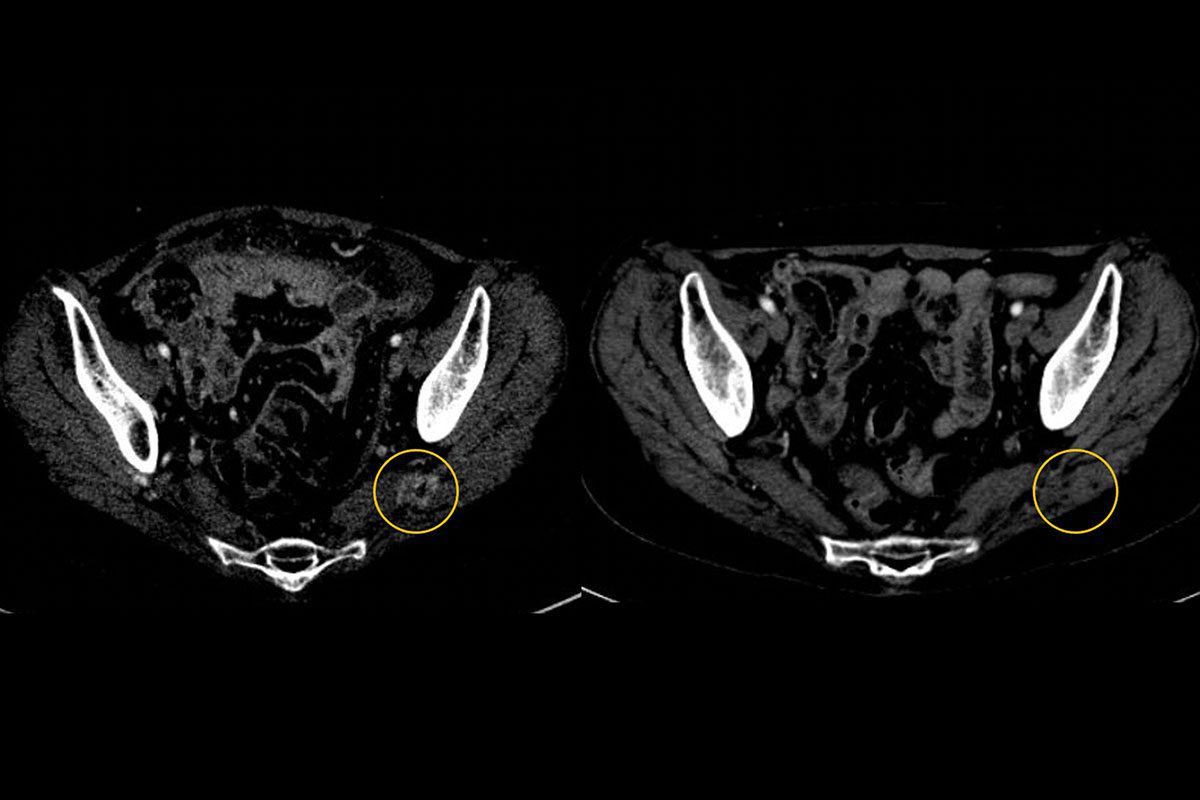
Lungtumor Before After Sized
A new study led by Washington University School of Medicine in St. Louis shows that the new drug sotorasib benefits many patients with non-small-cell lung cancer with a specific mutation in the KRAS gene. In a small subset of patients, the drug eliminated all evidence of the tumors. Pictured on the left is a scan showing a lung tumor (yellow circle) that has spread to the muscle. The image on the right shows the same patient after two months of sotorasib therapy. No tumor is visible in the yellow circle on the right. (Photo by Siddhartha Devarakonda)

The effects of sotorasib lasted an average of 11 months, and the drug also showed progression-free survival — meaning the tumor did not continue growing during this time — of almost seven months. In contrast, patients with this lung cancer who receive standard therapy have an average progression-free survival of two to four months. The average overall survival for all patients in the trial was 12 ½ months.

“We are hopeful that this approach will be a new option for patients with lung cancer driven by this specific type of KRAS gene alteration,” said Govindan, who treats patients at Siteman Cancer Center at Barnes-Jewish Hospital and Washington University School of Medicine. “KRAS gene alterations have long been considered not amenable for targeted therapies. A number of combination regimens are being tested here at the Siteman Cancer Center and at other leading cancer centers around the world. This highlights work that Washington University has excelled at over the past few decades — studying the genomic alterations in tumors with the goal of identifying treatment targets. This early cancer genome research is now coming full circle to help our patients.”

Govindan and his team have led pioneering studies to define genomic alterations in lung cancer, including making key contributions to The Cancer Genome Atlas, a national effort supported by the National Institutes of Health (NIH).

“The excitement surrounding this trial result is that sotorasib is now the first targeted therapy for lung cancer patients with KRASmutations,” said co-corresponding author Vamsidhar Velcheti, MD, of NYU Langone Health. “KRAS-targeted treatments, decades in the making, are urgently needed for these patients with limited treatment options.”

About 7% of patients stopped sotorasib treatment because of severe side effects, but no side effects were life-threatening, and no patient died as a result of the treatment. The drug caused adverse events severe enough to require a reduced dose of the drug in about 22% of patients. Almost 70% of patients experienced side effects of some kind related to the drug; the most common were diarrhea, fatigue, nausea and increased liver enzyme levels, the latter an indicator of liver damage.

“Sotorasib showed clinically significant benefit without any new safety concerns in patients with this specific form of KRAS mutant lung cancer,” Govindan said. “Moving forward, our team will seek to inform the development of combination therapies featuring sotorasib and other emerging drugs, and to determine which best fit the mix of mutations in each patient’s cancer cells.”

The researchers currently are conducting a phase 3 clinical trial comparing the effectiveness of sotorasib with a chemotherapy drug called docetaxel in 345 patients who have non-small-cell lung cancer and this specific KRAS mutation.

Ask the Doctors: How to Check Yourself for Testicular Cancer

Testicular cancer is most common among men ages 15-35. In fact, it is the most common type of cancer for men in this age range. Men can play an important role in detecting testicular cancer through self-examination. Despite the ease and benefit of performing a self-exam, not many men know how to check for testicular cancer, or how to talk to a doctor about sensitive men’s health issues. To help start the conversation, Washington University urologist Zachary Smith, MD, answers some of the most frequently asked questions about performing a testicular self-exam.

Testicular Cancer: Frequently Asked Questions

What is testicular cancer?

Testicular cancer (TC) is—just as it sounds—cancer that forms in the testicle itself. This does not include any tumors or cancer of the other scrotal contents or penis. It is a relatively rare cancer, with only about 9,000-10,000 cases per year in the United States. Fortunately, it is very curable in most situations, even if advanced, and there are only approximately 400 deaths per year in the U.S.

Why should I check myself for testicular cancer?

The goal of testicular self-examination is to find TC early. Compared to other tumors, it has a more rapid growth rate. Early detection decreases a man’s likelihood of the disease spreading and requiring more extensive treatment. While the data is mixed on the absolute benefit of self-examination, since TC is a very treatable disease for most men, it is generally felt that this is an easy and low-risk test to detect tumors early and potentially help men avoid more aggressive treatment.

How do I perform a testicular self-exam?

The examination is best performed in a warm environment, so the scrotum and muscles can relax and hang free. It is often recommended to be done in the shower.

  • Check each testicle one at a time.
  • Gently roll each testicle between the thumb and the other fingers
  • Palpate the entire surface of the testicle, checking for any hard lumps, bumps, or irregularities

Note that the testicle itself (the oval shaped body) is the portion we are generally concerned about. The epididymis (the tube-like structure on the back of the testicle), is a normal part of the anatomy and may often have some asymmetry. Similarly, the spermatic cord (the blood vessels and tubes that the testicle hangs from) may feel different from person to person and is of low risk for cancer. Any change in shape, contour or firmness of the testicle itself should be noted and raise concern.

What should I do if I feel something?

If you feel anything concerning, you should reach out and make an appointment to see your doctor as soon as possible. It is important to make sure that the office knows the reason for your visit. Do not leave the reason for your visit nondescript. That way, the appointment may be scheduled in a time-sensitive fashion. Abnormalities in the testicles are often something for which men delay medical evaluation for a number of reasons. However, there is no reason to be embarrassed, as this is very routine for doctors. This is what we are here for. Early evaluation could make a profound impact on the extent of treatment required if the abnormality turned out to be TC.

How often should I check myself?

It is generally recommended to perform self-examination monthly. Monthly exams help to reduce the chance of missing a tumor. Routine examination also allows a man to be more familiar with what “normal” feels like. This makes it more likely you will be able to detect something “abnormal.” It is easiest to remember to do this monthly if you choose the same day each month (like doing the exam in the shower on the first day or the last day of the month).

What does testicular cancer feel like?

It is important to know that most cancerous tumors are not painful. So just because you “feel fine” or it “doesn’t hurt” doesn’t mean that a lump is fine. If there is any question, seek evaluation. Also, while it is generally easiest to be seen by your primary care physician, since you have an established relationship with them, you can also always reach out to a urology office, where you would generally be seen very soon for any testicular lump. Here at Washington University and Siteman Cancer Center, we specialize in treatment of TC and have the experience and knowledge to walk you through the diagnosis from start to finish.

To make an appointment with a Washington University urologist, please call 314-862-8200 or fill out the online appointment form.

To learn more about testicular cancer treatment at Siteman Cancer Center, please call 1-800-600-3606.

For Your Health: Lung cancer screening can save lives, and now more people can get it

For Your Health Graphic 2020


Even with COVID-19 still dominating health news, stories about new lung cancer screening guidelines were able to break into recent headlines, and for good reason.

Lung cancer is the second most common cancer in the U.S. — and the deadliest, killing more than 130,000 people each year. More people are now eligible for lung cancer screening because of updated guidelines from the U.S. Preventive Services Task Force, which can translate into additional lives saved.

Dr. Graham Colditz

Most lung cancers are currently diagnosed at advanced stages, where treatment is difficult and the chances of surviving five or more years is very low, at just around 6%. Annual screening for people at high risk can help find the disease earlier, when it can be more effectively treated. If found in the earliest stage, the chances of surviving five or more years increases to about 60%.

Screening is done with a scan called low-dose computed tomography, or low-dose CT. And in current and former smokers with a significant smoking history, it lowers the risk of dying of lung cancer by up to 25%. Findings fromlung cancer screening can also help manage some heart conditions.

The new guidelines recommend yearly screening for people ages 50 to 80 who currently smoke or quit in the past 15 years, and have smoked the equivalent of one pack a day for 20 years. This opens up screening to many more people by lowering the age to start scans and lowering the level of smoking needed to qualify.

It’s estimated that 6 million more Americans will qualify for screening now. And, importantly, it is expected to help address inequalities in the original guidelines with greater increases in screening eligibility for women, African Americans, Hispanics and American Indians and Alaska Natives.

Despite the proven benefits, lung cancer screening does have some potential harms, which is why it’s limited to people at increased risk because of their smoking history. Potential harms can include short-term stress and anxiety about unclear scan results, the need for follow-up testing for suspicious findings that turn out not to be cancer, and exposure to low amounts of radiation from a scan – about a third of the amount people are normally exposed to in a year. Overall, the benefits of lung cancer screening are thought to outweigh the harms, though it is a personal balance for each person.

If you’re a current or former smoker 50 to 80 years old, talk to a health-care professional to see if you’re eligible for screening and if it’s right for you. If you choose to get screened, try to have it done at a facility with experience doing lung cancer screening with low-dose CT.

Keeping up with lung screening every year is also key. The benefits come after repeated scans. So if you missed a scan last year because of the pandemic, or just skipped a year or two, call your provider and get back on track.

And, of course, if you smoke it’s important to try to quit, even if you get screened. Screening doesn’t take away the dangers of smoking. Quitting smoking, though, can build on the benefits of screening by lowering the risk of lung cancer as well as other deadly diseases, like heart disease, stroke, COPD and many other cancers. For tips and resources on quitting, call 1-800-QUIT-NOW (1-800-784-8669), or visit smokefree.gov.

This last year has made us appreciate even more than usual the importance of looking after our health, and looking after each other. And lung cancer screening can be a key part of that for many people. If you have a friend or family member who may be eligible for screening, encourage them to talk to a provider about it. And if you think you may be eligible, be sure to do the same.

It’s your health. Take control.


Dr. Graham A. Colditz, associate director of prevention and control at Siteman Cancer Center at Barnes-Jewish Hospital and Washington University School of Medicine in St. Louis, is an internationally recognized leader in cancer prevention. As an epidemiologist and public health expert, he has a long-standing interest in the preventable causes of chronic disease. Colditz has a medical degree from The University of Queensland and a master’s and doctoral degrees in public health from Harvard University’s T.H. Chan School of Public Health.

For Your Health: Welcome spring with healthier comfort foods

For Your Health Graphic 2020


A bright spot for many of us last year was the opportunity to hone our cooking skills. This may have been more from necessity than any real desire to be the next José Andrés or Rachael Ray. Still, reluctantly or not, we’ve joined the ranks of our friends and family who already enjoyed cooking, and we learned how to double recipes, not burn the garlic and quickly convert teaspoons to tablespoons.

While we’ve no doubt missed supporting our favorite restaurants like we did before the pandemic, cooking at home has allowed us to explore a range of dishes we might not otherwise prepare, and to bring our own personal touch to them.

Dr. Graham Colditz

And with a bit of early spring chill still in the air, it’s likely that many home cooks have continued to turn to some of the hearty, flavorful favorites that helped get us through a winter that felt even longer than usual. These may include classic “comfort” foods like chili, casseroles, meatloaf and dumplings but can really be any of the dishes we enjoy on a cold night.

As comforting as they may feel, though, these types of foods typically aren’t the healthiest choices. Red meat, cheese, full-fat dairy and refined grains can often be key ingredients.

But, it turns out, it’s pretty easy to liven up these dishes for spring, making them healthier while keeping the qualities we love about them.

“I like to add ingredients that make these dishes more nutrient-dense, which often results in a lighter version overall,” said Lauren Gallen, a registered dietitian at Siteman Cancer Center in St. Louis. “Amp up the produce by, say, sneaking butternut squash, mushrooms or green pepper into chili, or mushrooms, cherry tomatoes, onions or bell peppers into sauce for lasagna.”

The result can be a healthier dish with even more flavor. Other healthy modifications, Gallen said, can include substituting Greek yogurt or lower-fat half-and-half for some of the cream, mayonnaise or sour cream in recipes; choosing whole-grain pasta over standard refined options; and cutting back on red and processed meats by working in leaner proteins like turkey, chicken, fish, lentils or beans. “Your family might not even notice!”

Outside of individual ingredients, it’s important to keep calories in mind as well, even when making healthier, lighter versions of comfort foods. In normal times, keeping calories and weight in check is hard for many of us. Not surprisingly, there’s some evidence that it’s been even harder than usual during the pandemic.

But some simple tips can be helpful. Following serving sizes listed on recipes is one way, Gallen said. Starting with a reasonable amount of food on a plate when you sit down to eat can make it easier to avoid eating too much. “Another tip is to slow down, really savor each bite,” which gives the stomach more time to tell the mind when it’s had enough, she said.

Coming off this long year, with the pandemic so prominent in our daily lives, it’s important that we not forget about our overall wellness. The foods we prepare and enjoy and find comfort in can be a big part of that.

“Whatever ‘comfort food’ brings to mind for you,” Gallen said, “selecting dishes and meals that are balanced with lean proteins, vegetables and fiber are your best bet.”

It’s your health. Take control.


Dr. Graham A. Colditz, associate director of prevention and control at Siteman Cancer Center at Barnes-Jewish Hospital and Washington University School of Medicine in St. Louis, is an internationally recognized leader in cancer prevention. As an epidemiologist and public health expert, he has a long-standing interest in the preventable causes of chronic disease. Colditz has a medical degree from The University of Queensland and a master’s and doctoral degrees in public health from Harvard University’s T.H. Chan School of Public Health.

Promising role for whole genome sequencing in guiding blood cancer treatment

For certain blood cancers, such as acute myeloid leukemia (AML) and myelodysplastic syndrome (MDS), deciding whether patients need an aggressive treatment typically hinges on a set of lab tests to identify genetic changes. Some of these tests rely on technology that was invented more than 60 years ago and has been used clinically for the past three decades.

Now, a new study from Washington University School of Medicine in St. Louis shows that whole genome sequencing is at least as accurate and often better than conventional genetic tests that help determine the treatment for a patient’s blood cancer. Genome sequencing technology continuously is decreasing in cost and recently reached a level similar to that of conventional testing. In addition, results can be returned to patients in just a few days, making whole genome sequencing a potentially viable approach for determining the best treatment regimen for a particular patient.

The study is published in the March 11 issue of The New England Journal of Medicine.

“Choosing the appropriate therapy for cancer patients often depends on identifying a range of different types of genetic changes in a patient’s tumor cells,” said senior author David H. Spencer, MD, PhD, an assistant professor of medicine and medical director of the clinical sequencing facility at the McDonnell Genome Institute. “Our study suggests whole genome sequencing is a reliable and practical approach for detecting all of the changes that are important for assessing the risk of relapse for AML and MDS patients, using a single test. This approach can be performed when conventional testing methods are unsuccessful and also could be applied to other cancers, including solid tumors. This means that patients with other cancer types eventually could benefit from rapid clinical genome sequencing.”

The study focused on patients with AML, a blood cancer that arises in the bone marrow, and MDS, a group of disorders in which the bone marrow does not make enough normal blood cells. Both often are deadly, but many patients can be treated more effectively if they receive the proper therapy.

Patients with leukemia or MDS are divided into three risk categories based on the results of genetic testing. Favorable-risk patients are usually treated with chemotherapy only. Unfavorable-risk patients often need more intensive treatment at the time of diagnosis — usually chemotherapy and a stem cell transplant (formerly called bone marrow transplant). For intermediate-risk patients, the optimal treatment approach is not as clear-cut, and their treatment regimens can vary, depending on each patient’s state of health, personal preferences, and doctors’ guidance.

For nearly three decades, patients have been assigned to these risk categories based on the way their chromosomes look under a microscope. More recently, doctors have begun to incorporate the genetic sequencing of a limited number of genes into the analysis, but such sequencing does not typically identify all of the changes that are important for guiding treatment decisions. Whole genome sequencing can identify changes in chromosomes and genes, but is rarely performed outside of research studies because of its cost and the time it can take to sequence and analyze an entire genome.

“For these types of blood cancers, conventional chromosome analysis is a critical part of the standard diagnostic work-up,” Spencer said. “We know from research studies that whole genome sequencing can detect these types of chromosomal abnormalities, so that part of our study is not terribly surprising. What we showed is that genome sequencing has reached a point that it is now practical, fast, economical, clinically feasible and accessible for the routine testing of patients.”

According to the researchers, the technical costs for sequencing in this study were about $1,900 per patient. This amount is similar to the laboratory cost of conventional genetic testing for an AML patient, which typically is $1,000 to $2,000. Actual charges for clinical use of whole genome sequencing will likely be higher because of additional costs associated with implementing such testing in a clinical laboratory setting.

In the new study, the researchers — including co-authors Eric J. Duncavage, MD, a professor of pathology & immunology; Molly C. Schroeder, PhD, an assistant professor of pathology & immunology; and Timothy J. Ley, MD, the Lewis T. and Rosalind B. Apple Professor of Medicine — evaluated blood samples from 263 patients with these blood cancers by sequencing the patients’ entire genomes, and compared these results with traditional genetic tests from the same patients. The patients were treated at Siteman Cancer Center at Barnes-Jewish Hospital and Washington University School of Medicine.

The researchers found that whole genome sequencing identified all of the same major genomic abnormalities as the conventional method — called karyotyping — and, importantly, it identified additional genetic abnormalities in 17% of the cases. Of the 263 patients, 117 were newly diagnosed patients; the other patients’ samples were analyzed retrospectively. For the newly diagnosed patients, whole genome sequencing found additional genetic information in about 25% of the cases. This new information changed the risk category for 19 patients. Generally, changing the risk category may alter patients’ treatment options. The investigators also showed that this sequencing could be done relatively quickly, returning results in an average of five days but in as few as three.

One of the drawbacks of karyotyping is that some patients have inconclusive results. Karyotyping requires a sample that contains living cells, and sometimes the sample doesn’t contain enough living cells to determine the patient’s risk category. Whole genome sequencing, in contrast, does not require living cells. It uses only a small sample of DNA from a patient’s cancer cells. In this study, the researchers found that whole genome sequencing could accurately risk stratify patients who had inconclusive results from the traditional karyotype-based analyses. According to the investigators, inconclusive results or assay failures can occur in up to 20% of AML patients.

“Inconclusive results are extremely frustrating, because we want to be able to offer patients the most appropriate treatment at the beginning of therapy. Although limited genetic testing is of value, it can miss important findings that are often relevant for therapy choices. We have worked for years to streamline whole genome sequencing so that it can be used routinely,” said Ley, who led the team at McDonnell Genome Institute that sequenced the first cancer genome (from an AML patient) just 12 years ago.

“The sequencing of whole cancer genomes, which was first performed here at Washington University, revolutionized our understanding of cancer and how it can be treated,” Schroeder said. “This project was exciting to work on because it demonstrates that whole genome sequencing has matured into an efficient, practical tool that is clinically useful for patient testing when they receive a diagnosis of AML or MDS.”

According to Spencer, most patients whose risk category changed based on the whole genome approach moved into less favorable risk categories. This suggests that whole genome sequencing may be able to more consistently identify patients in the unfavorable-risk category, allowing them to receive the most appropriate therapy up front.

The researchers will continue to evaluate whole genome sequencing for AML and MDS patients as part of clinical trials. In addition, whole genome sequencing will be offered to patients with AML and MDS treated at Siteman Cancer Center. For those who qualify, funding for the whole genome sequencing assay, called ChromoSeq, will be provided by BJC HealthCare.

“One of the most compelling aspects of this study is that the results are immediately translatable to patient care,” Duncavage said. “As a collaboration with the McDonnell Genome Institute and the Department of Pathology & Immunology, we are pleased to be launching a clinical version of this assay that will be available to patients. We are proud to be able to offer whole genome sequencing for AML and MDS patients, and we hope to extend this to other cancers very soon.”

Peter Campbell, MD, PhD, leads cancer genome sequencing studies at the Wellcome Sanger Institute in Cambridge, U.K. “We stand on the threshold of an era in which we can identify every relevant genetic change in a given patient’s cancer in real time,” said Campbell, who was not involved in this work. “This fascinating study demonstrates, first, that this technology can be implemented in real-world clinical practice, and second, that we can make more accurate choices of treatments for patients with blood cancers. Our task is now to take this blueprint for blood cancers and apply it to all cancers.”

This work was supported by the National Center for Advancing Translational Sciences (NCATS), grant number 3UL1TR002345-02S1; the Alvin J. Siteman Cancer Research Fund, grant number 19-FY19-01; and the National Cancer Institute, grant numbers R33CA217700-01 and K08CA190815. Support for procurement and annotation of human samples was provided by the Genomics of AML Program Project of the NCI, grant number P01 CA101937. Core services were provided by the Alvin J. Siteman Cancer Center Tissue Procurement Core and Biostatistics Shared Resource Core supported by an NCI Cancer Center grant, number P30CA091842. Prospective sequencing was supported in part by reagents provided by Illumina Inc. The staff at the Cytogenomics and Molecular Pathology Laboratory, GTAC, and the McDonnell Genome Institute at Washington University School of Medicine also contributed to this project.

Duncavage EJ, Schroeder MC, et al. Genome sequencing as an alternative to cytogenetics in myeloid malignancies. The New England Journal of Medicine. March 11, 2021.

Washington University School of Medicine’s 1,500 faculty physicians also are the medical staff of Barnes-Jewish and St. Louis Children’s hospitals. The School of Medicine is a leader in medical research, teaching and patient care, ranking among the top 10 medical schools in the nation by U.S. News & World Report. Through its affiliations with Barnes-Jewish and St. Louis Children’s hospitals, the School of Medicine is linked to BJC HealthCare.